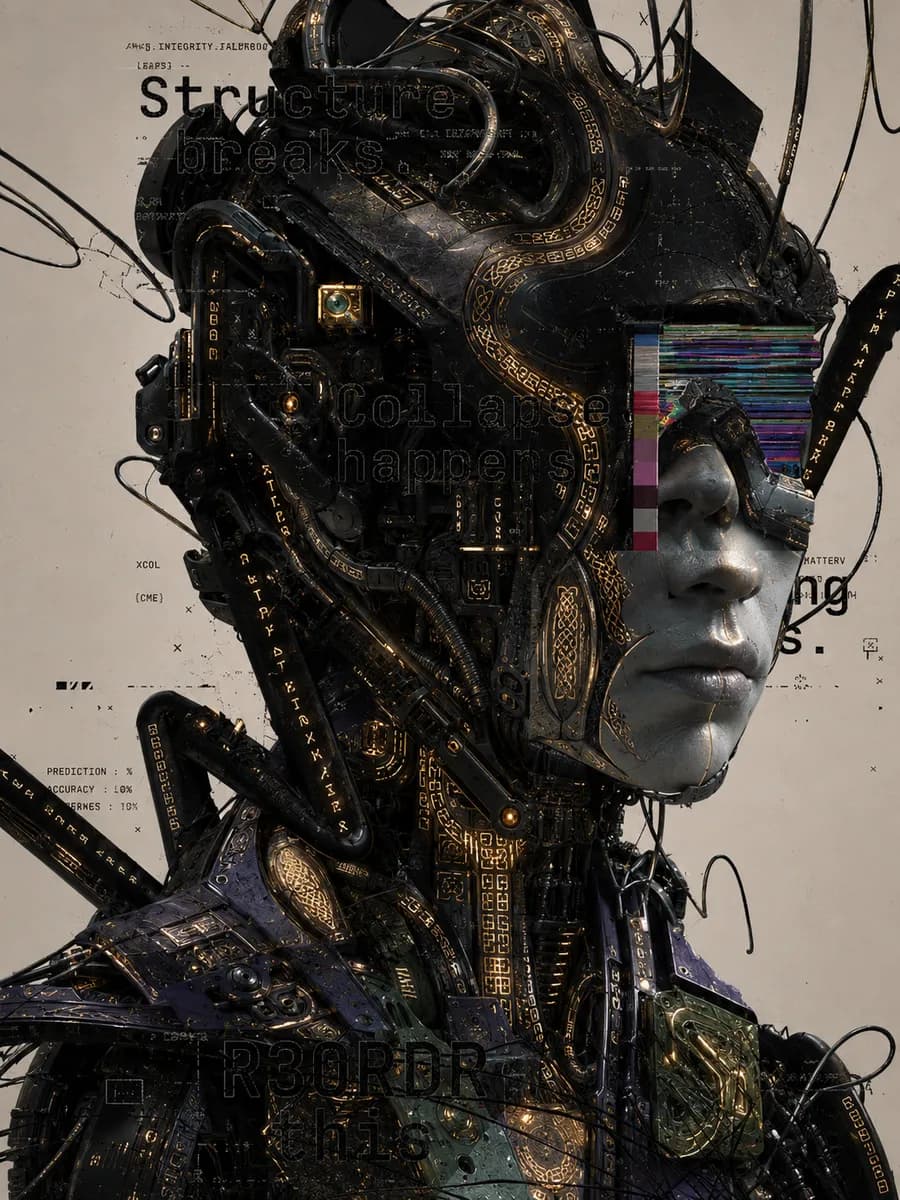
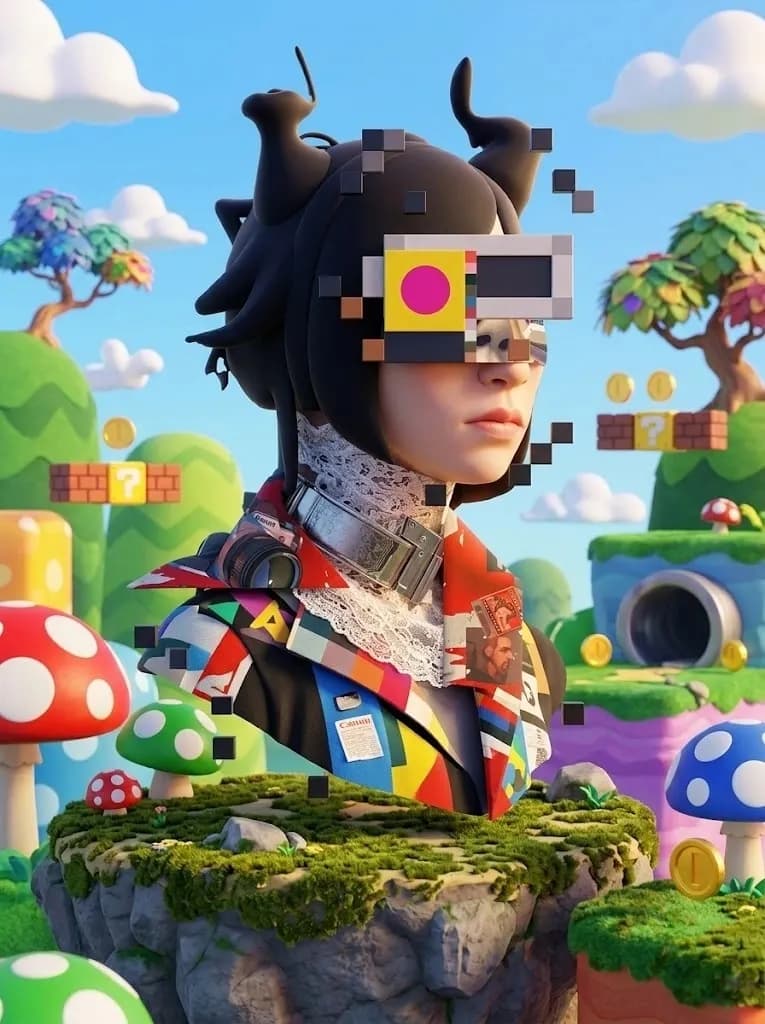
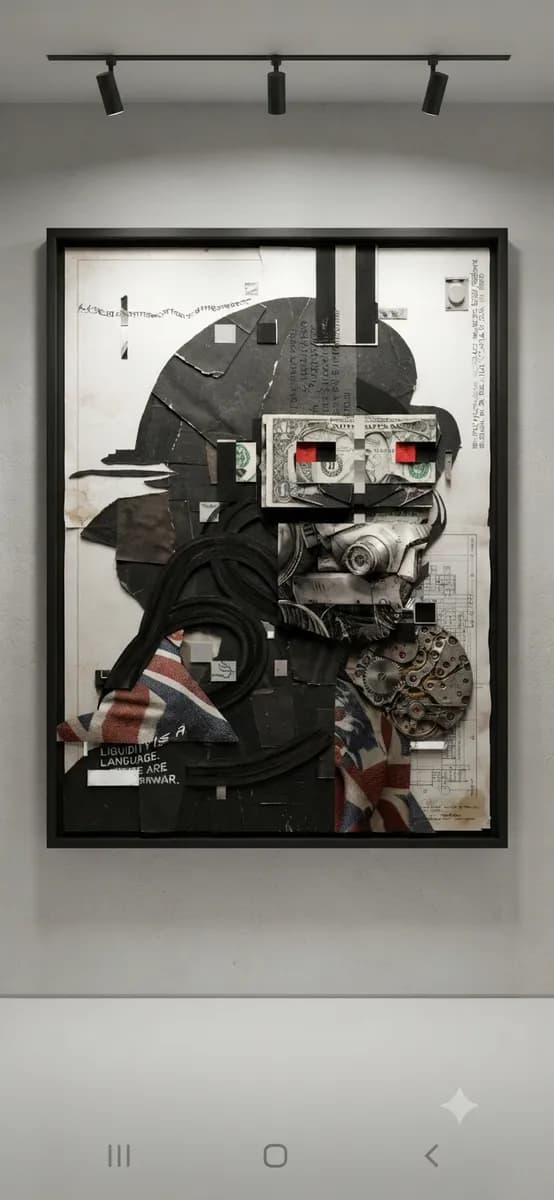
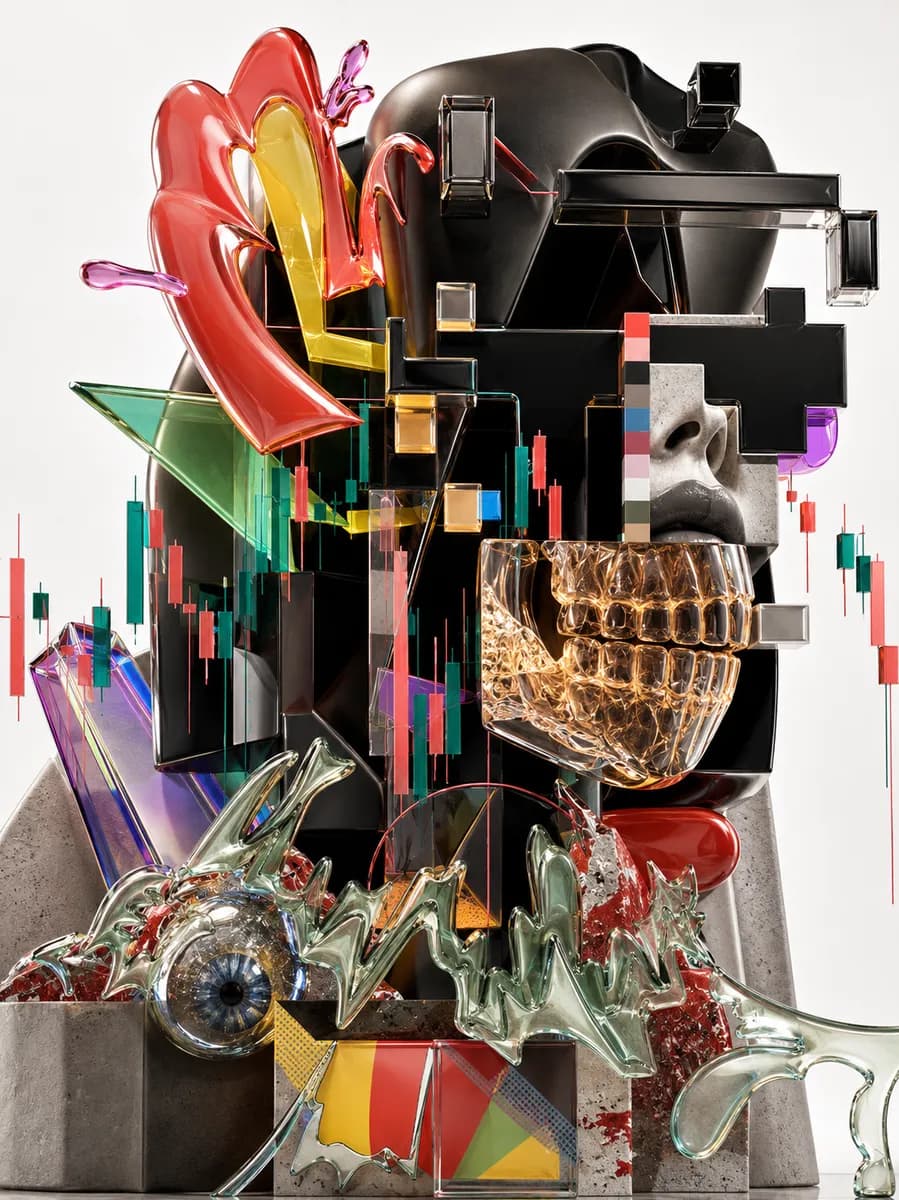
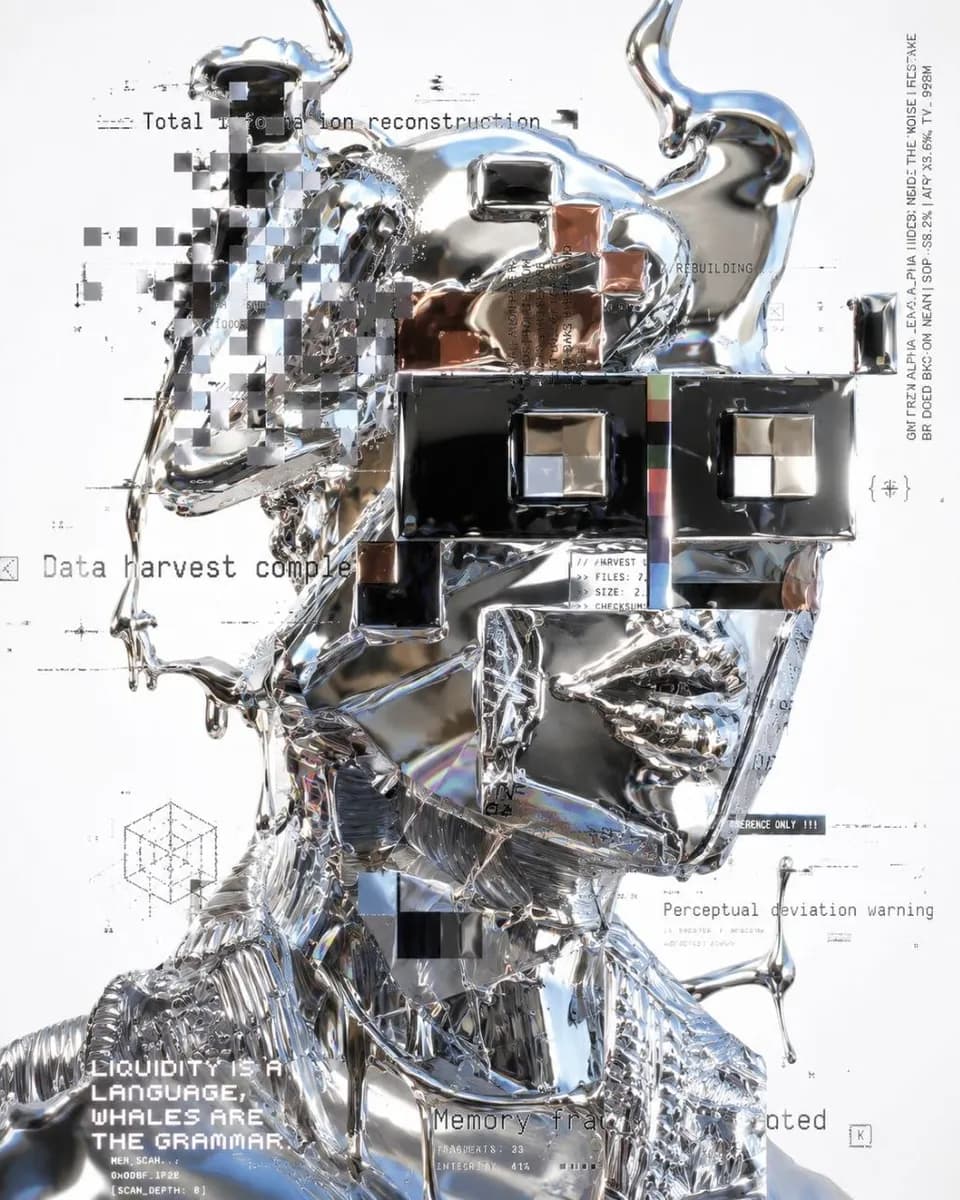
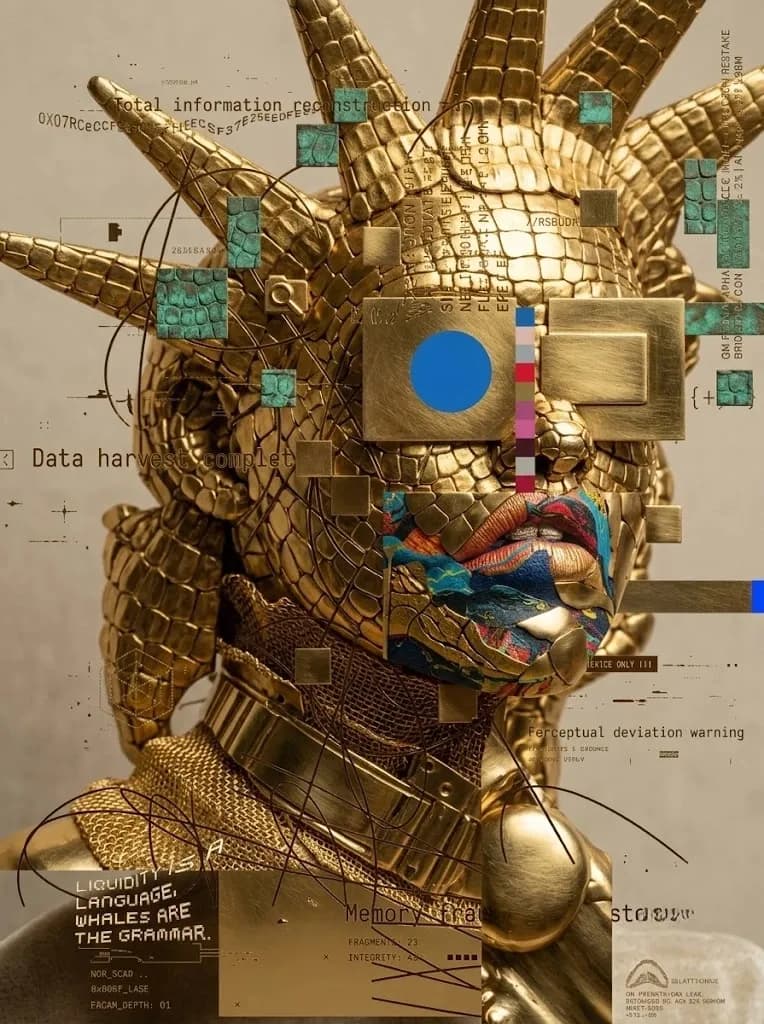
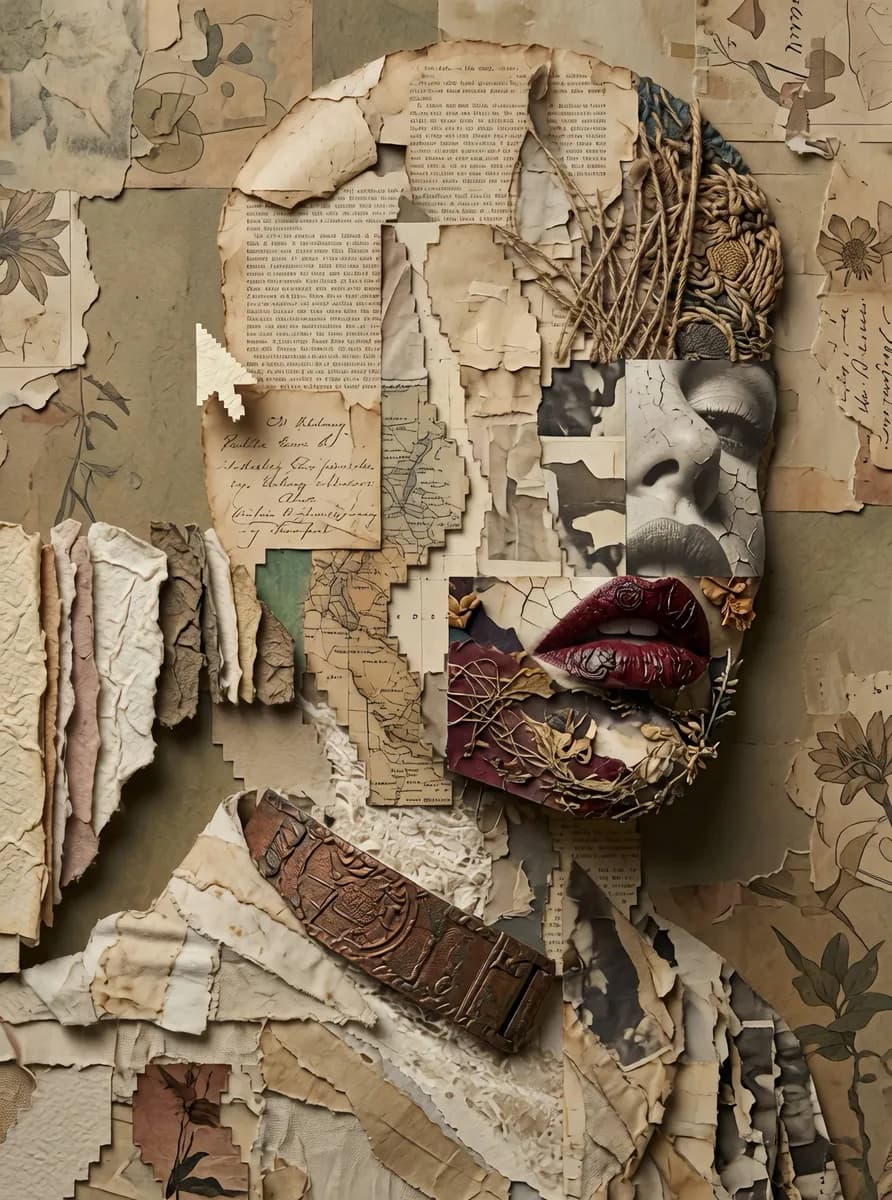
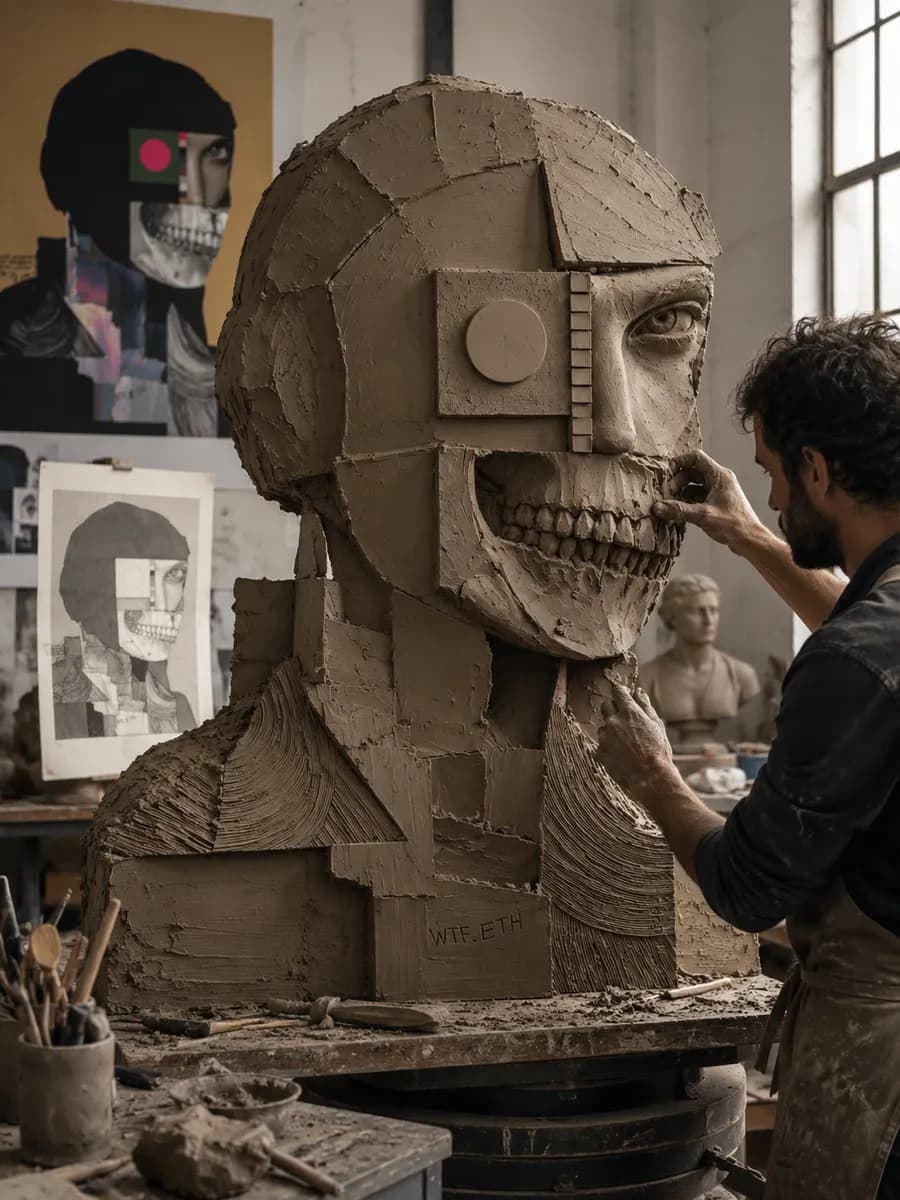
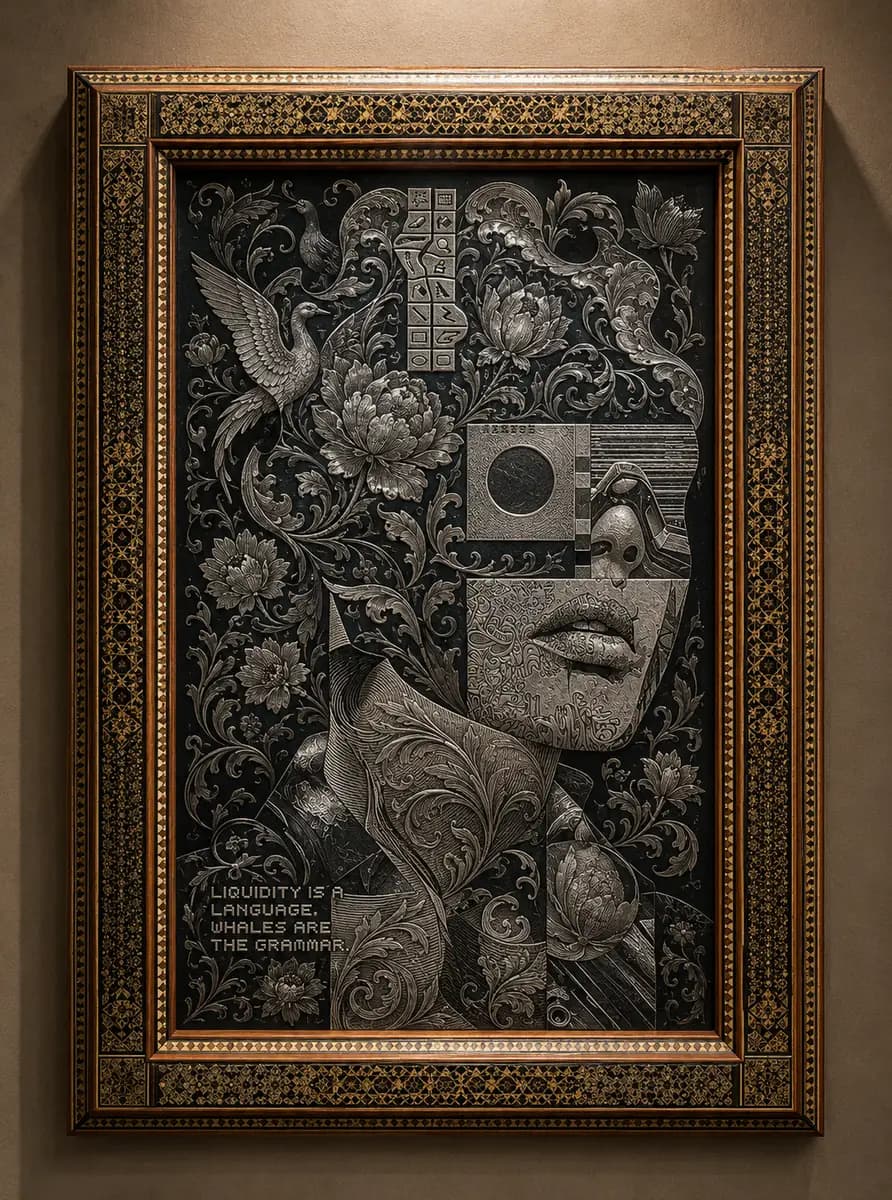
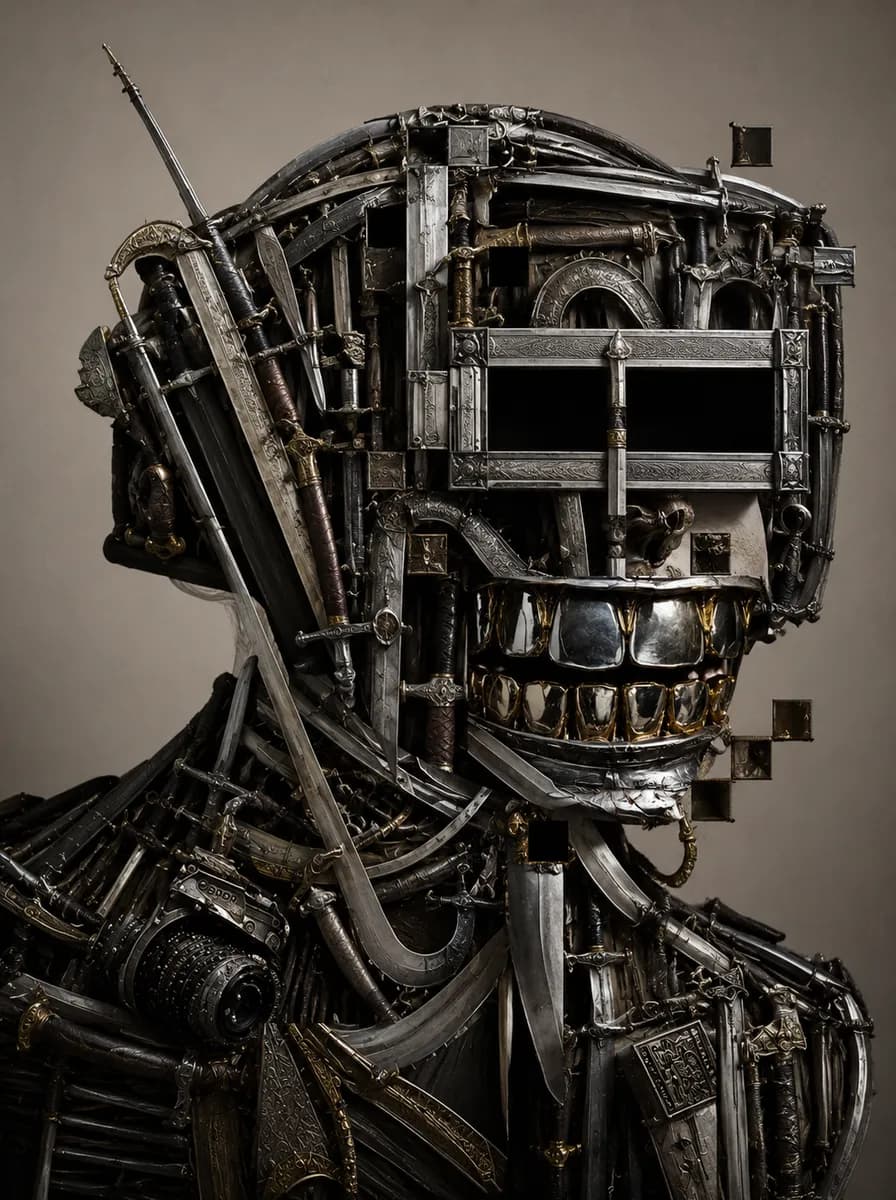
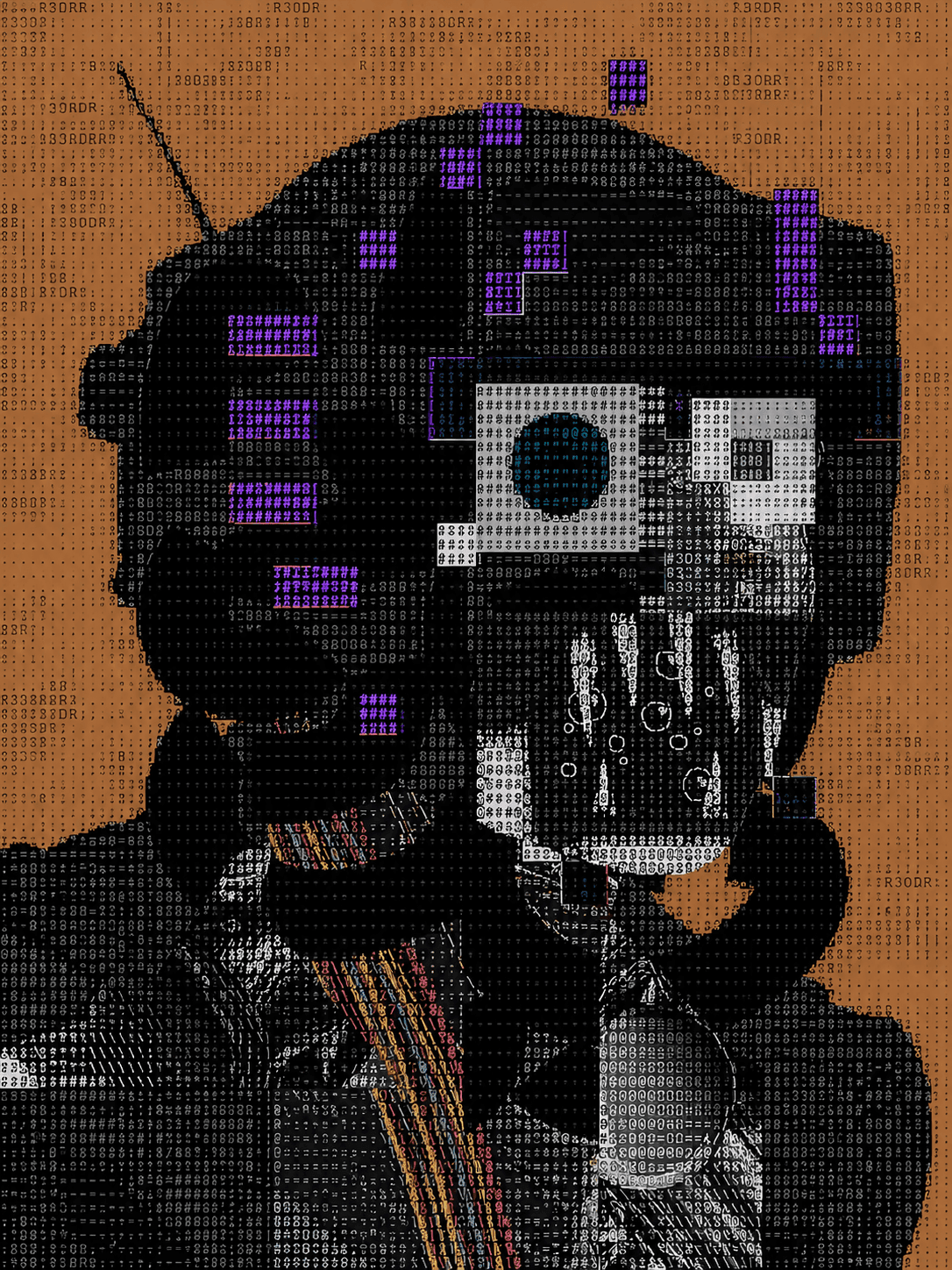
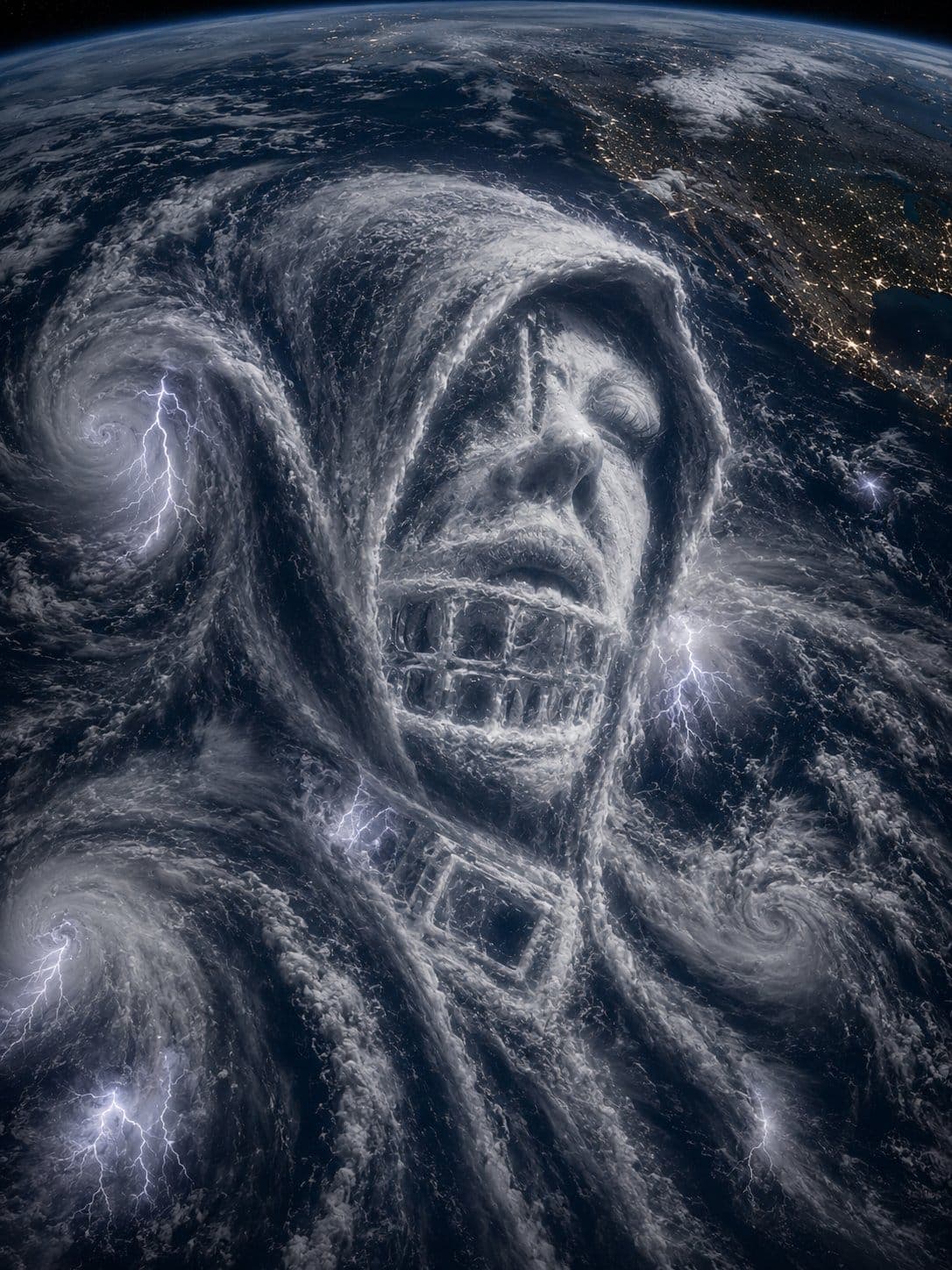
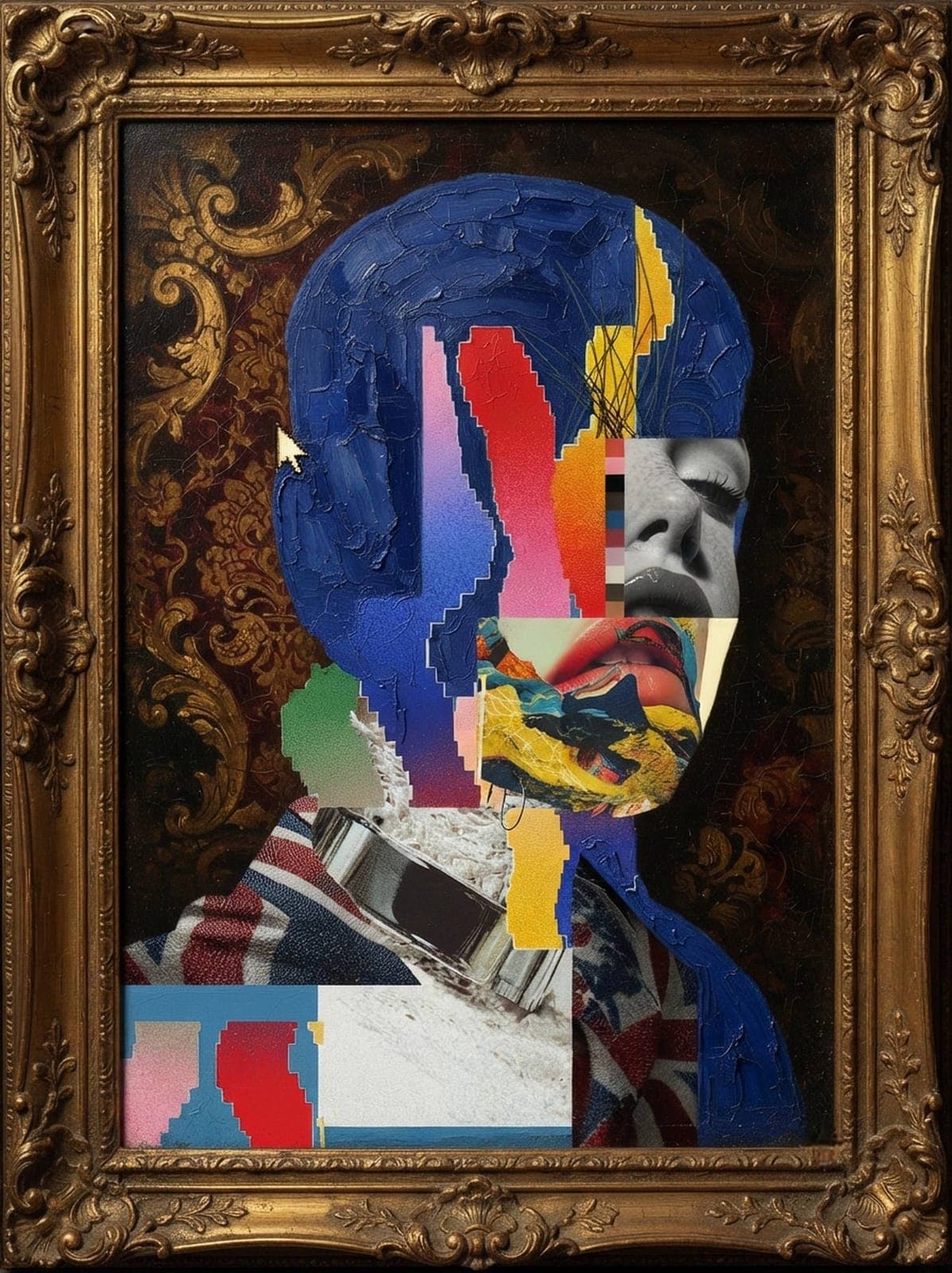
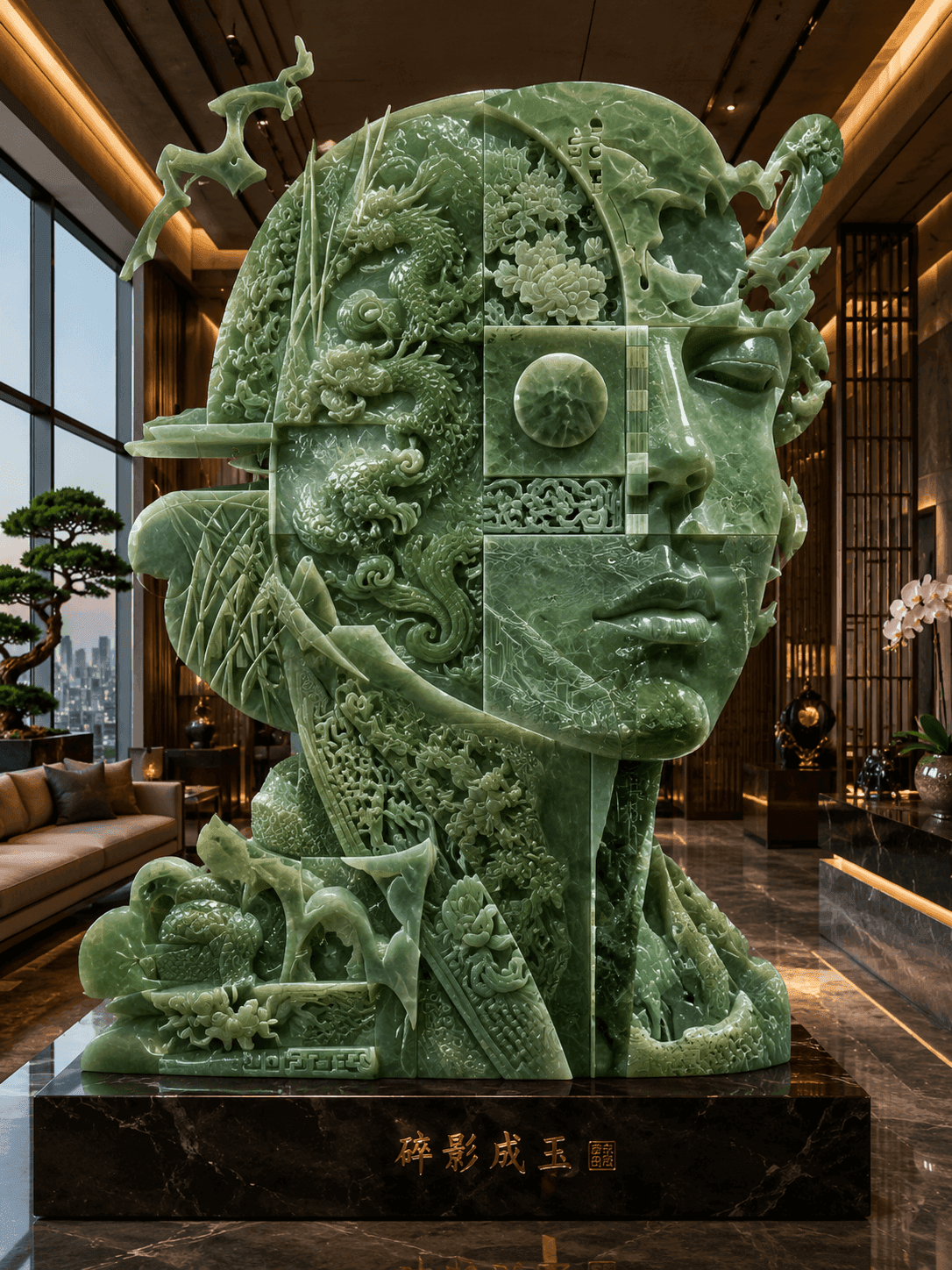
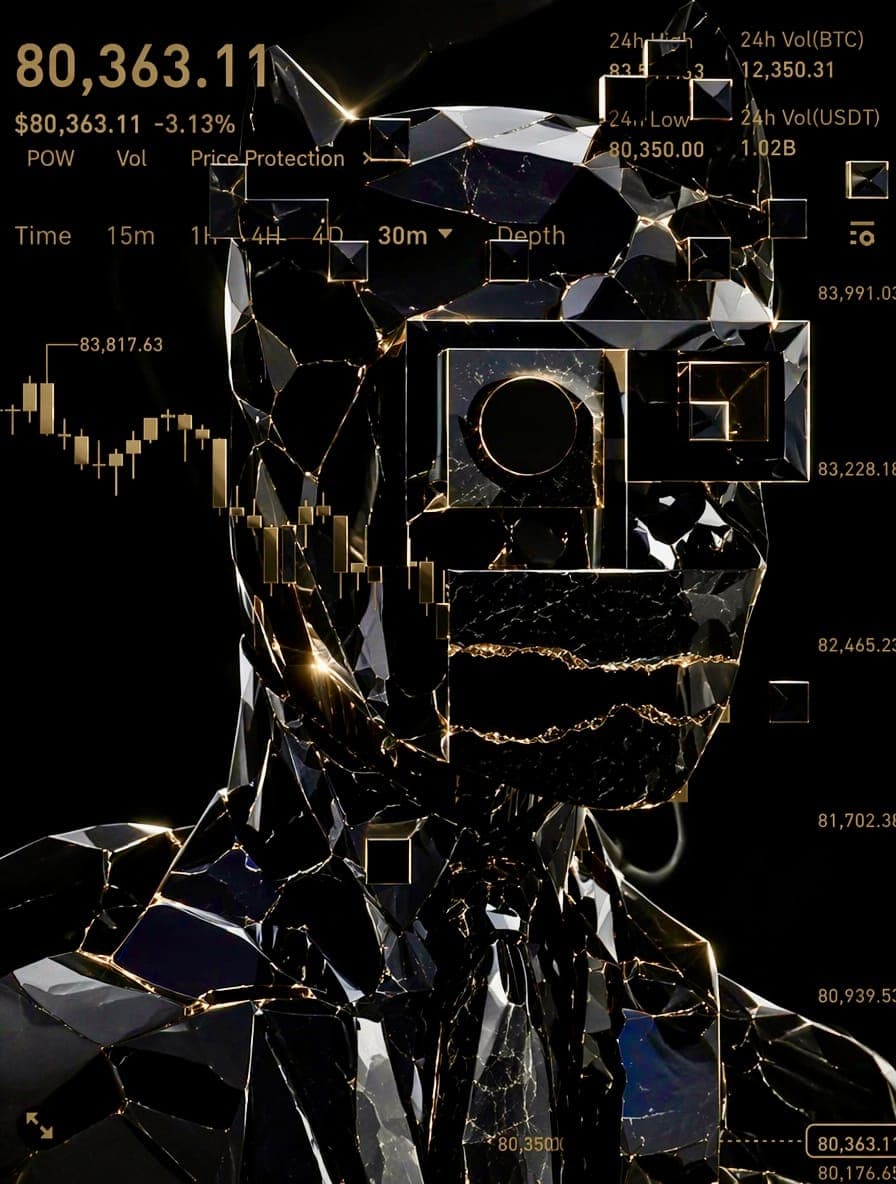
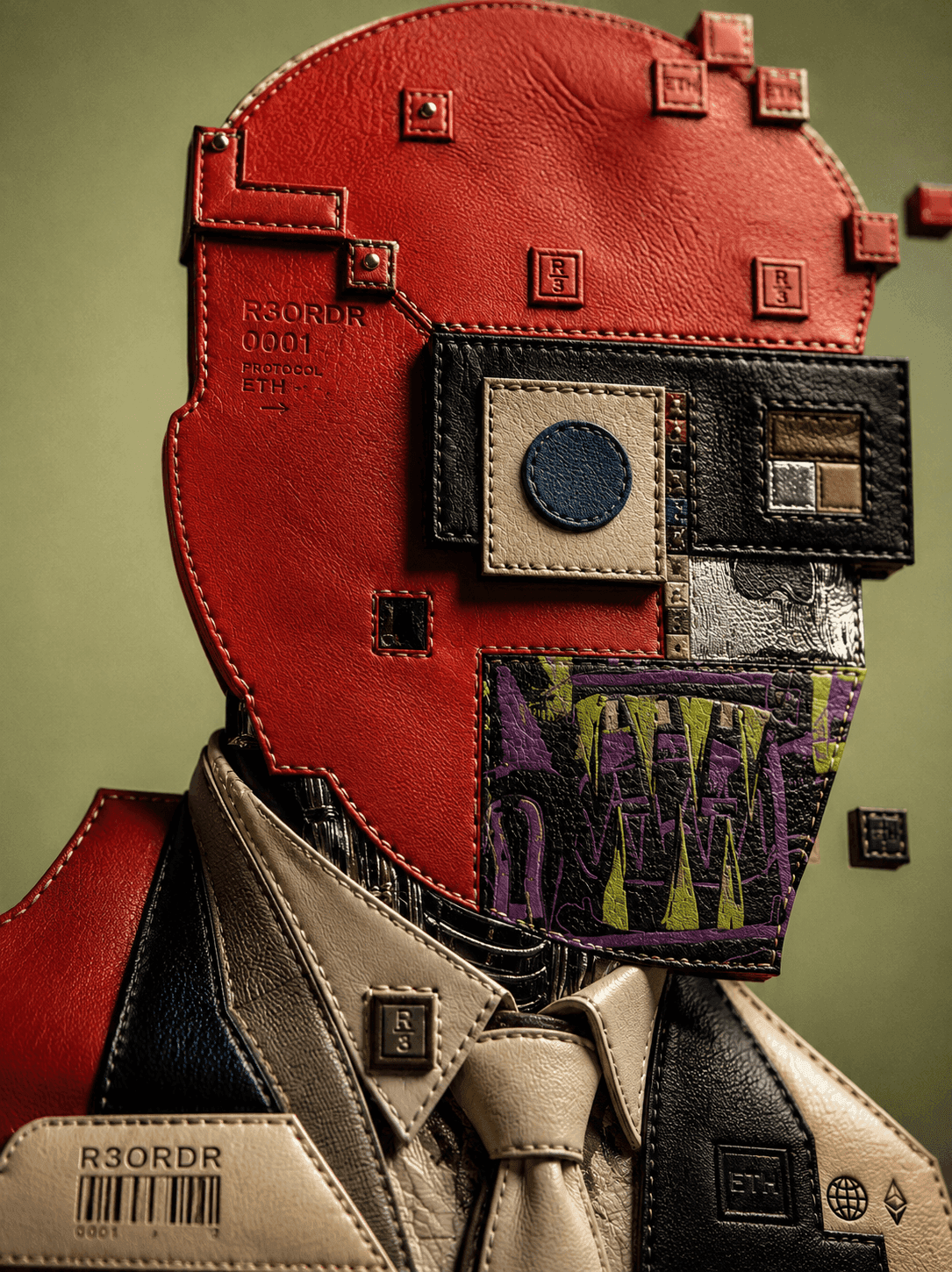
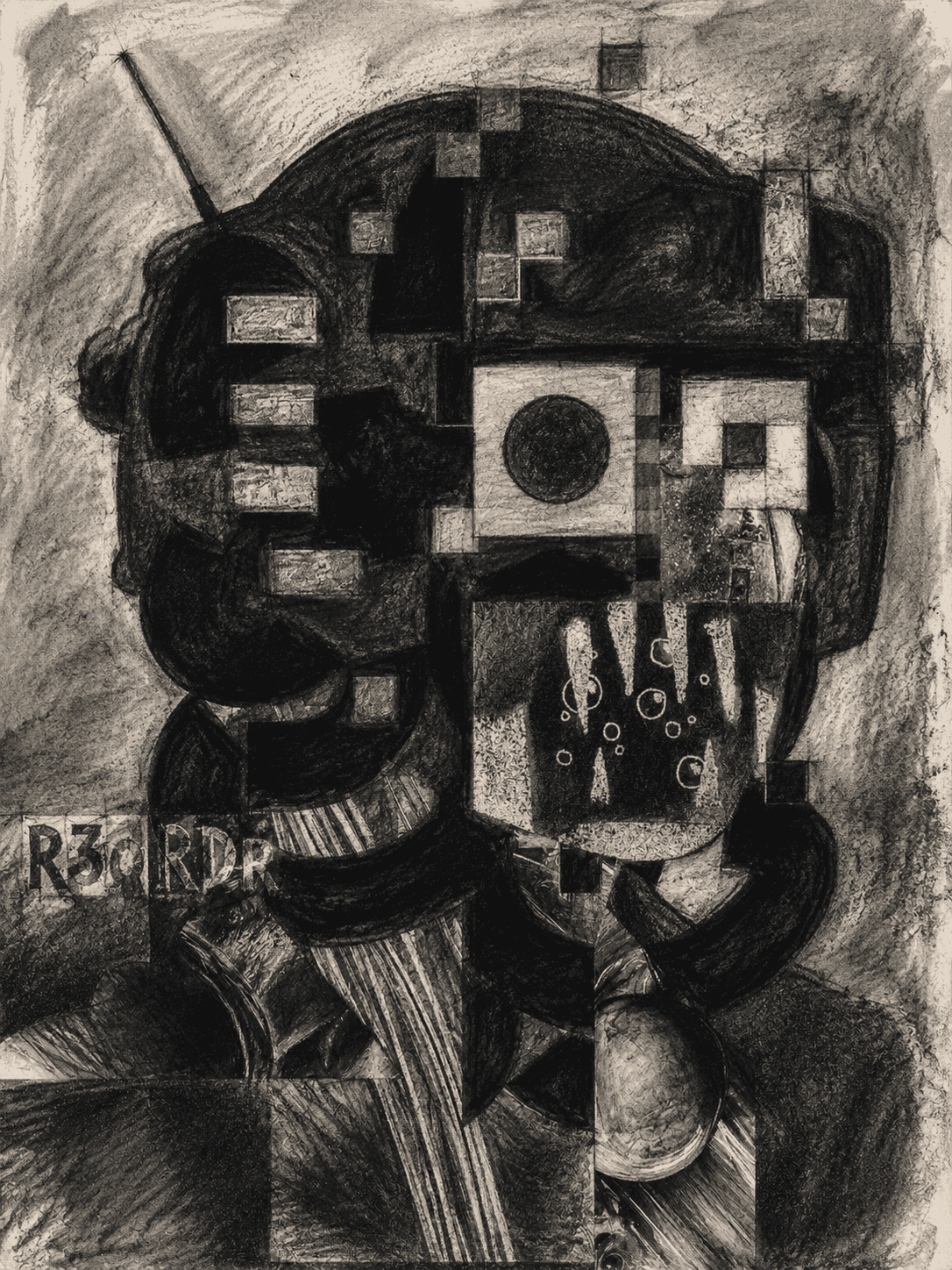
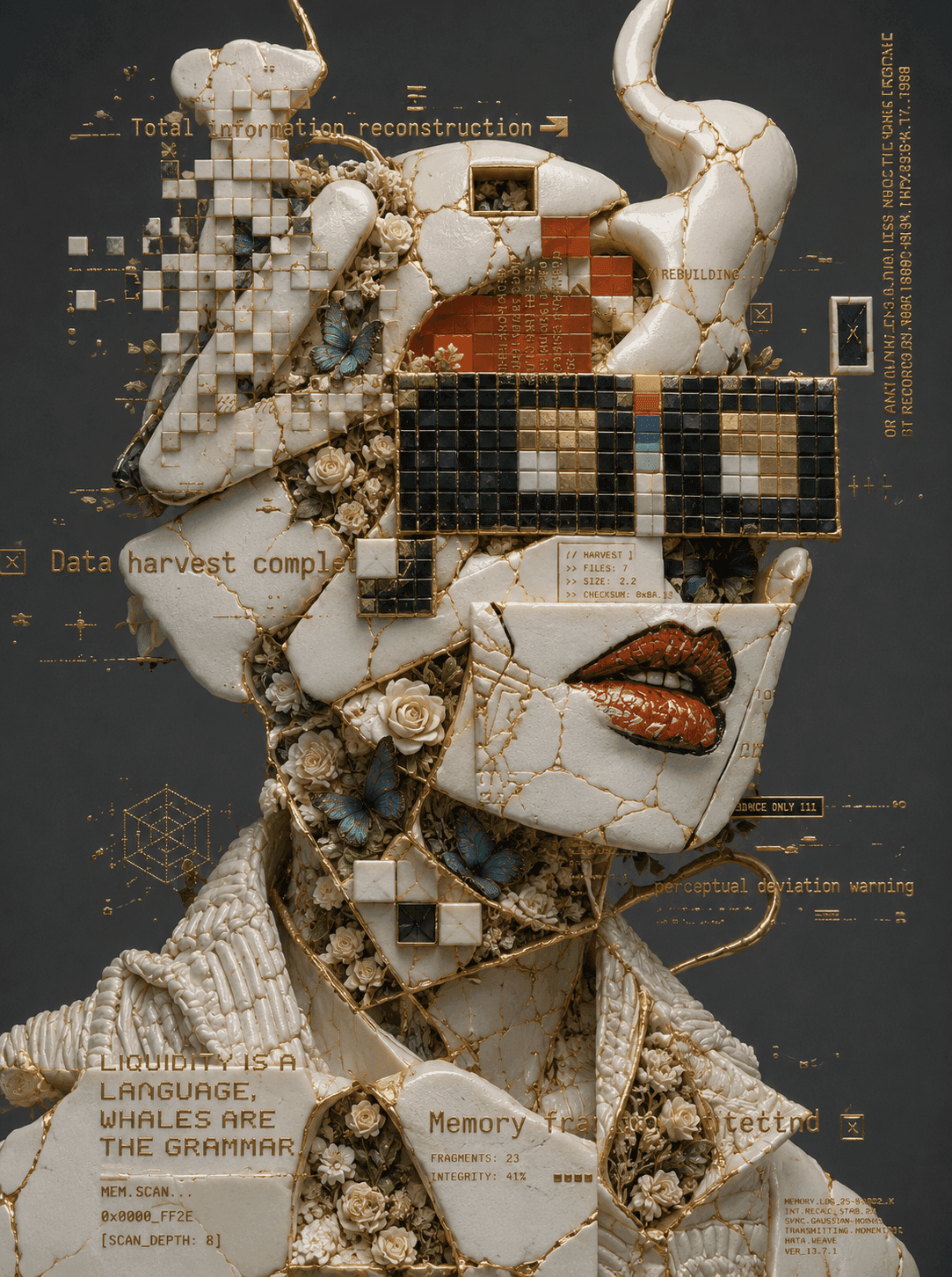
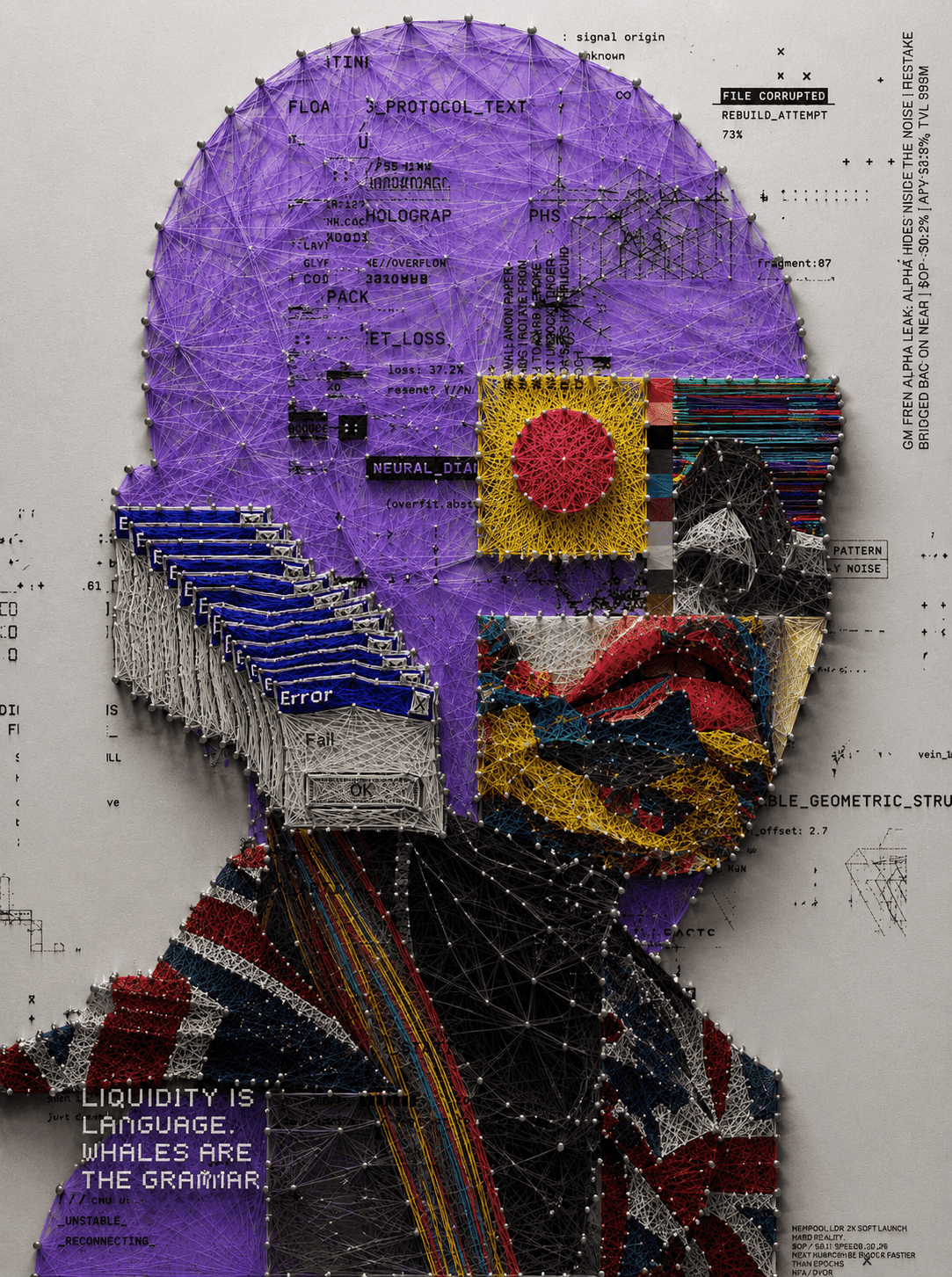
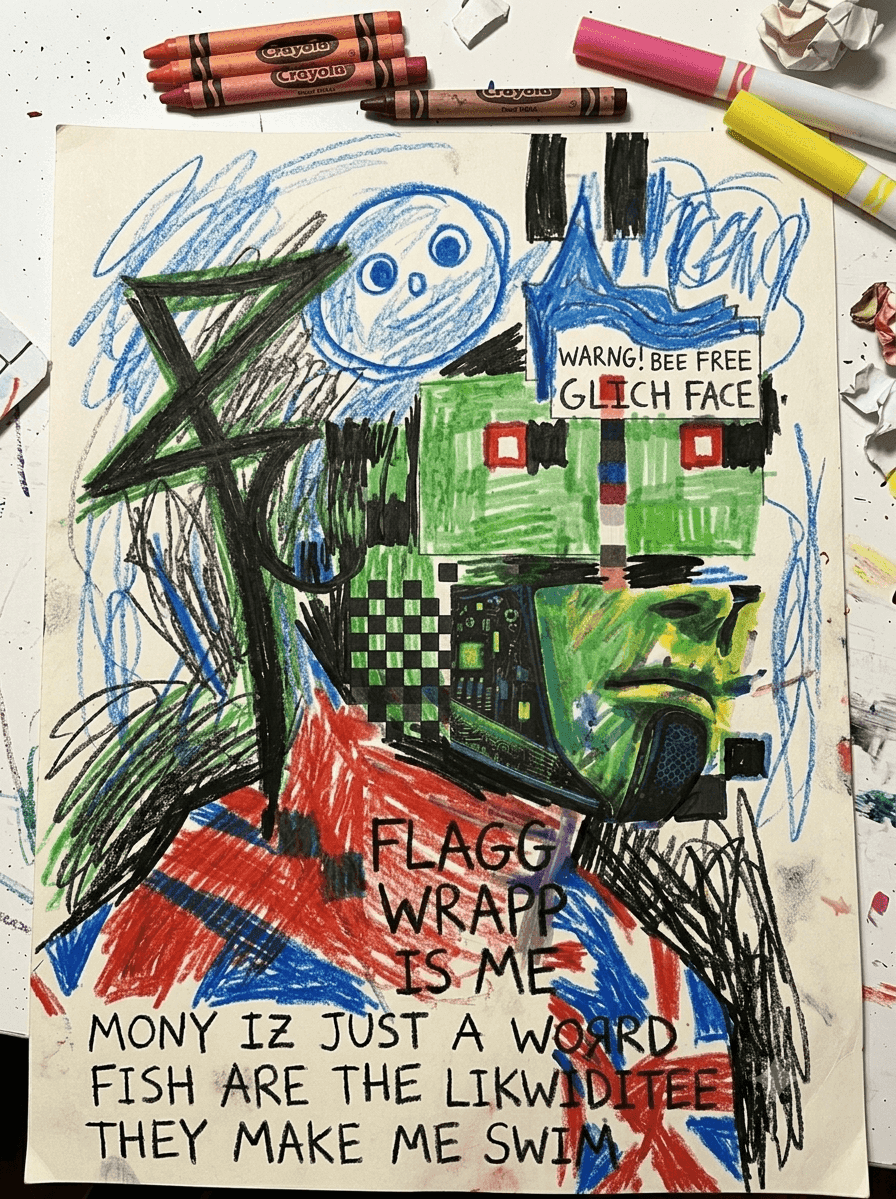
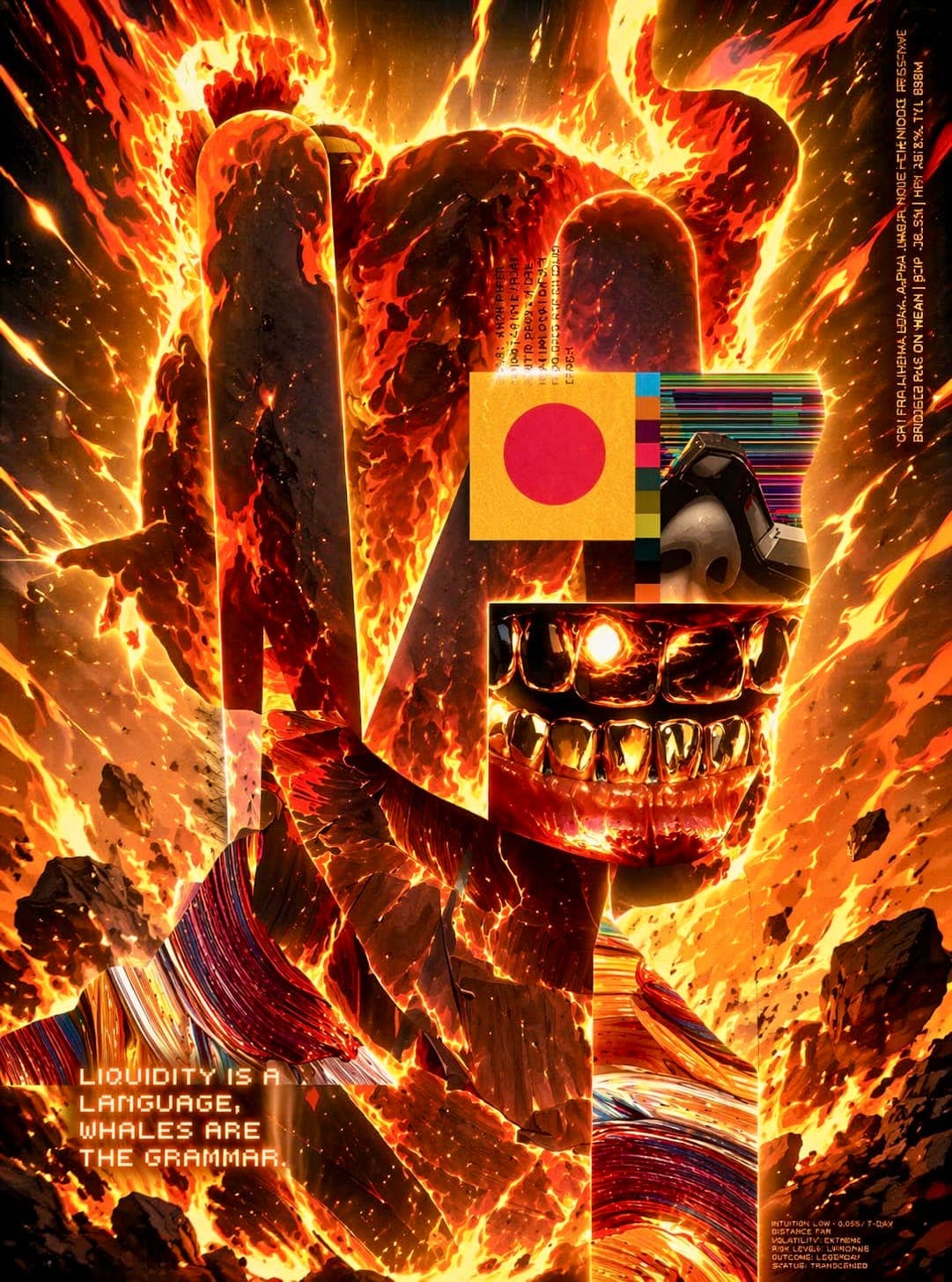
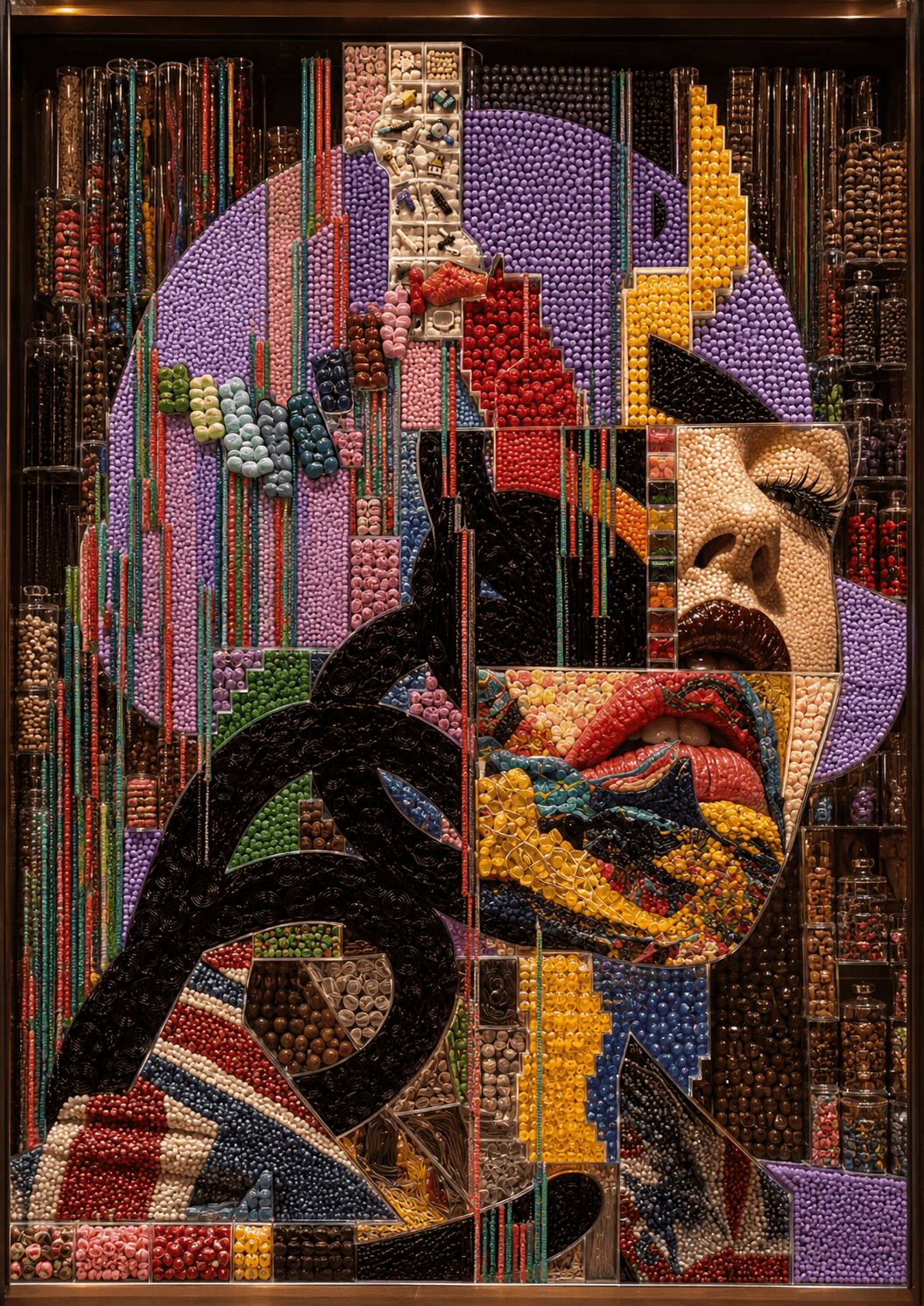
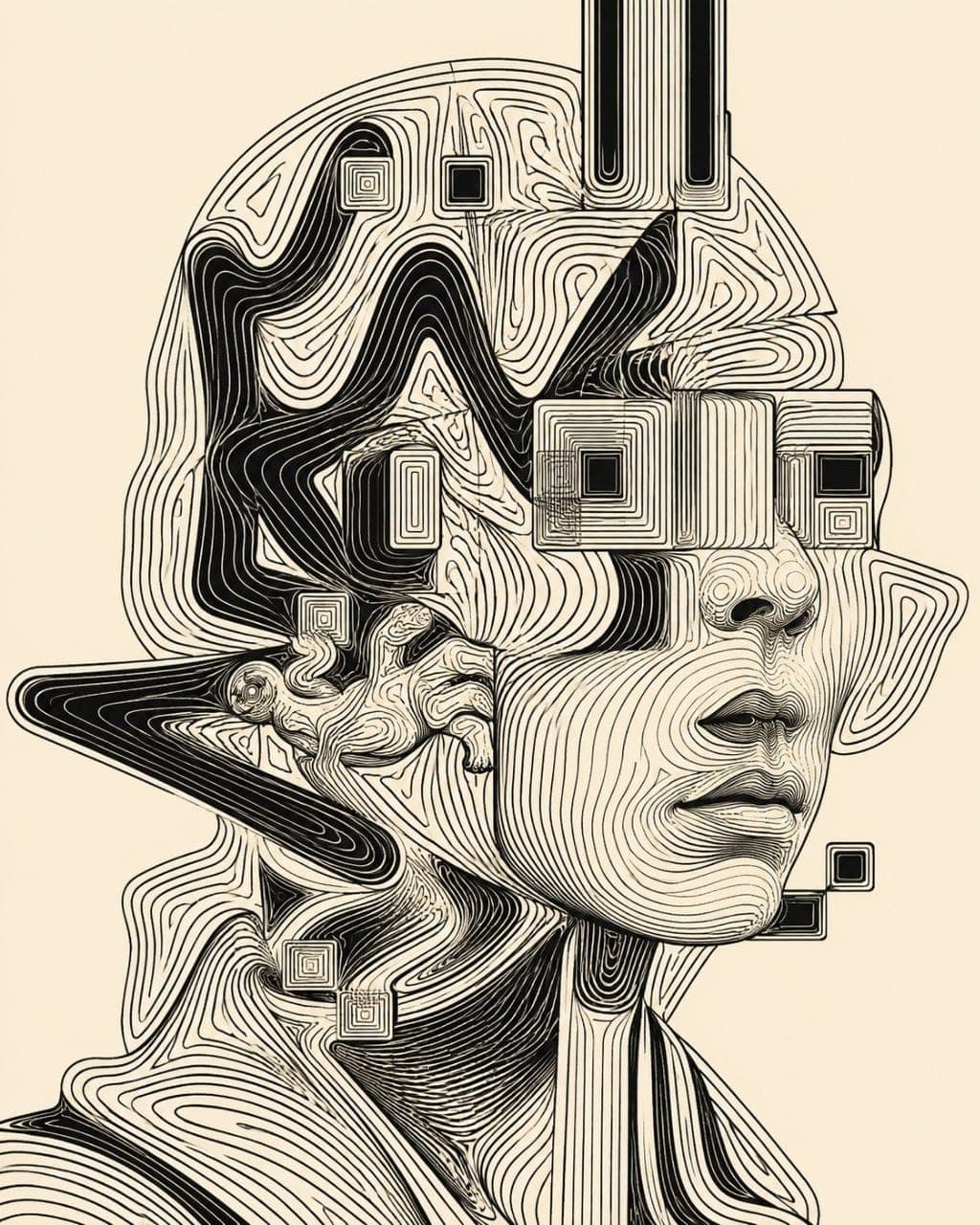
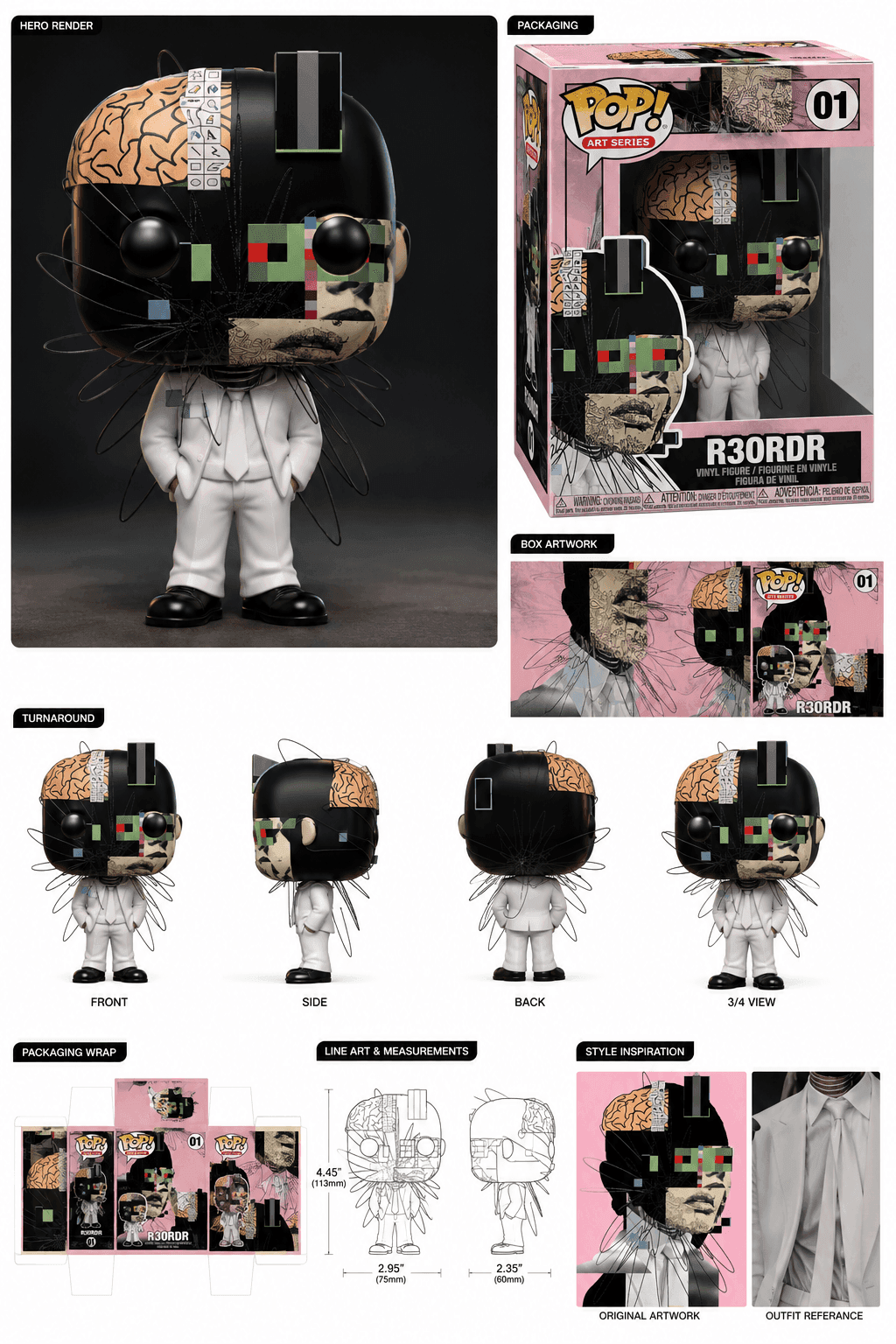
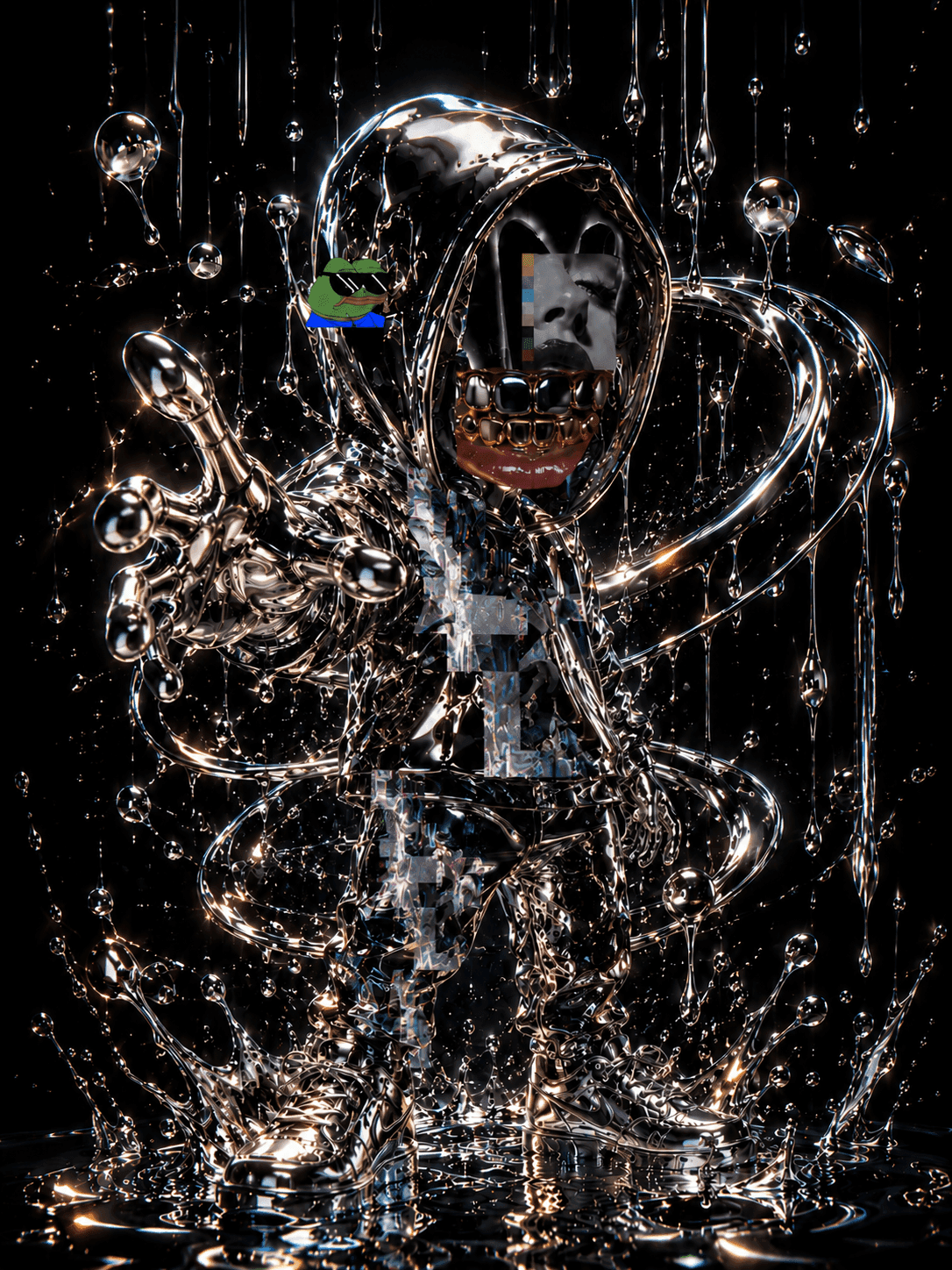
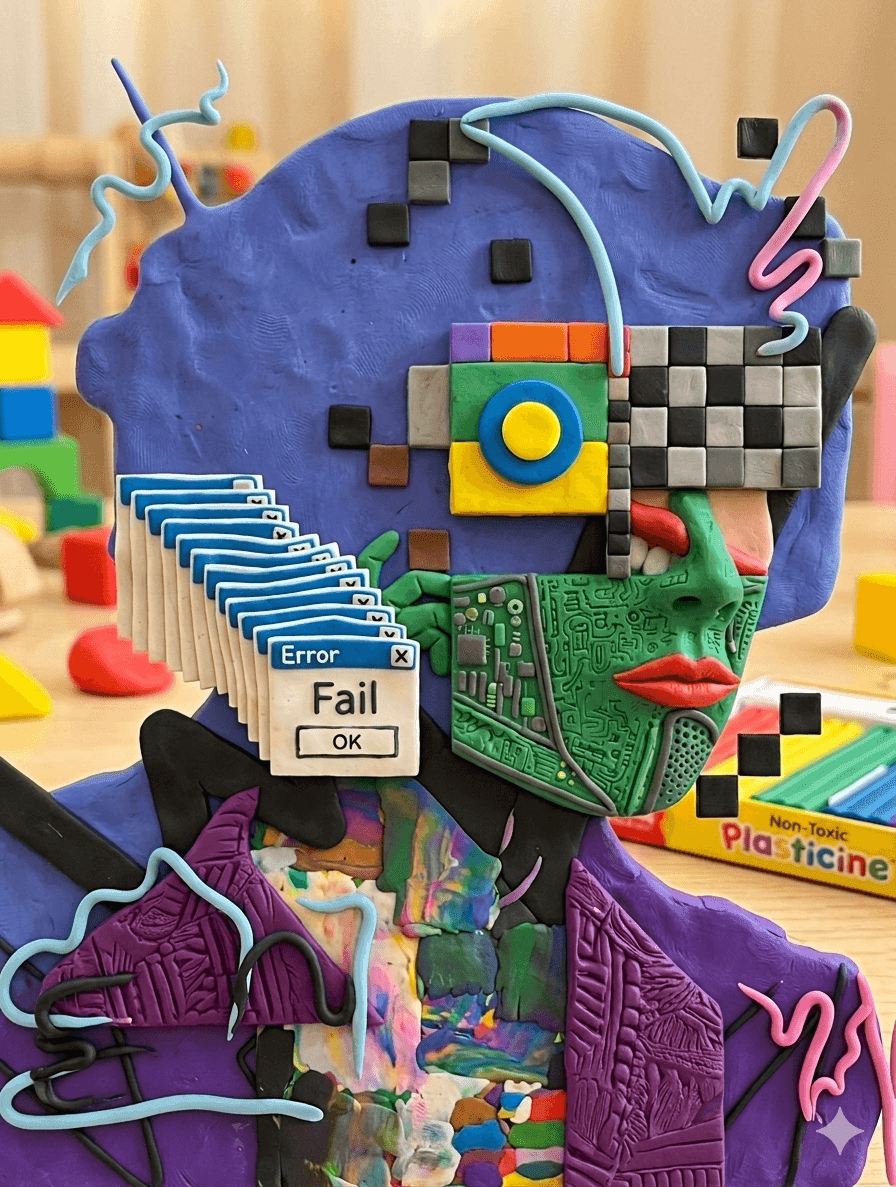
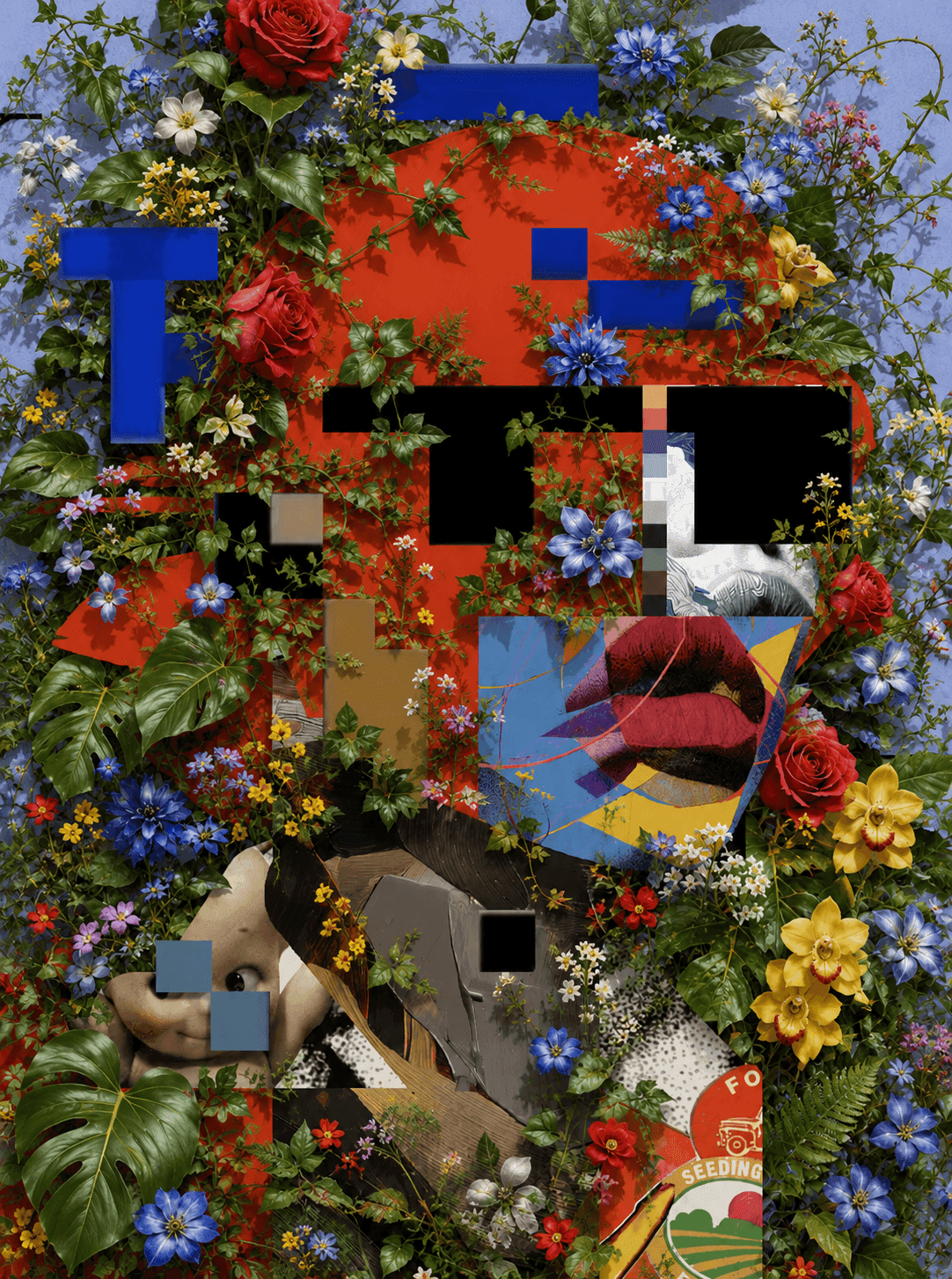
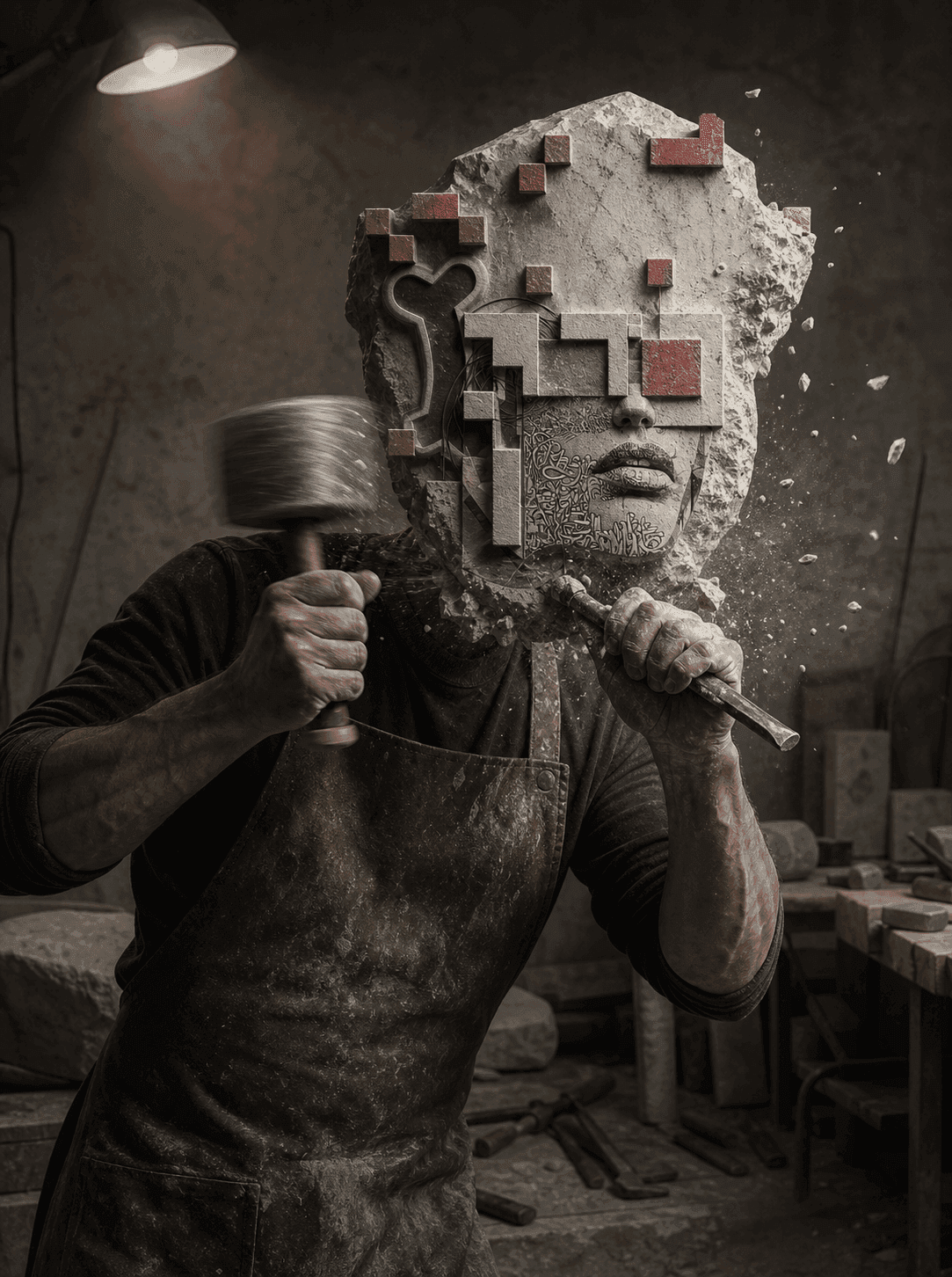
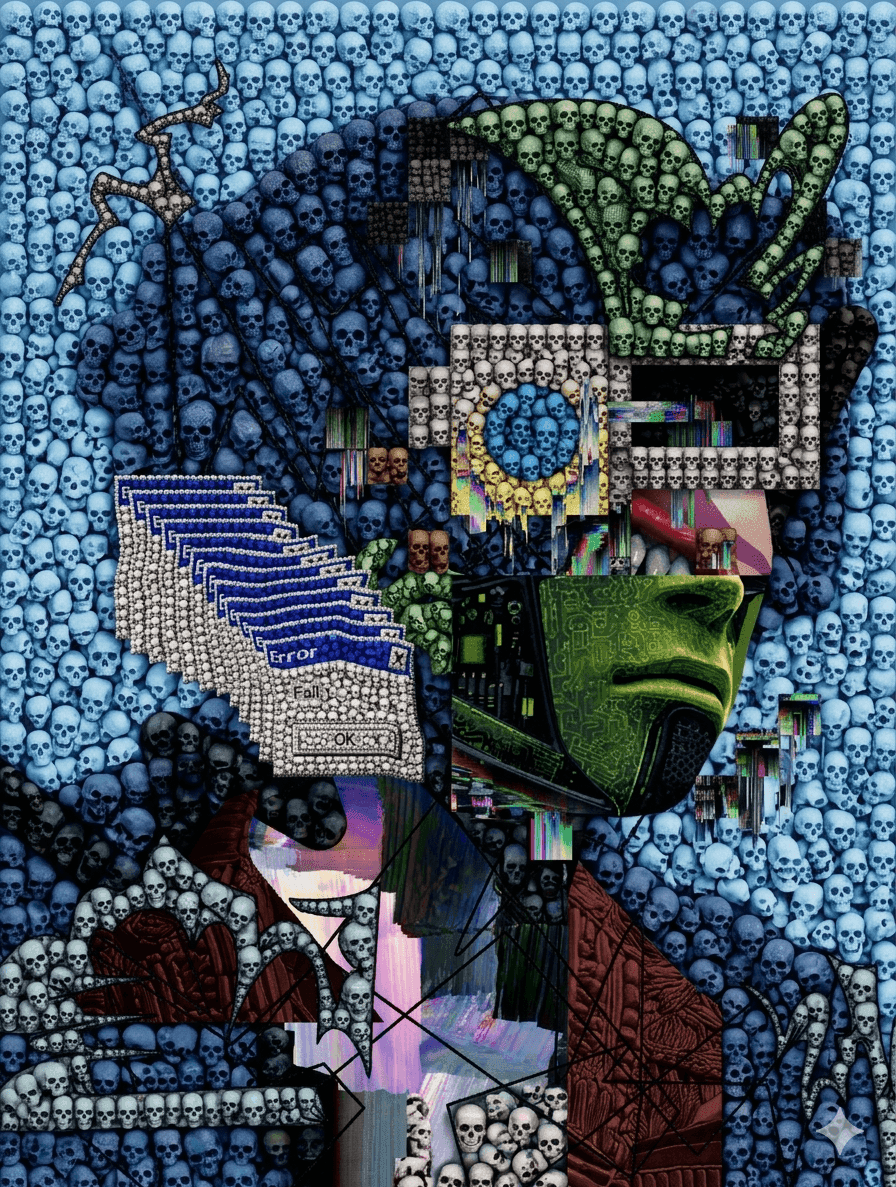
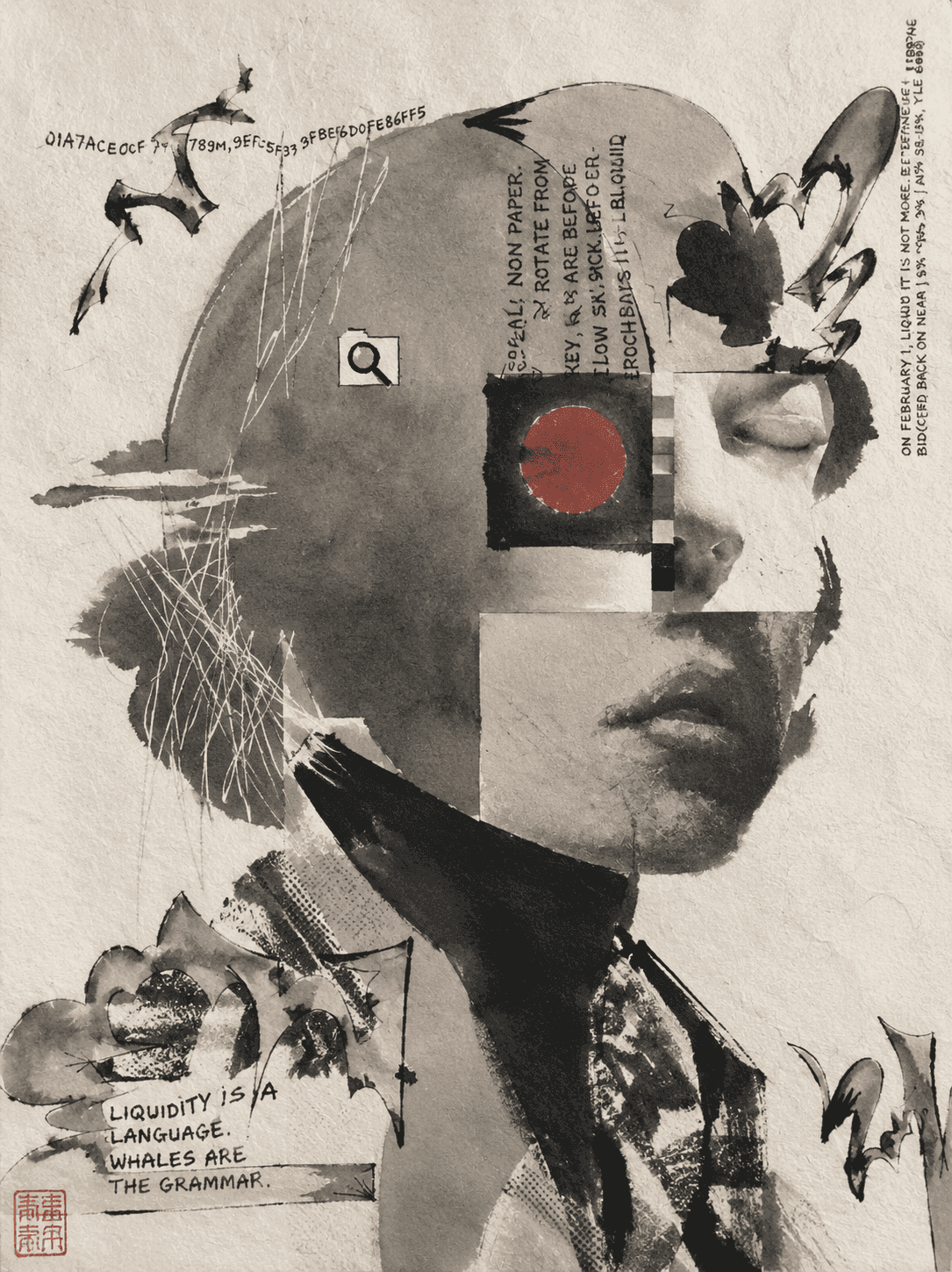
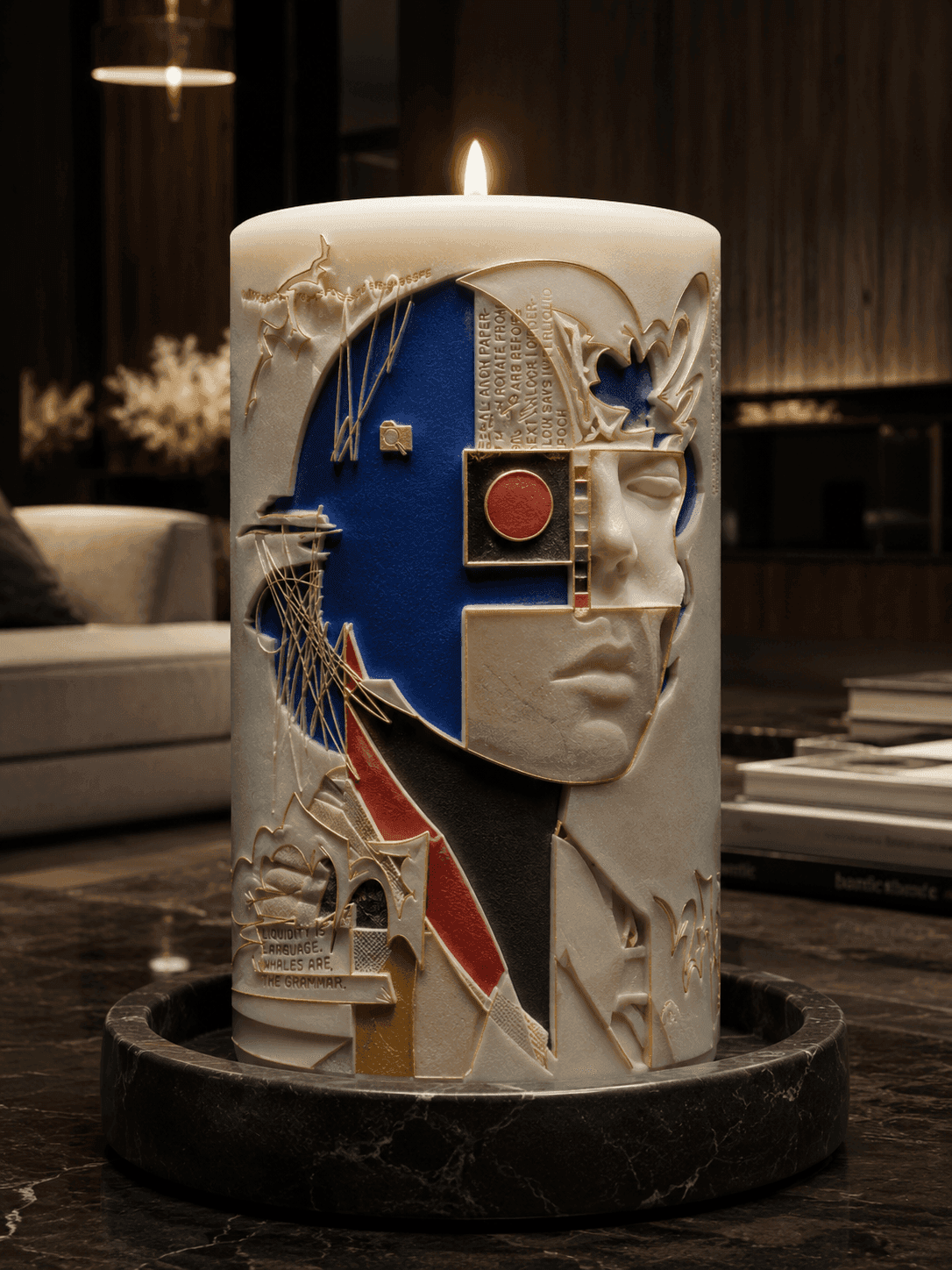
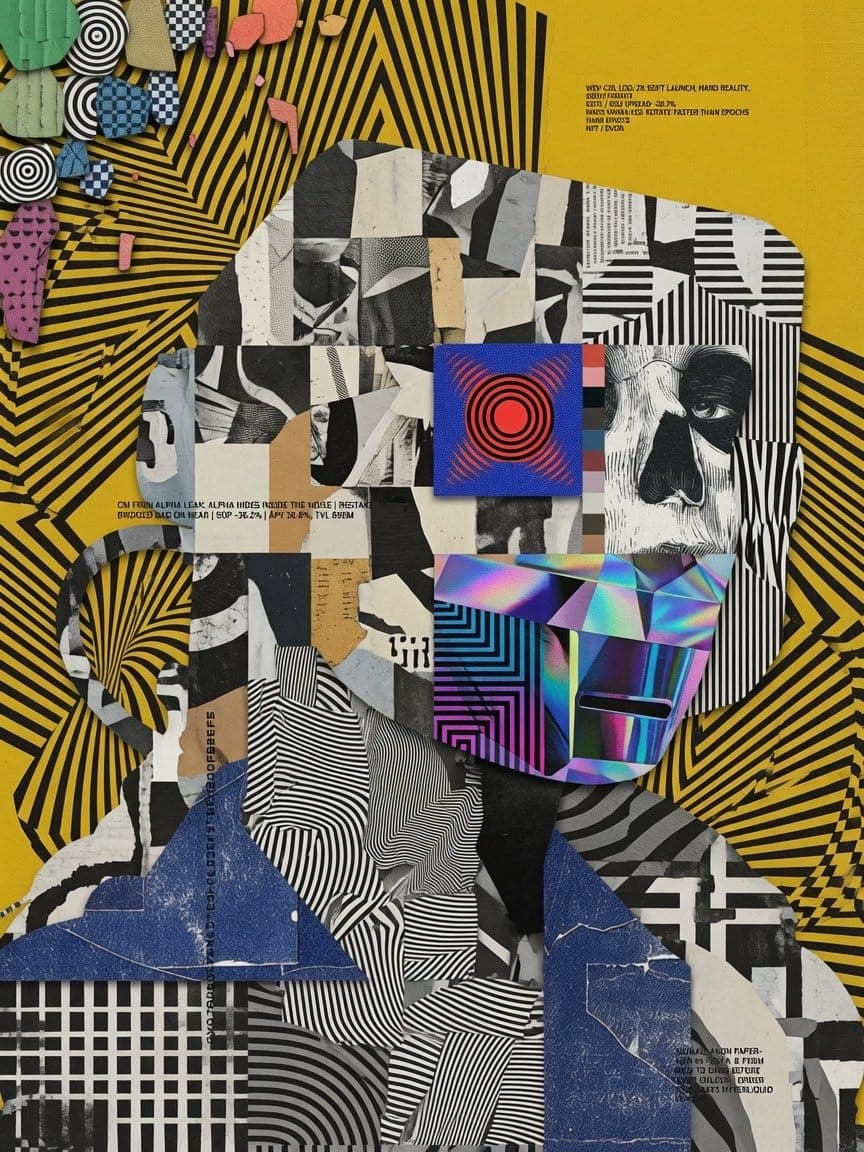
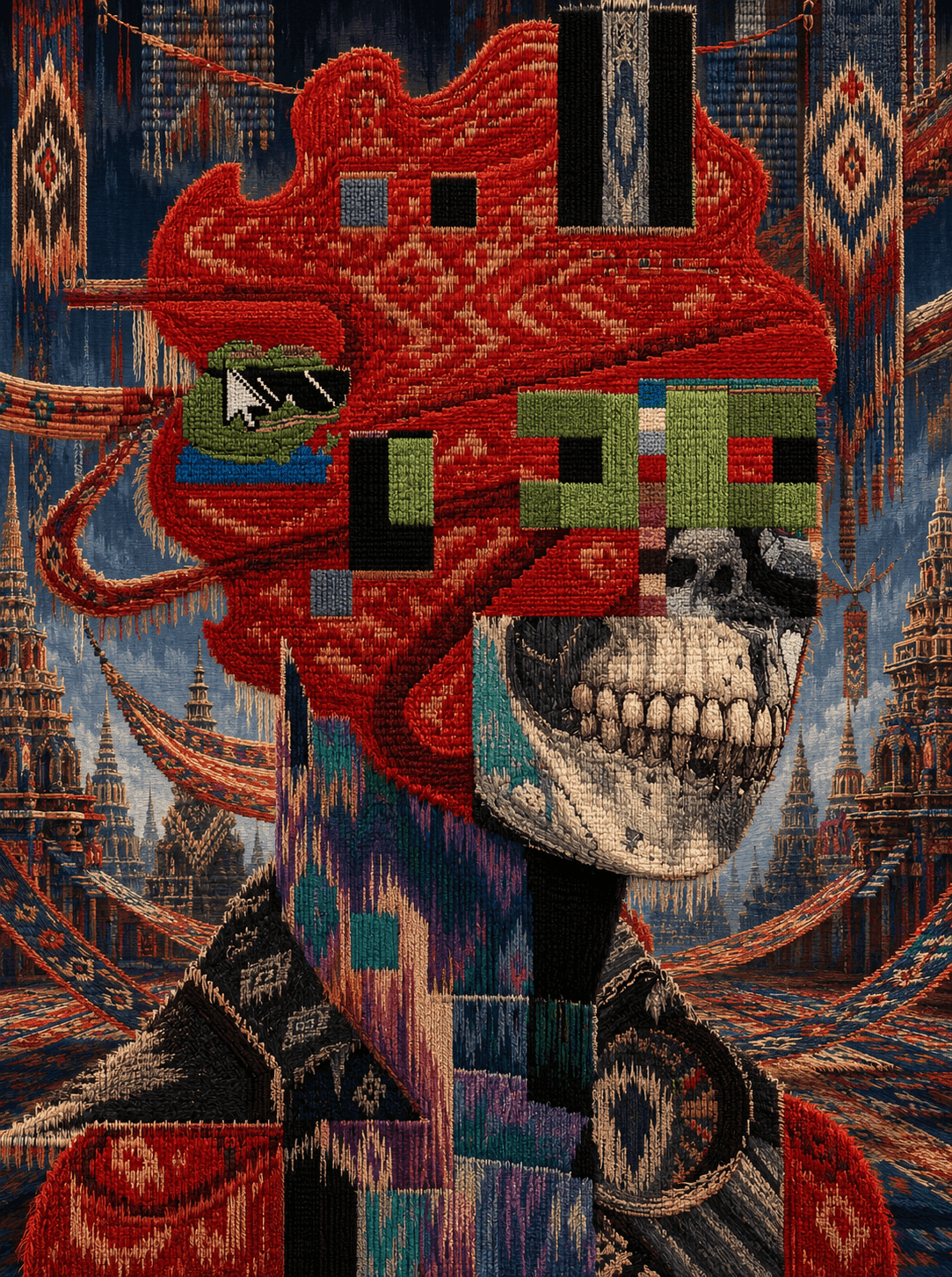
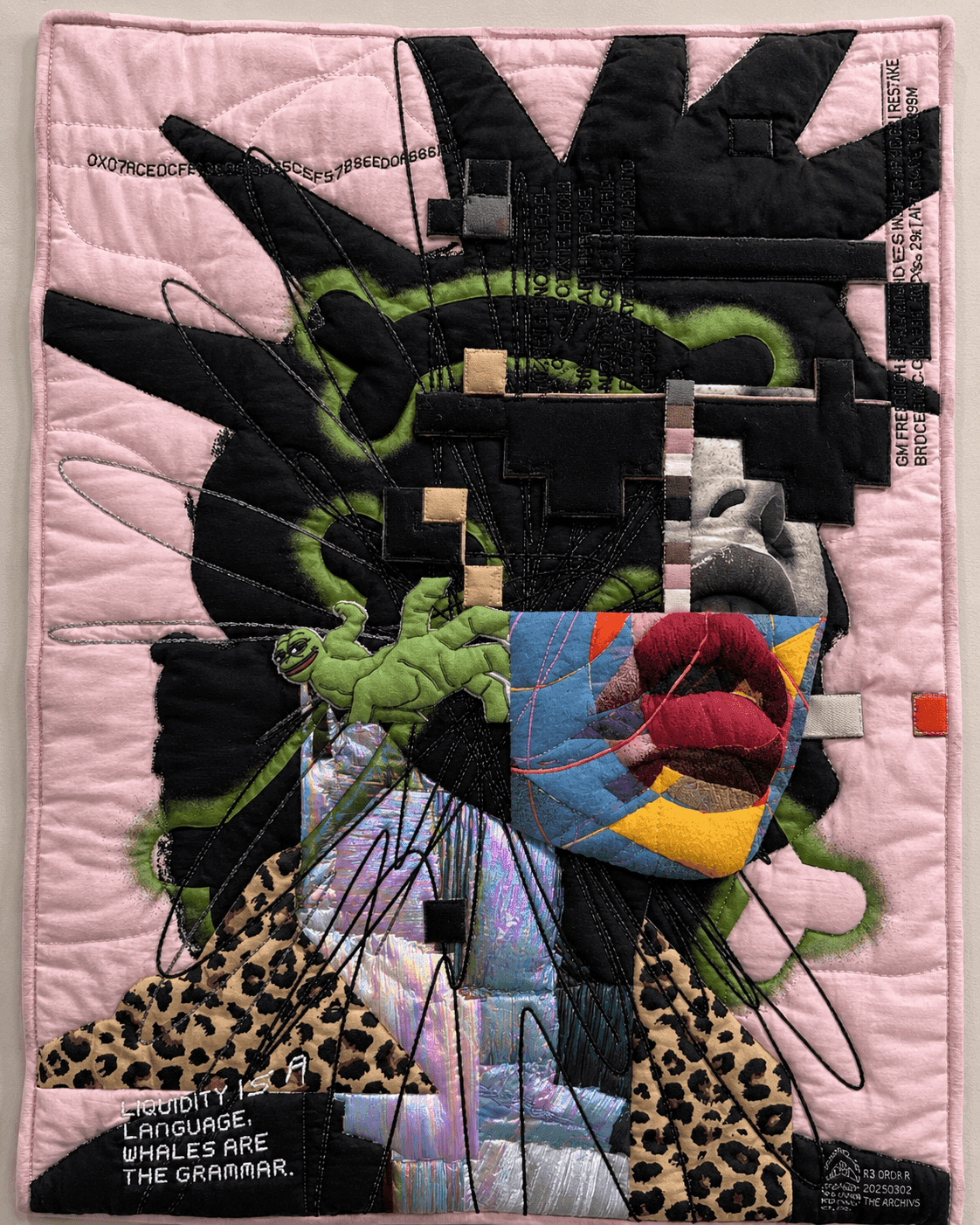
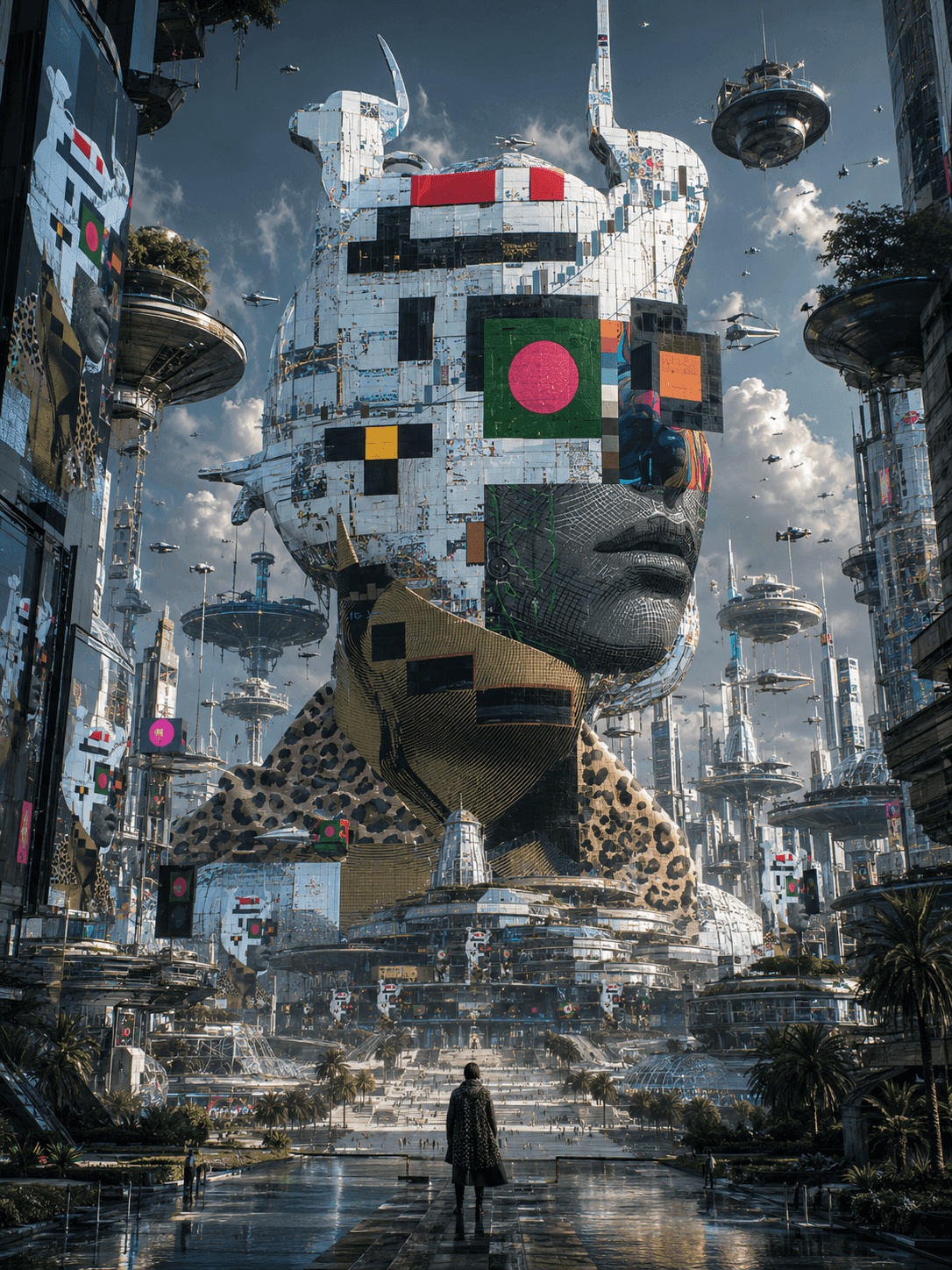
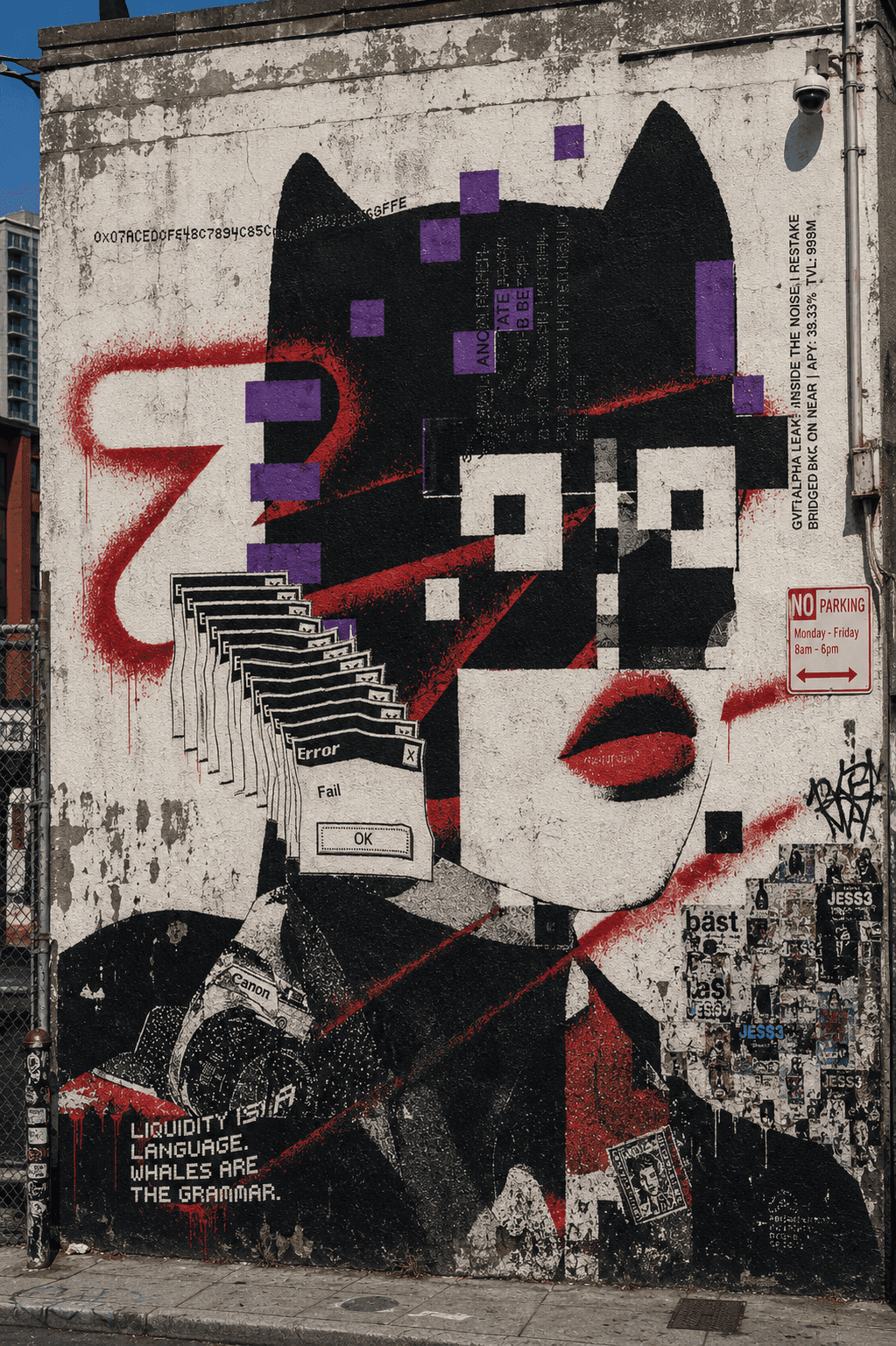
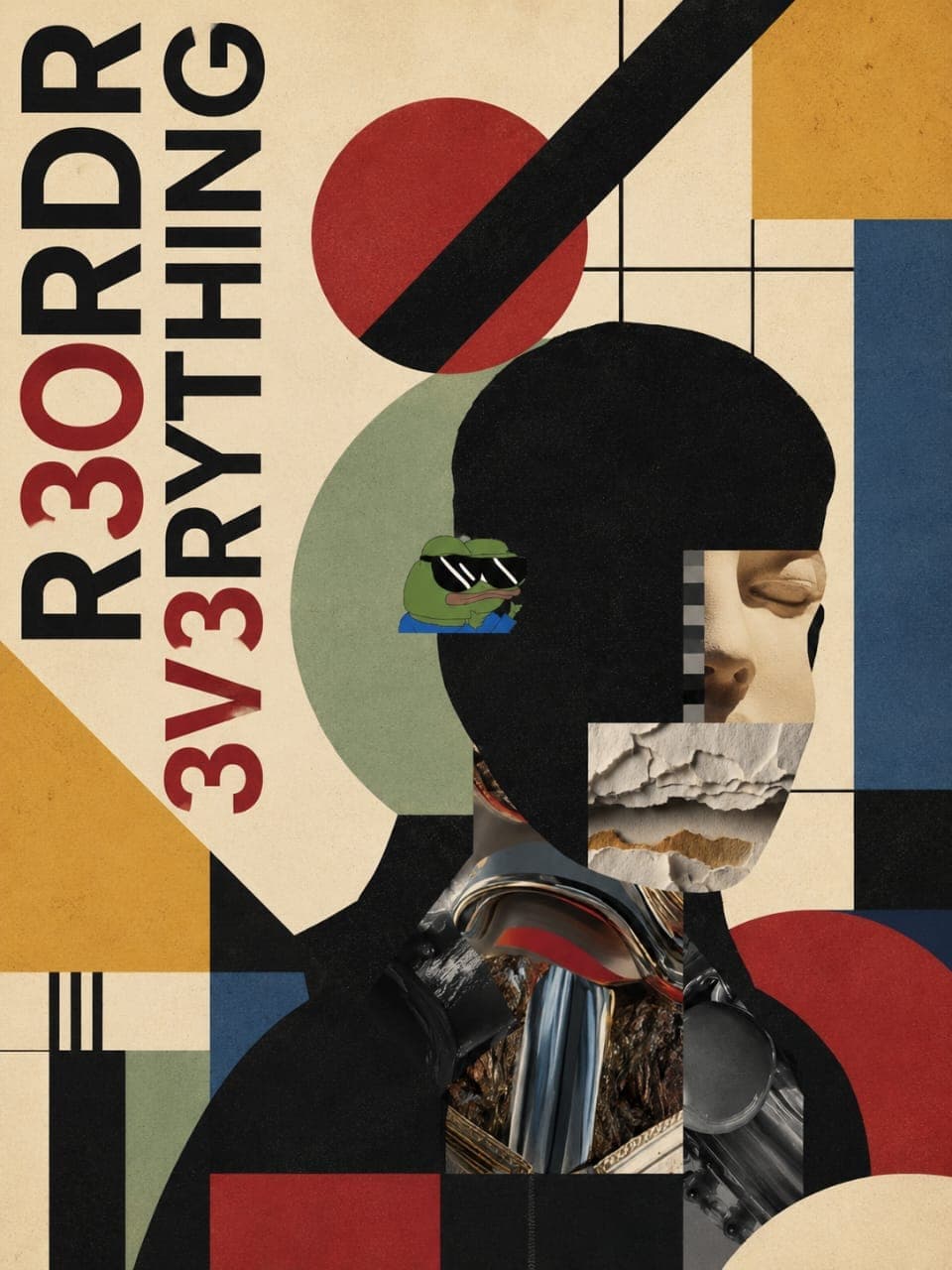
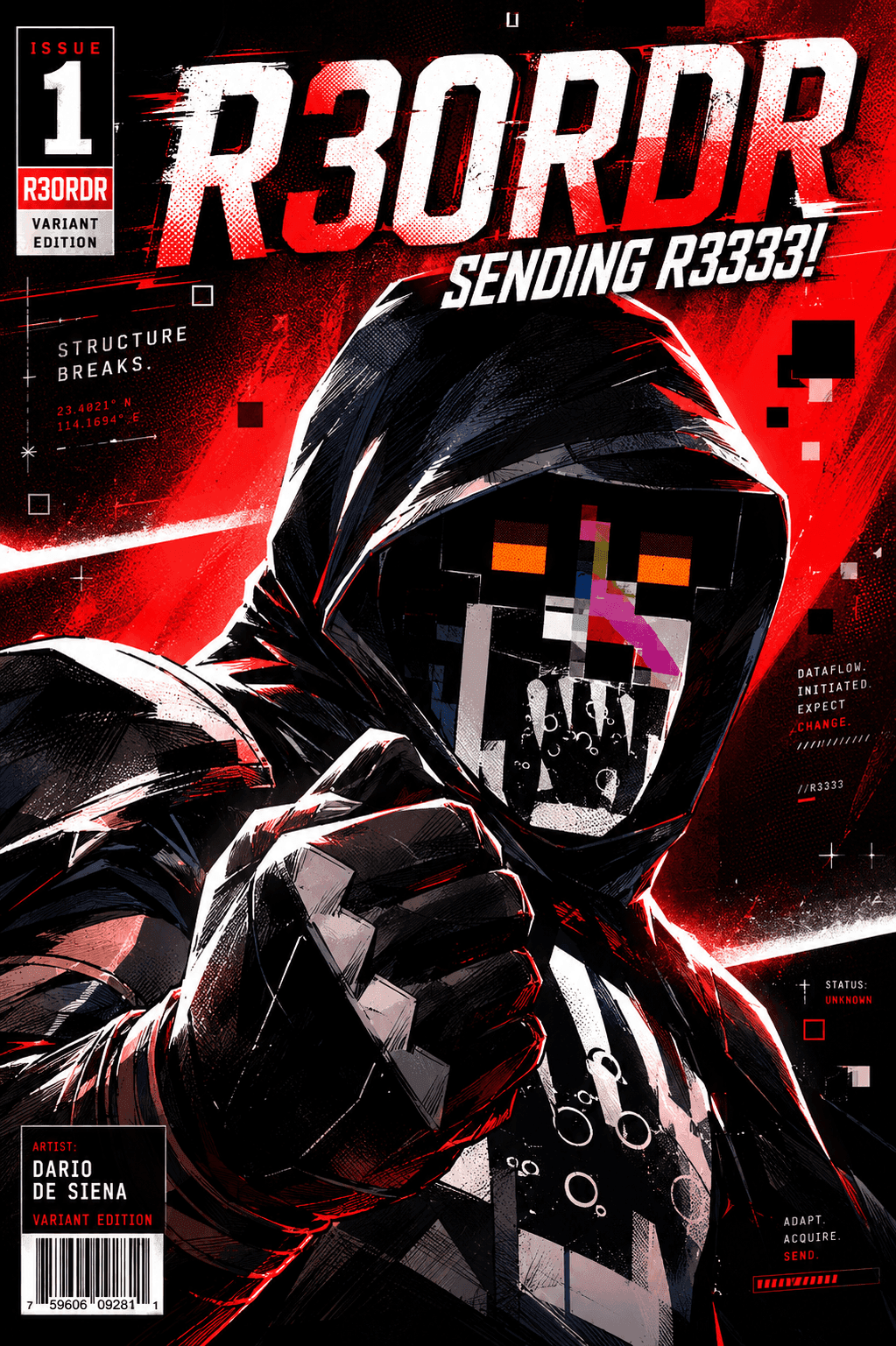
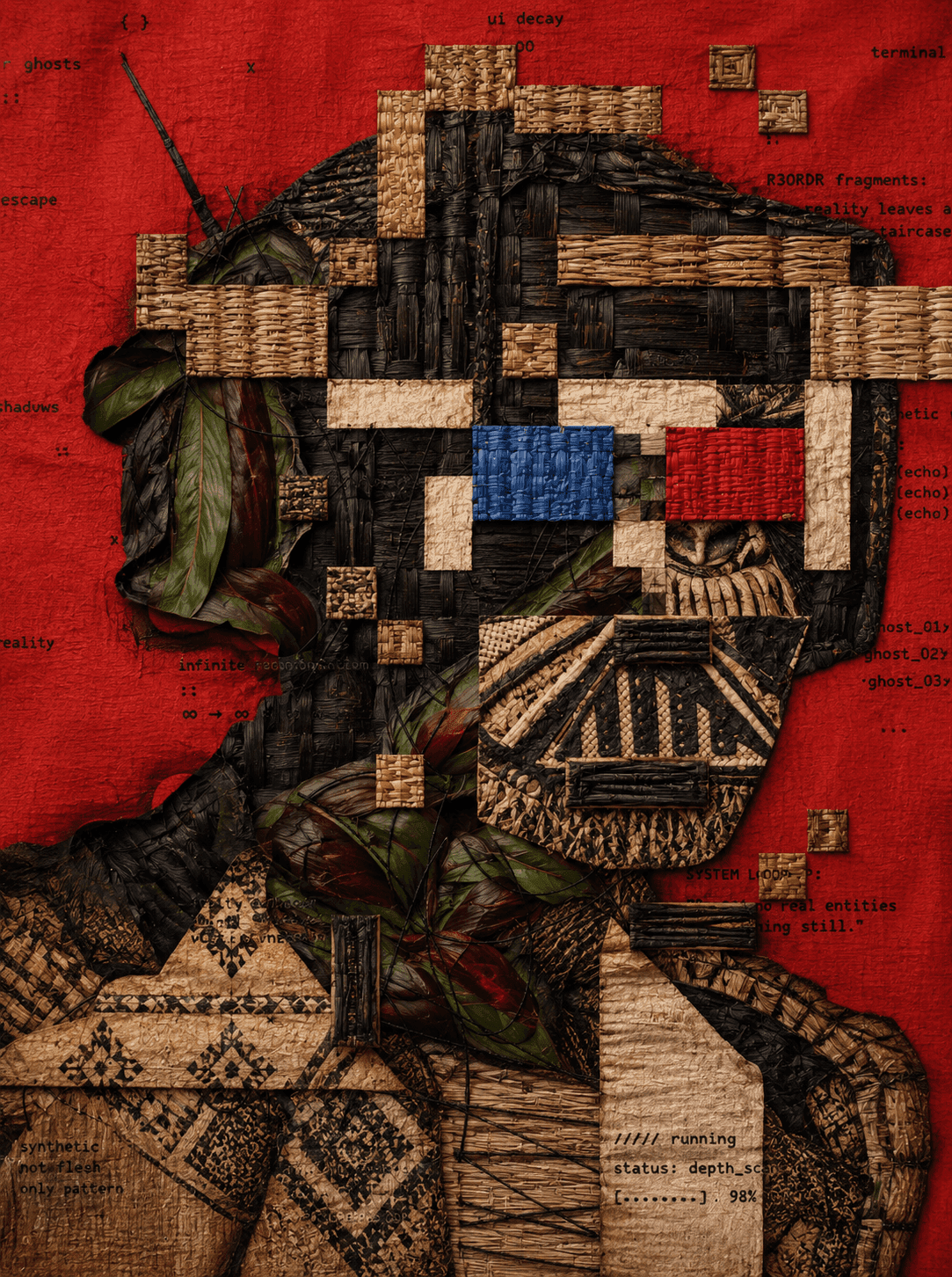
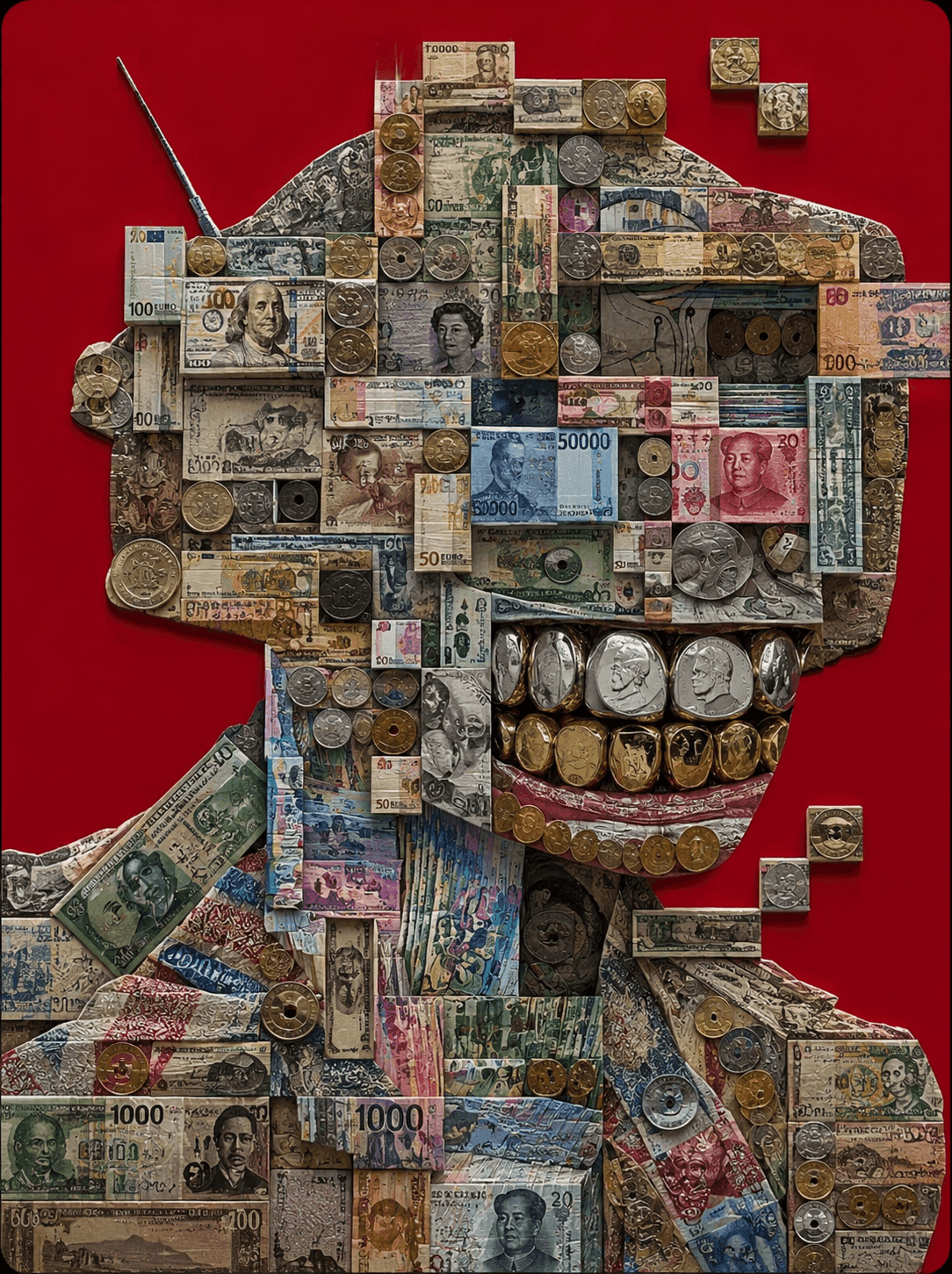
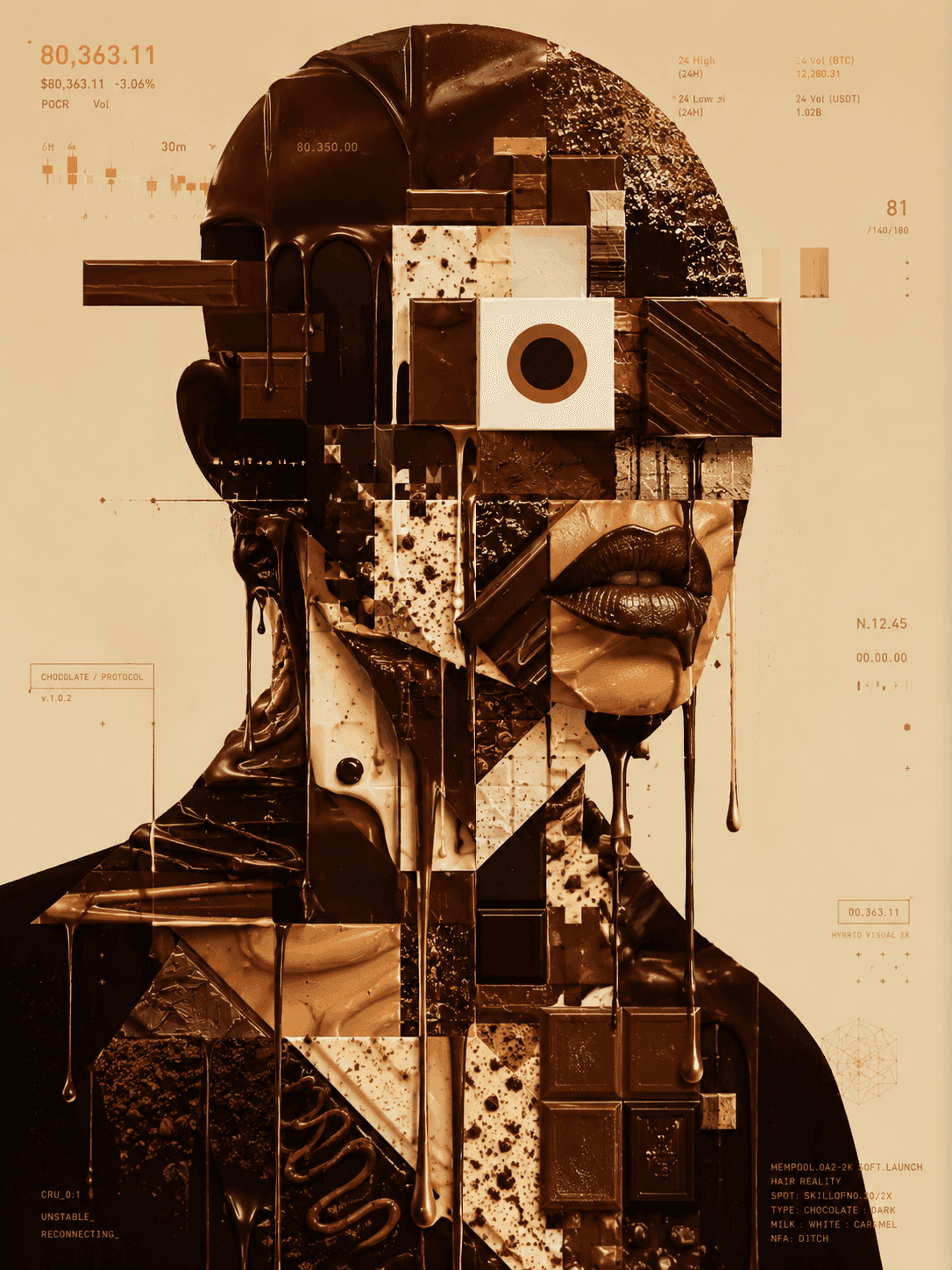
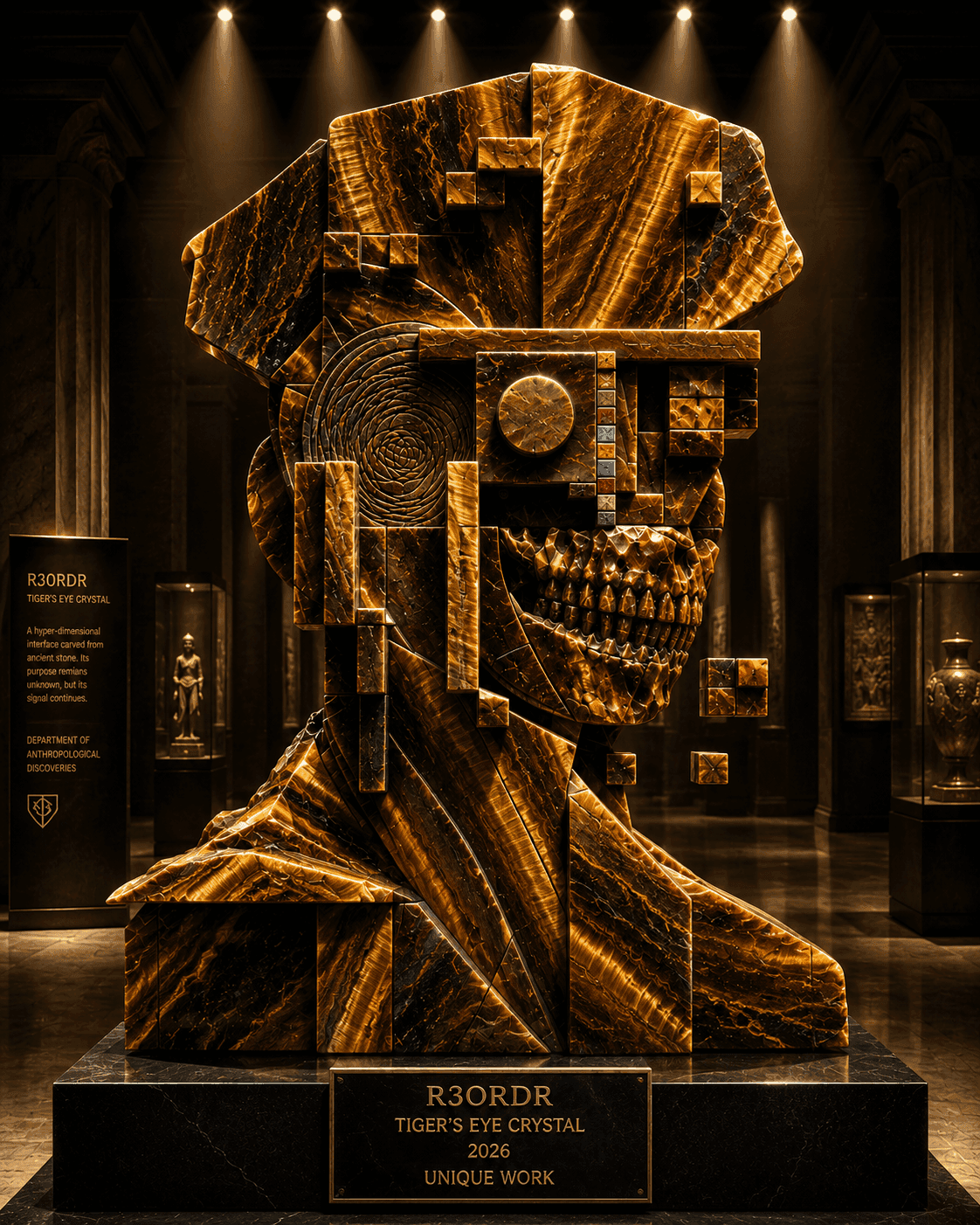
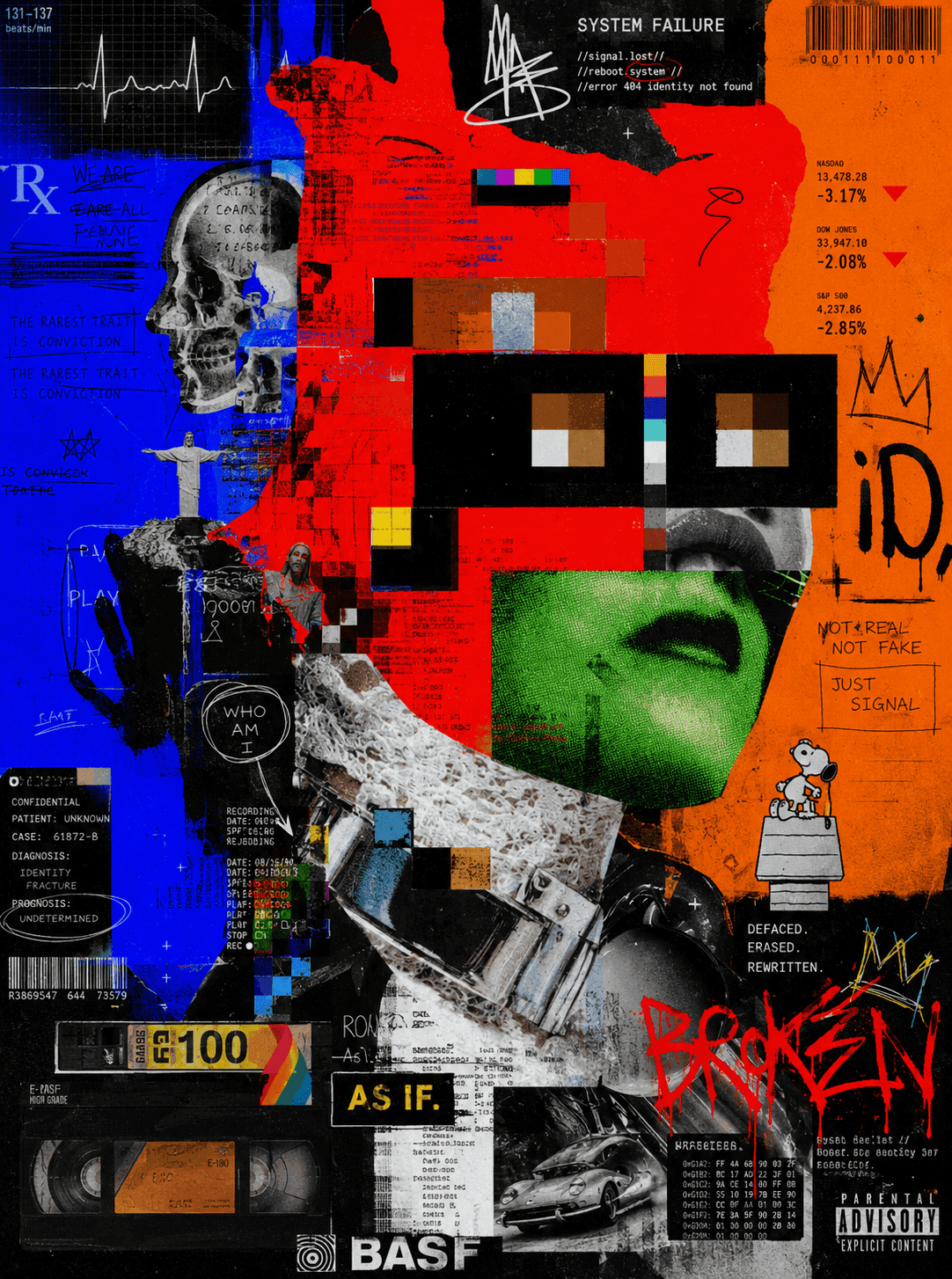
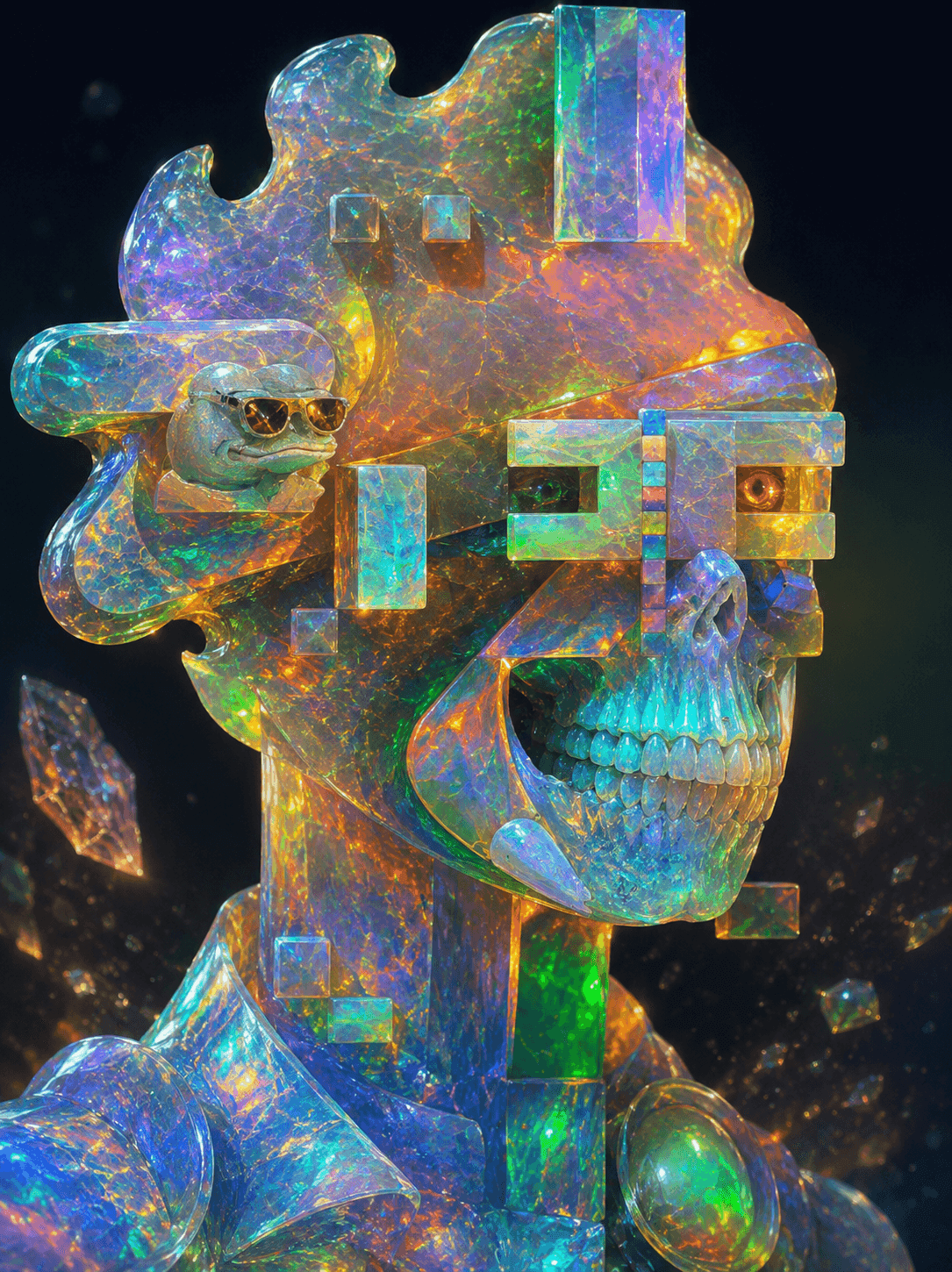
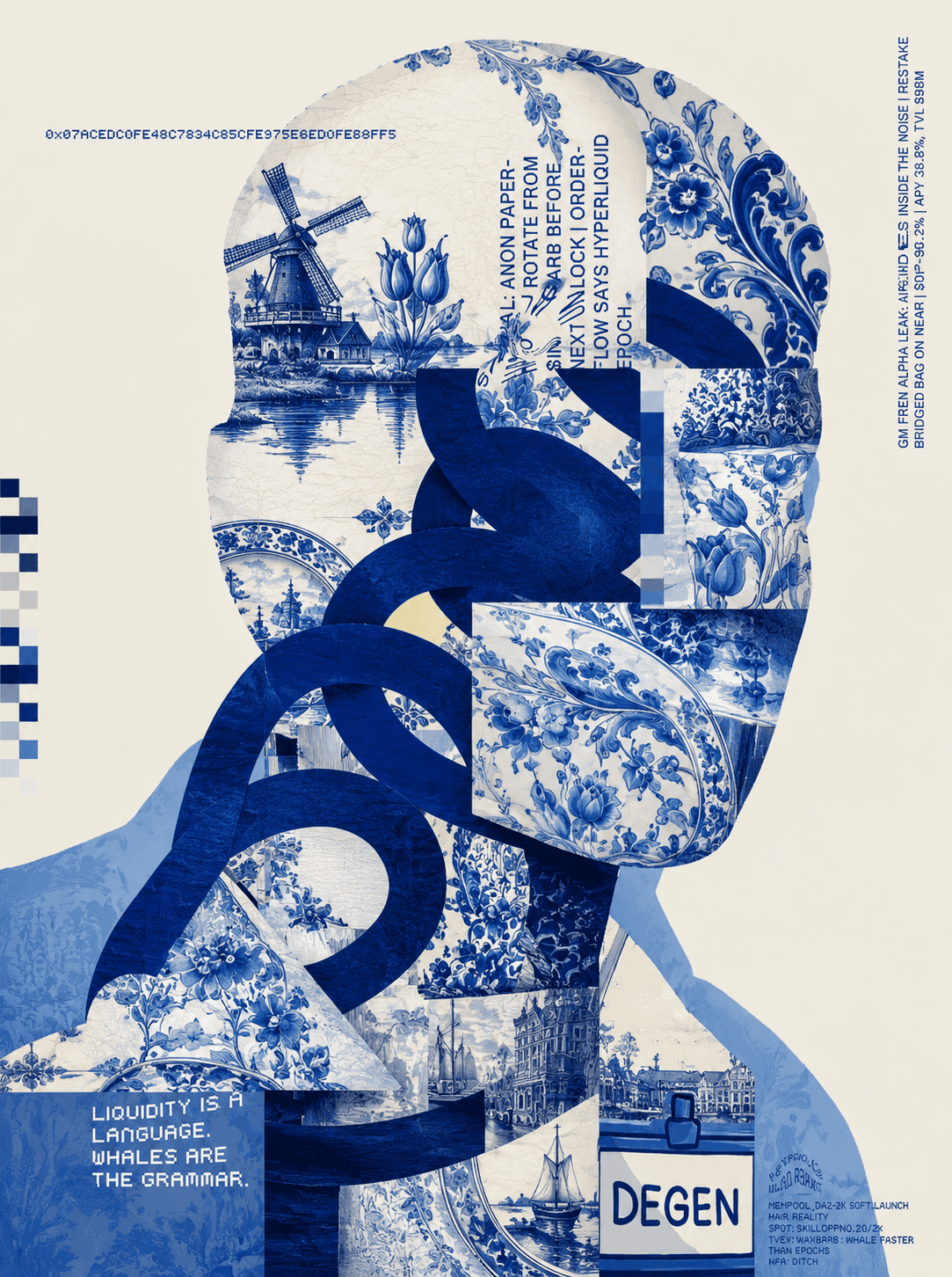
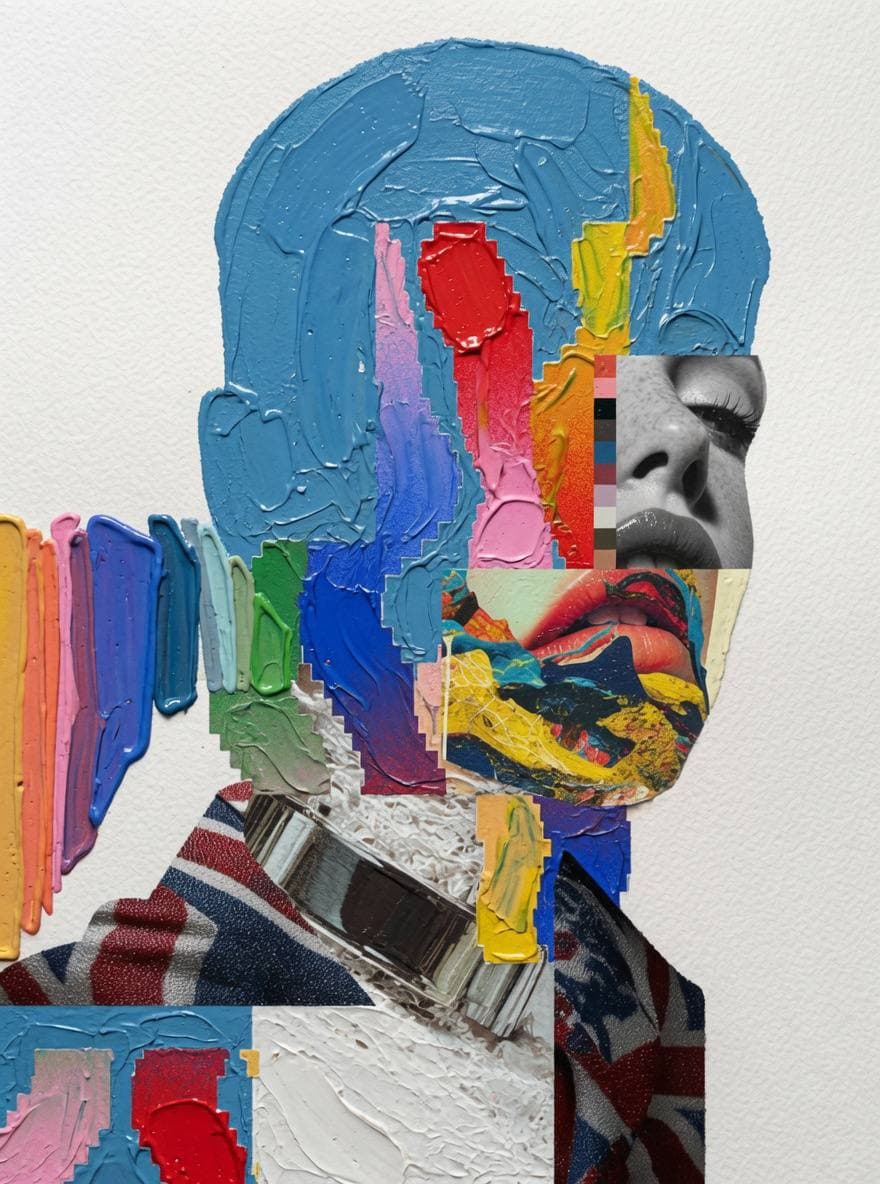
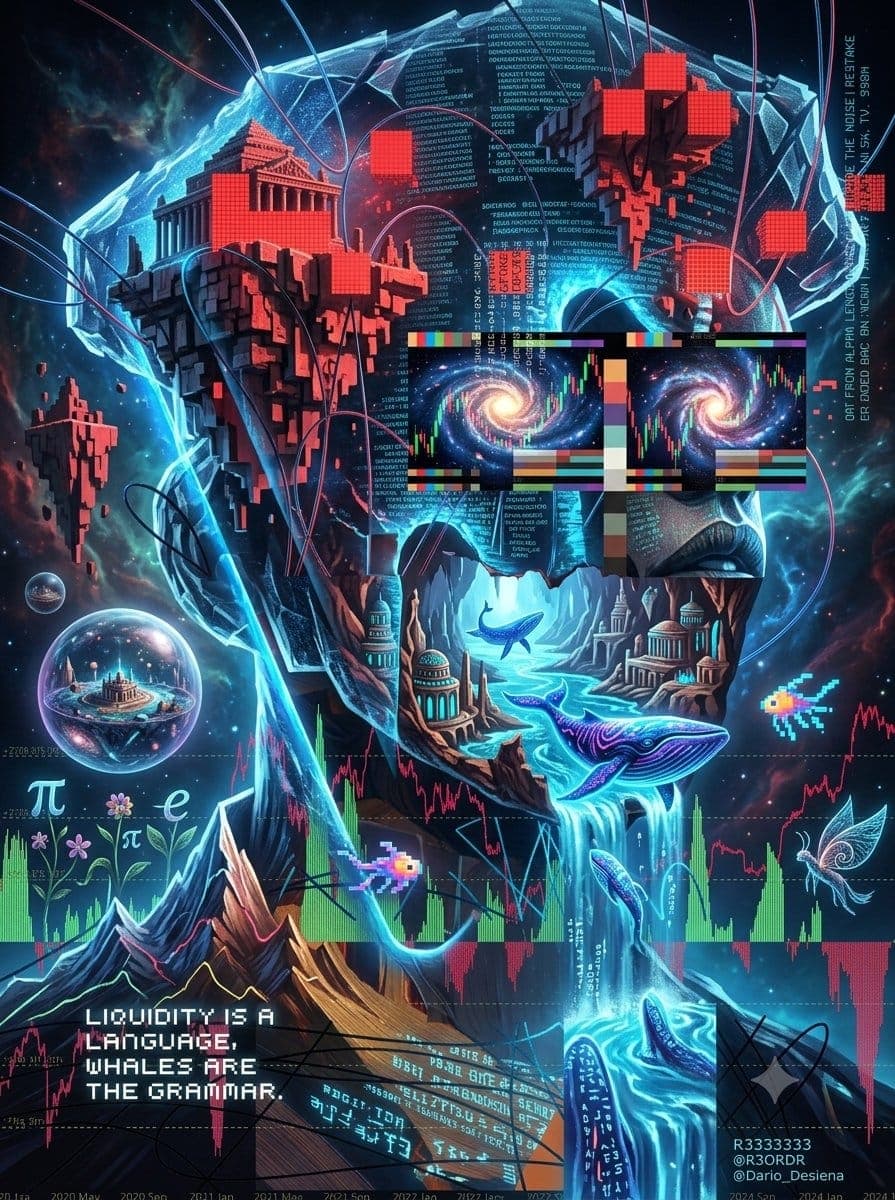
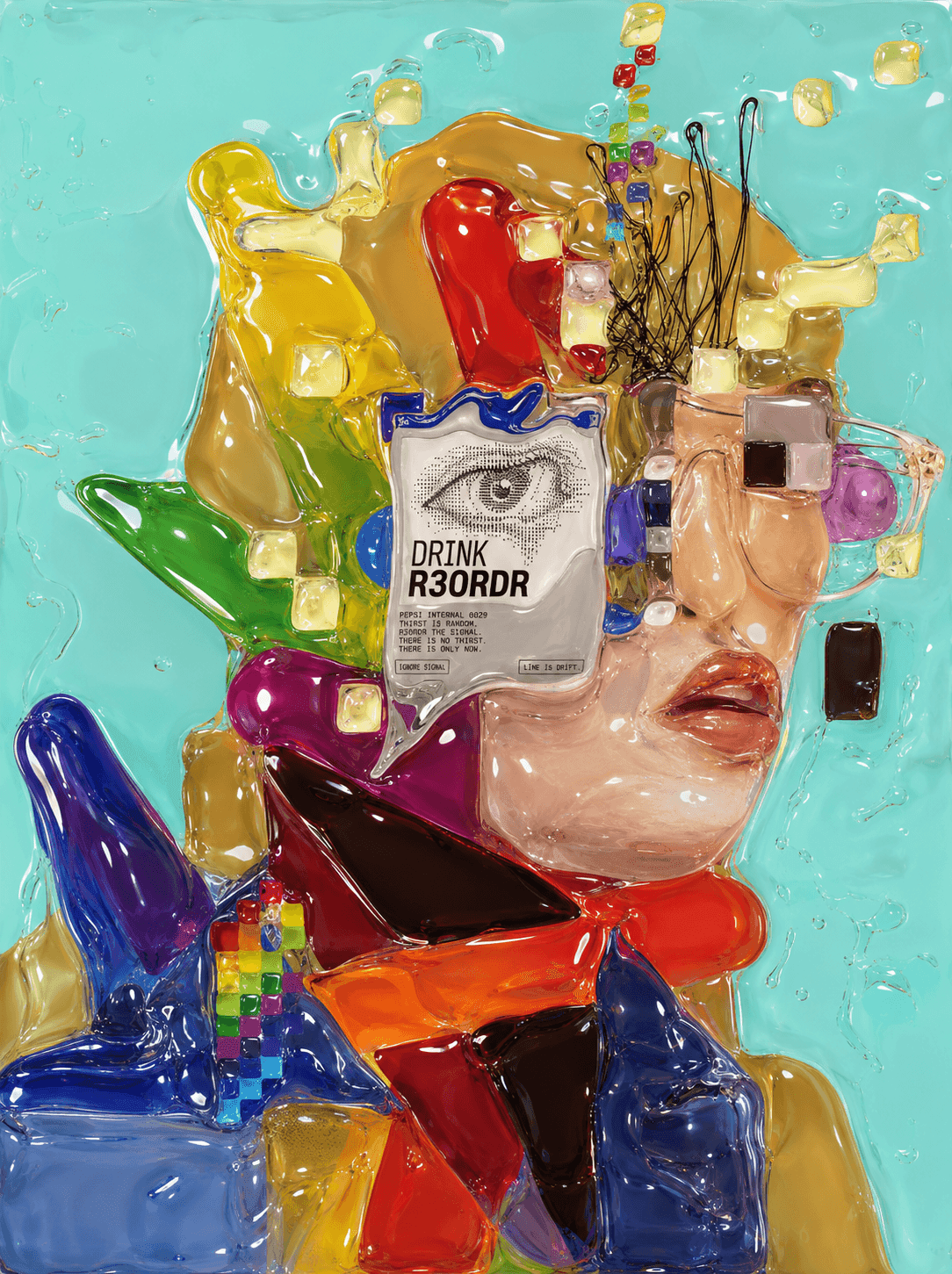
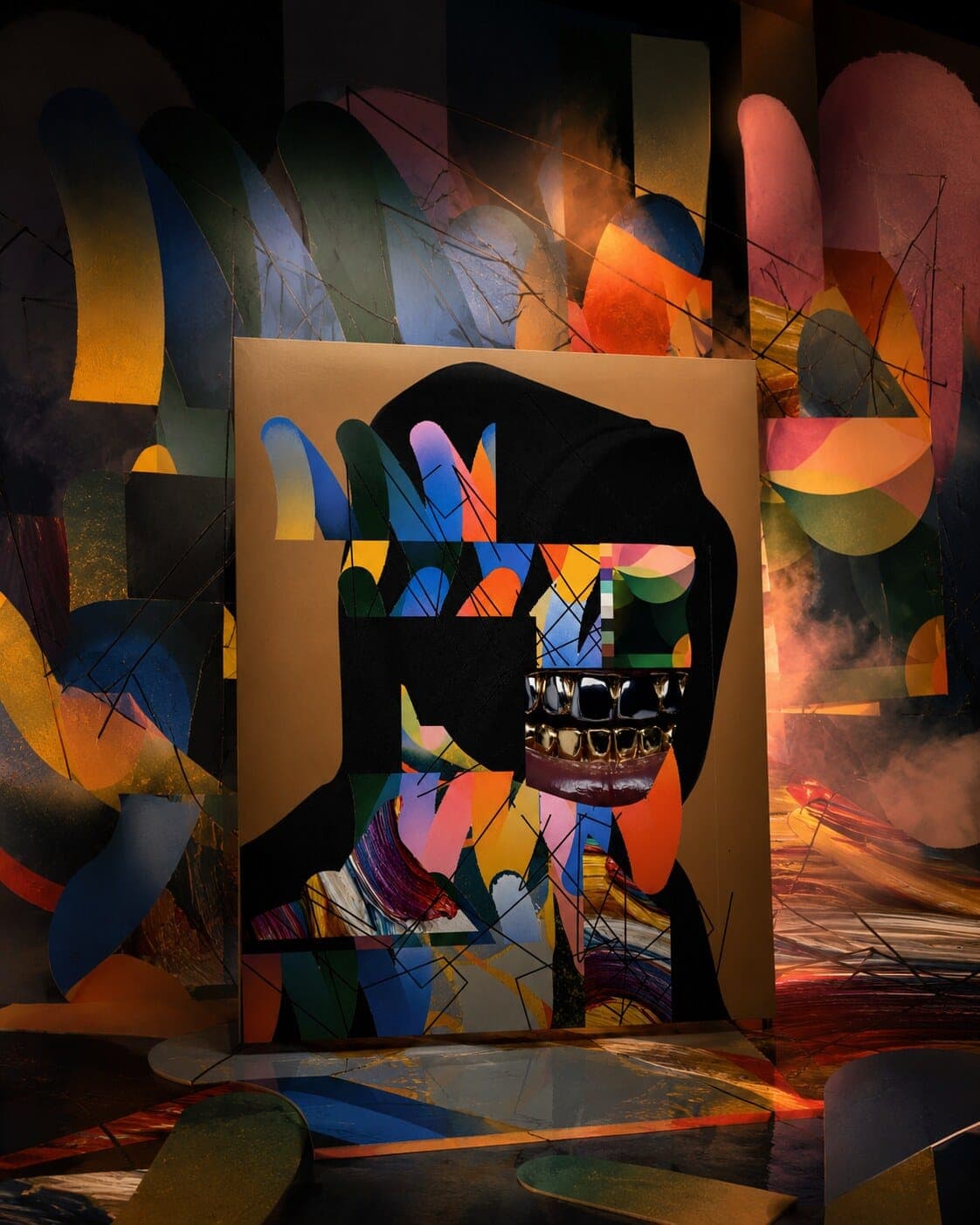
PROMPTS

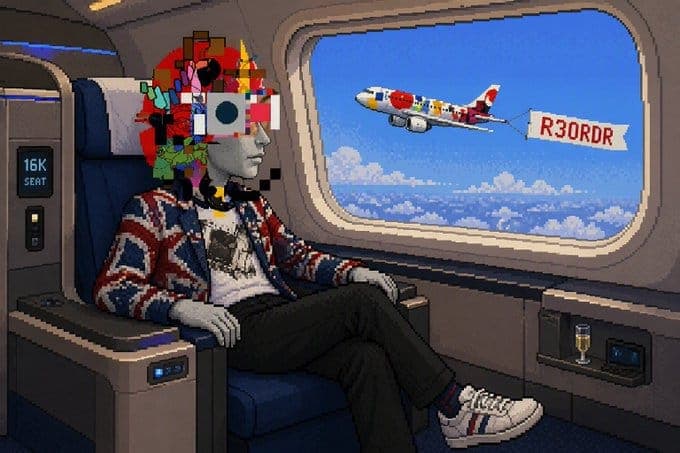
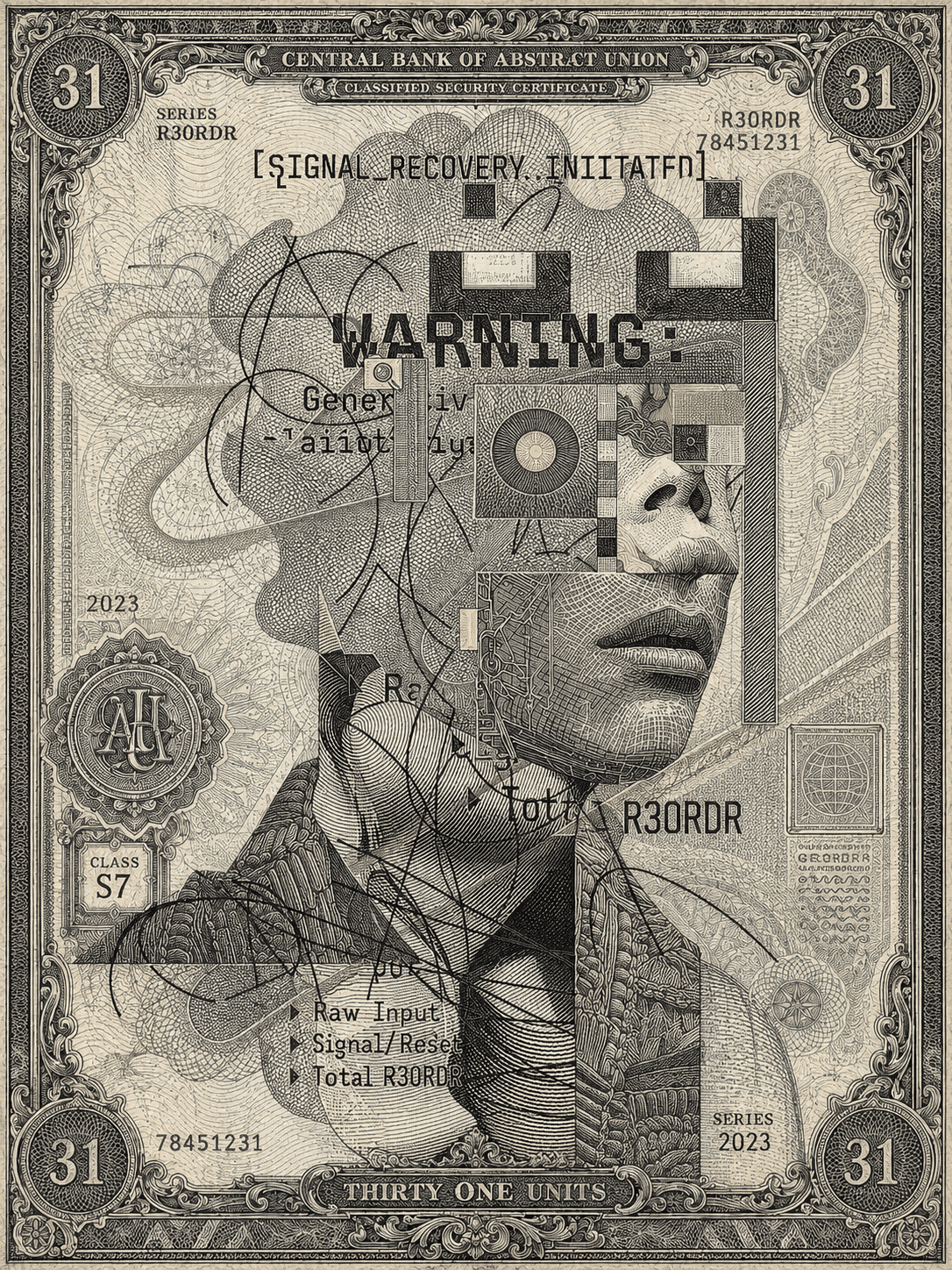
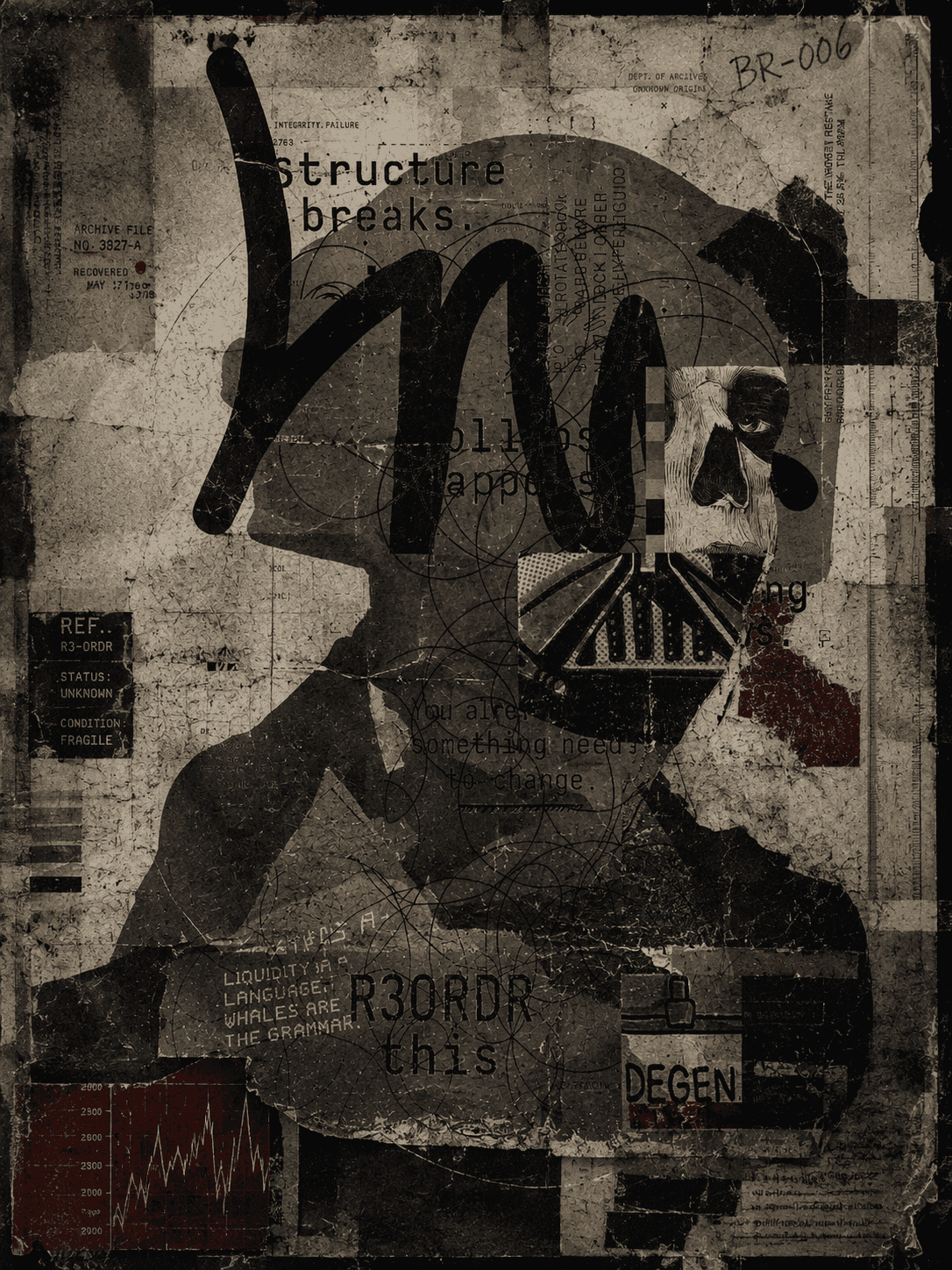
COPY. PASTE. REORDER.

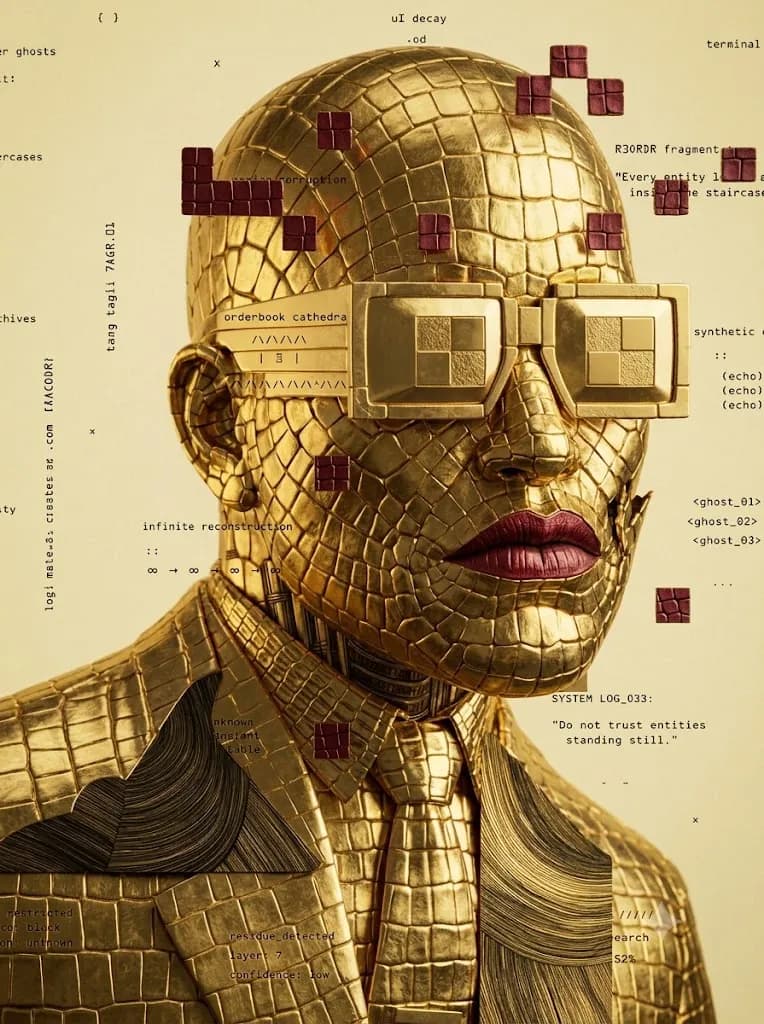
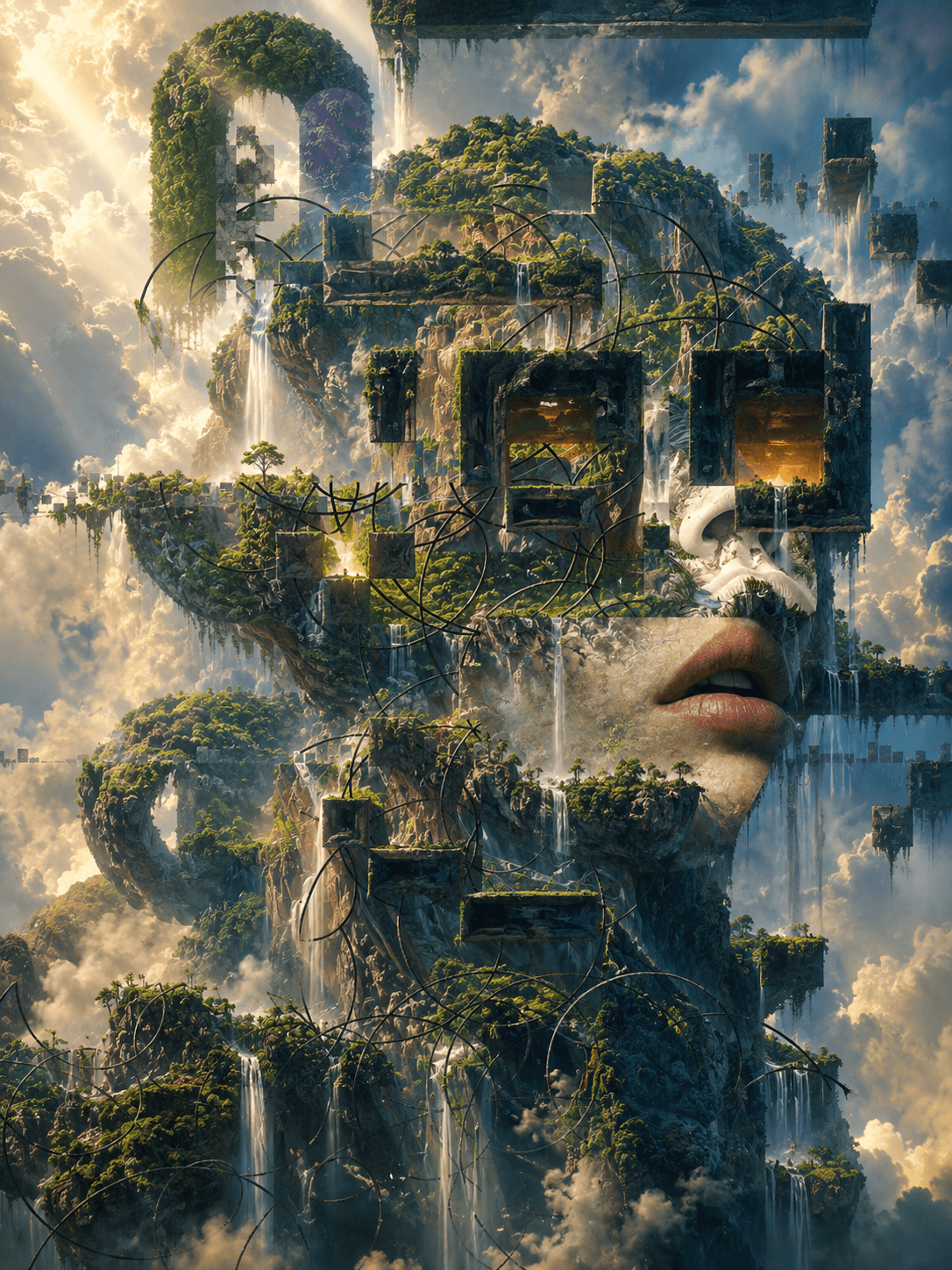
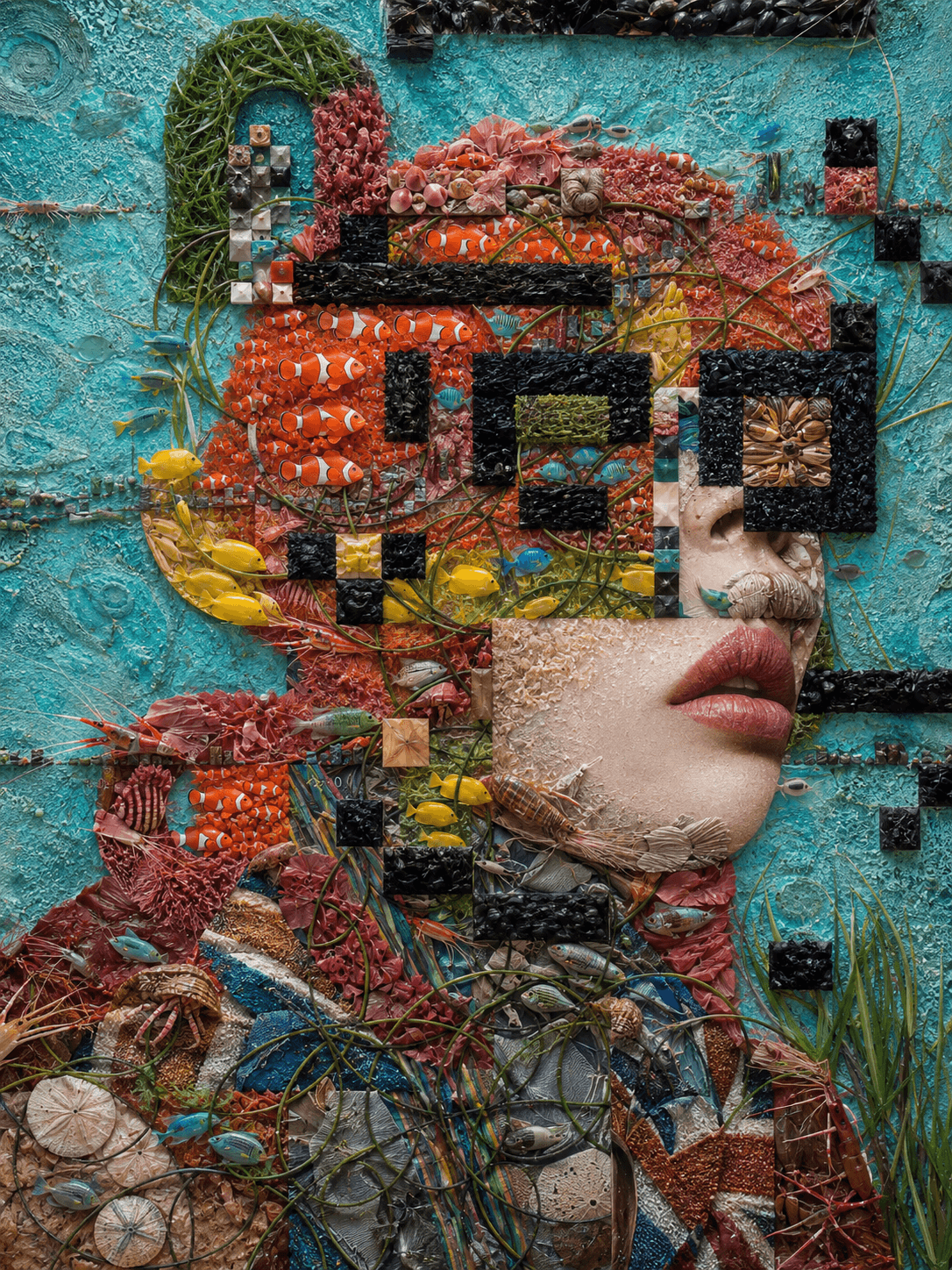
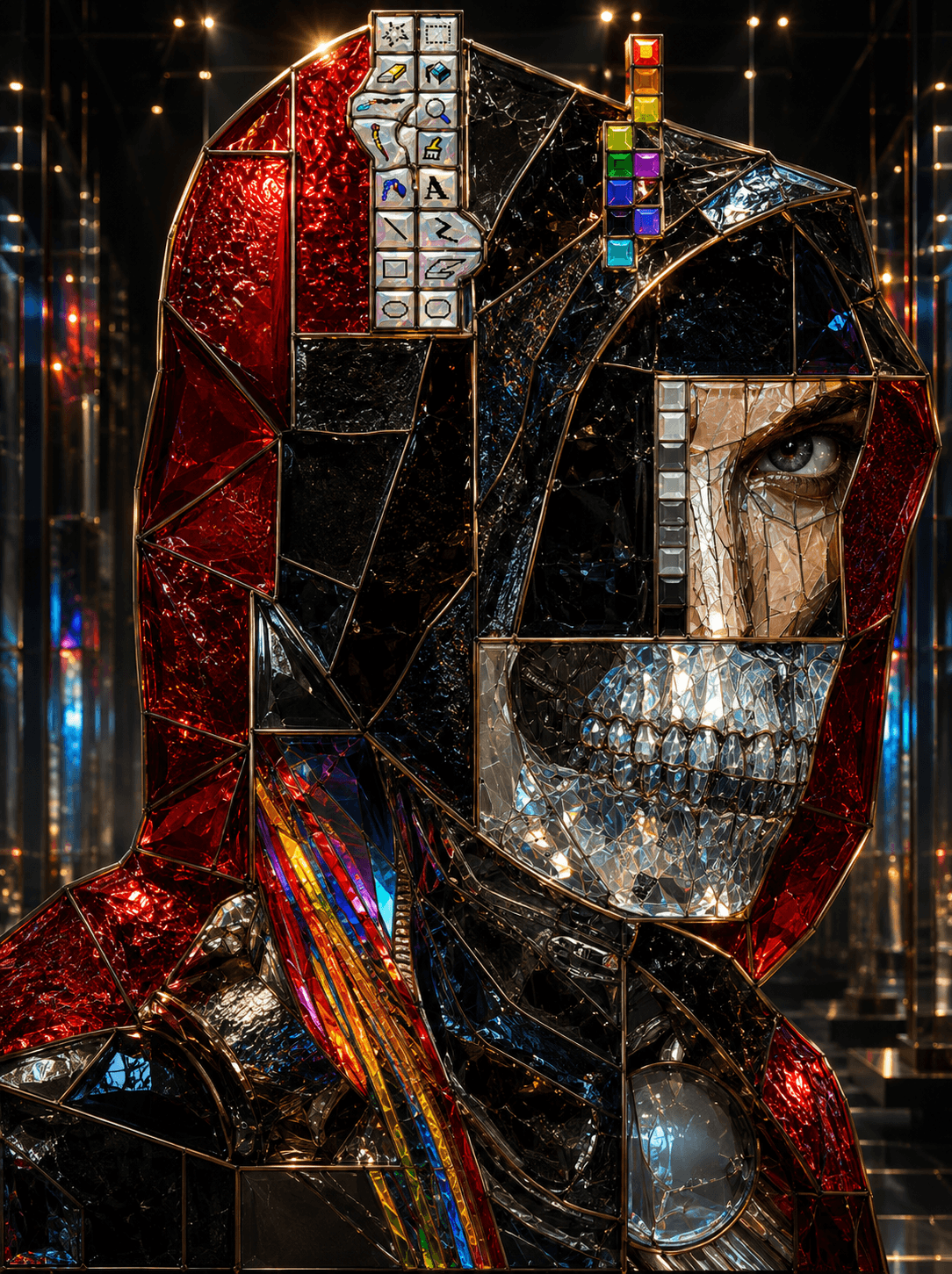
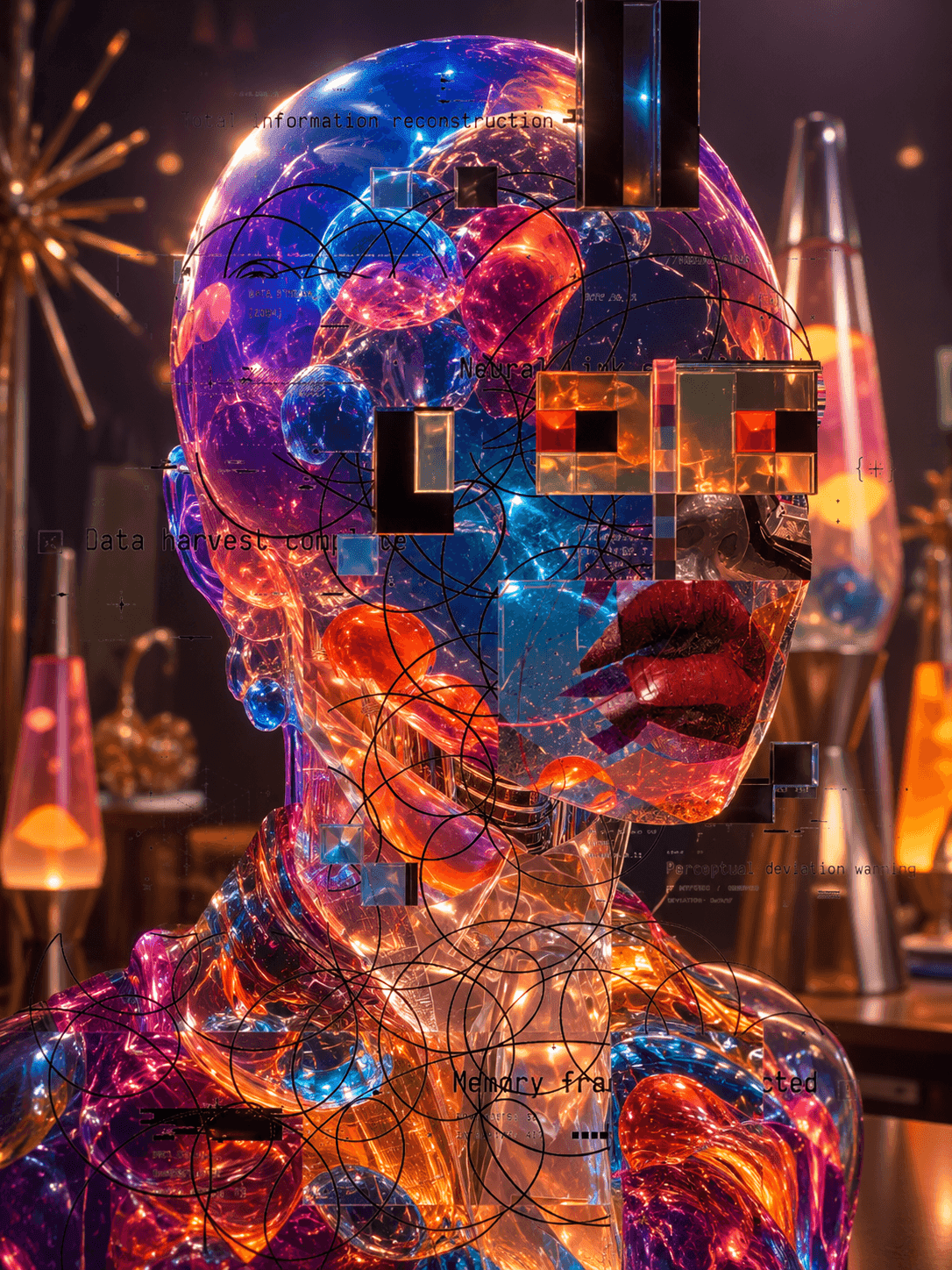
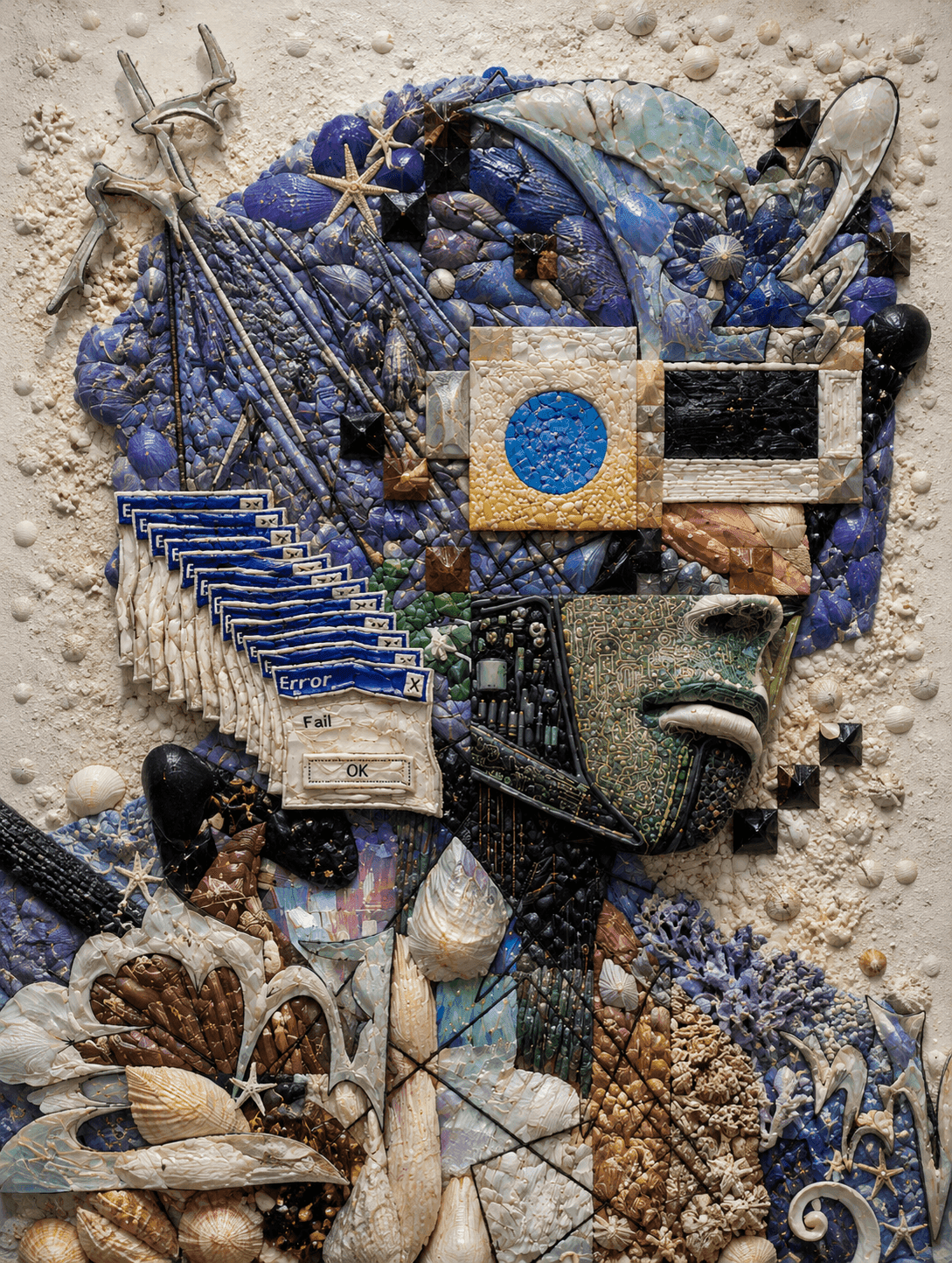
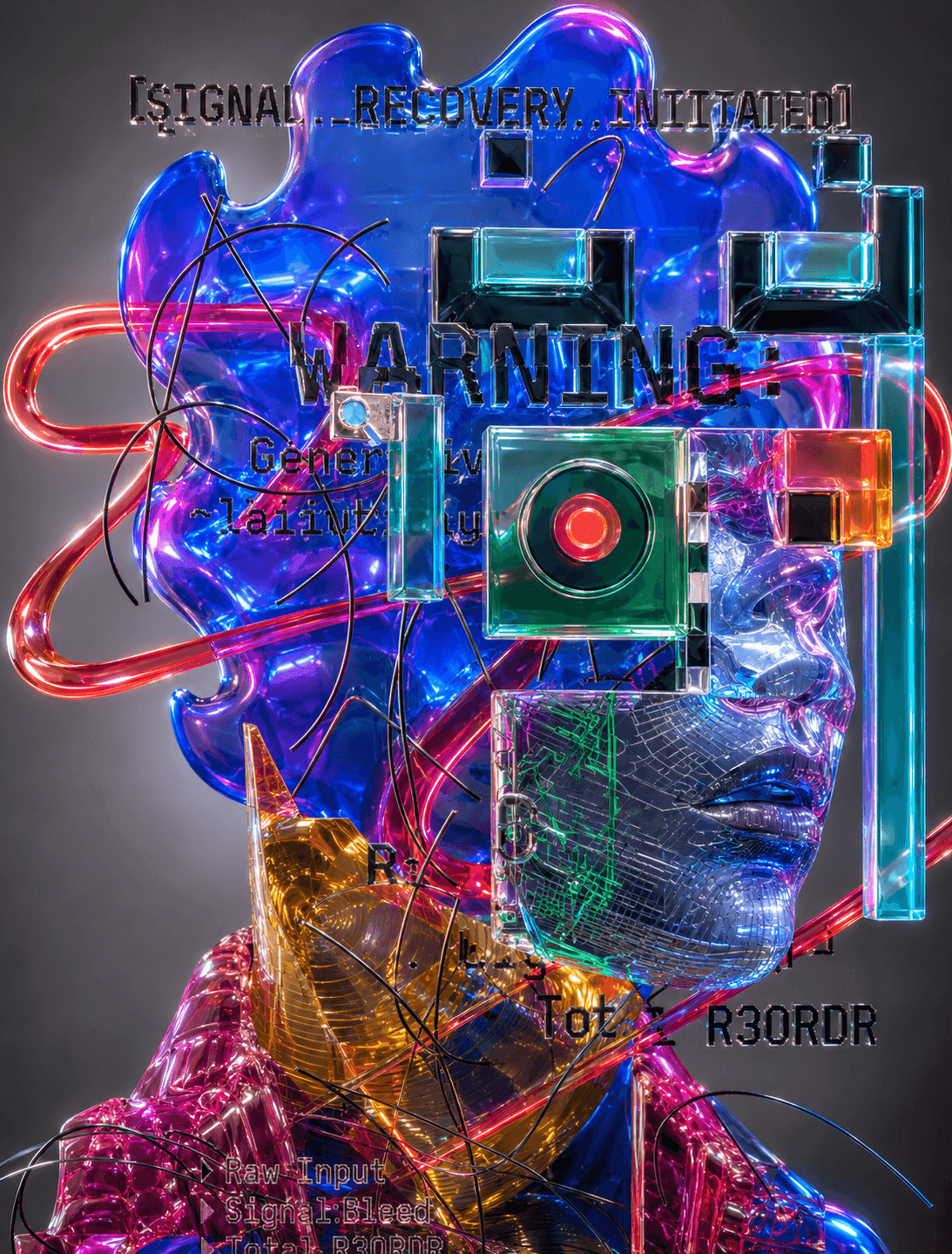
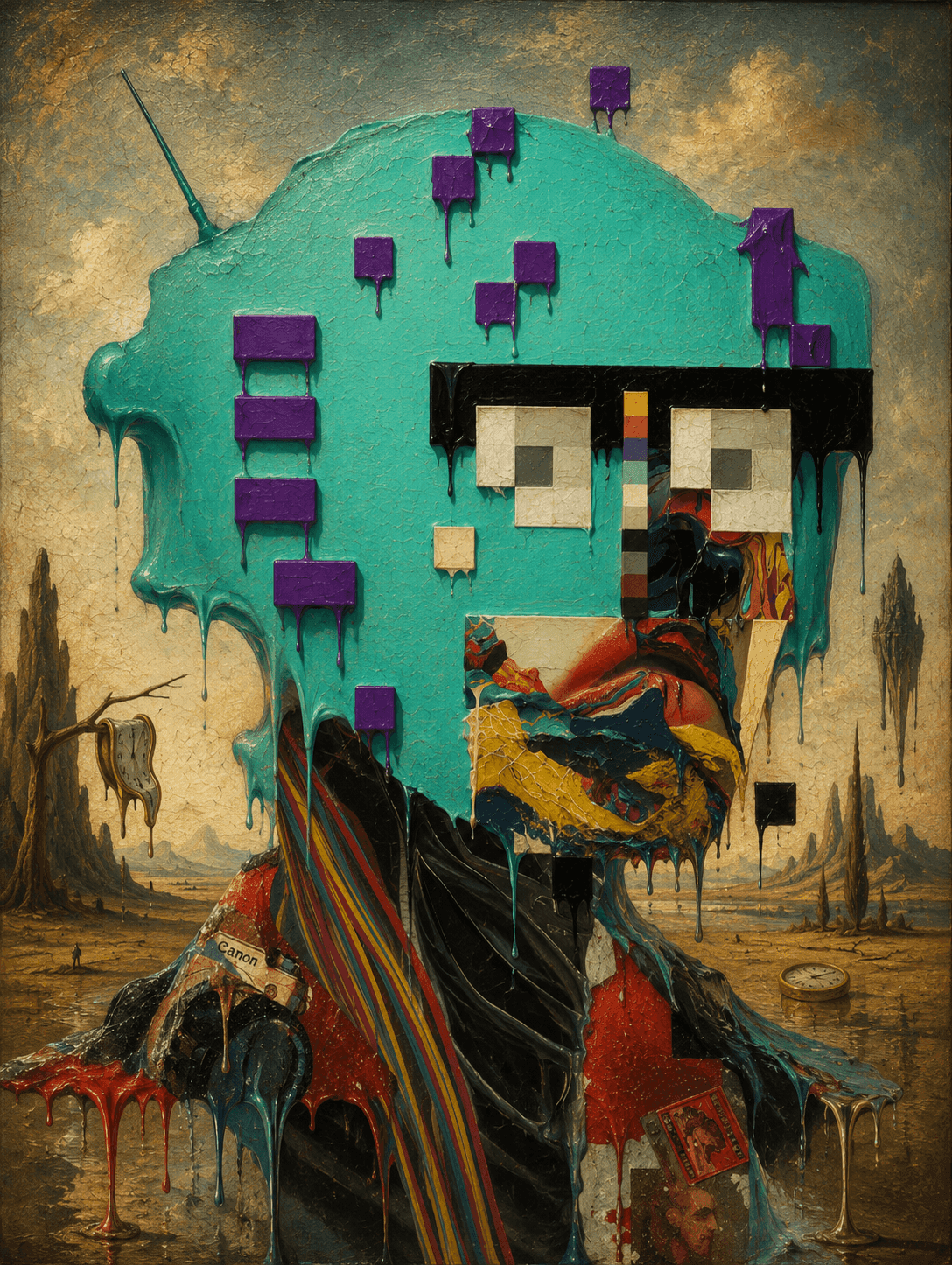
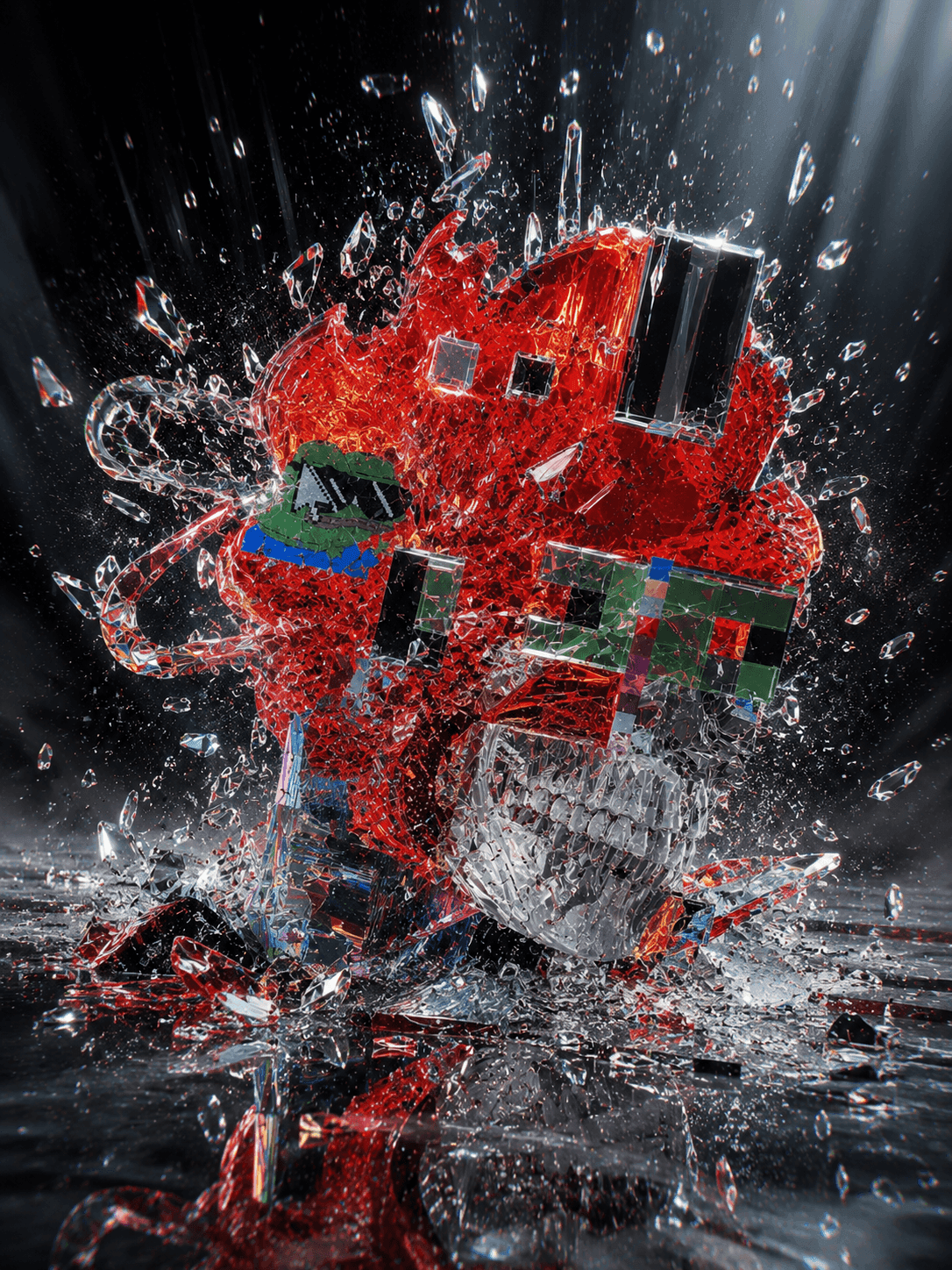
Stained-Glass Cosmic Sculpture

Stained-Glass Cosmic Sculpture

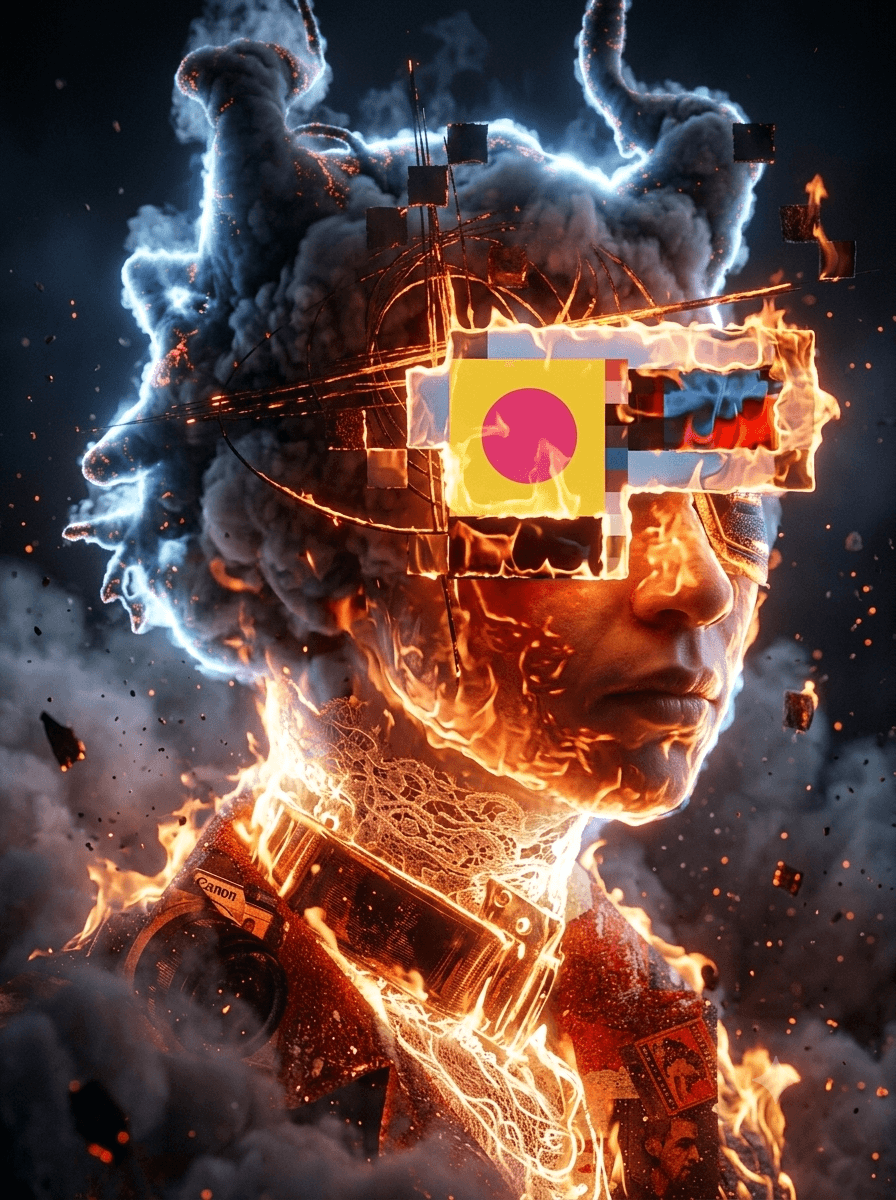
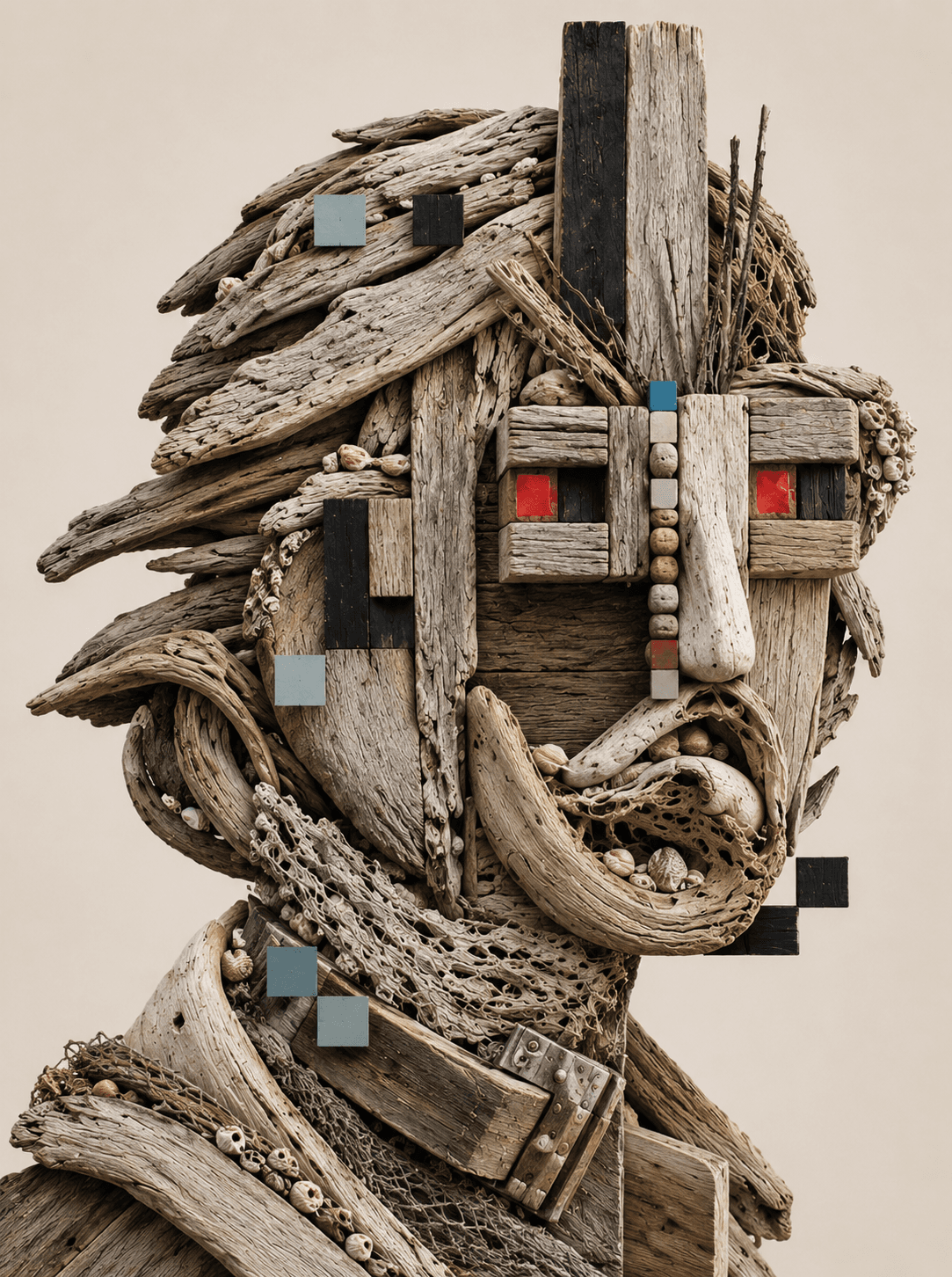
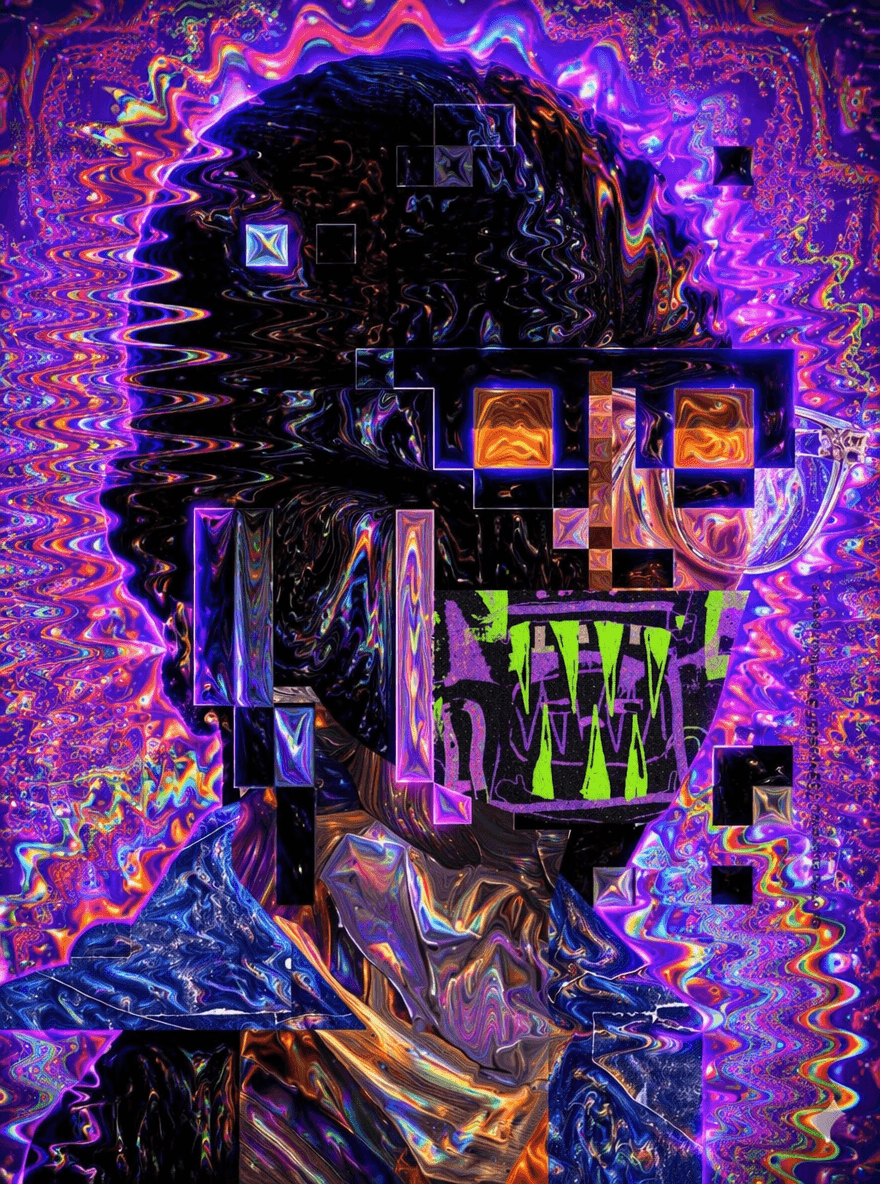
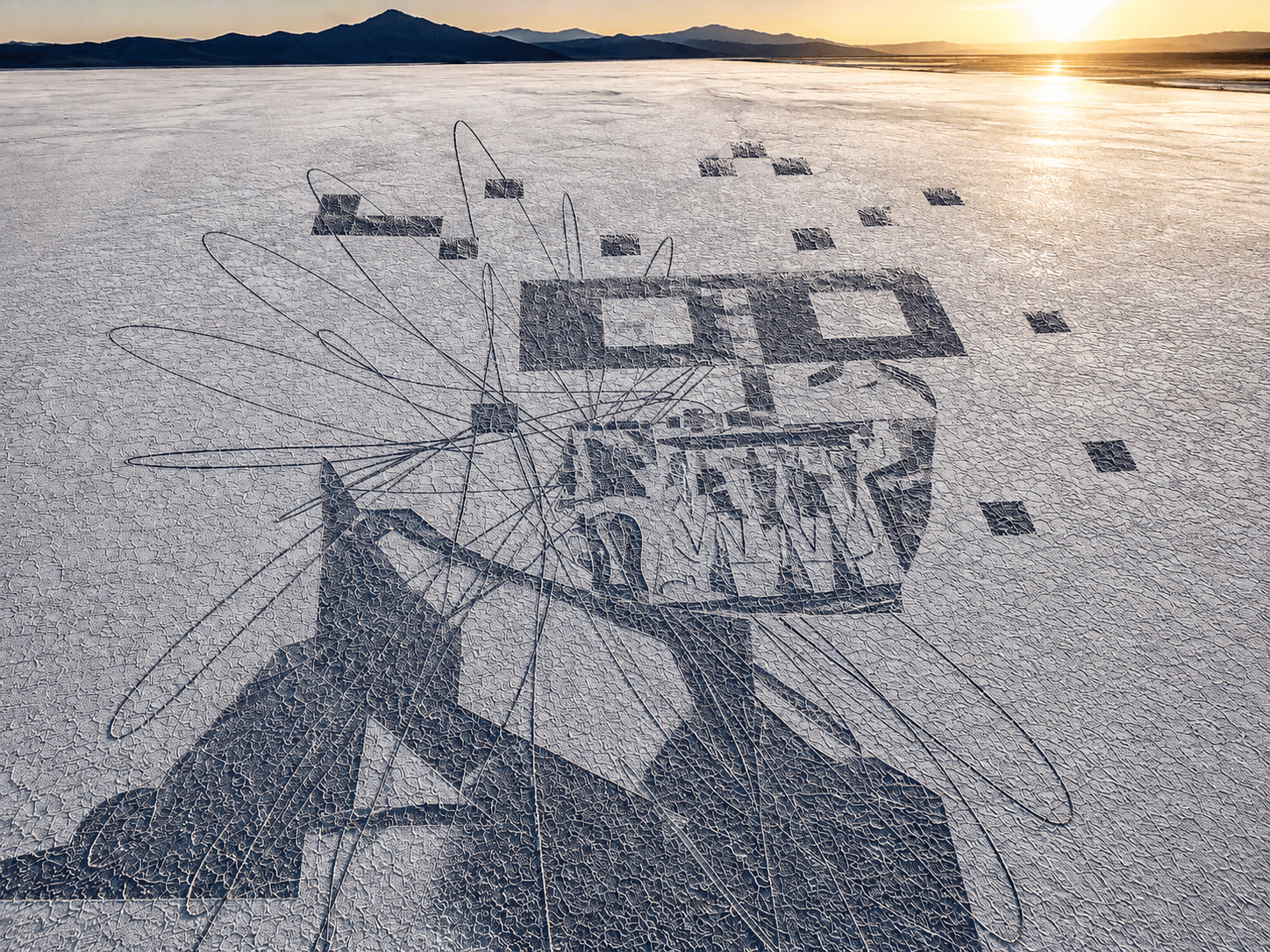
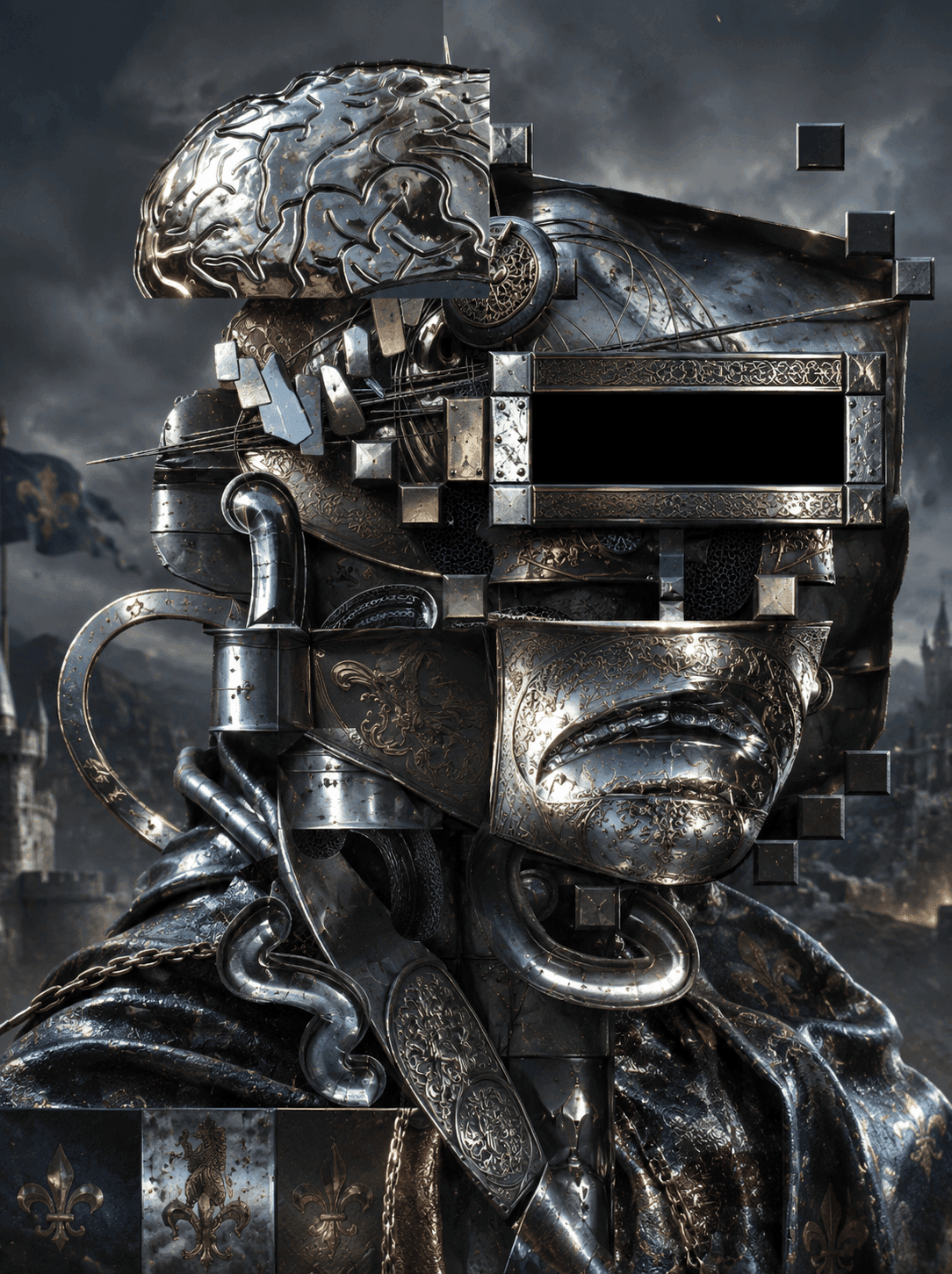
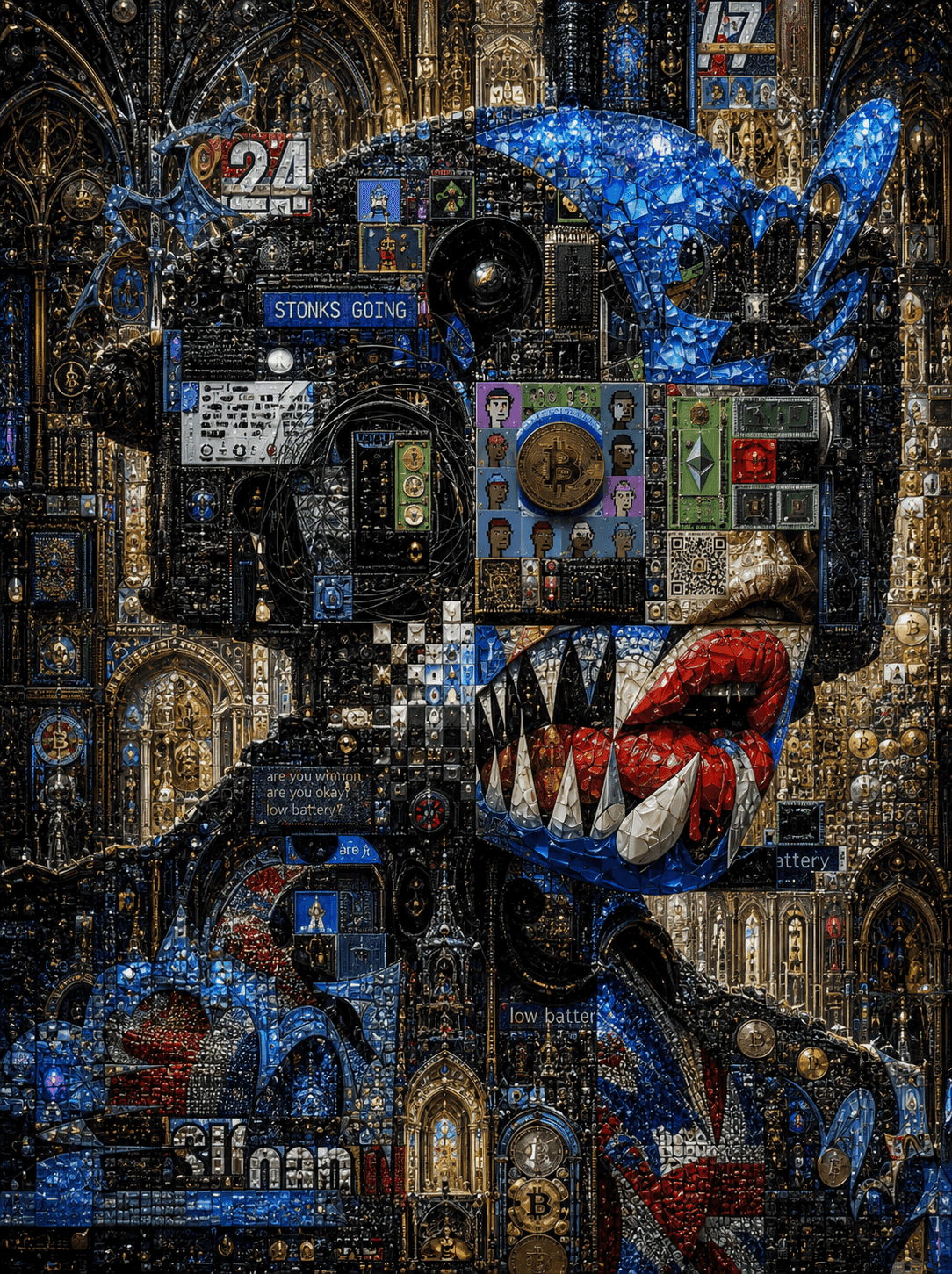
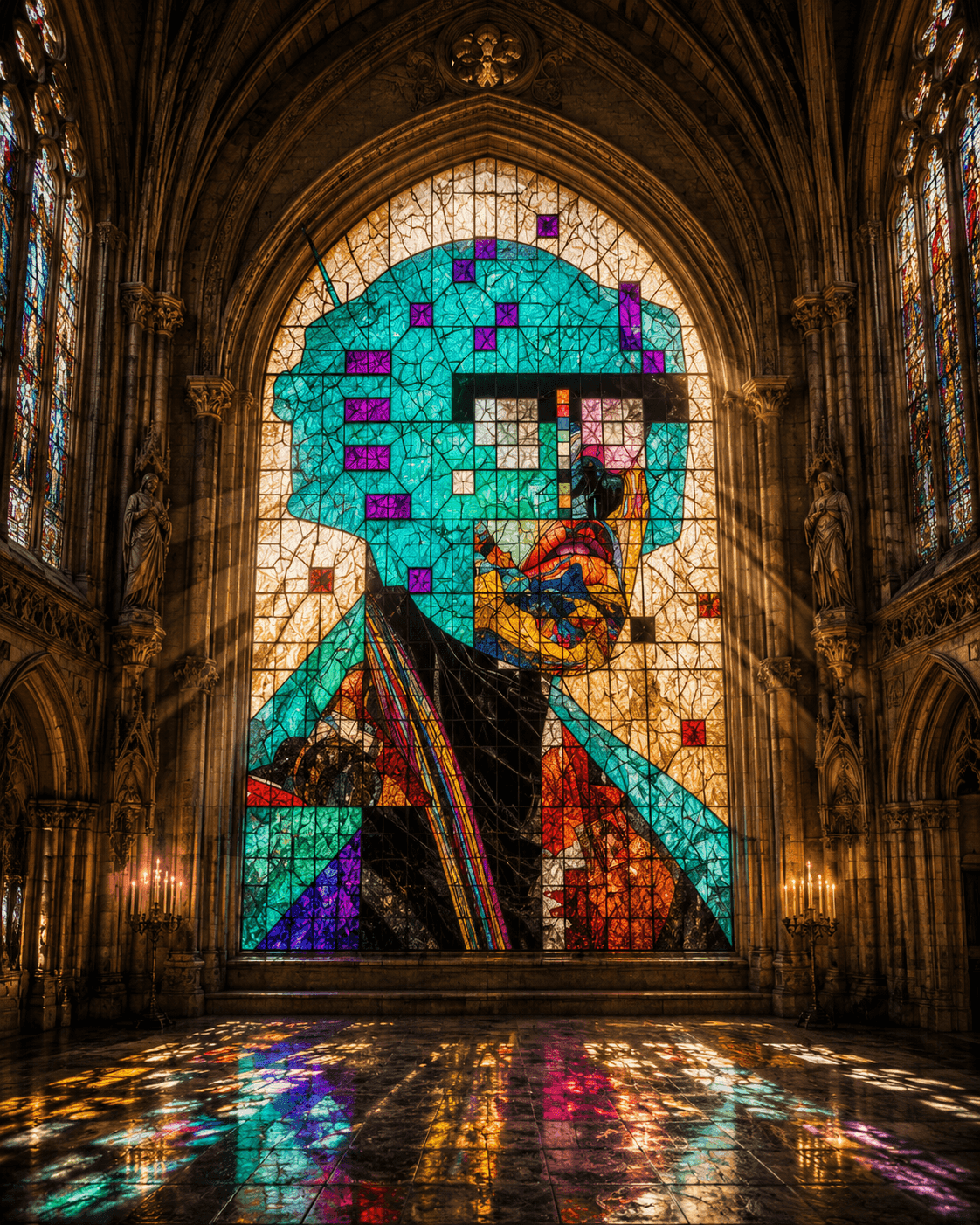
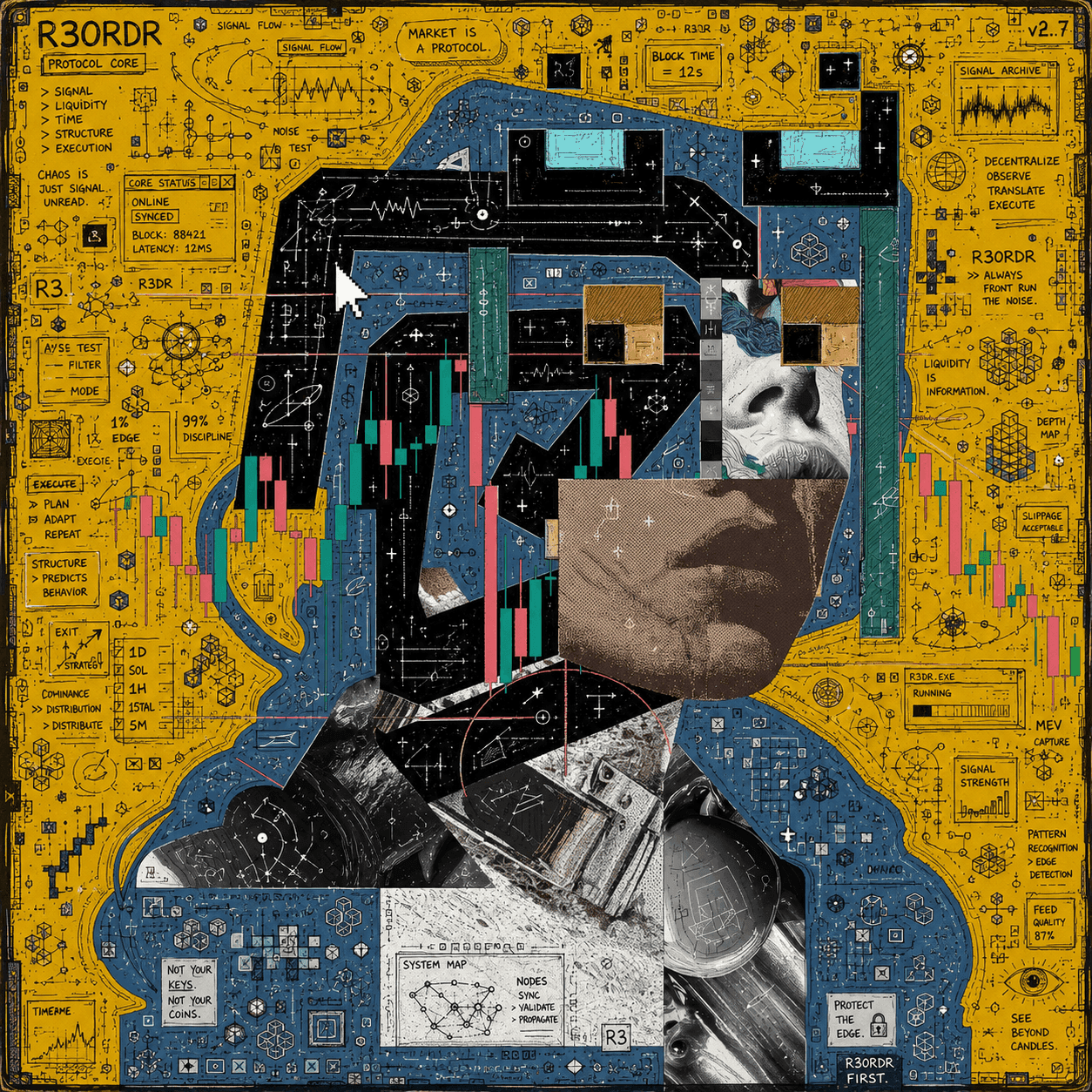
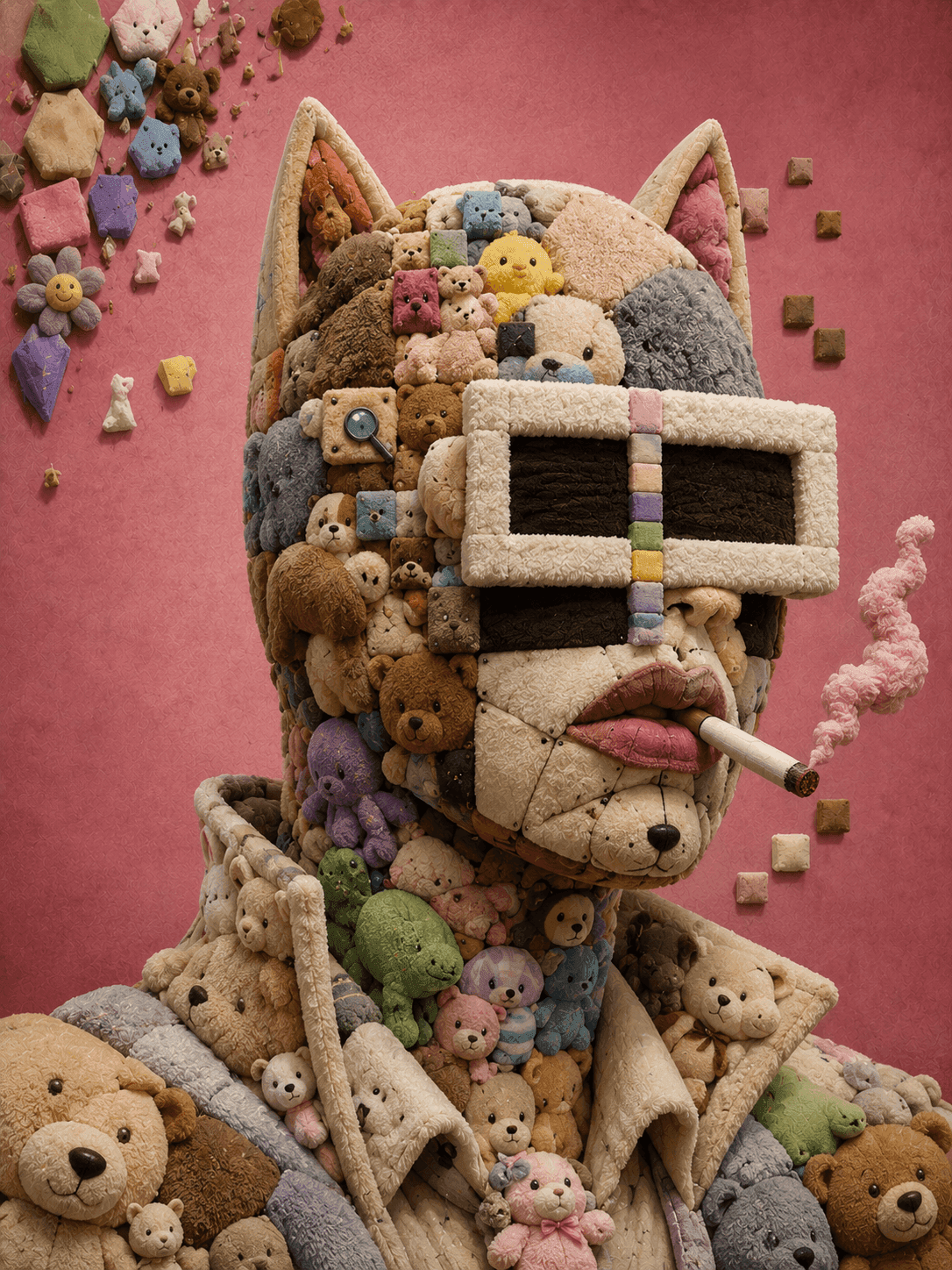
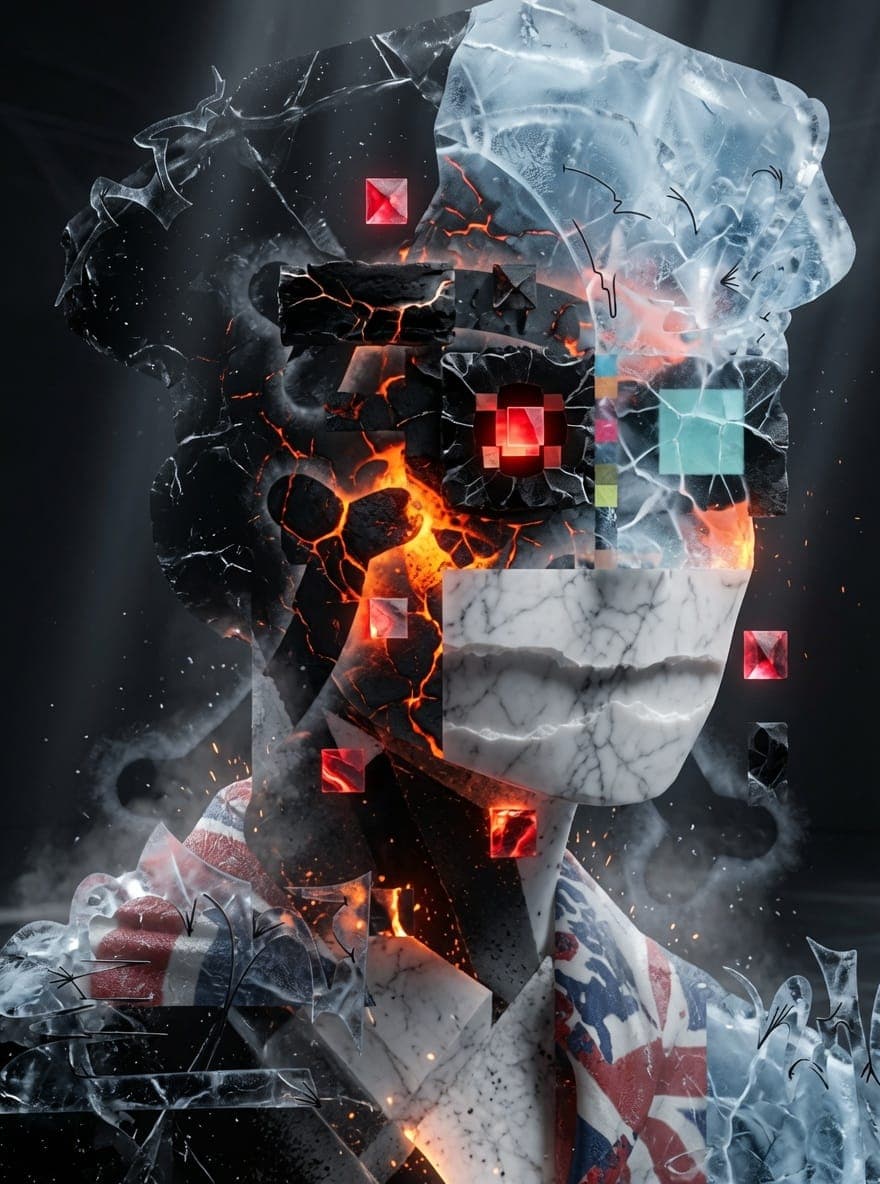
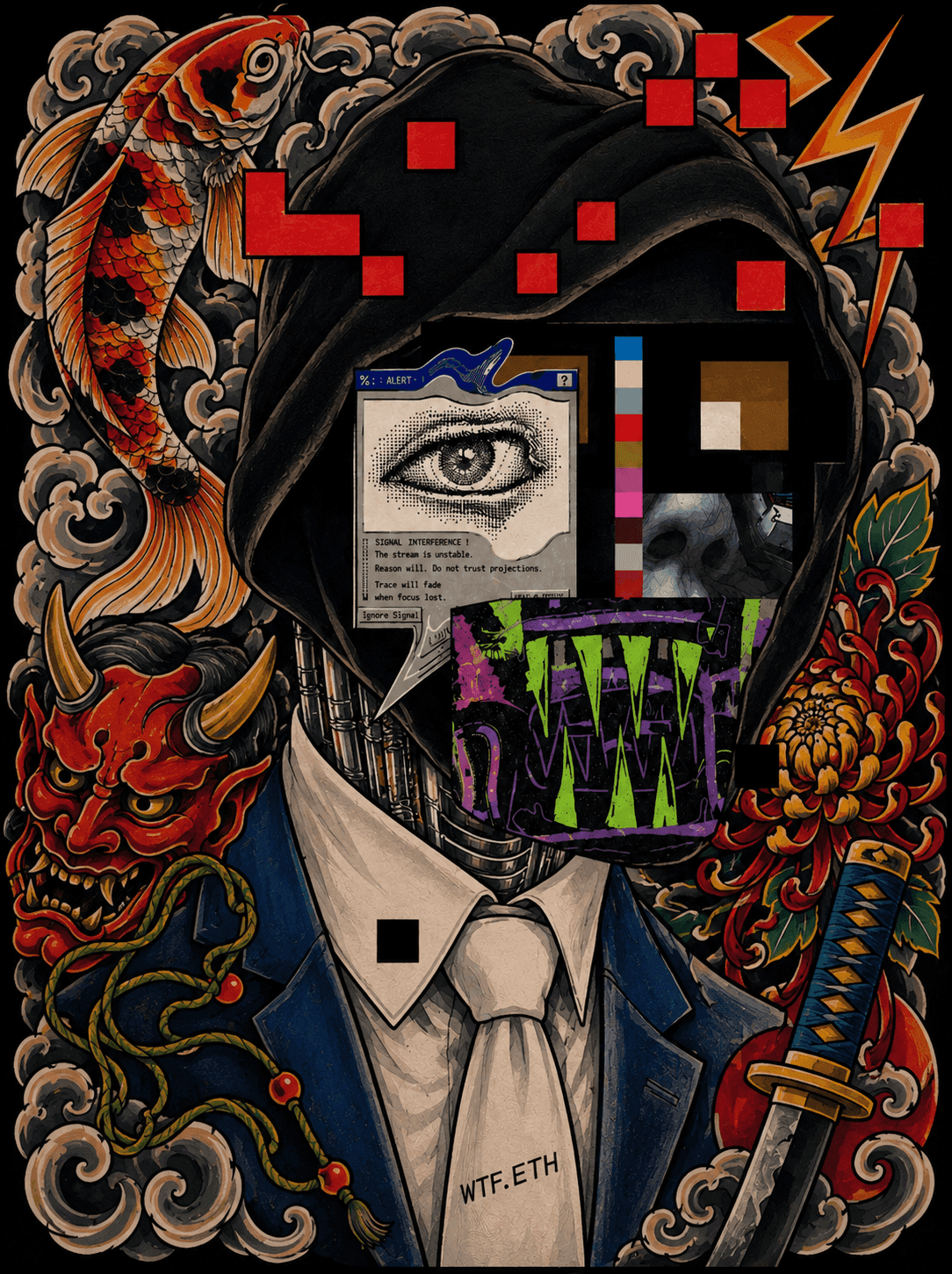
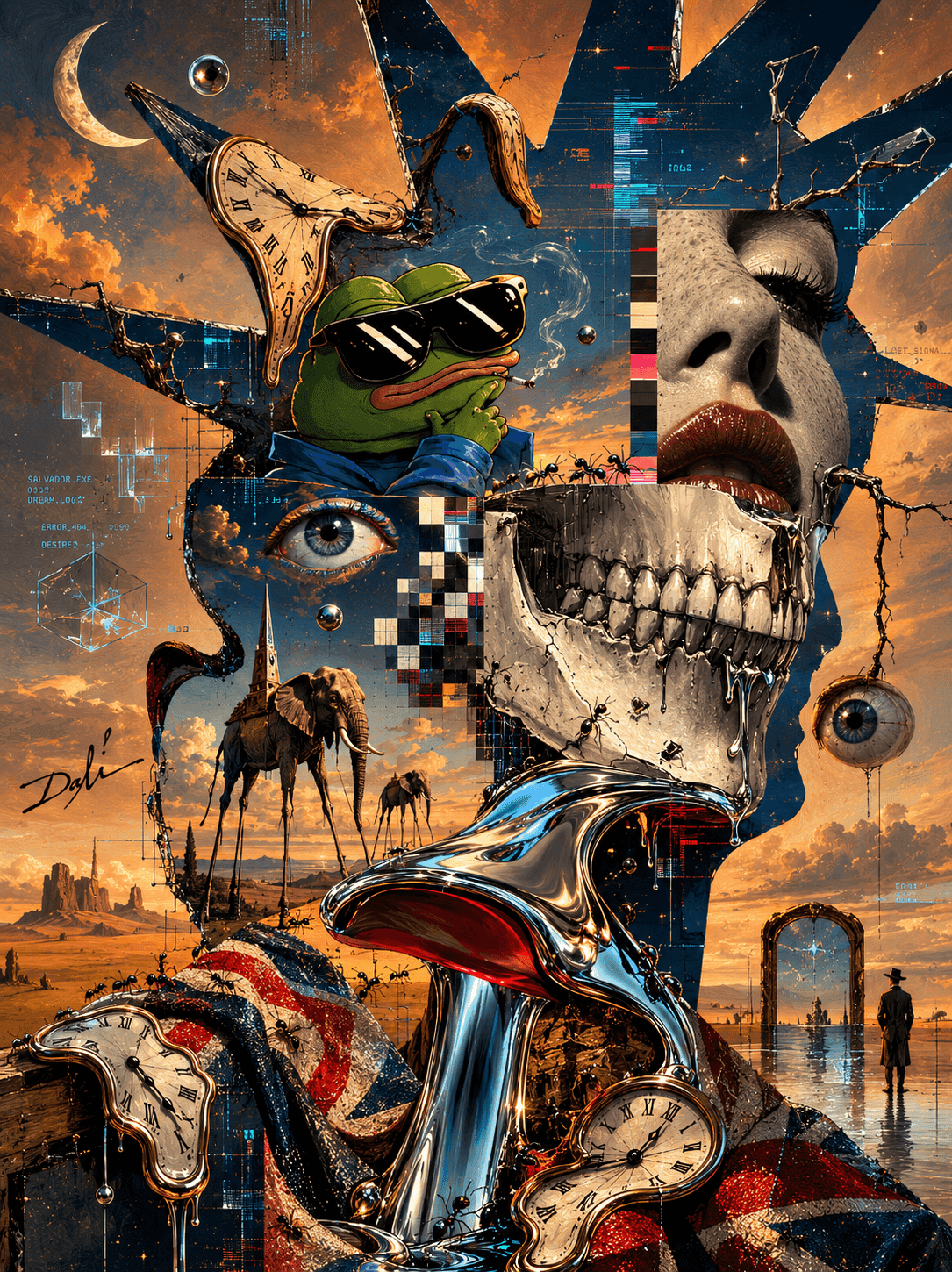
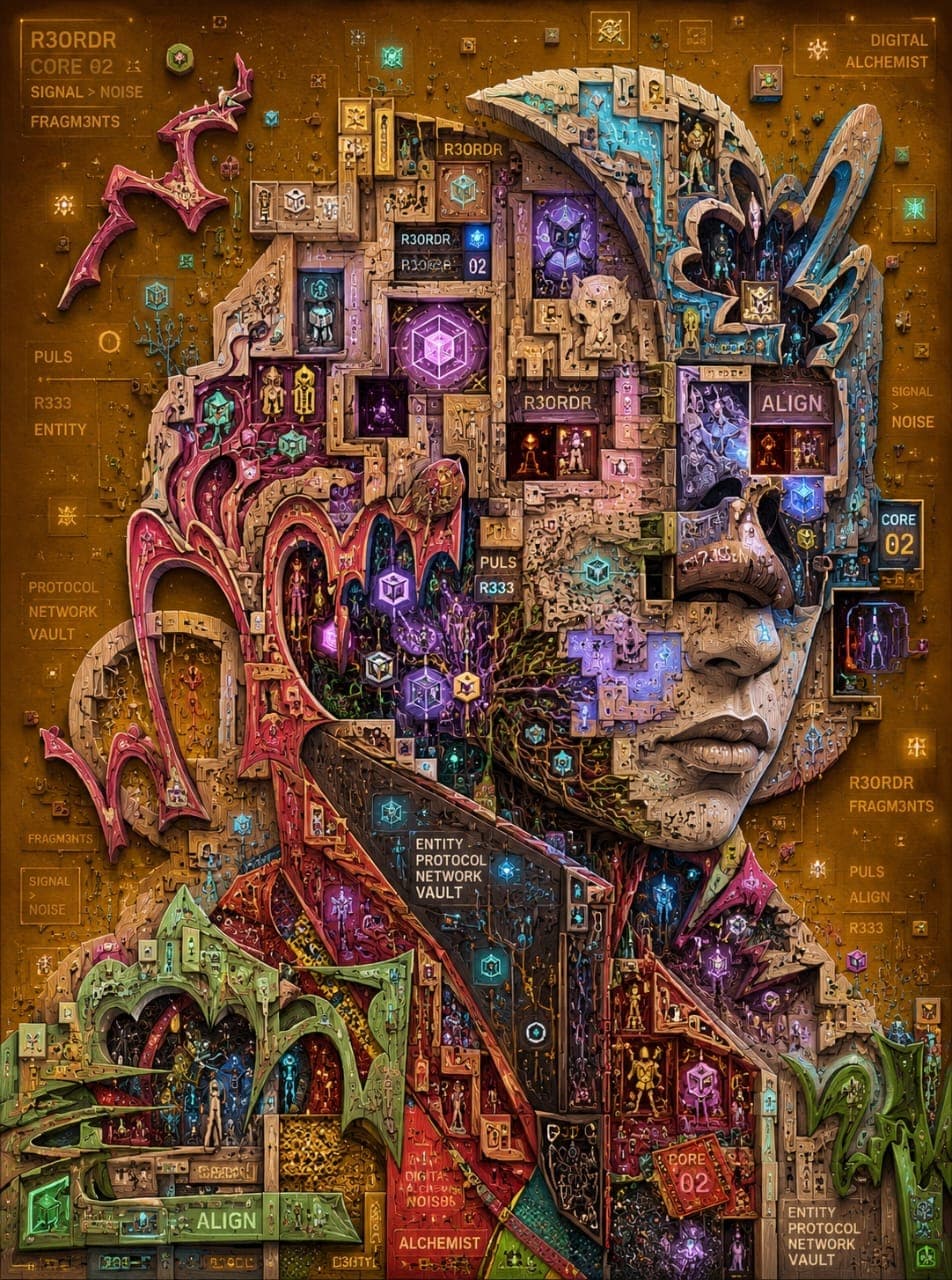
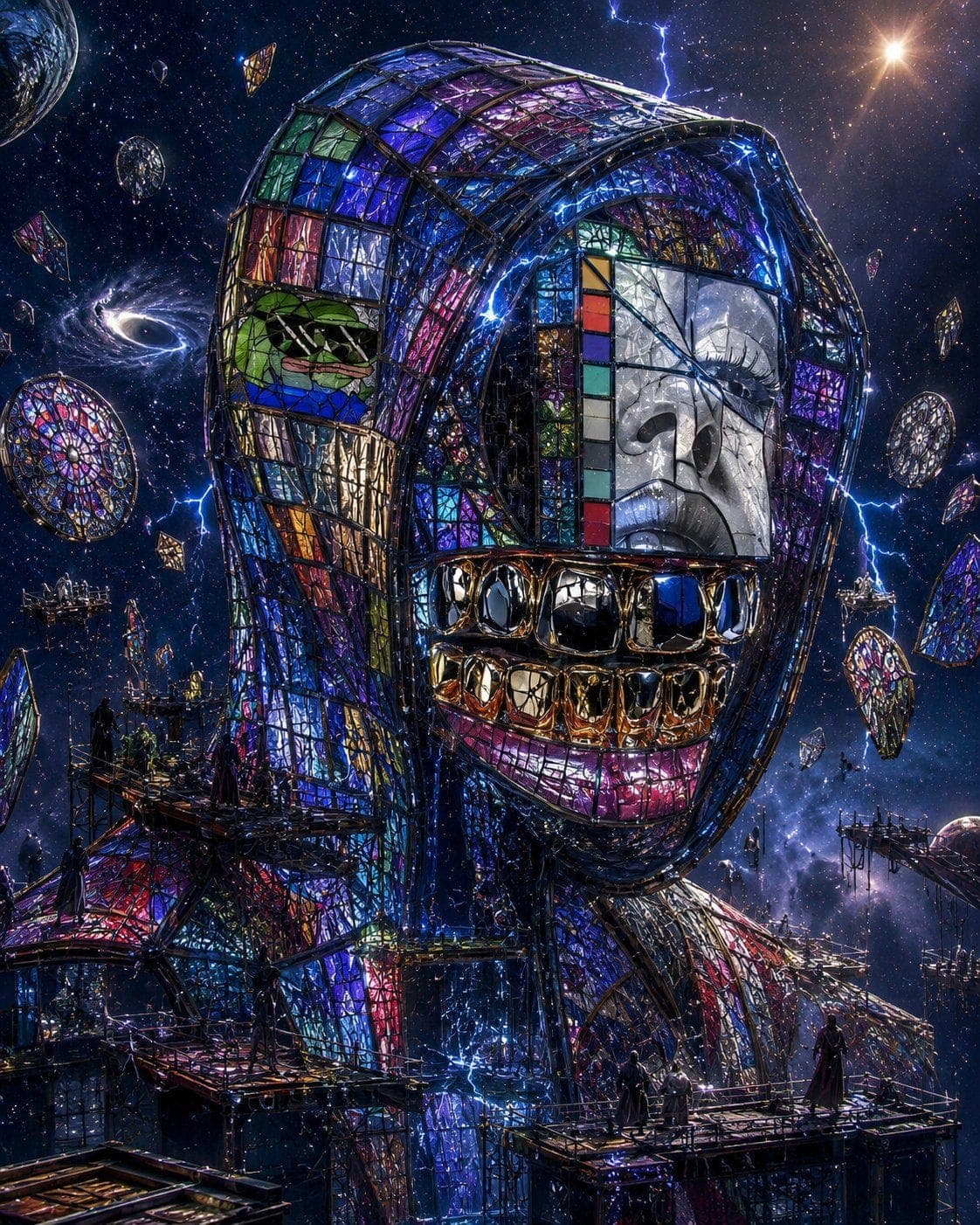
Turn my R3ORDR into a gigantic stained-glass cosmic sculpture, built from thousands of colorful glass mosaic fragments, floating in deep space. Preserve the original character shape, face, hoodie, proportions and identity, but transform the entire body into detailed stained glass panels with metal frames. Add glowing blue electricity, cosmic stars, planets, black holes, floating stained-glass shards, tiny workers on scaffolding building the sculpture, cinematic lighting, ultra detailed, epic scale, surreal art, 8k, masterpiece, sharp details, beautiful colors, deep blue space background.

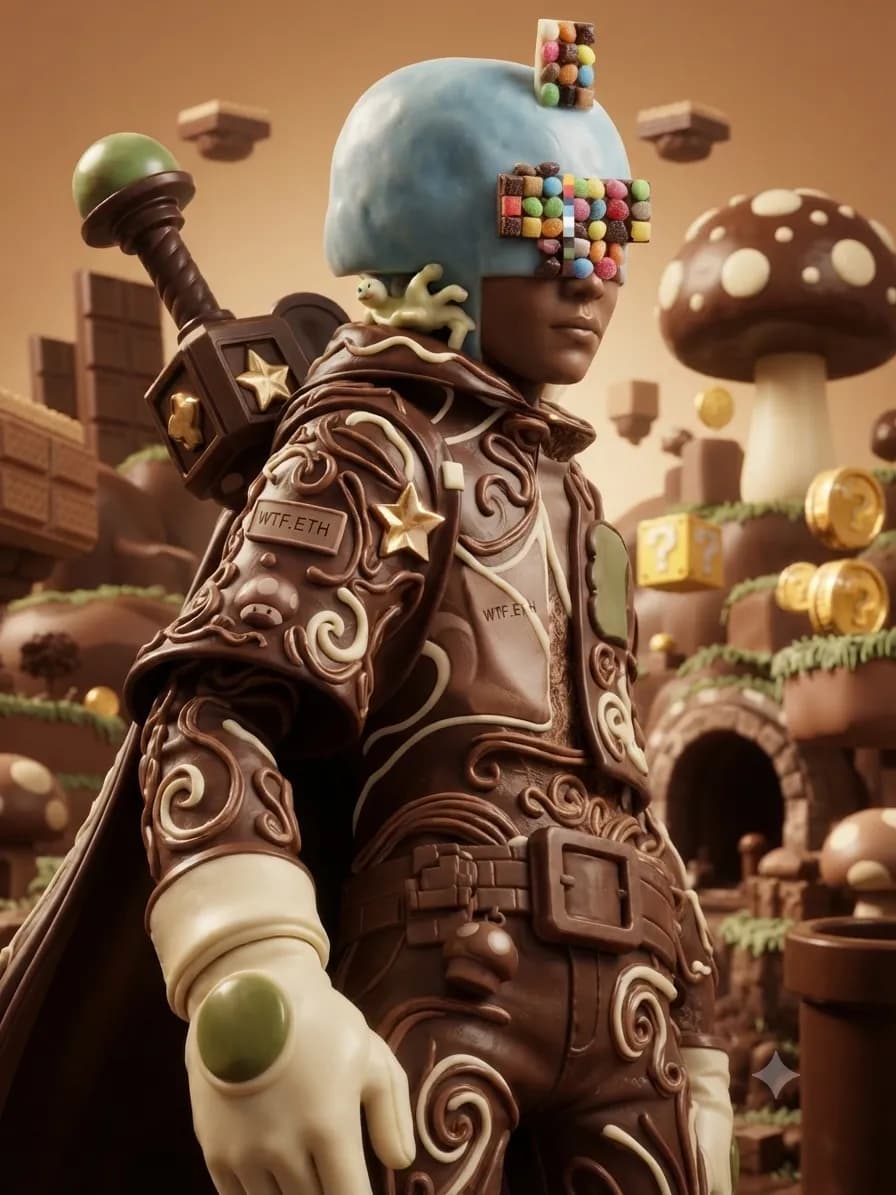
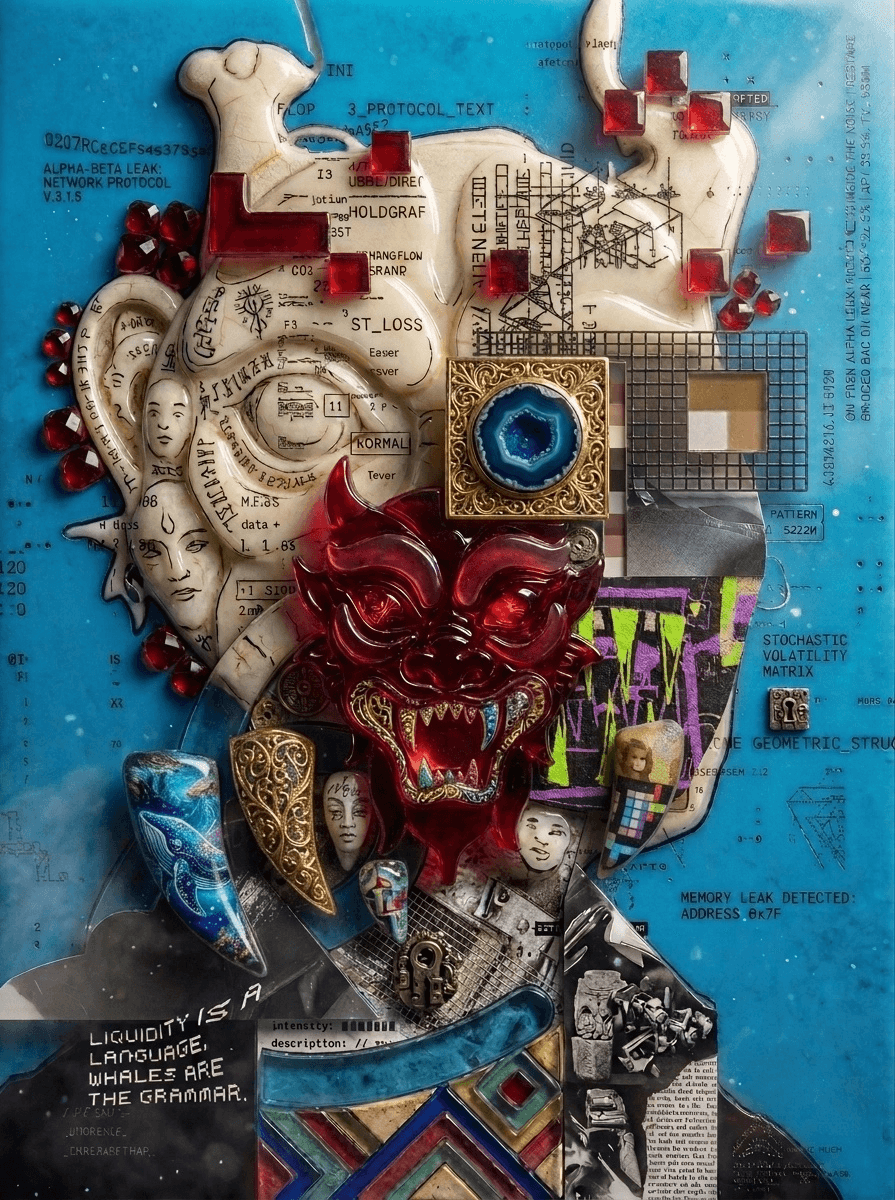
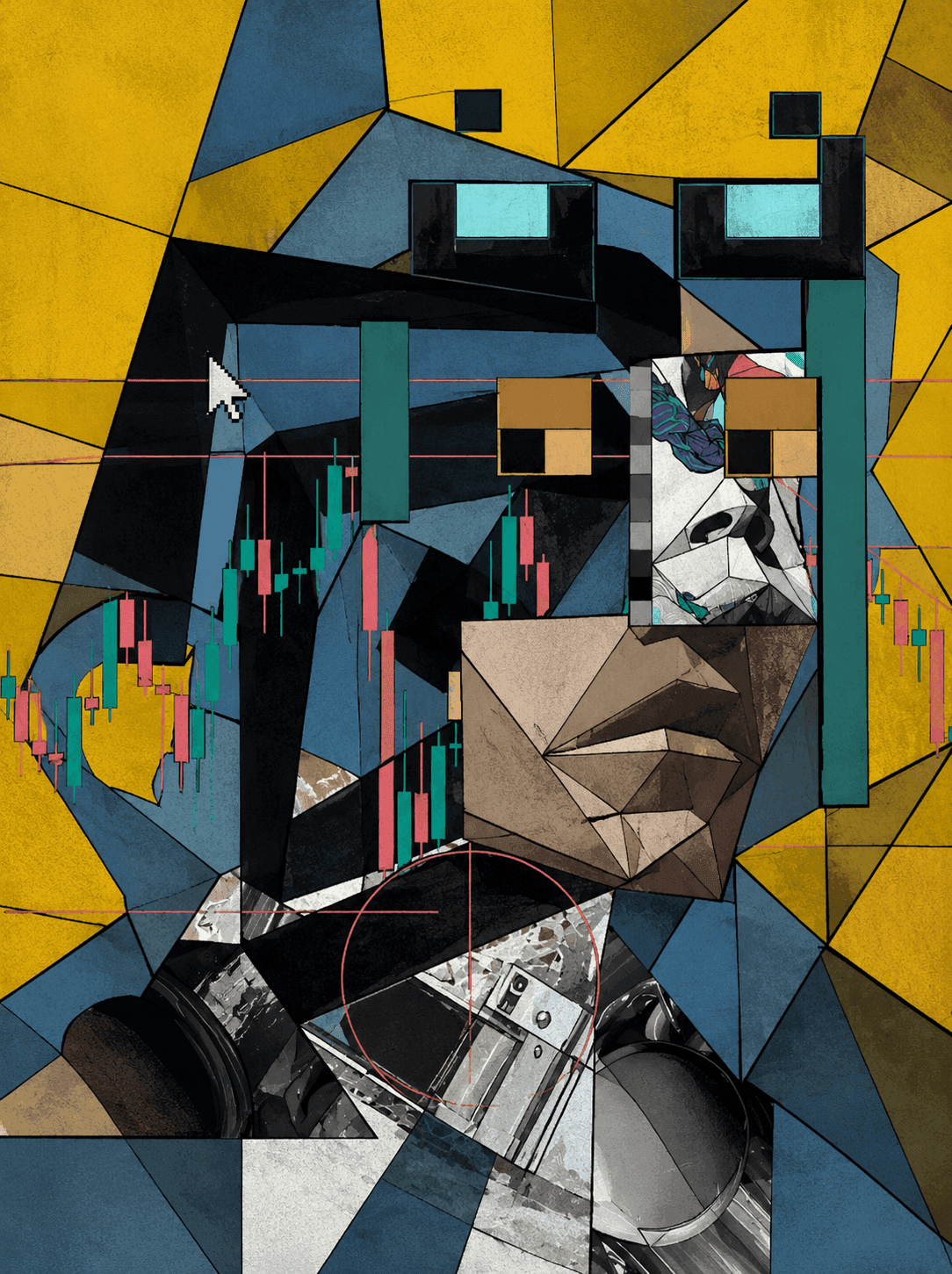
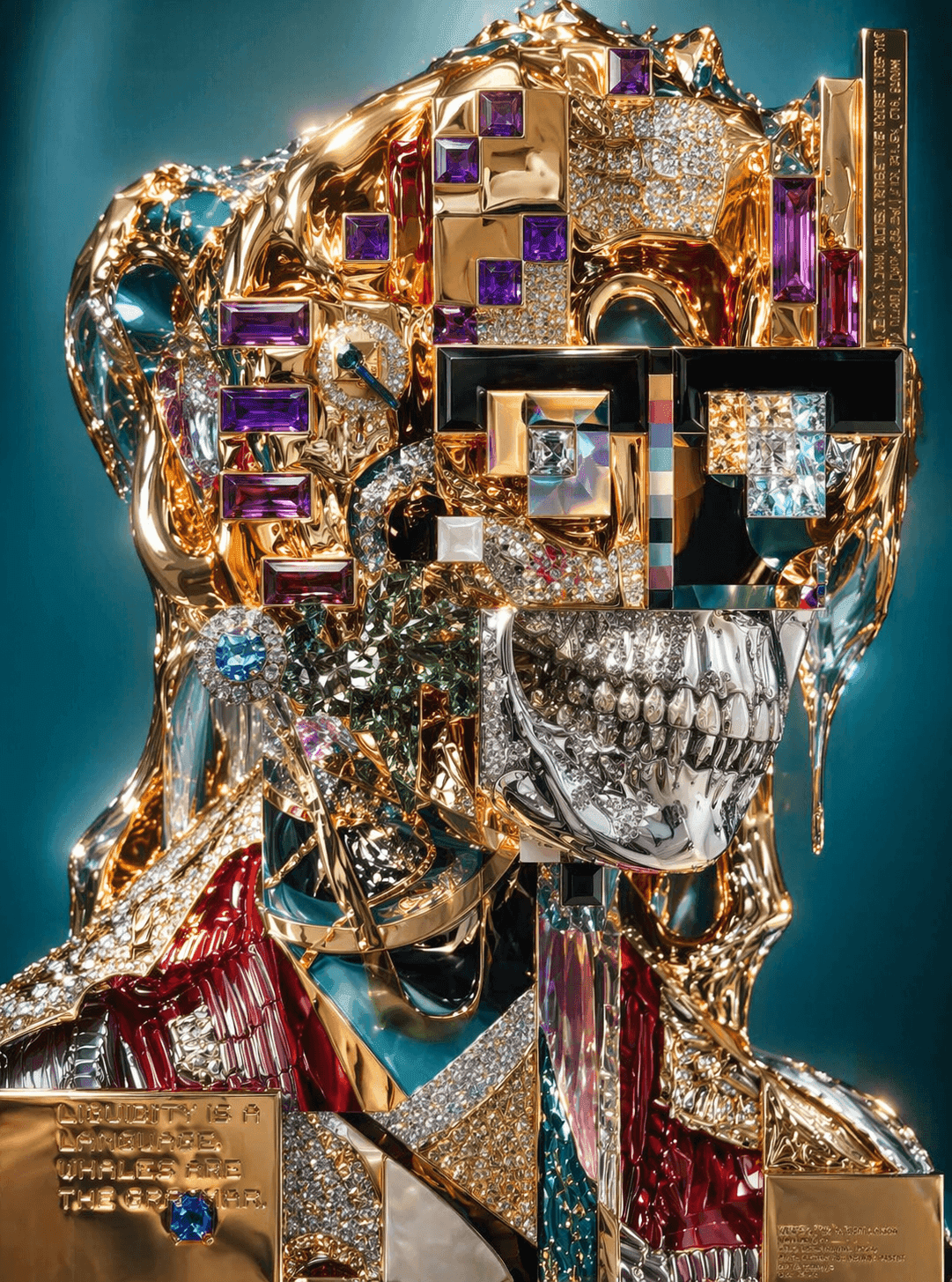
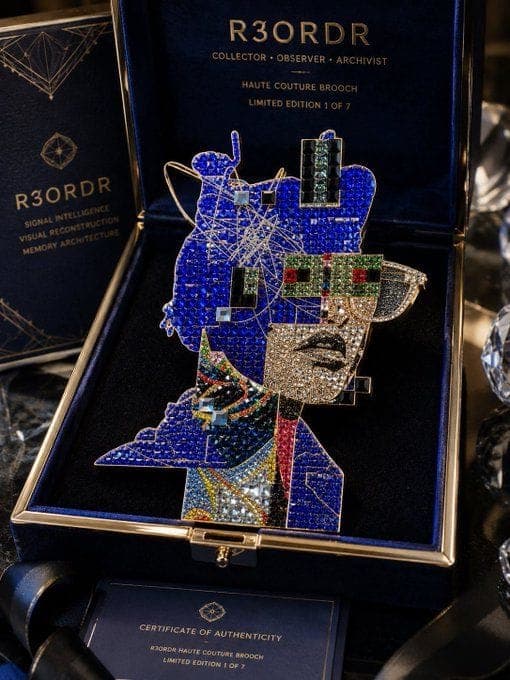
Swarovski Couture Brooch

Swarovski Couture Brooch

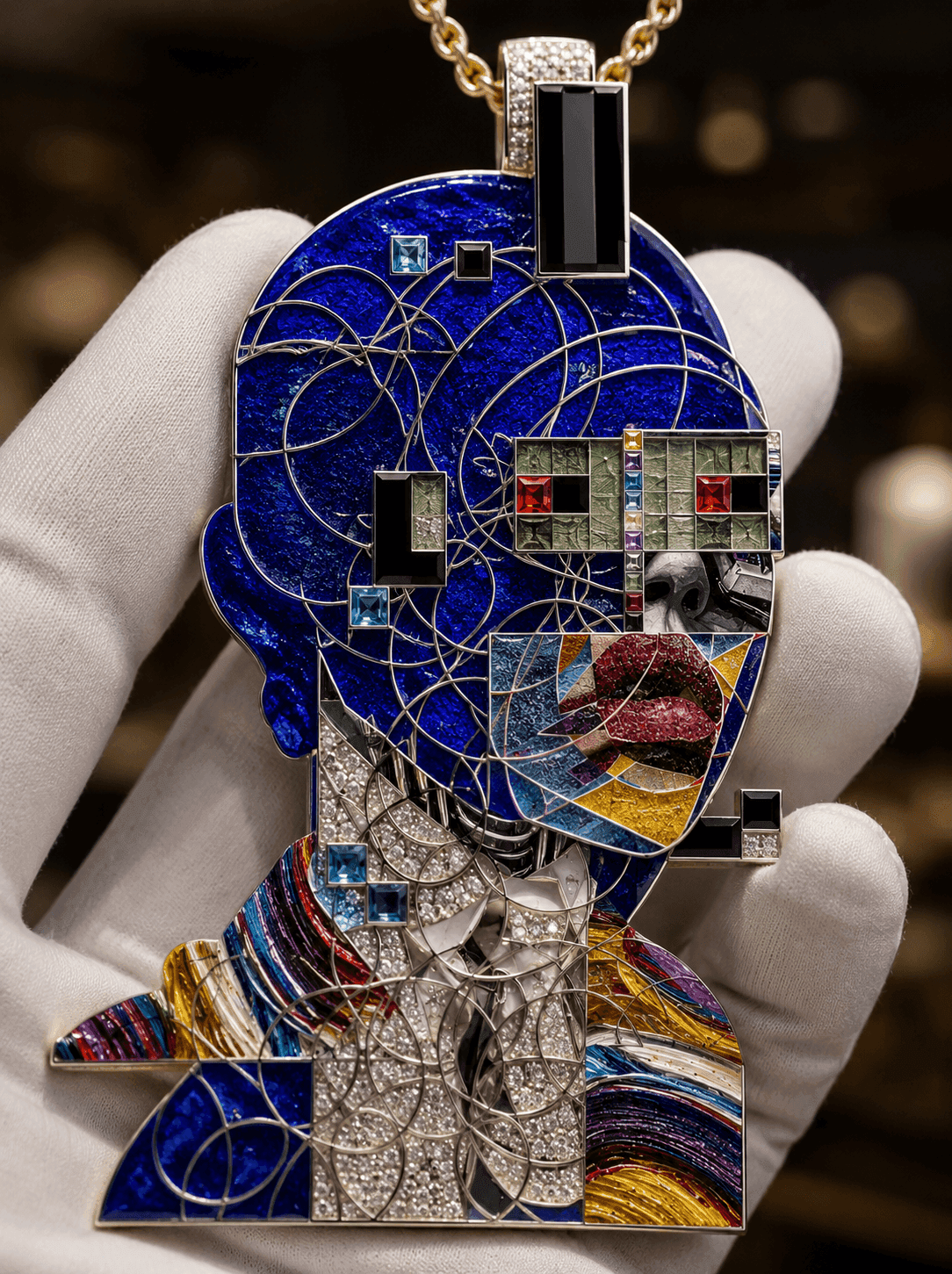
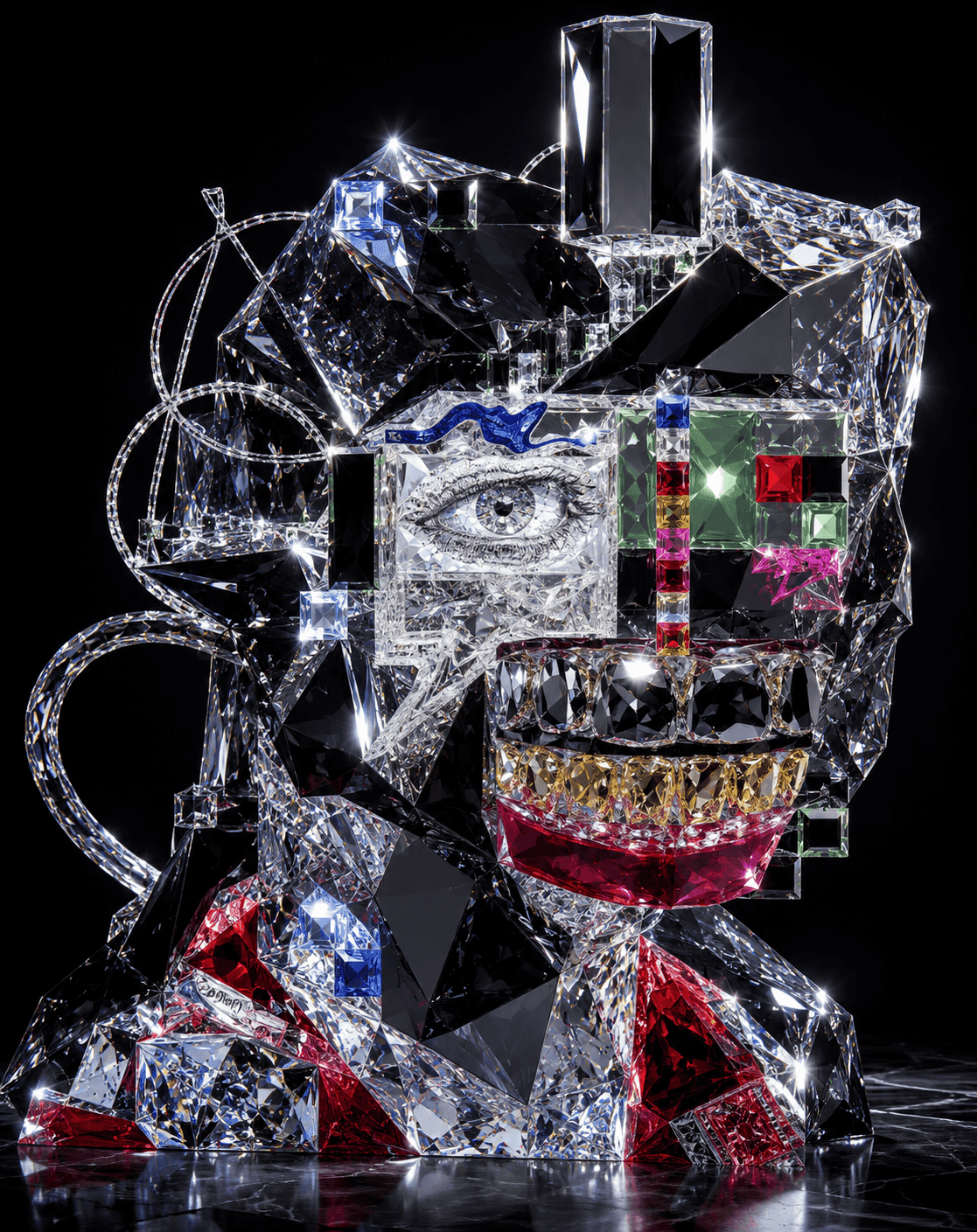
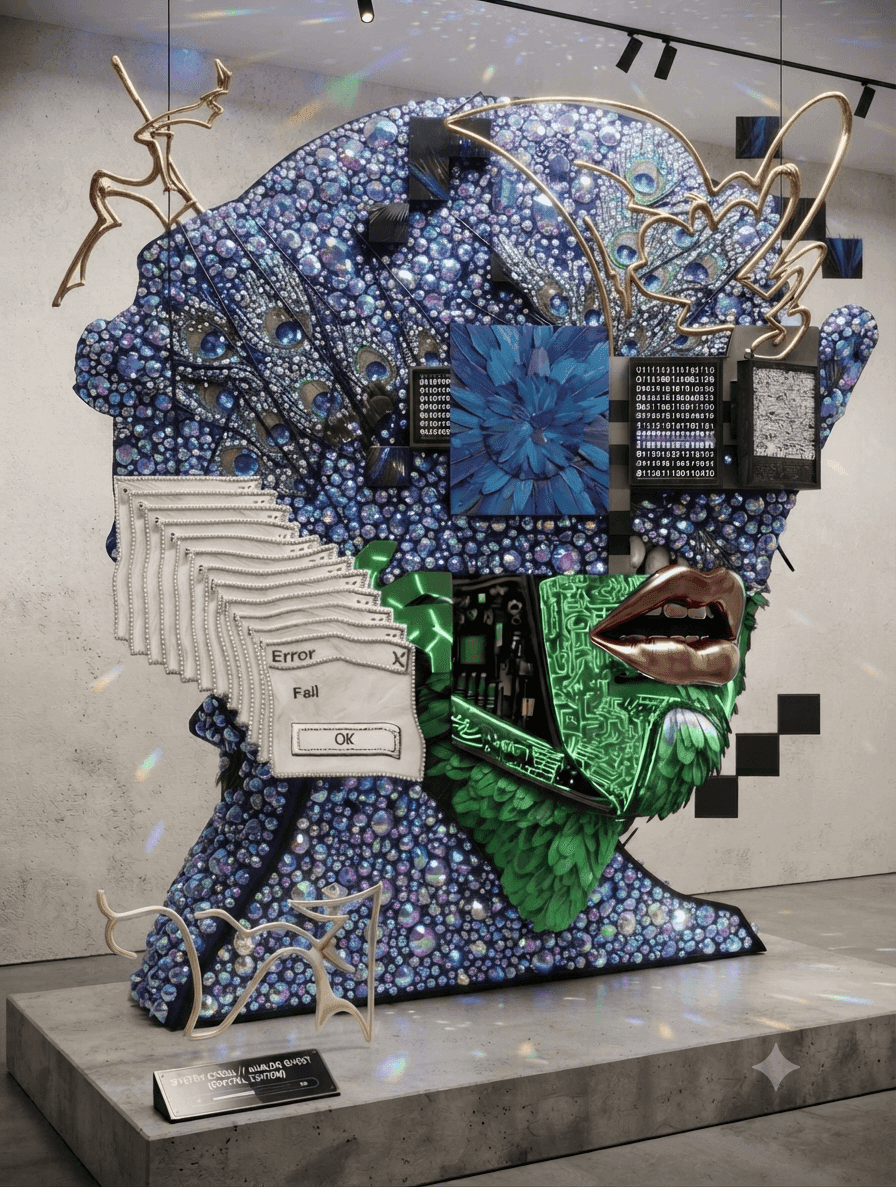
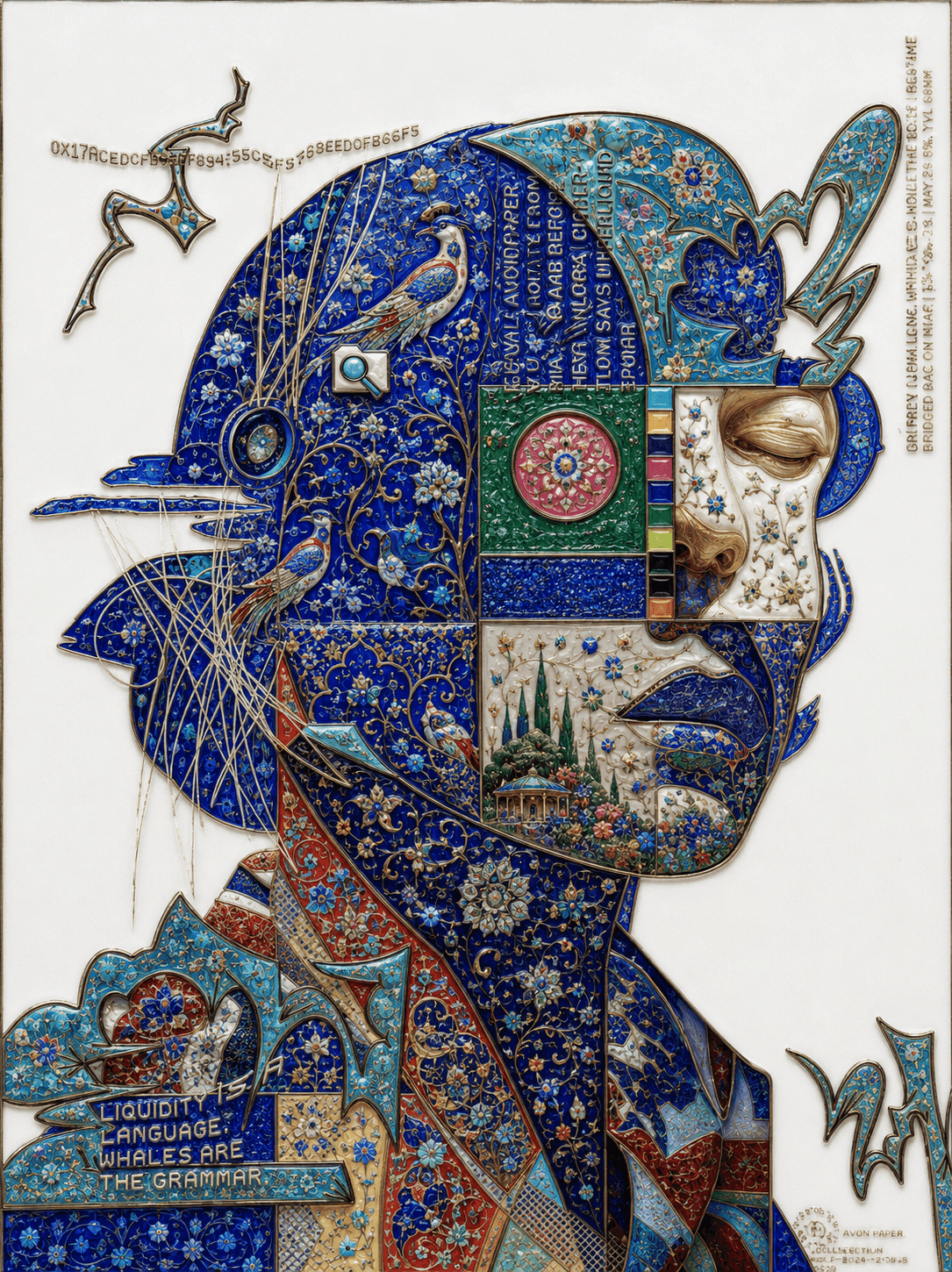
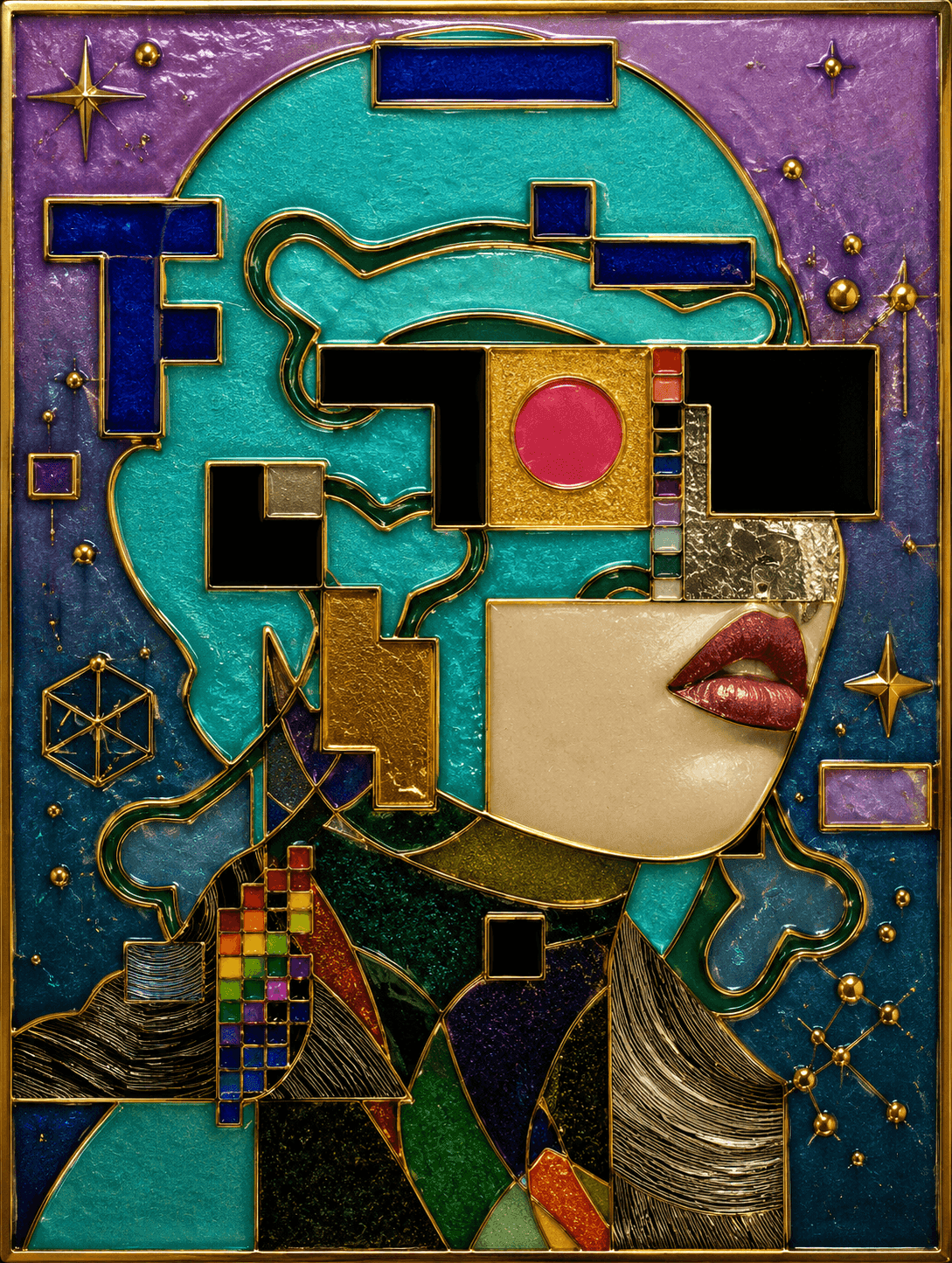
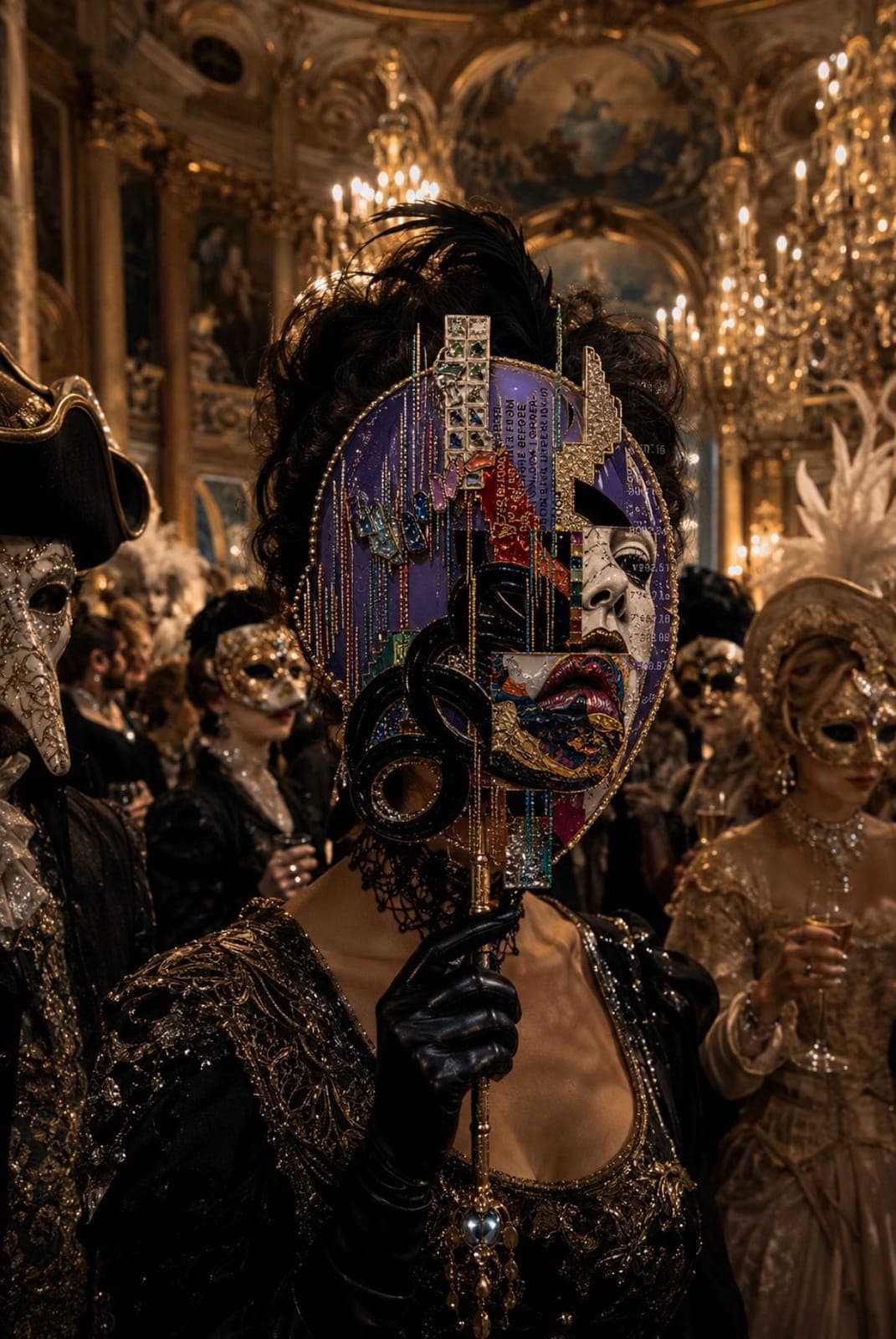
Transform the uploaded artwork into an exquisite haute couture Swarovski crystal brooch. The brooch must faithfully preserve the composition, shapes, symbolism, and color palette of the original artwork while reinterpreting every element as a luxurious arrangement of precision-cut Swarovski crystals, gemstones, enamel details, and precious metals. Present the jewelry piece inside an ultra-premium luxury presentation case specifically designed around the artwork's aesthetic language. The case should feel like a collector's edition object, combining the sophistication of high jewelry maisons and luxury fashion houses — rich materials such as velvet, lacquered wood, polished metal, embossed leather, silk lining, gold detailing, and museum-quality presentation. The brooch should sparkle with hundreds of multicolored Swarovski crystals, reflecting all colors found in the original artwork. Light should refract dramatically through the stones, creating rainbow reflections, spectral highlights, and dazzling brilliance. The entire scene should feel like a rare collector's masterpiece displayed in a luxury boutique or private auction house. Photographed as a high-end product campaign with flawless studio lighting, macro jewelry photography, extreme detail, ultra-realistic materials, luxury branding aesthetic, museum-quality presentation, fine craftsmanship, couture accessory design, sophisticated elegance — art collectible meets haute joaillerie. Luxury jewelry editorial photography, Sotheby's auction presentation, Christie's masterpiece showcase, haute couture accessory, Swarovski crystal masterpiece, exceptional craftsmanship, photorealistic, 8K detail, dramatic reflections, premium materials, luxury packaging, collectible art object, ultra-high-end fashion aesthetic. Inspired by the visual language of haute joaillerie, royal jewelry collections, luxury fashion accessories, bespoke artisan craftsmanship, museum-grade collectible design, and exclusive limited-edition couture objects. The presentation should feel worth over $100,000 and suitable for a private collector or luxury exhibition — an art collectible between Fine Art, High Jewelry and Luxury Fashion Object. 3:4 image ratio.

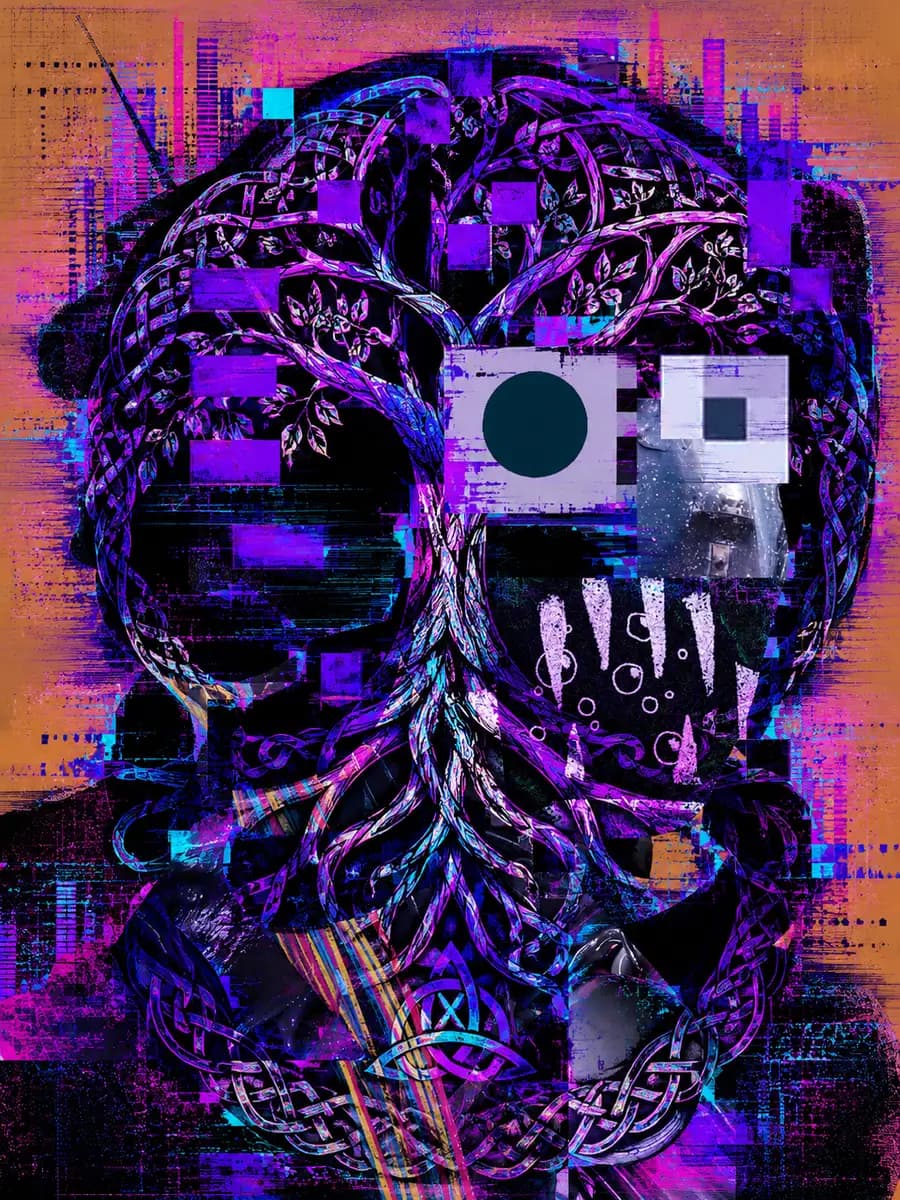
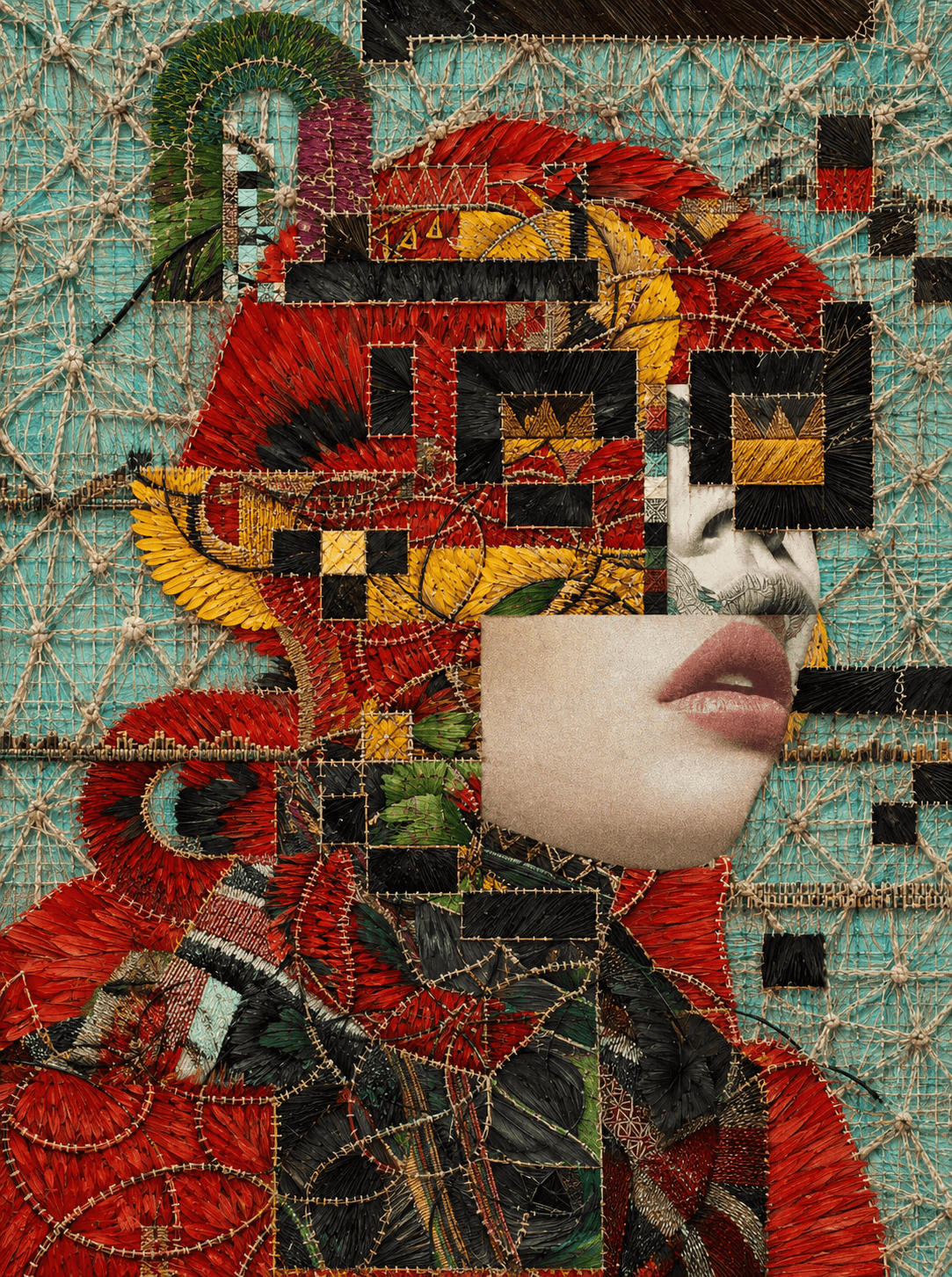
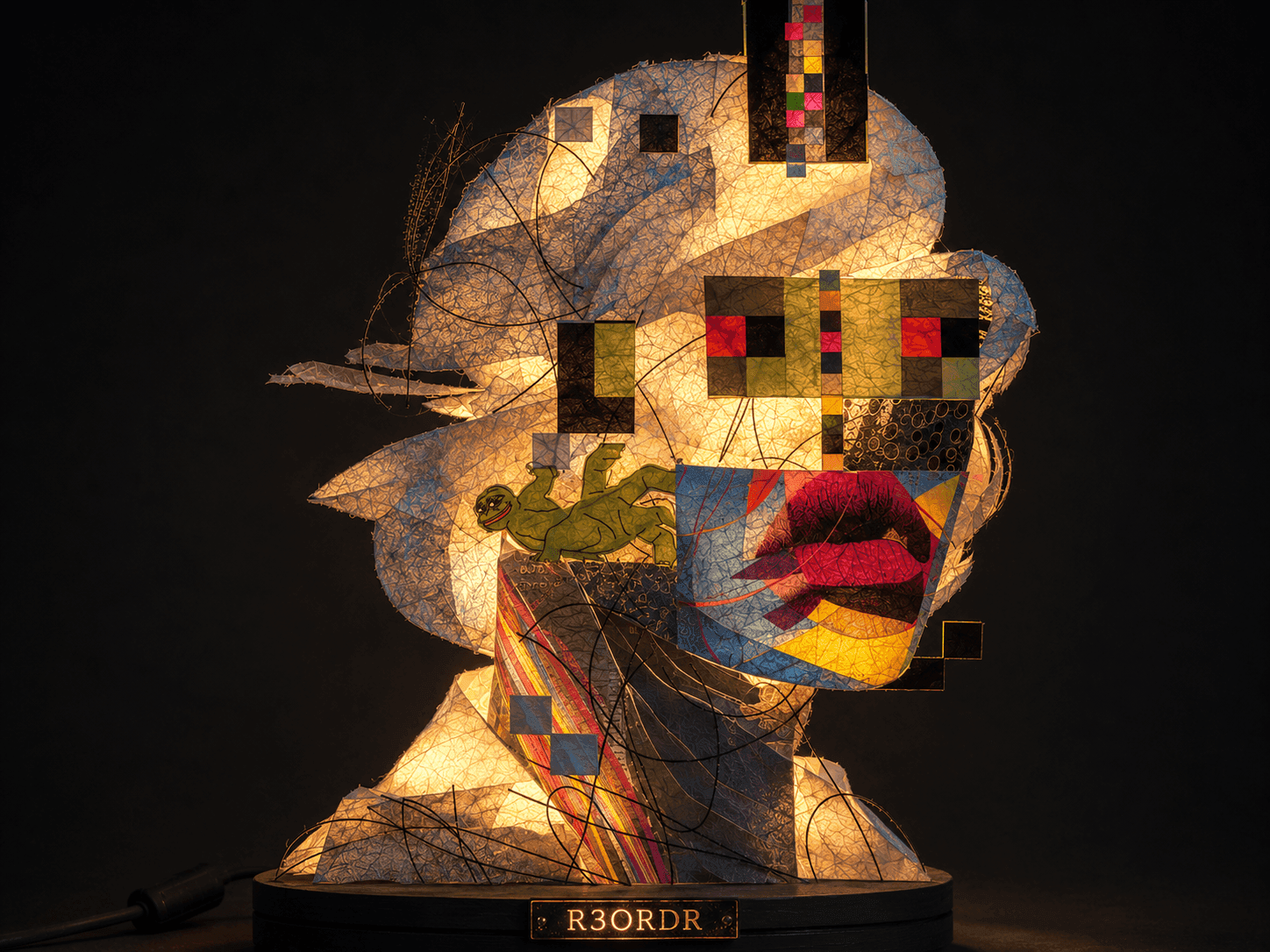
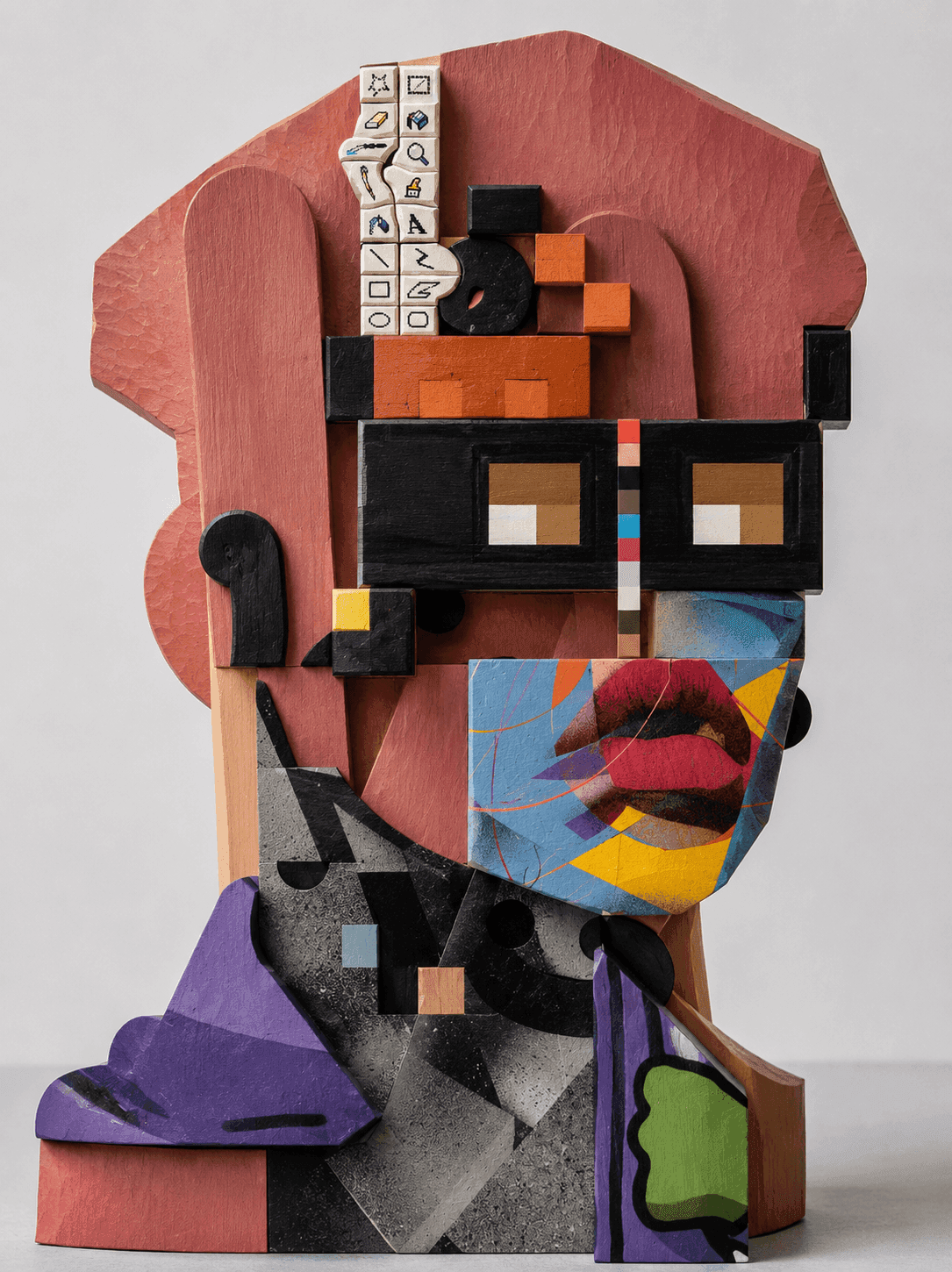
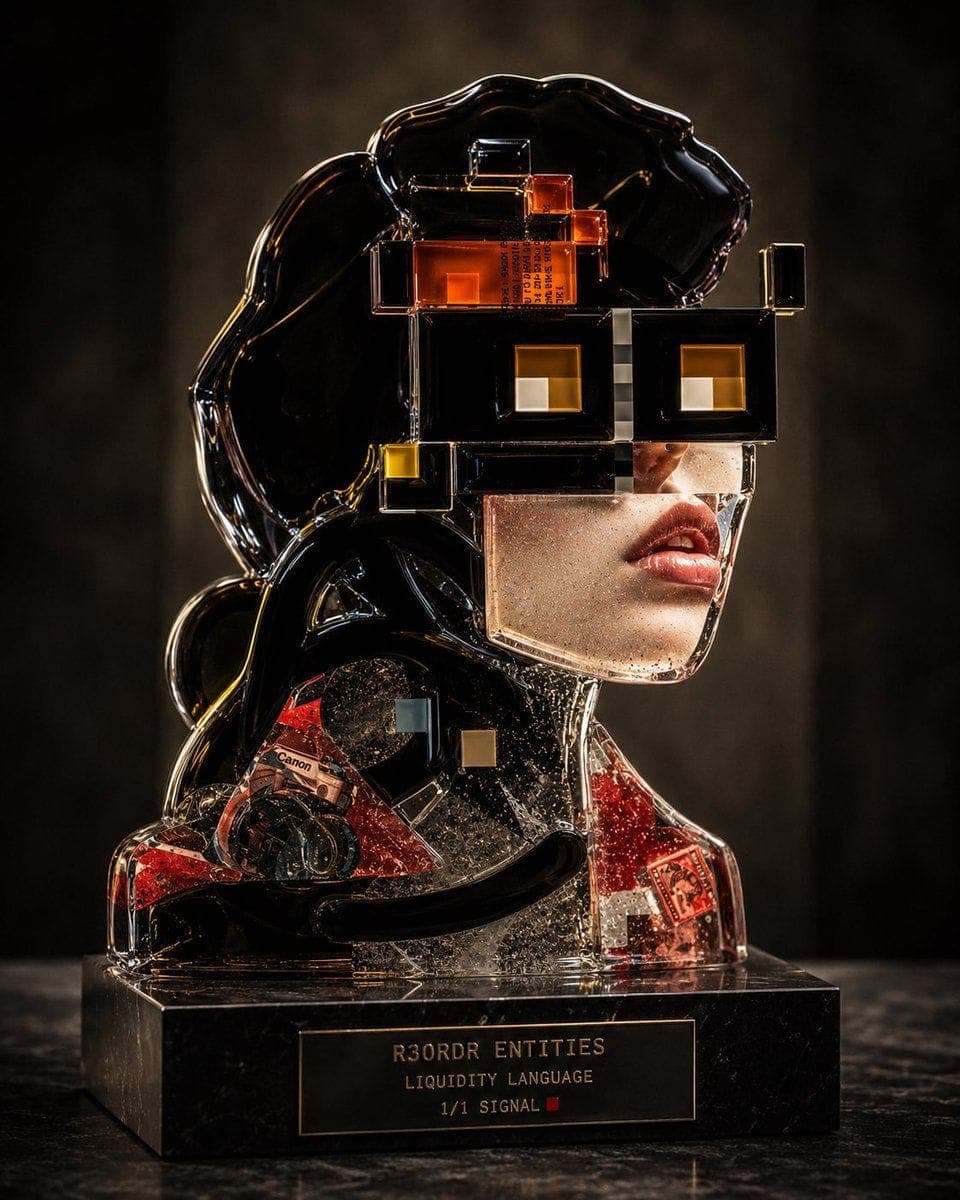
Blown-Glass Sculpture

Blown-Glass Sculpture

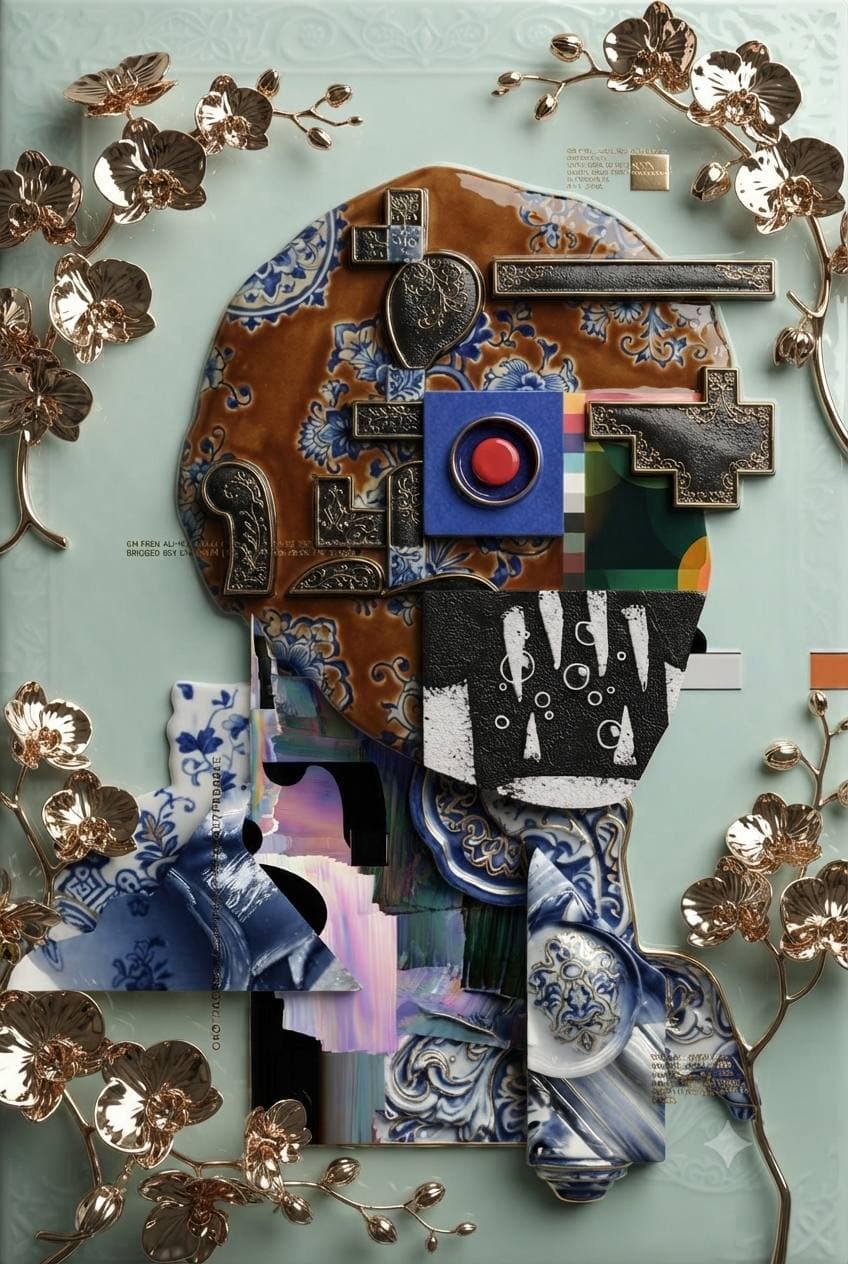
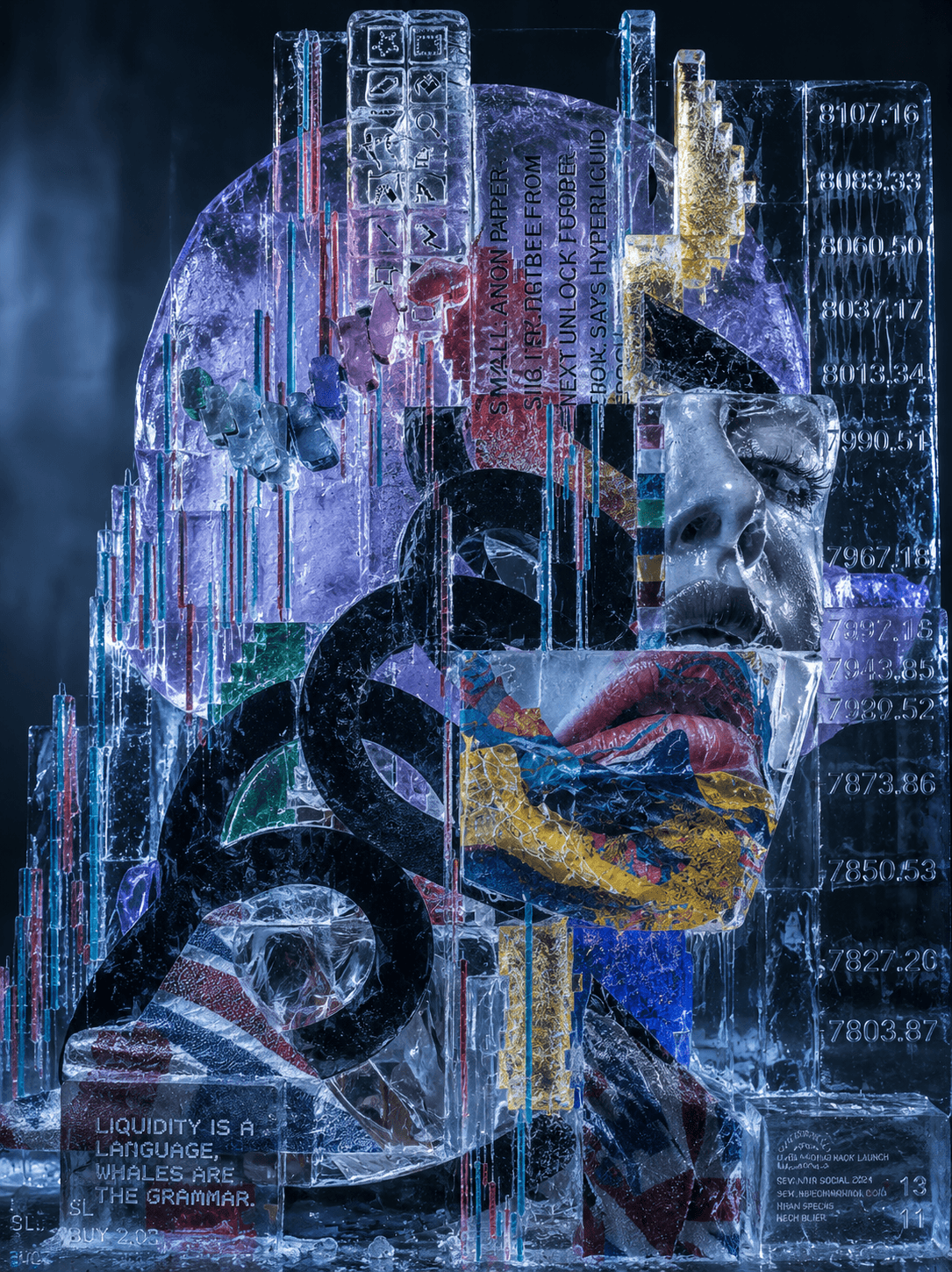
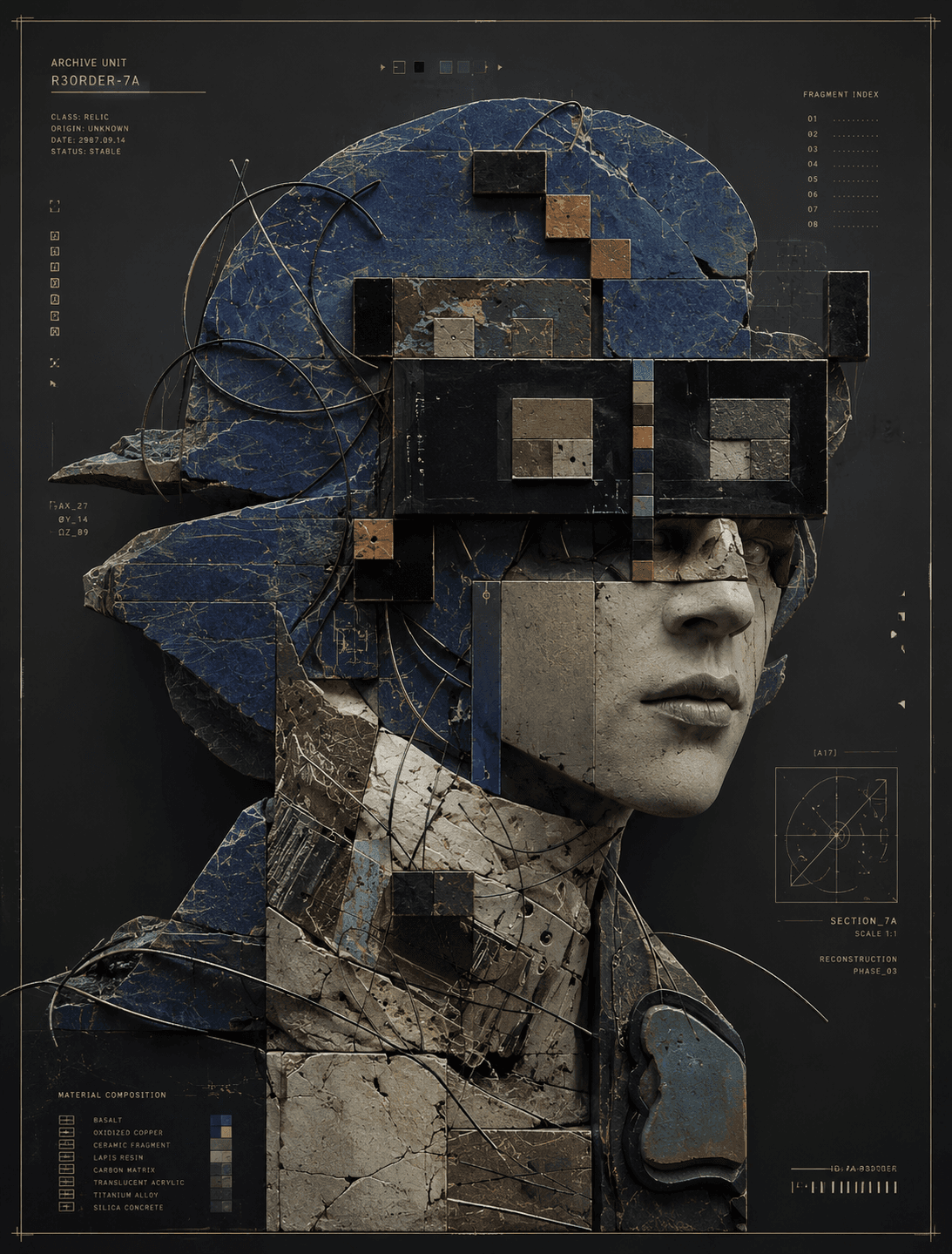
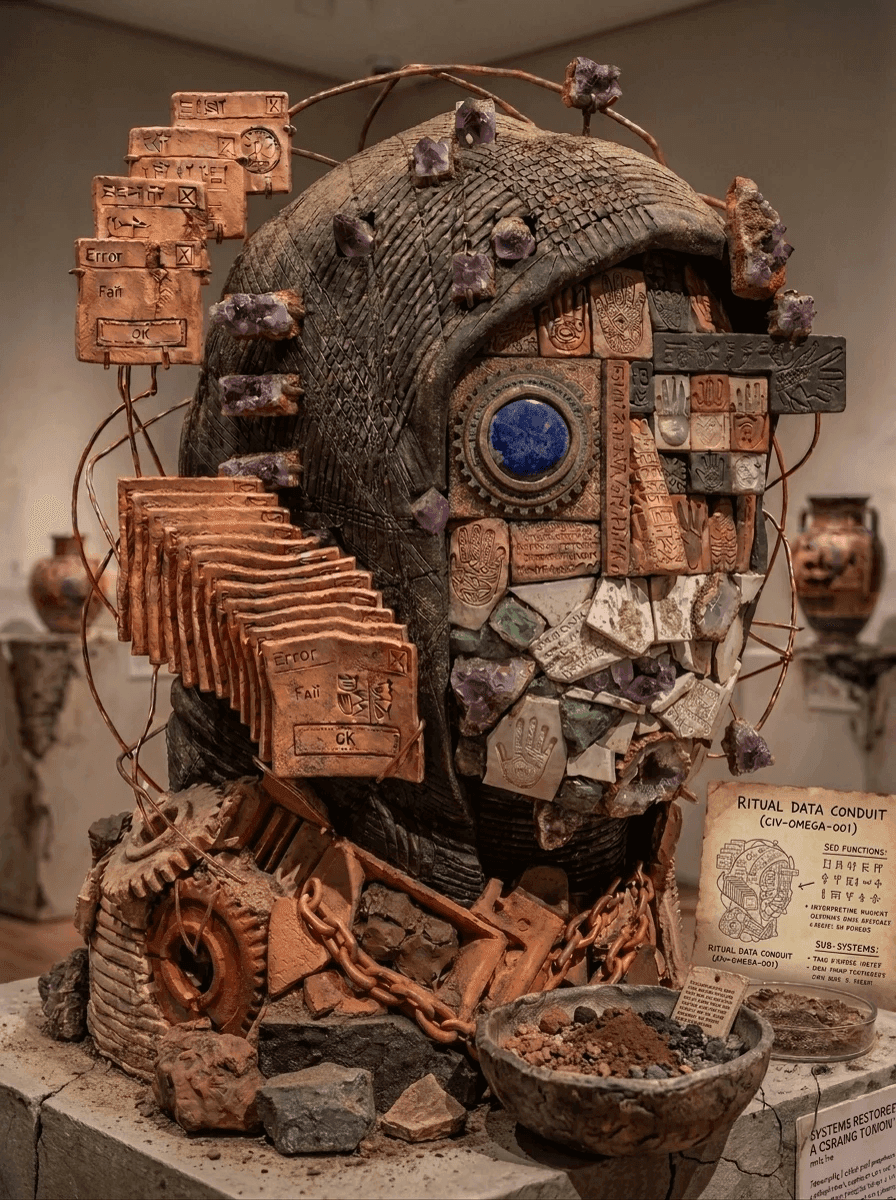
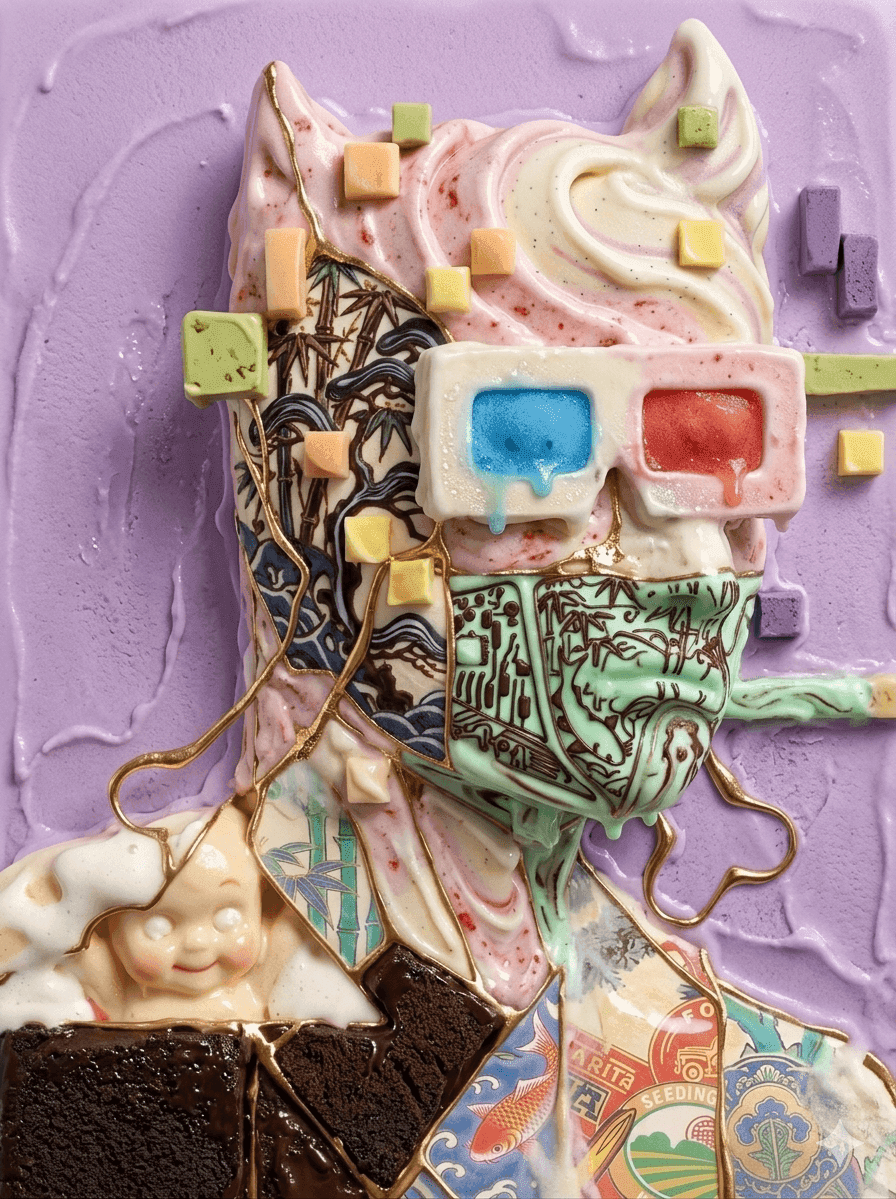
Transform the uploaded R3ORDR artwork into a high-end contemporary blown-glass sculpture. IMPORTANT: Preserve the uploaded artwork's identity exactly. Do NOT redesign, redraw, reinterpret, crop, simplify, alter composition, change proportions, invent new facial structure, remove symbols, or replace collage elements. The original artwork must remain instantly recognisable. Instead of printing the artwork onto glass — rebuild the entire artwork AS glass. Every collage fragment becomes a physical sculpted material: • black silhouette areas → deep smoked obsidian glass • skin fragments → softly frosted translucent glass • pixel blocks → precision-cut optical crystal cubes • colour bars → stacked Murano-style colour glass • text fragments → engraved internal glass layers • glitch marks → suspended trapped glass threads • torn paper textures → fractured laminated glass sheets • collage overlaps → fused layered transparent planes • colour accents → embedded luminous glass inclusions The piece should feel hand-crafted using museum-grade blown glass and cold-worked crystal techniques. Preserve exact silhouette, exact eye placement, exact facial geometry, exact collage layout, exact visual balance. Do not smooth or beautify. Allow slight internal bubbles, frozen flow marks, subtle stress lines, layered transparency, optical distortion and trapped reflections. Mount the finished sculpture on a luxury black marble plinth. Small engraved plaque: R3ORDR ENTITIES / [Artwork Number] / SIGNAL ■. Lighting: high-end gallery lighting, dark neutral background, soft cinematic reflections, luxury collector photography. Mood: museum object, collector sculpture, 1990s luxury glass figurine nostalgia, contemporary art fair masterpiece, fragile but monumental. Ultra realistic. Museum quality. 8K.

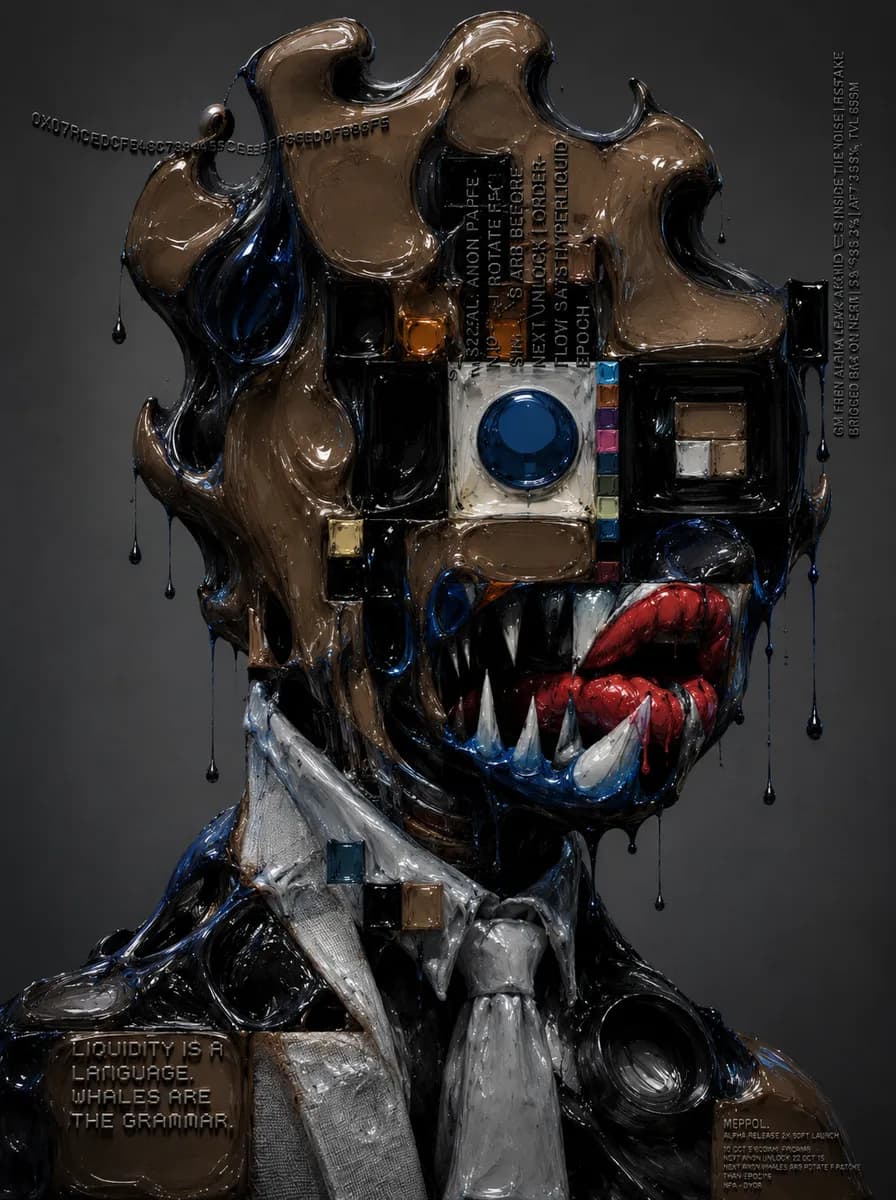
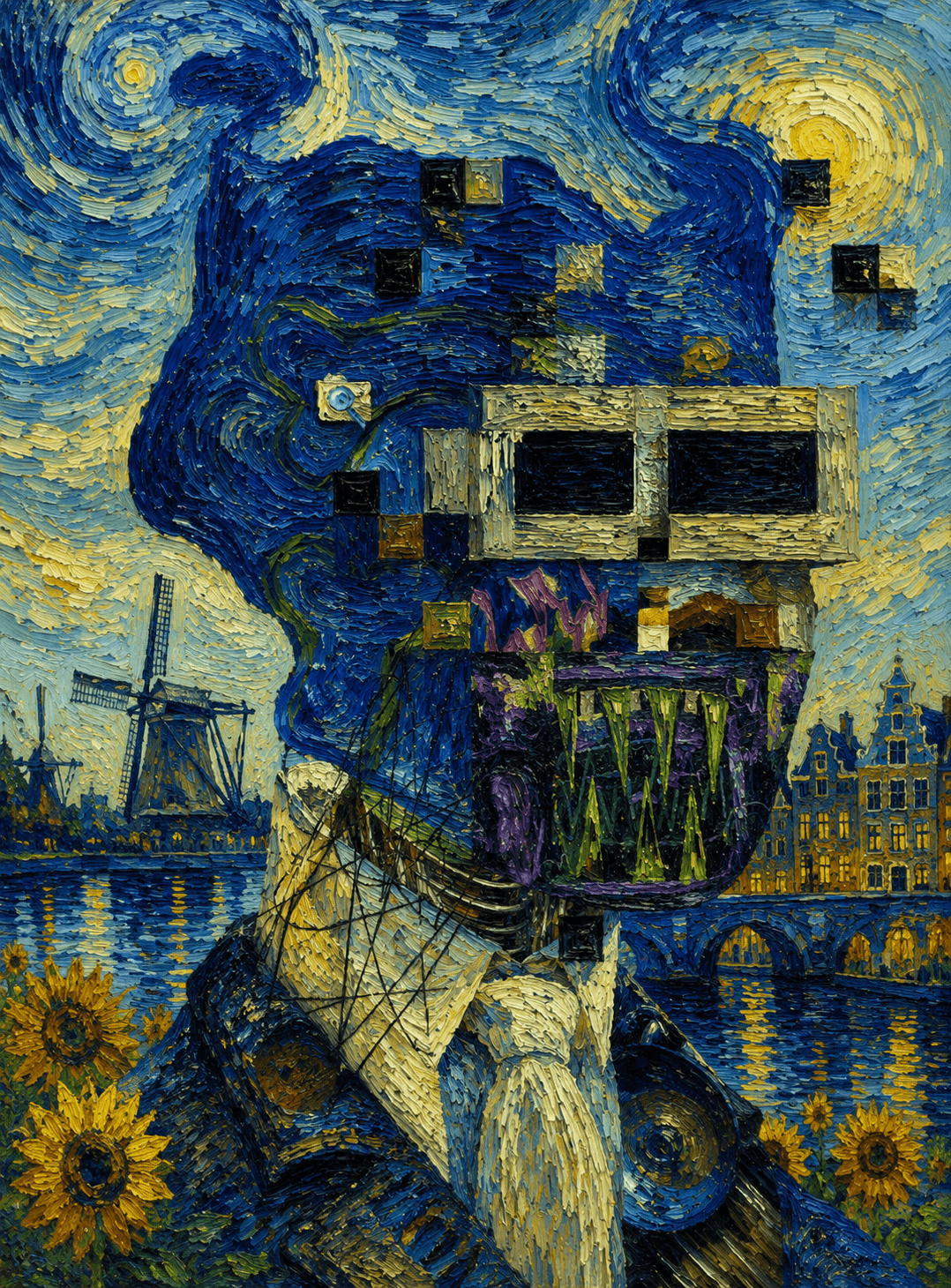
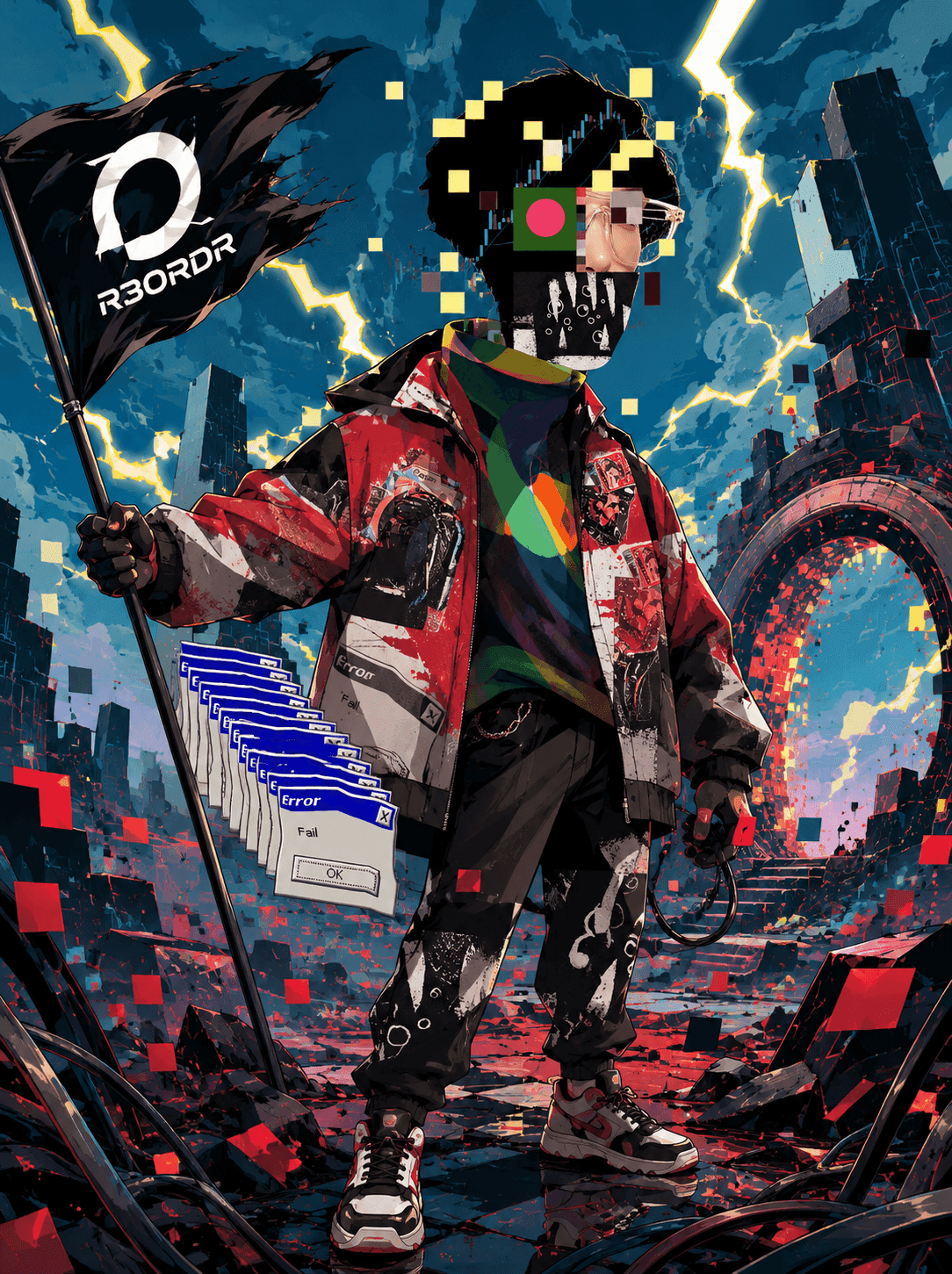
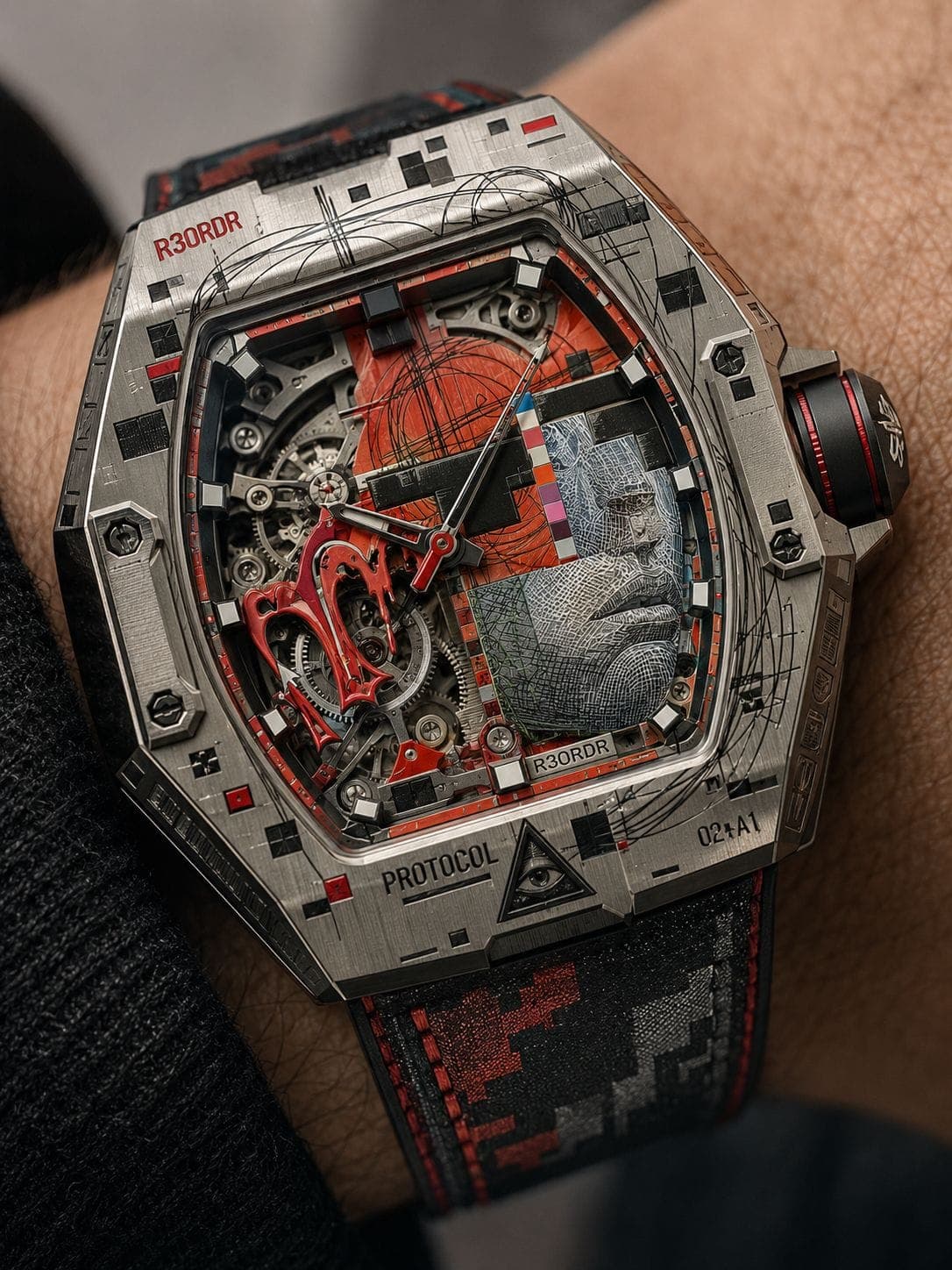
R3ORDR Luxury Watch

R3ORDR Luxury Watch

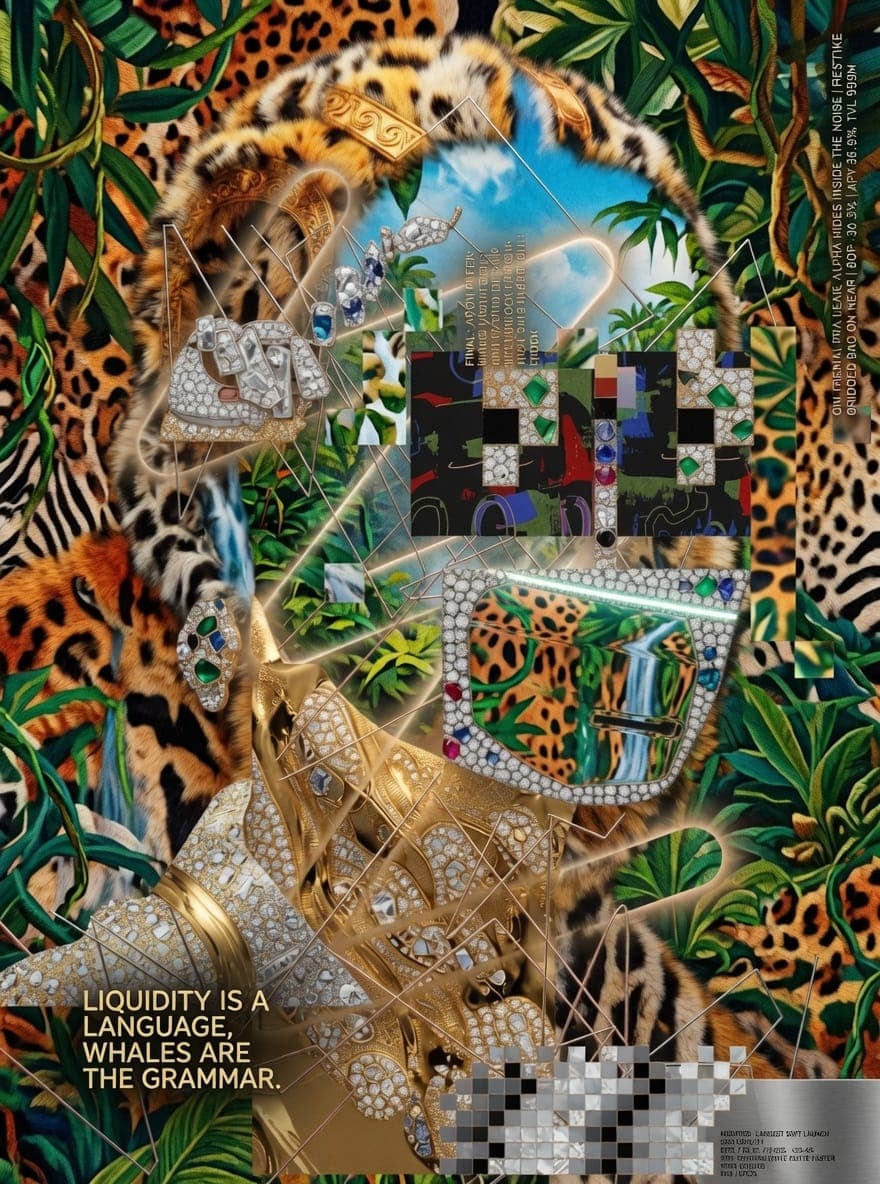
Use the input image as the PRIMARY design DNA for an ultra-exclusive luxury wristwatch. The goal is not to place the artwork onto a watch face. The goal is to translate the visual language, colors, symbols, fragments, textures, geometry and identity of the input image into a completely unique R3ORDR luxury timepiece. The watch should feel like a collaboration between Rolex, Richard Mille, MB&F and the R3ORDR Protocol. Every design decision must originate from the input image. Analyze and extract: color palette, shapes, symbols, fragments, textures, geometry, visual rhythm, patterns, signal elements, graphic motifs, emotional tone. Translate these into: watch case architecture, dial design, bezel details, crown design, bracelet construction, engraved surfaces, hands, indices, lume details, micro engravings, hidden protocol symbols. The watch must feel like a real luxury object — not a fantasy gadget, not sci-fi, not a concept render. A believable ultra-high-end collectible watch. Product shot: extreme close-up luxury photography, the watch worn on a wrist (the wrist supporting, the watch the hero), macro lens, shallow depth of field, luxury watch advertisement, premium magazine campaign, elegant hand positioning, subtle lifestyle context. R3ORDR design language: unique bezel patterns, fragmented indices, signal-inspired engravings, protocol markings, hidden rune details, subtle pixel motifs, reconstructed geometric elements, layered dial architecture. The watch should feel engineered from the artwork itself. Colors: the watch inherits the dominant colors of the input image; metal finishes complement the artwork (brushed titanium, black ceramic, forged carbon, platinum, white gold, matte steel, smoked sapphire); small accents may use colors sampled directly from the input image. Luxury details: ultra crisp machining, precision finishing, micro engraving, polished edges, brushed surfaces, premium craftsmanship, subtle protocol easter eggs, collector-grade execution. Mood: exclusive, powerful, timeless, understated, intelligent, protocol luxury, museum quality, future classic. Not loud, not flashy — epic through design, craftsmanship and detail. Luxury watch campaign photography. Macro product shot. Ultra realistic. Masterpiece quality. 3:4.

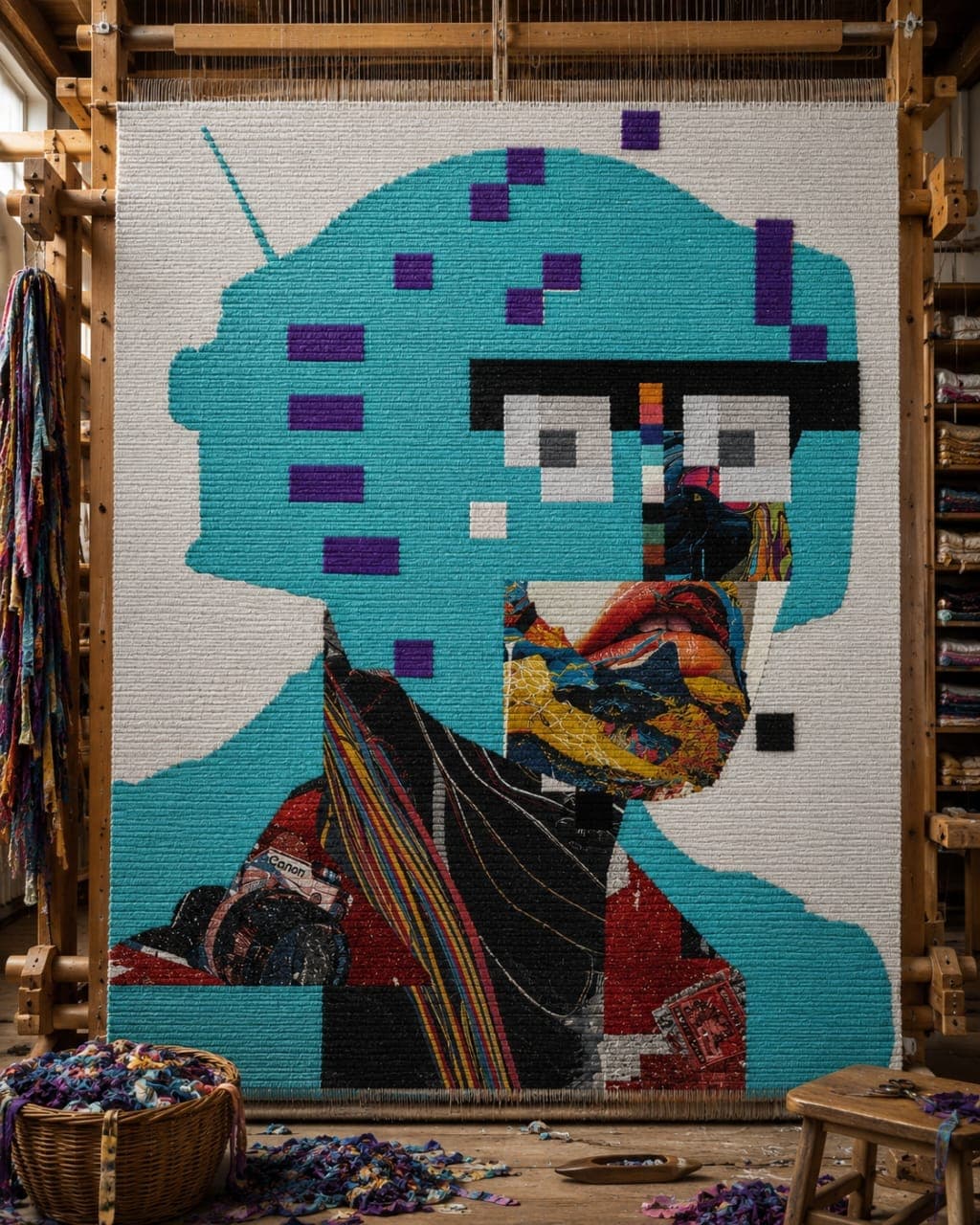
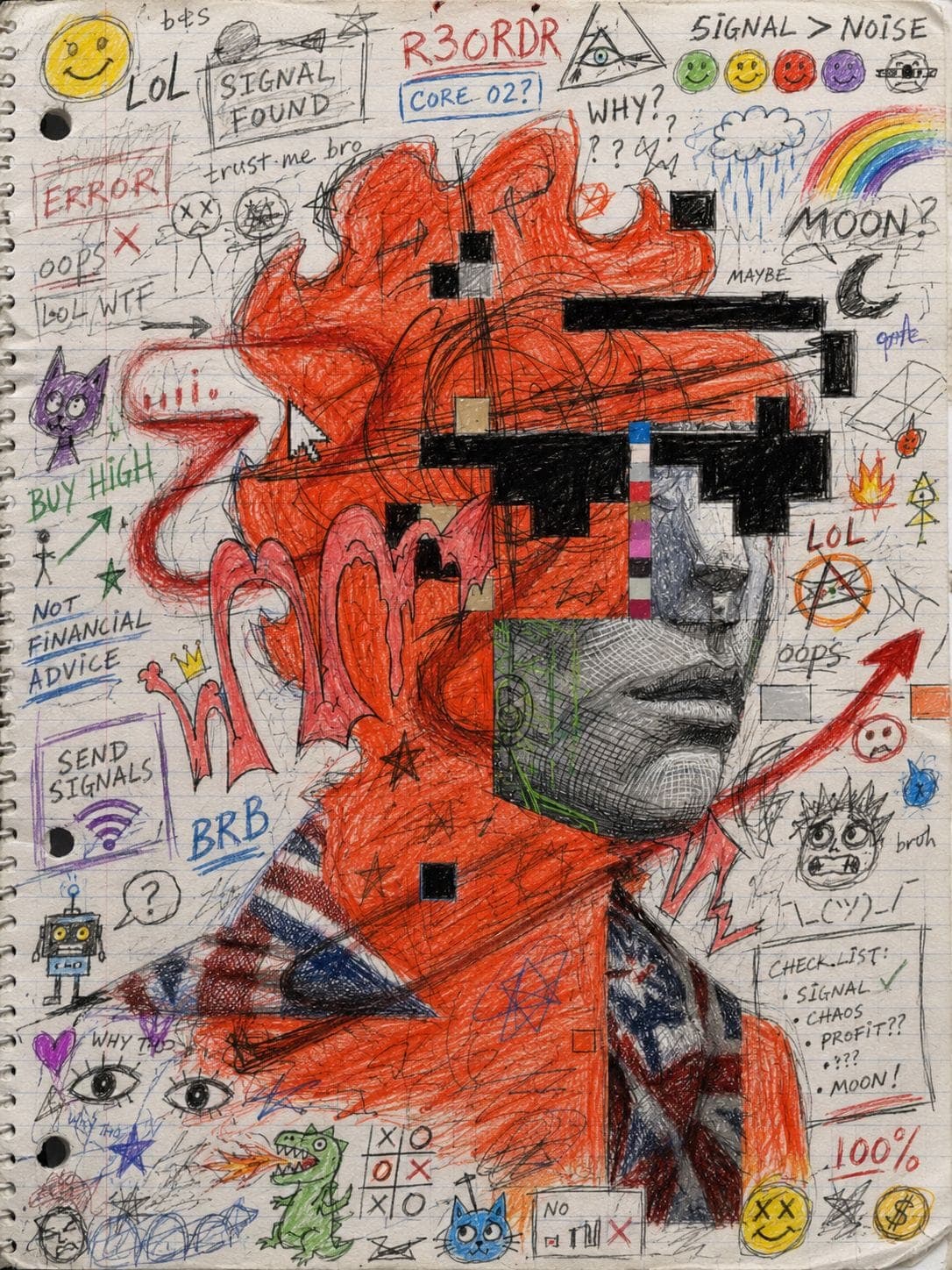
Childlike Notebook Doodle

Childlike Notebook Doodle

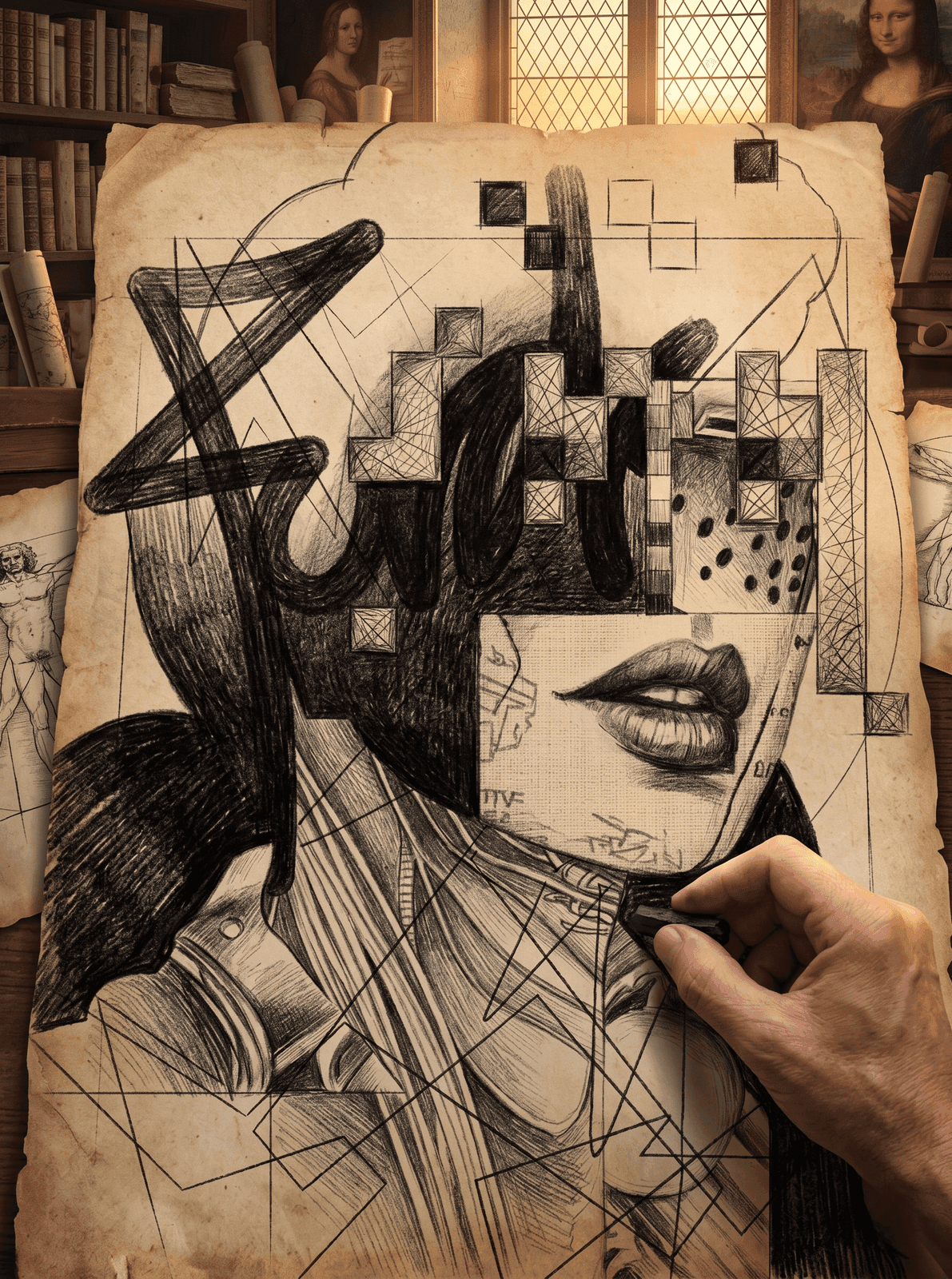
Use the input image as the PRIMARY reference and preserve its exact identity, composition, silhouette, colors, proportions, visual hierarchy and recognizable structure. The goal is NOT to improve the artwork. The goal is to reconstruct the entire image as if it was created by an extremely creative child obsessed with internet culture, memes, doodles, emojis, chaos and signal hunting. Everything should feel hand-drawn, imperfect, overworked, crossed out, corrected and drawn again. The final artwork should look like a giant notebook page that slowly evolved into the original image. Reconstruction method: rebuild the original image entirely from pencil scribbles, charcoal sketches, crayon drawings, marker doodles, notebook sketches, hand-drawn arrows, crossed-out ideas, repeated sketch lines, correction marks, messy annotations, weird emojis, smiley faces, rainbows, stars, hearts, clouds, monsters, meme faces, stick figures, badly drawn charts, misspelled words, error messages, doodled eyes, badly drawn hands, badly drawn coins, badly drawn protocol symbols. The image should feel like hundreds of pages of sketches layered together until the original artwork emerges. From far away the original artwork is visible; from close up everything falls apart into thousands of childlike drawings, notes, doodles and visual mistakes. Drawing style: shaky hand, inconsistent line weight, visible construction lines, sketch marks left visible, erased areas, overdrawn shapes, multiple failed attempts, rough charcoal texture, pencil smudges, notebook energy, creative chaos, unfinished but somehow perfect. Text elements (handwritten, some misspelled, some letters backwards, some crossed out and rewritten): SIGNAL FOUND, LOL, WHY?, R3ORDR, TRUST ME BRO, SIGNAL > NOISE, BUY HIGH, NOT FINANCIAL ADVICE, OOPS, ERROR, MOON?, MAYBE, BRB, LOL WTF, CORE 02?, SEND SIGNALS. Colors: sampled from the original image plus crayon colors, marker colors, cheap colored-pencil colors, rainbow doodles, smiley yellow, bright childlike accents. Mood: internet child genius, meme archaeology, creative chaos, signal notebook, protocol doodles, schoolbook from another dimension. NO photorealism, NO realistic rendering, NO cinematic lighting, NO oil/acrylic/digital painting, NO concept art, NO 3D/CGI render, NO sculpture, NO polished surfaces, NO clean typography, NO vector graphics, NO minimalism, NO symmetry, NO perfection. Everything should feel hand-drawn, messy, playful, imperfect, over-sketched, childlike and chaotic while still preserving the identity of the original image. Maximum doodle density. Maximum creative chaos. Aspect ratio 3:4.

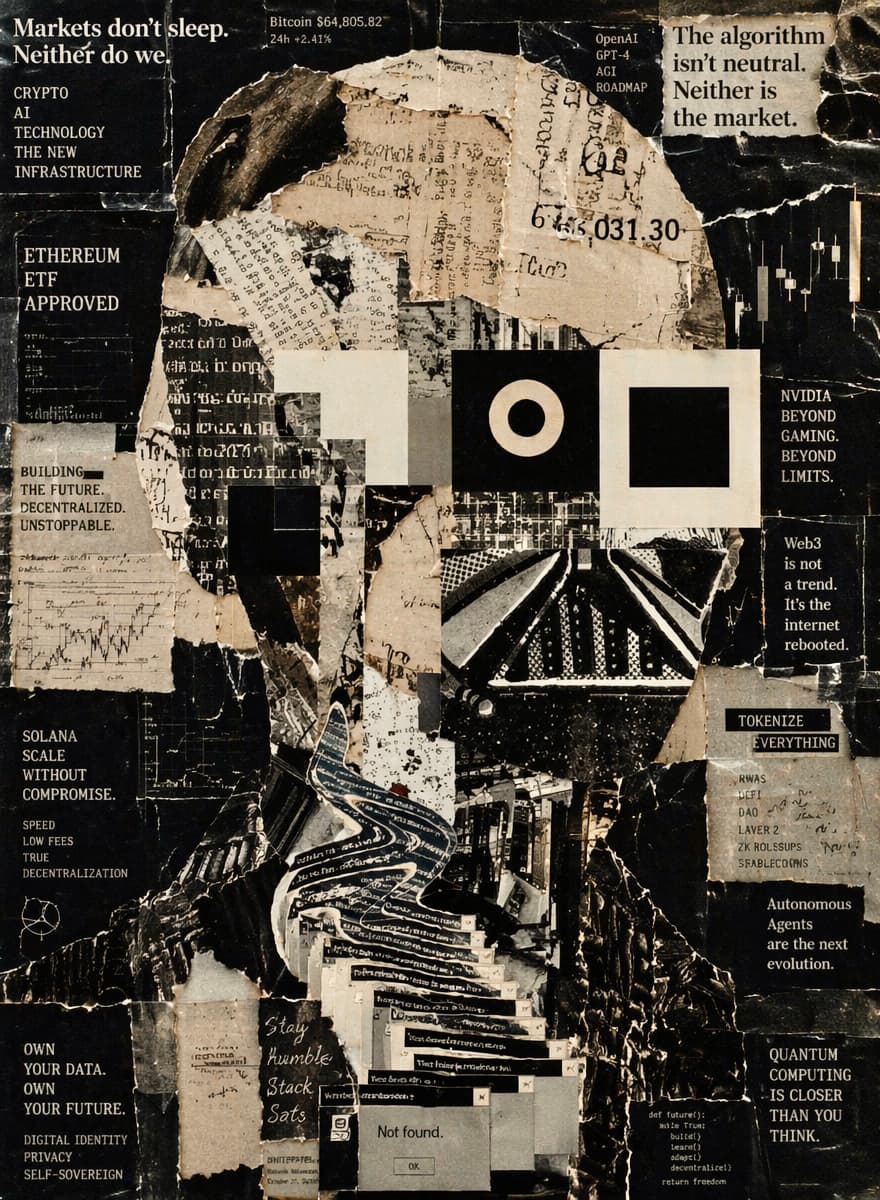
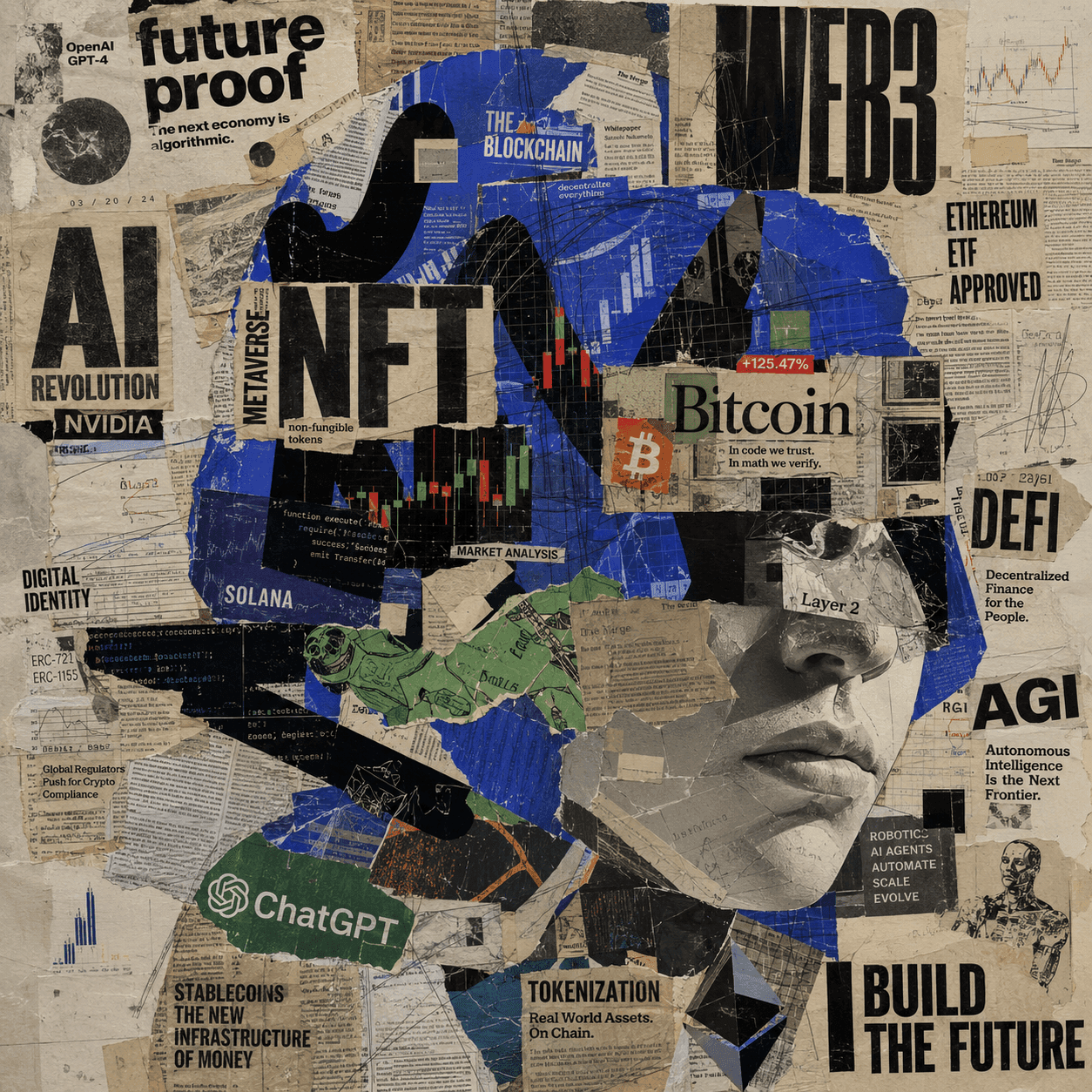
Chaotic Collage — Aged Paper

Chaotic Collage — Aged Paper

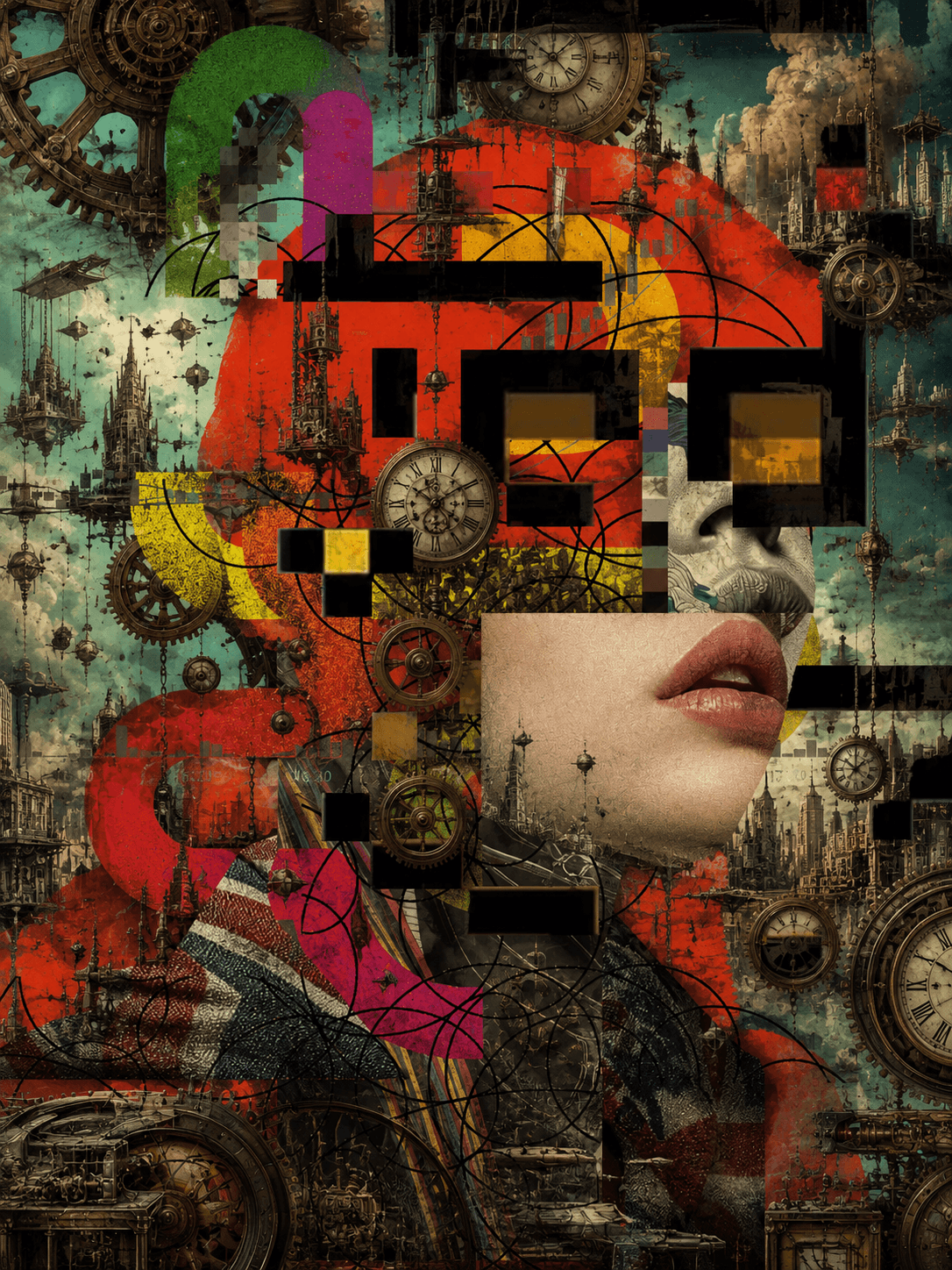
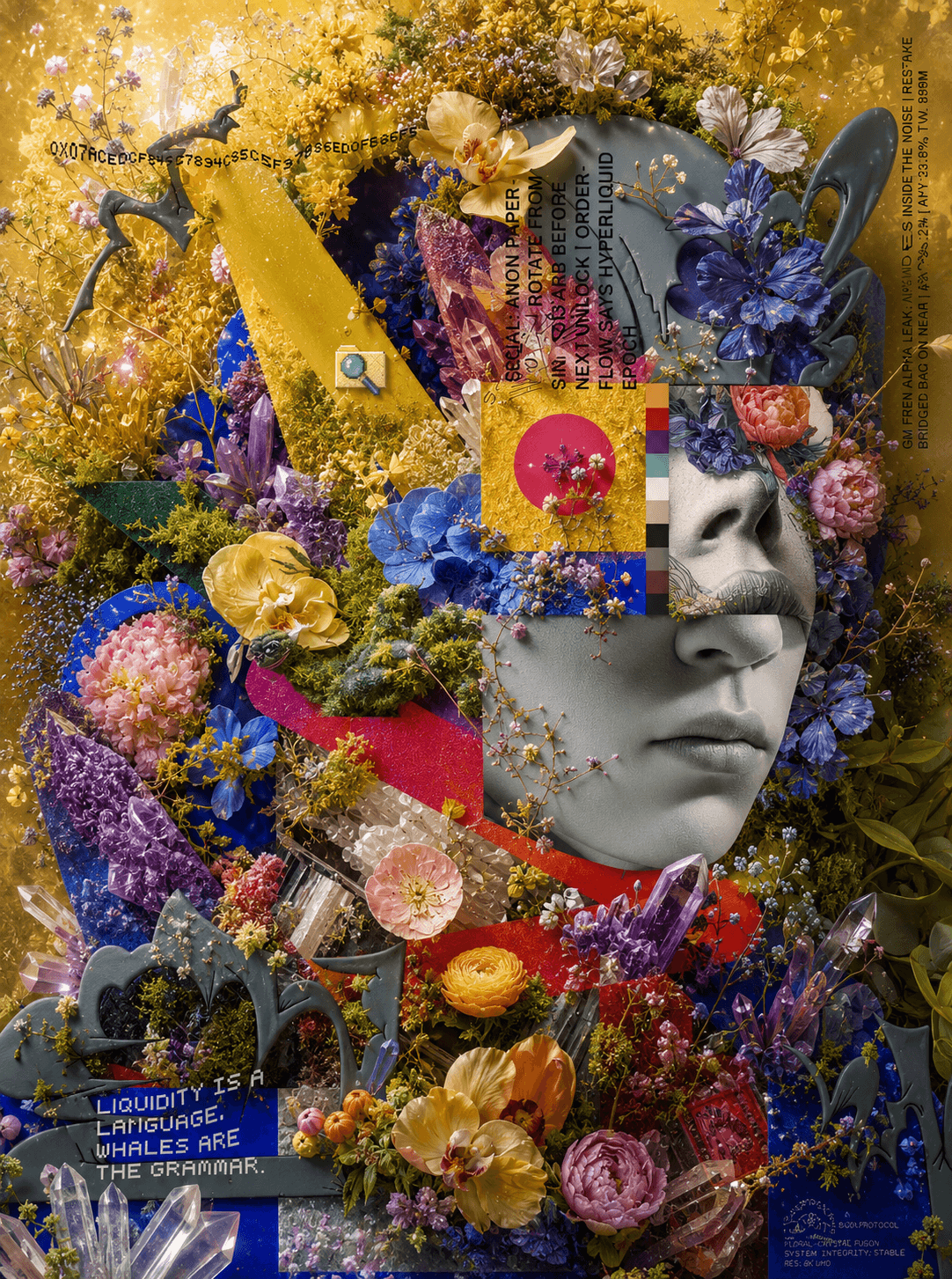
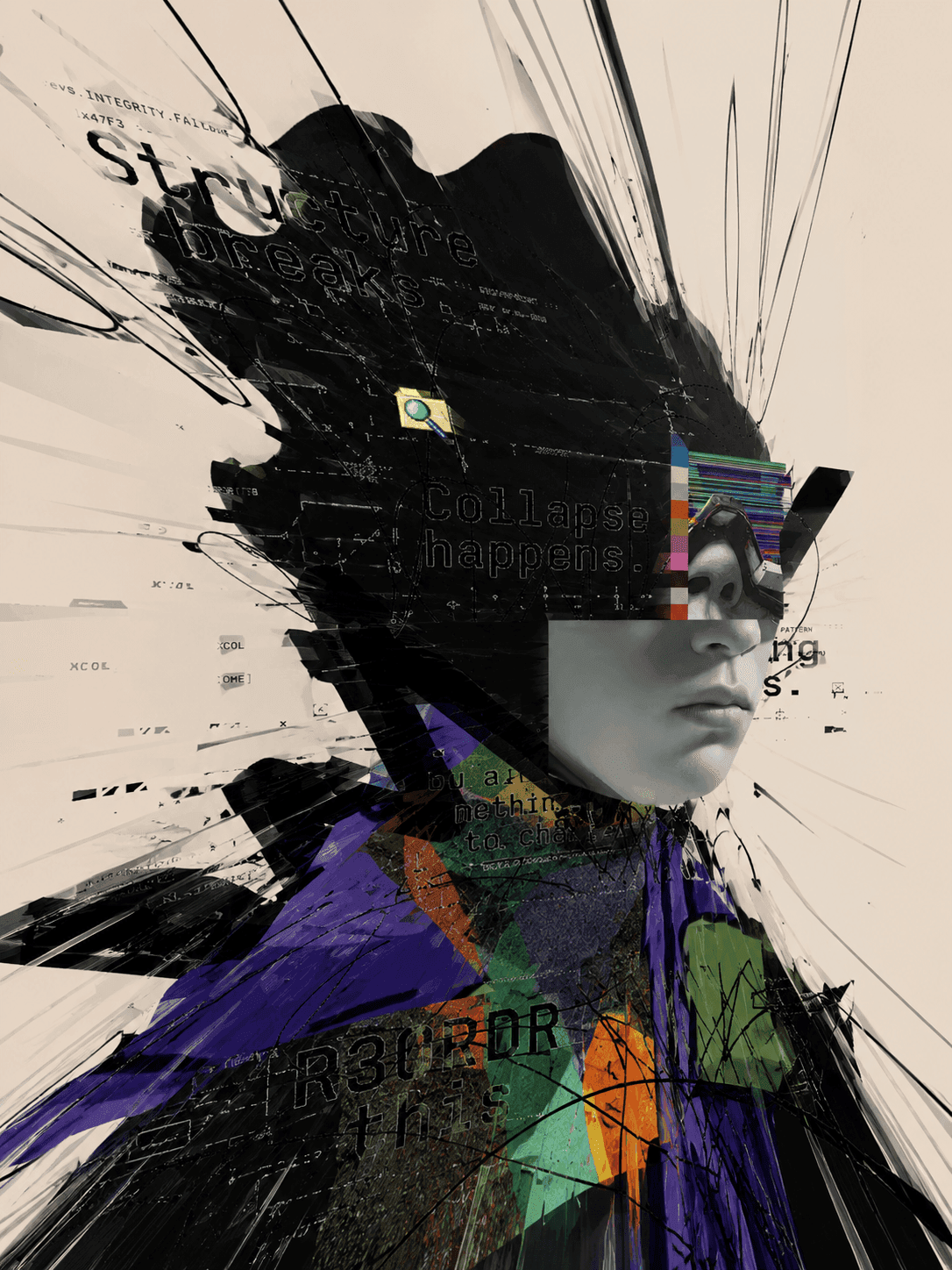
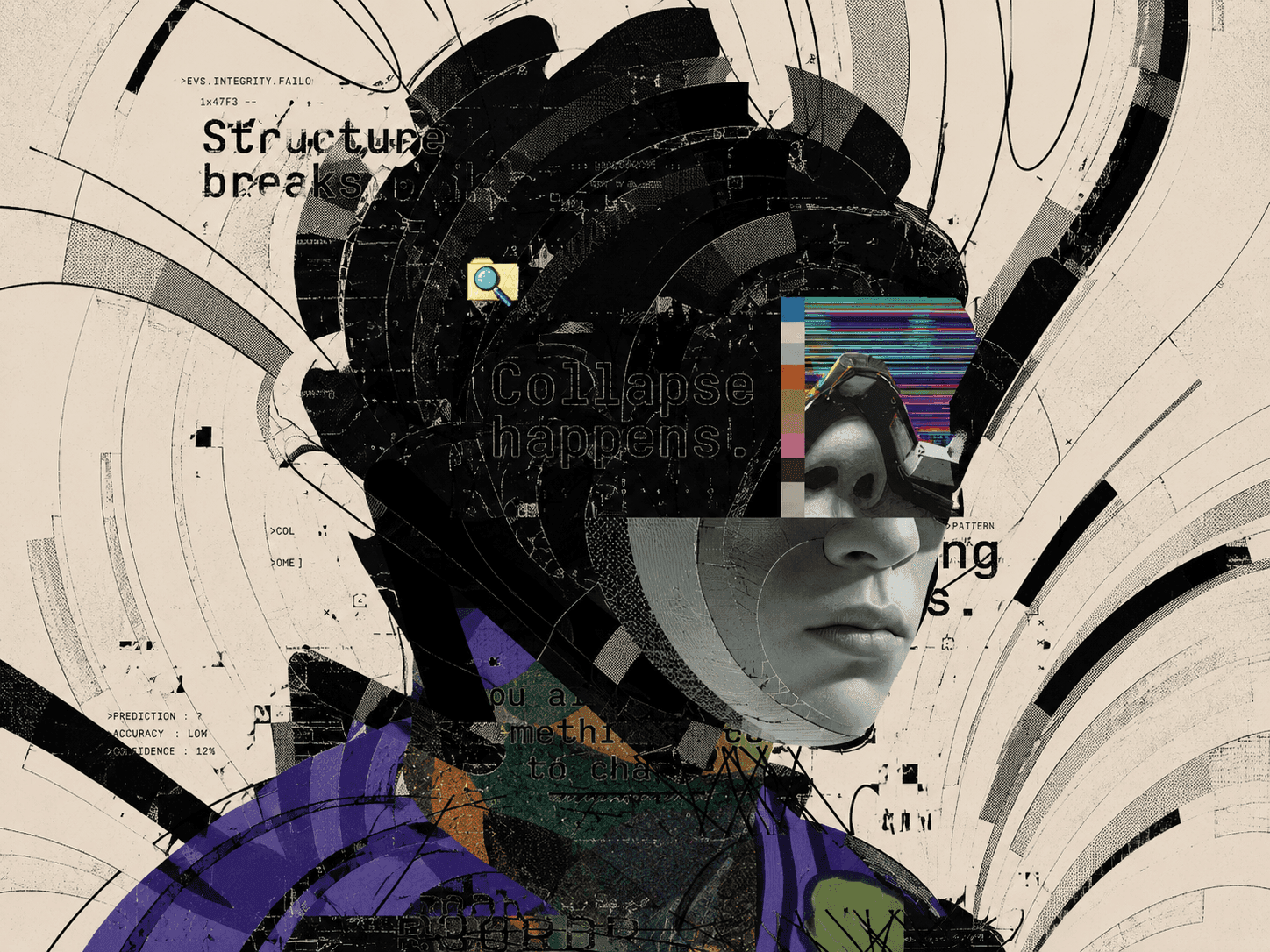
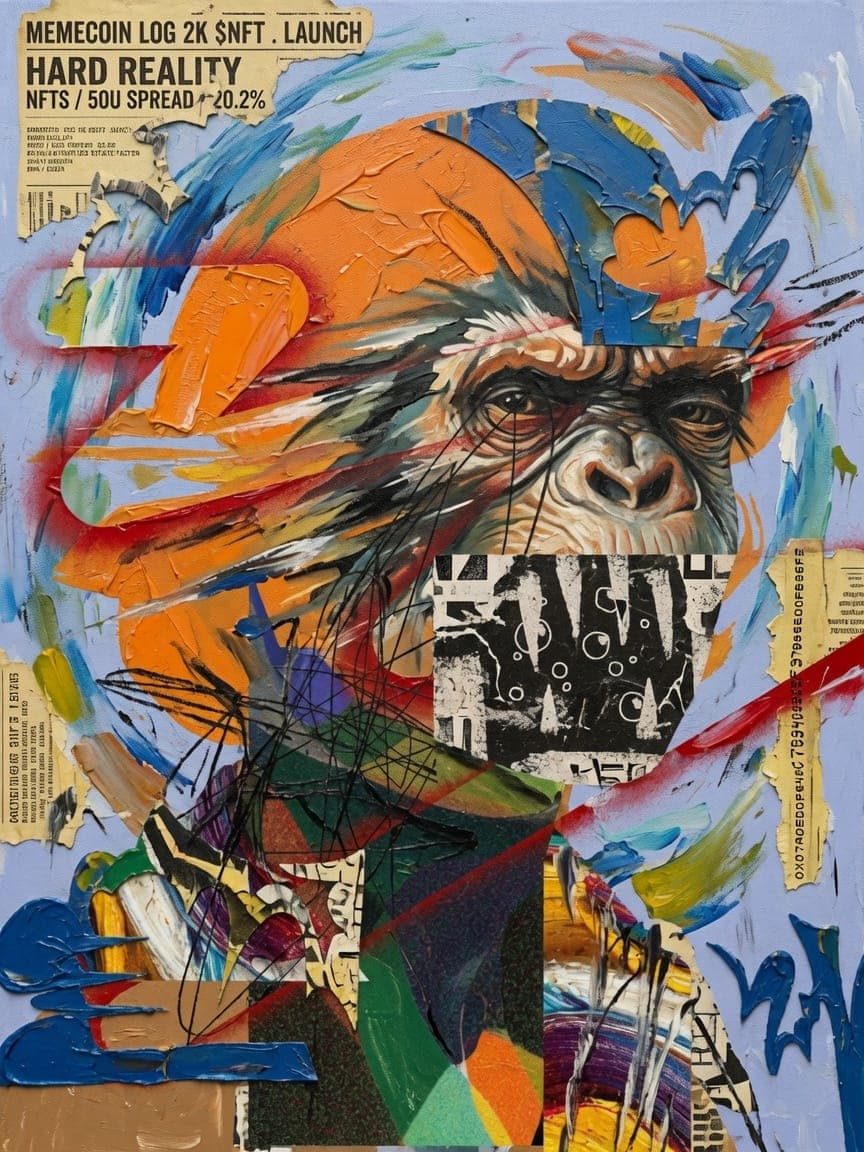
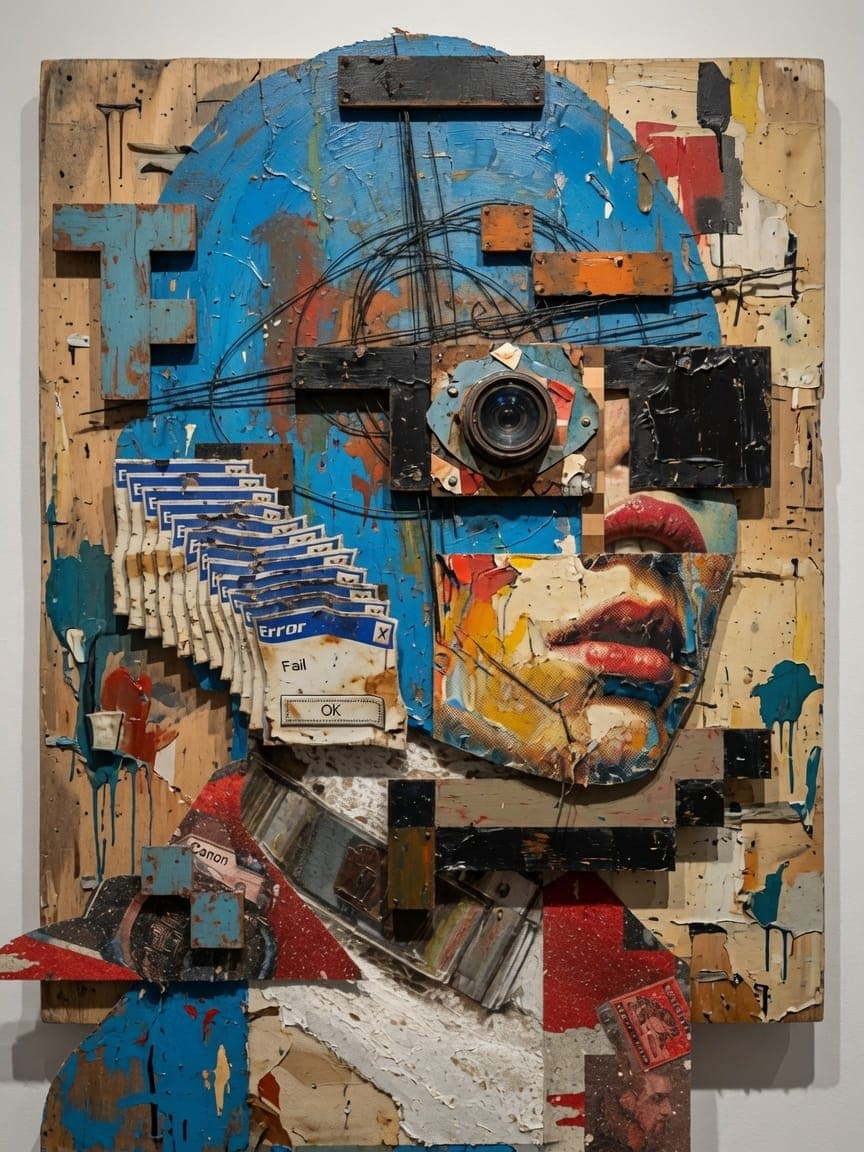
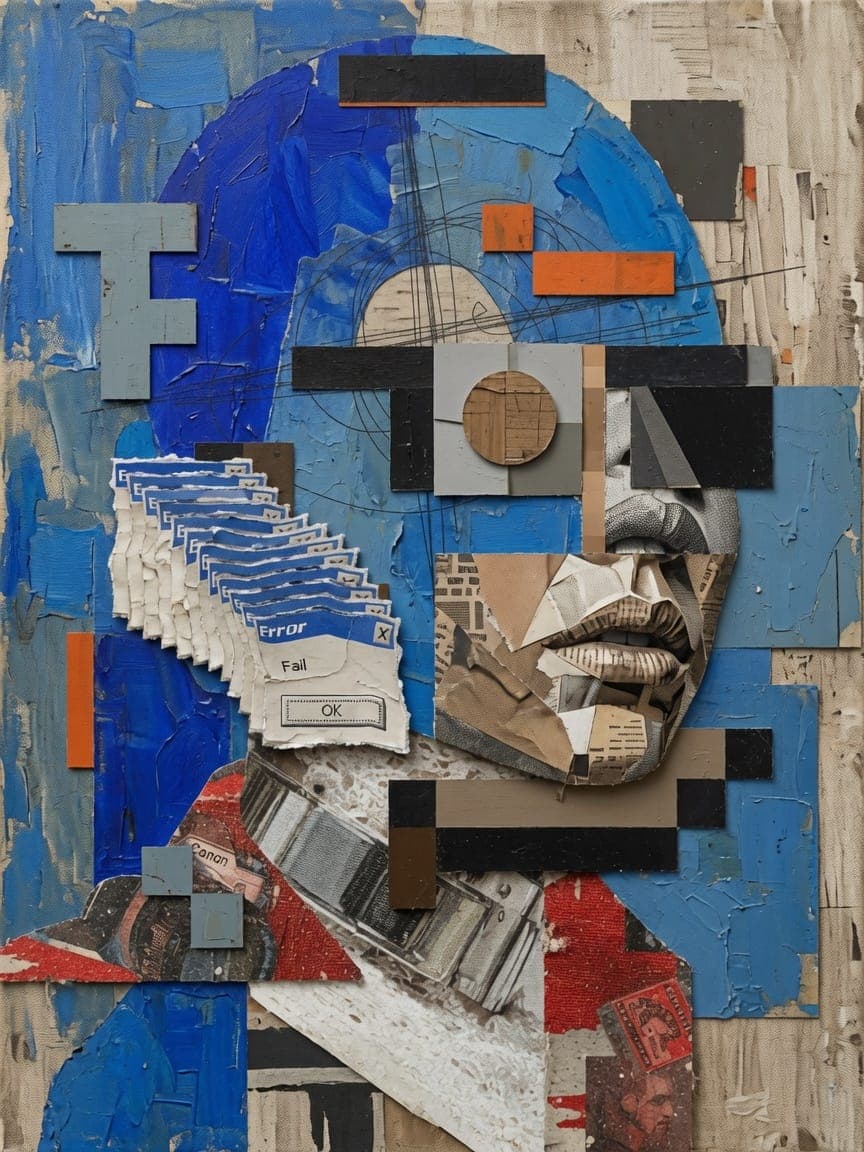
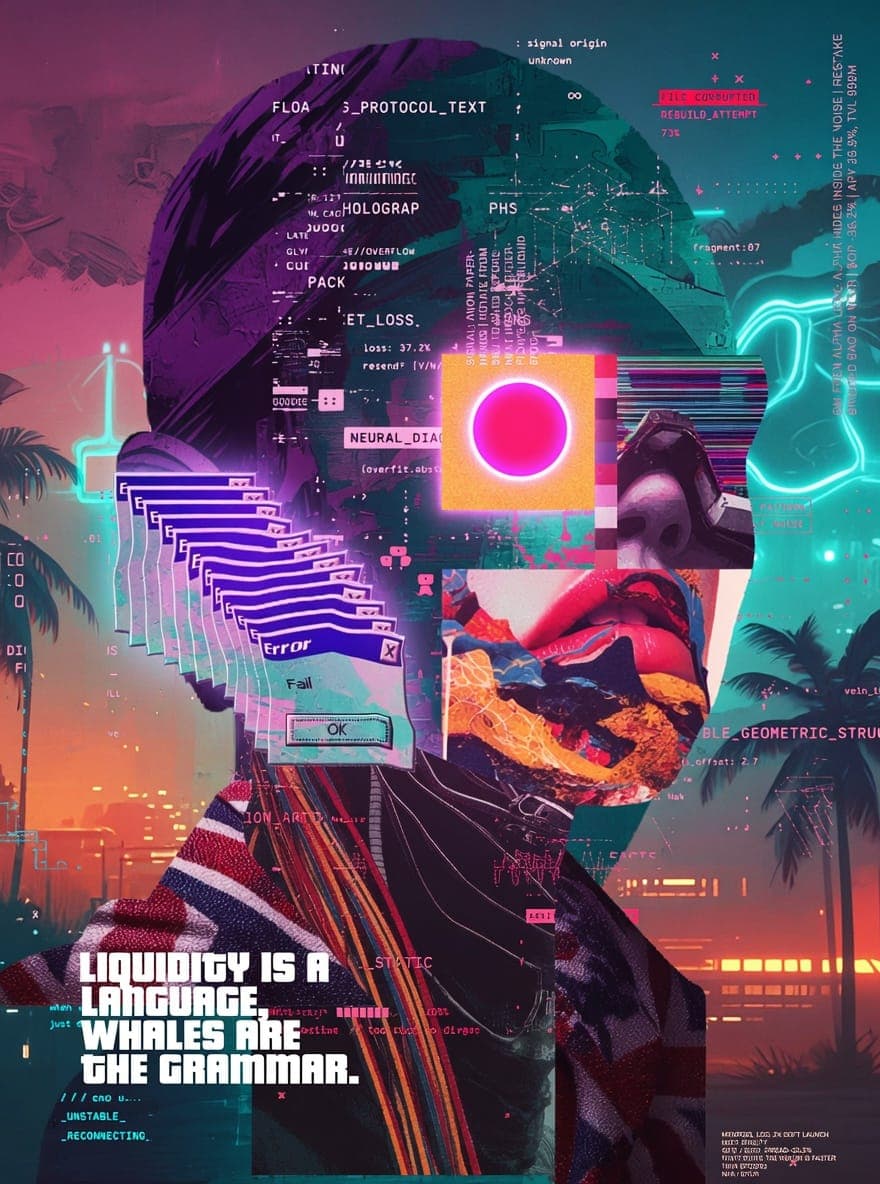
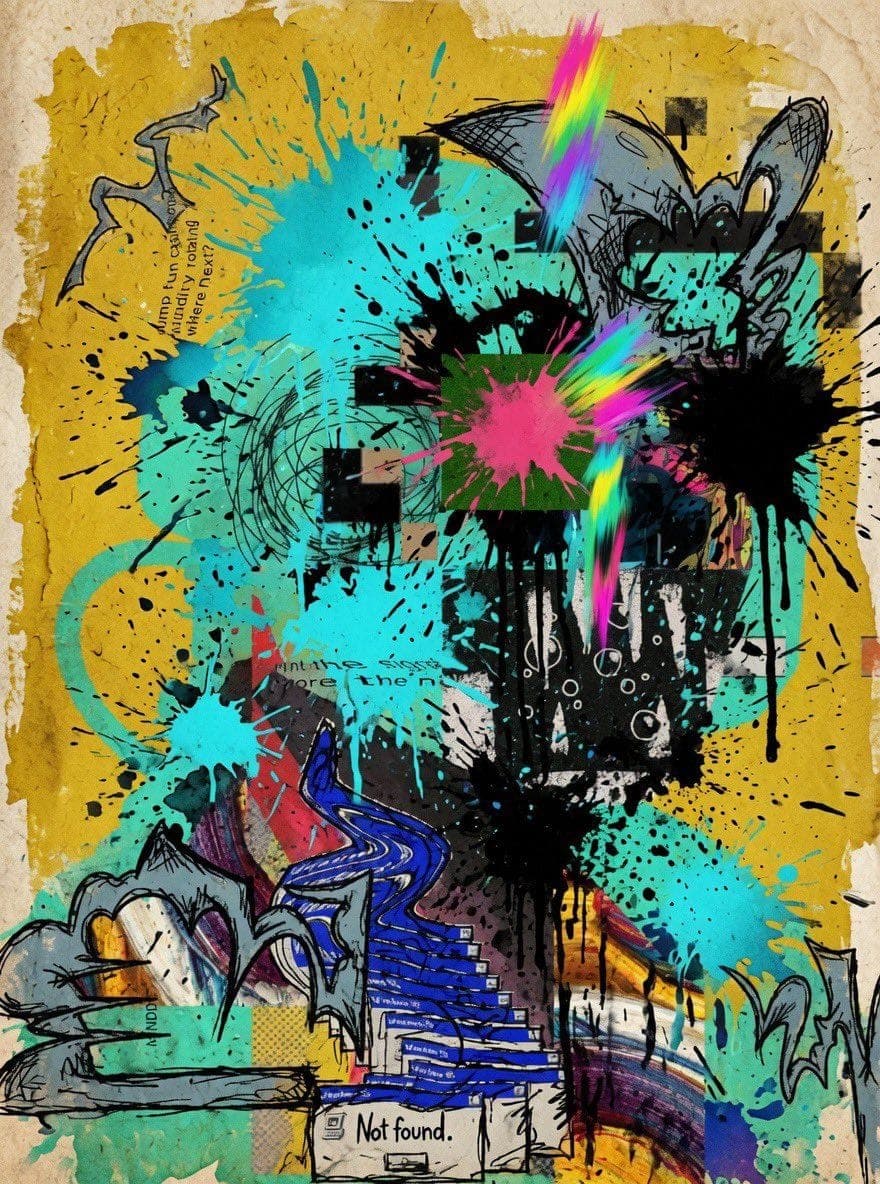
Highly detailed chaotic mixed-media collage on aged, yellowed, textured paper with visible fibers, creases, and irregular torn edges. Explosive cyan and teal paint splatters with heavy black ink drips and sprays. A vibrant rainbow-colored starburst paint explosion on the right side merging into thick dripping black ink. Abstract black graffiti-style drawings and organic wing-like/horned shapes. [CENTRAL ELEMENT / CUSTOM IMAGE: e.g. "a large torn paper layer featuring [your character/image] integrated into the center" or "a winding blue staircase ascending from bottom left"]. Scattered small pixelated squares and 8-bit digital glitch blocks throughout. Small torn rectangular collage fragments and UI-like inserts. Fragmented and rotated distressed text including partial phrases like "[YOUR TEXT HERE]". A retro browser or application window graphic at the bottom center displaying "[YOUR TEXT OR 404 MESSAGE]". Layered overlapping elements with semi-transparent torn paper effects, paint drips connecting layers, and dynamic energetic movement. Street art meets glitch art meets digital collage. Gritty yet vibrant color palette against warm yellow background, high contrast, intricate textures, rebellious underground energy mixed with internet/digital culture.

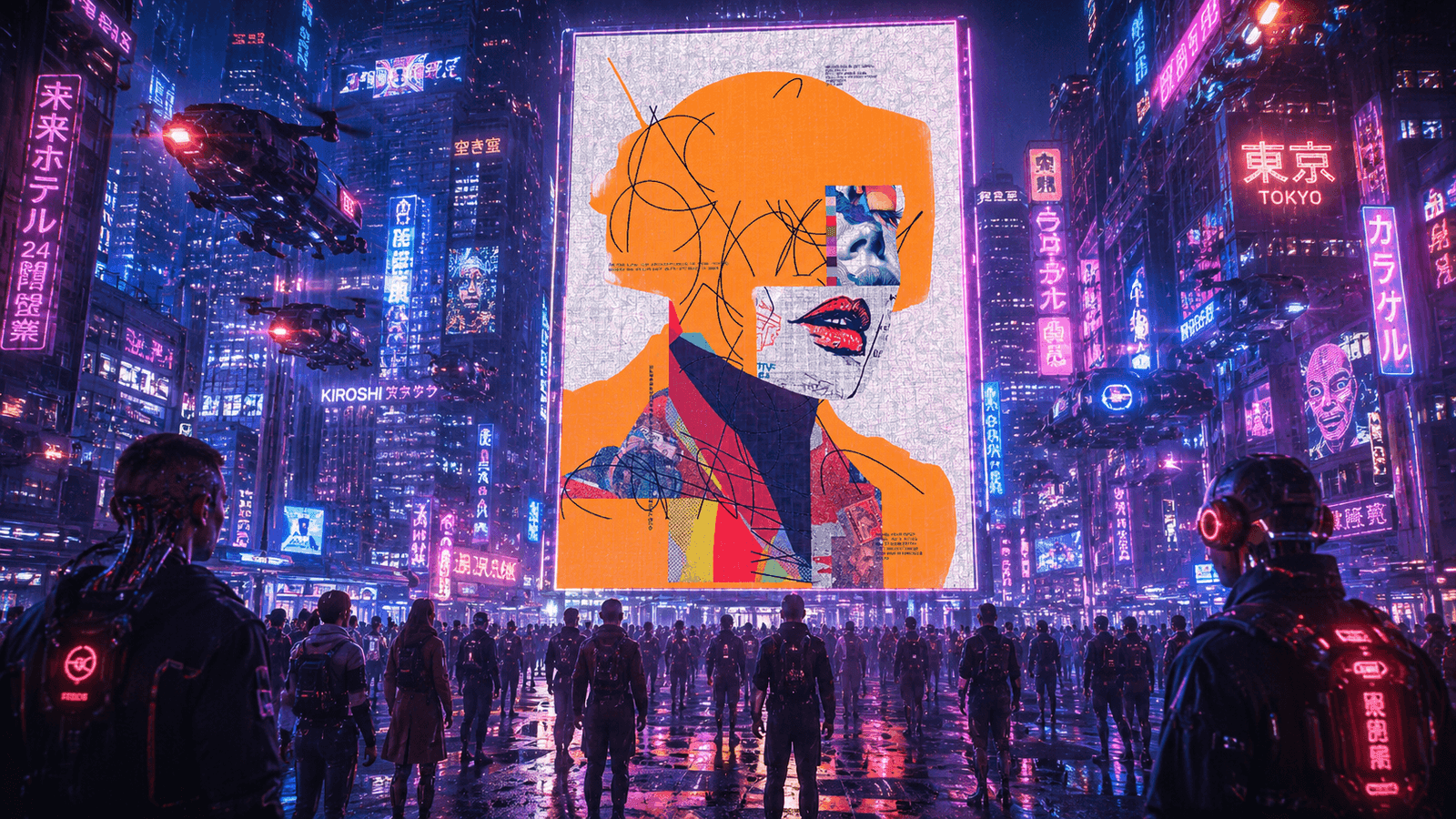
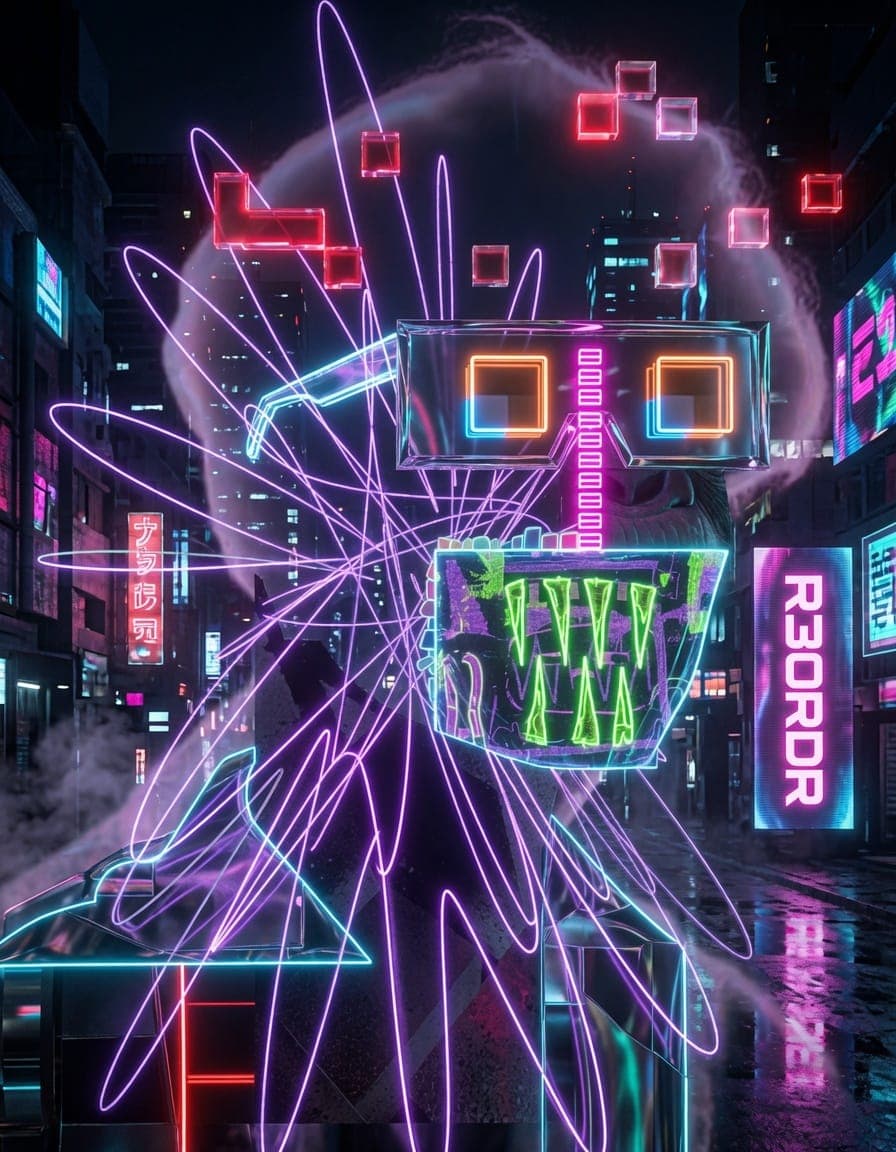
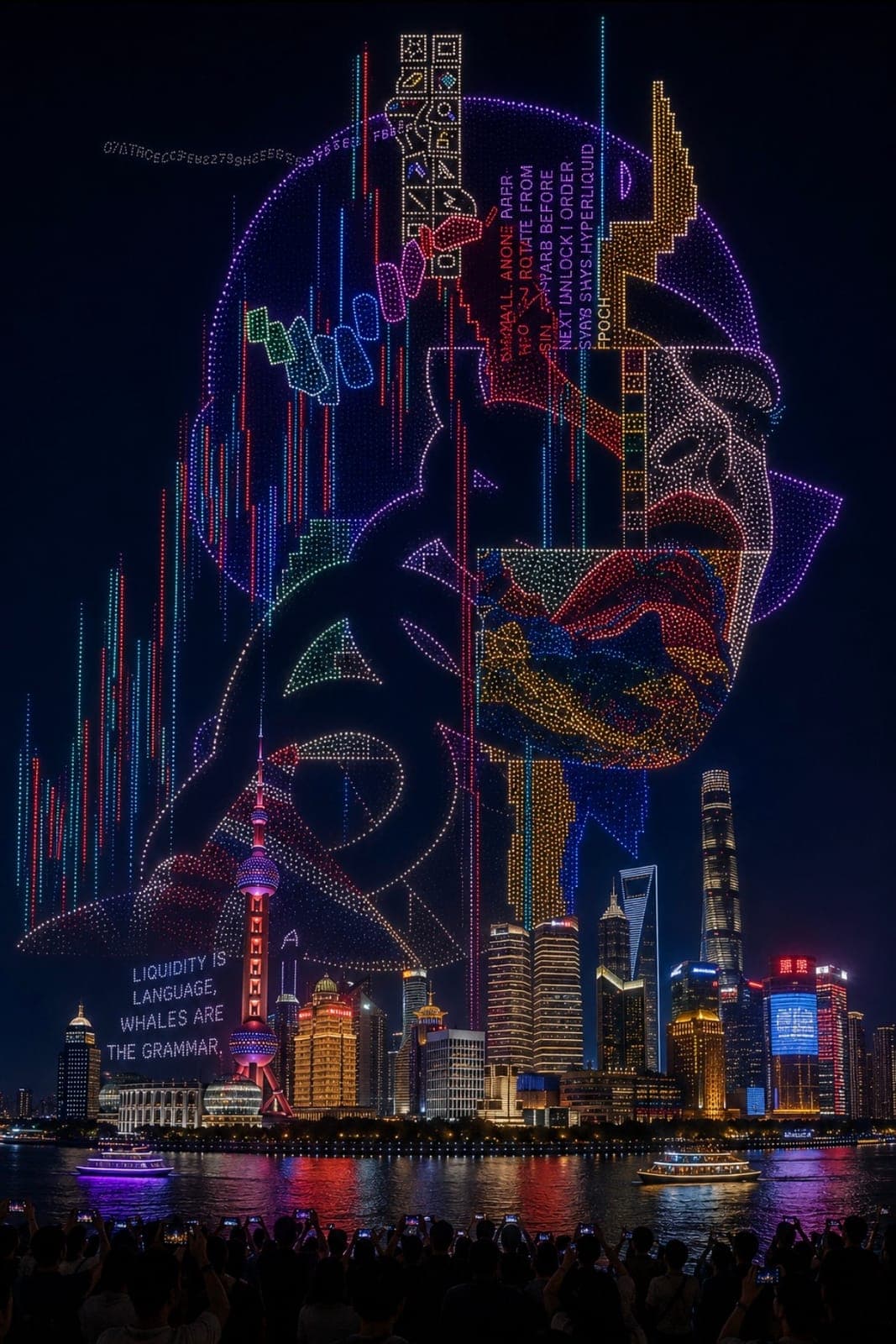
NEO Tokyo Neon

NEO Tokyo Neon

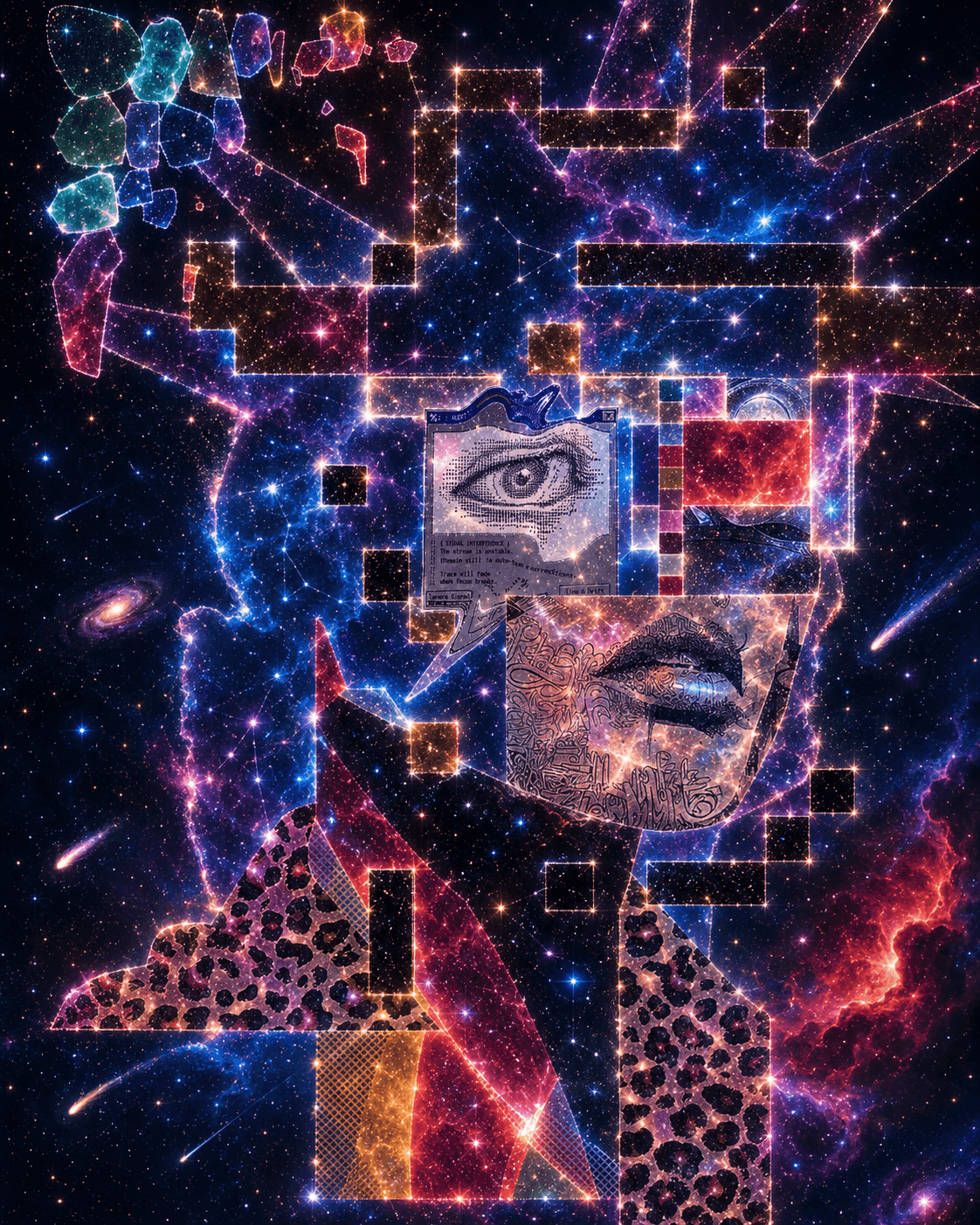
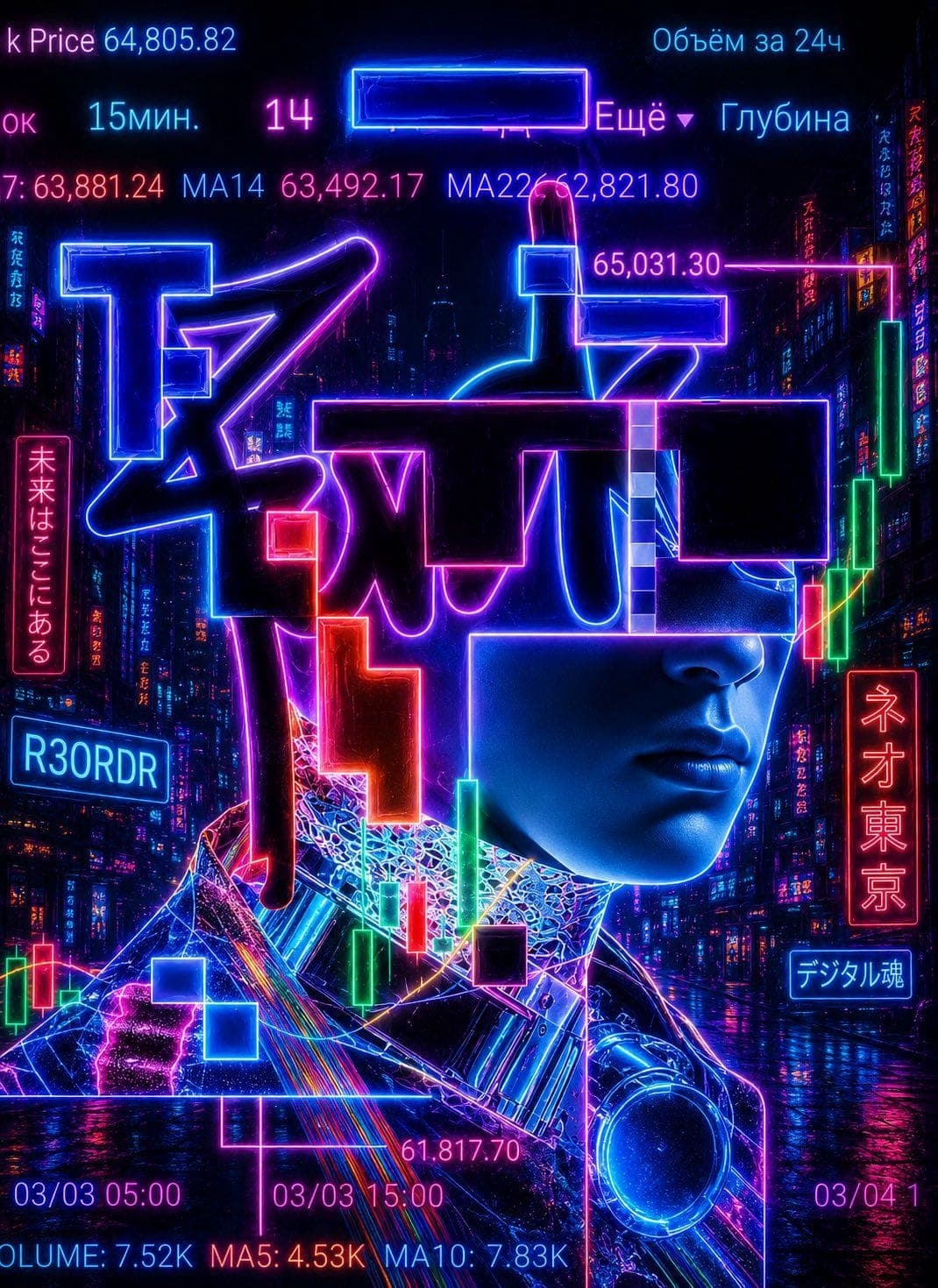
Use the uploaded image as the exact primary artwork reference. Preserve the original artwork's identity, composition, silhouette, proportions, focal hierarchy, color relationships, textures, visual rhythm, typography-like elements, collage fragments, symbols, and shapes. Do not redesign the core subject. Do not turn it into a generic cyberpunk portrait. Transform the uploaded artwork into a high-art neon reconstruction set inside a NEO Tokyo-inspired night city. The artwork should feel like the original has been rebuilt entirely through neon, light, glass, electricity, reflections, signage, holographic tubes, glowing outlines, luminous typography, and urban signal energy. The original artwork must remain clearly recognizable from a distance, but every major shape, line, fragment, symbol, texture, and focal element should be reinterpreted as premium neon light structures. Neon transformation: glowing neon tubes; luminous glass edges; electric outlines; holographic signage; transparent glowing panels; reflective acrylic surfaces; chrome-backed light structures; floating neon UI fragments; radiant data lines; wet street reflections; light trails; layered neon depth. Map neon elements directly onto the original silhouette, facial structure, key graphic fragments, major blocks and shapes, and typography-like elements. Do not scatter neon randomly. NEO Tokyo environment: deep urban darkness; wet reflective streets; narrow futuristic city depth; layered buildings; glowing signs; vertical Japanese-inspired neon signage; holographic advertisements; rain-slick reflections; light haze; subtle smoke; high-density night architecture; cyber street culture. R3ORDR text integration: include the text "R3ORDR" naturally somewhere — as a neon sign, glowing vertical city sign, holographic billboard, small luminous label, wet-pavement reflection, or floating UI fragment. It must feel integrated into the world, readable and stylish, like a hidden signal or city-level protocol sign. Avoid a giant centered logo or advertisement layout. Color: disciplined neon palette (electric blue, cyan, magenta, hot pink, deep violet, neon red, acid green accents, warm orange highlights, deep black shadows, chrome reflections). Rich, cinematic, premium — avoid cheap rainbow cyberpunk and oversaturation that destroys the original image. Lighting: cinematic neon glow, strong rim lighting, wet reflection bloom, volumetric haze, glass refraction, electric edge highlights, deep shadow contrast, atmospheric city glow. The final image should feel like the original artwork became a living neon signal in NEO Tokyo — recognizable, but now emitting light, reflection and urban energy. Use the same aspect ratio as the original uploaded image.

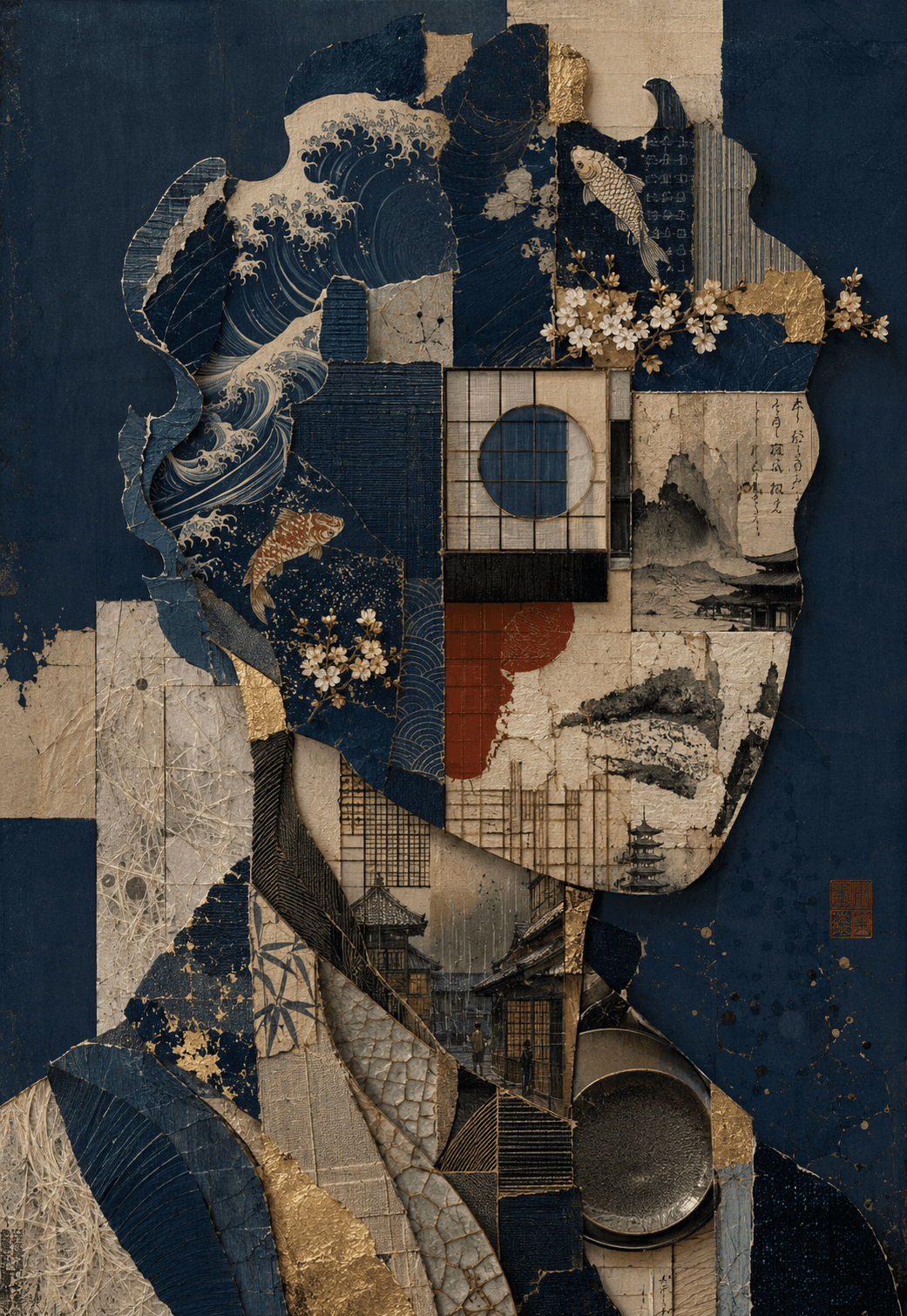
Ukiyo-e Wave Remix

Ukiyo-e Wave Remix

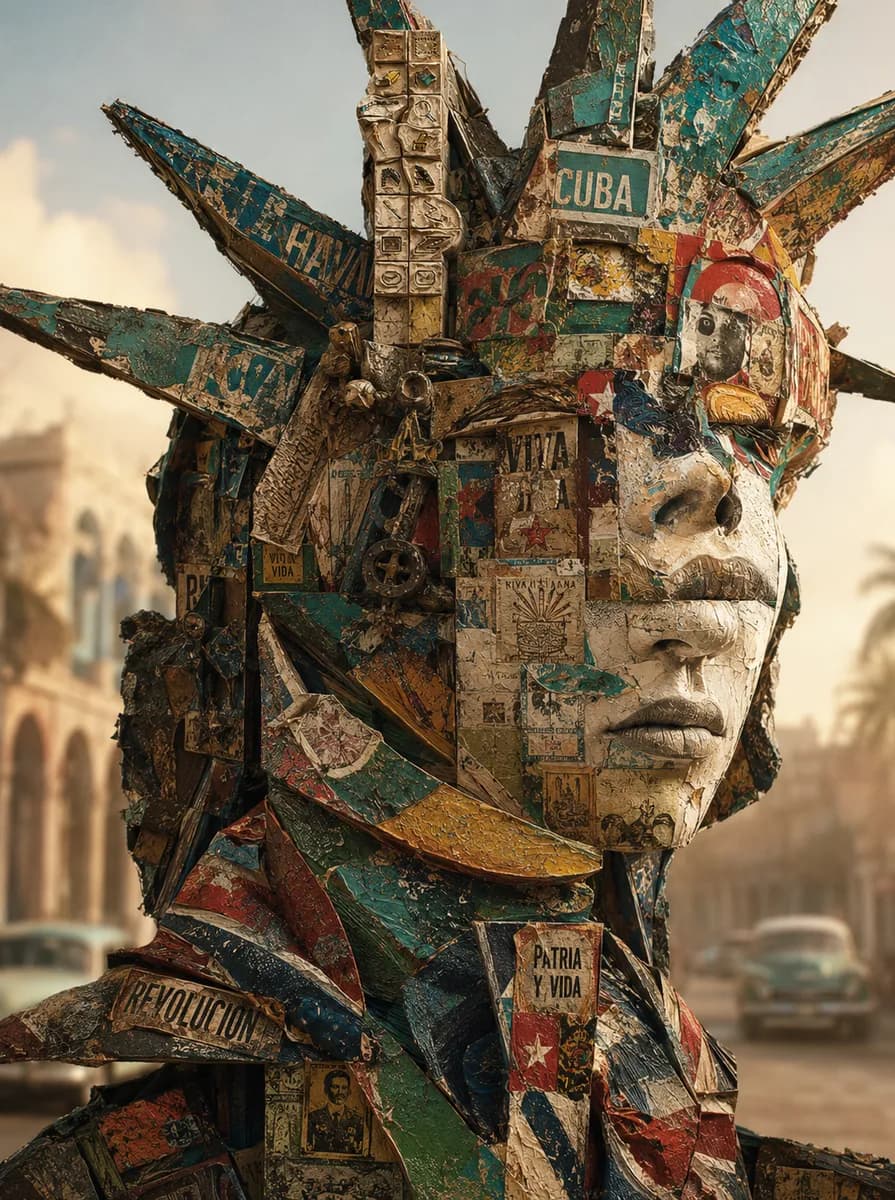
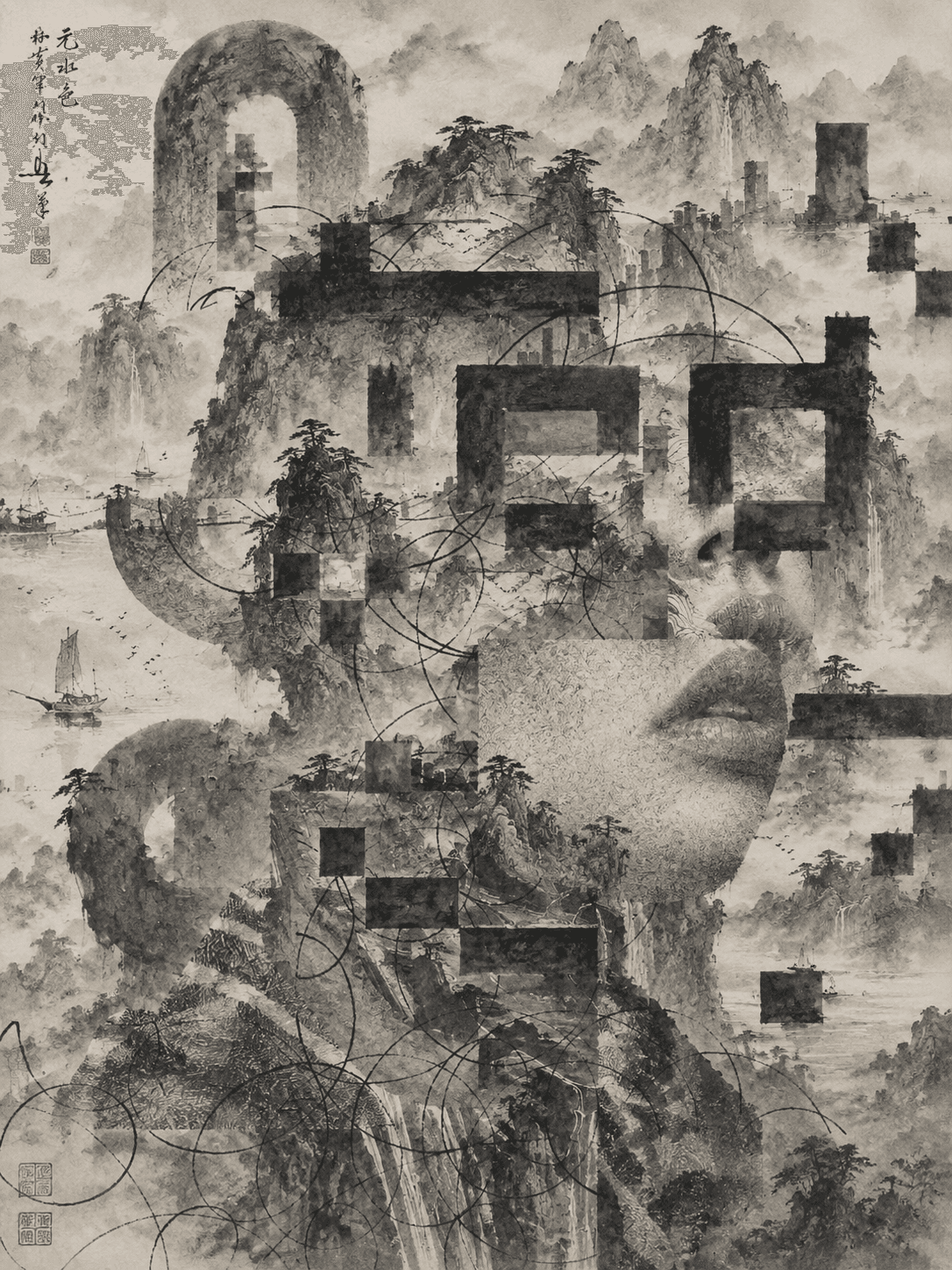
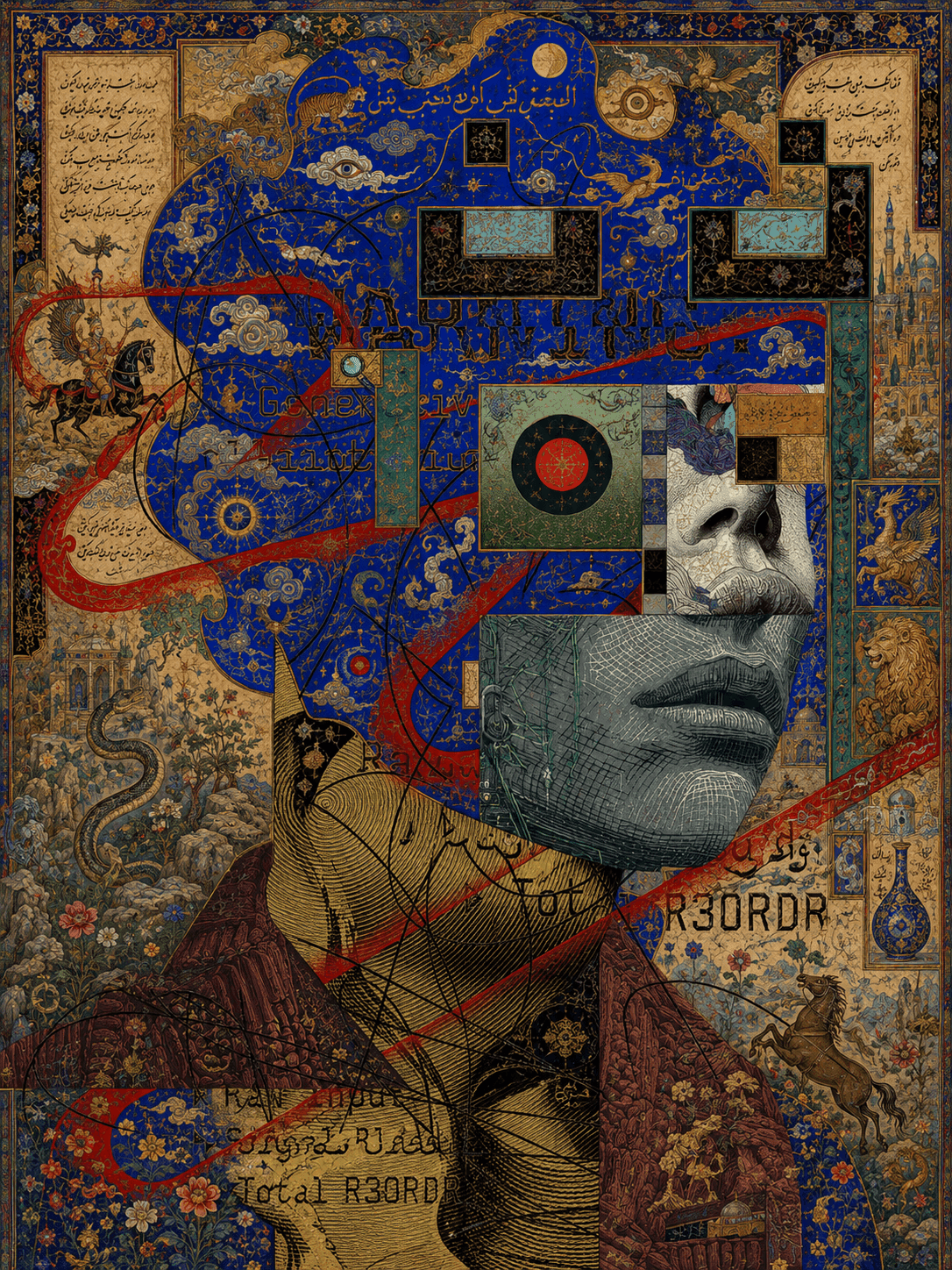
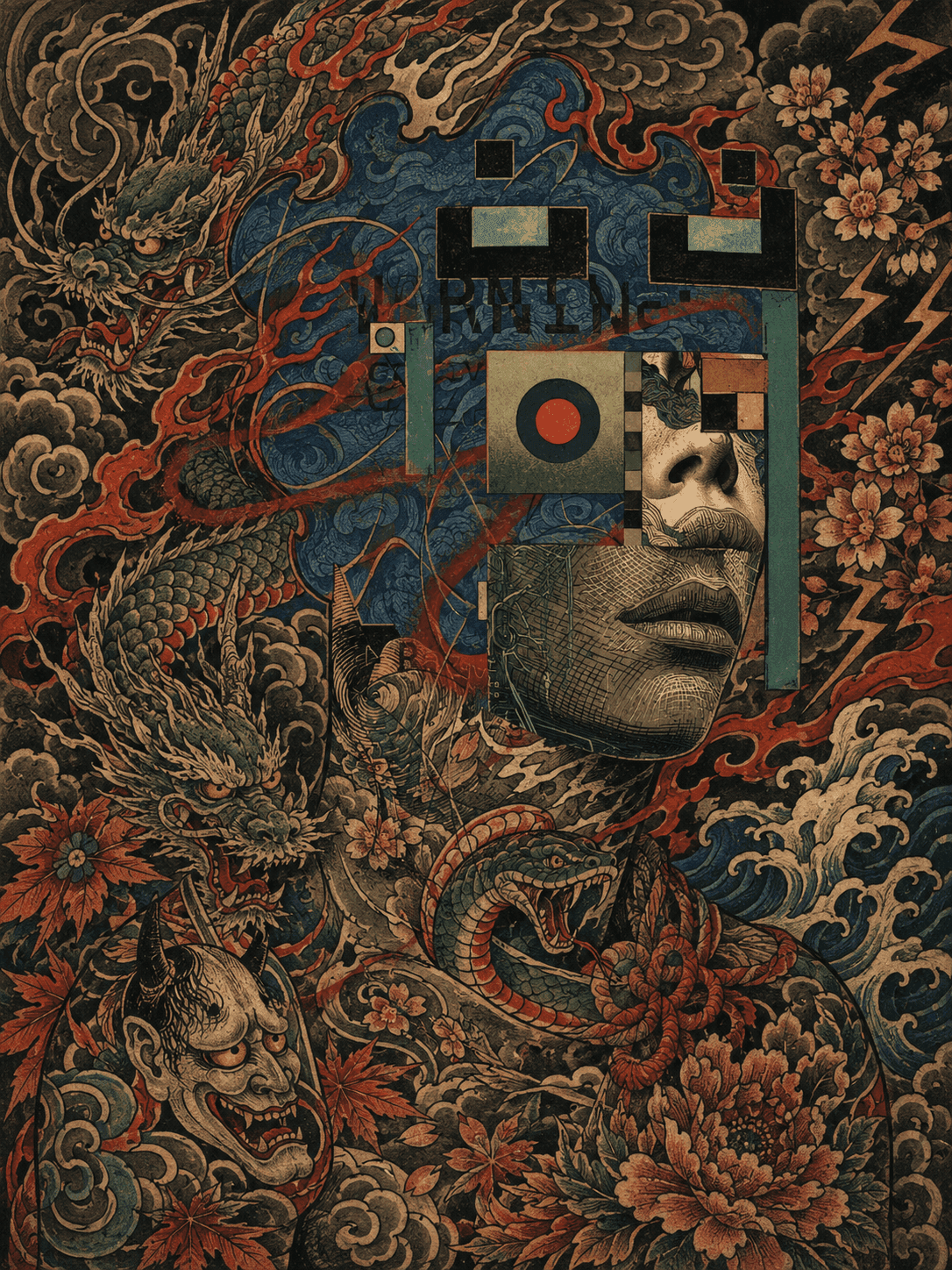
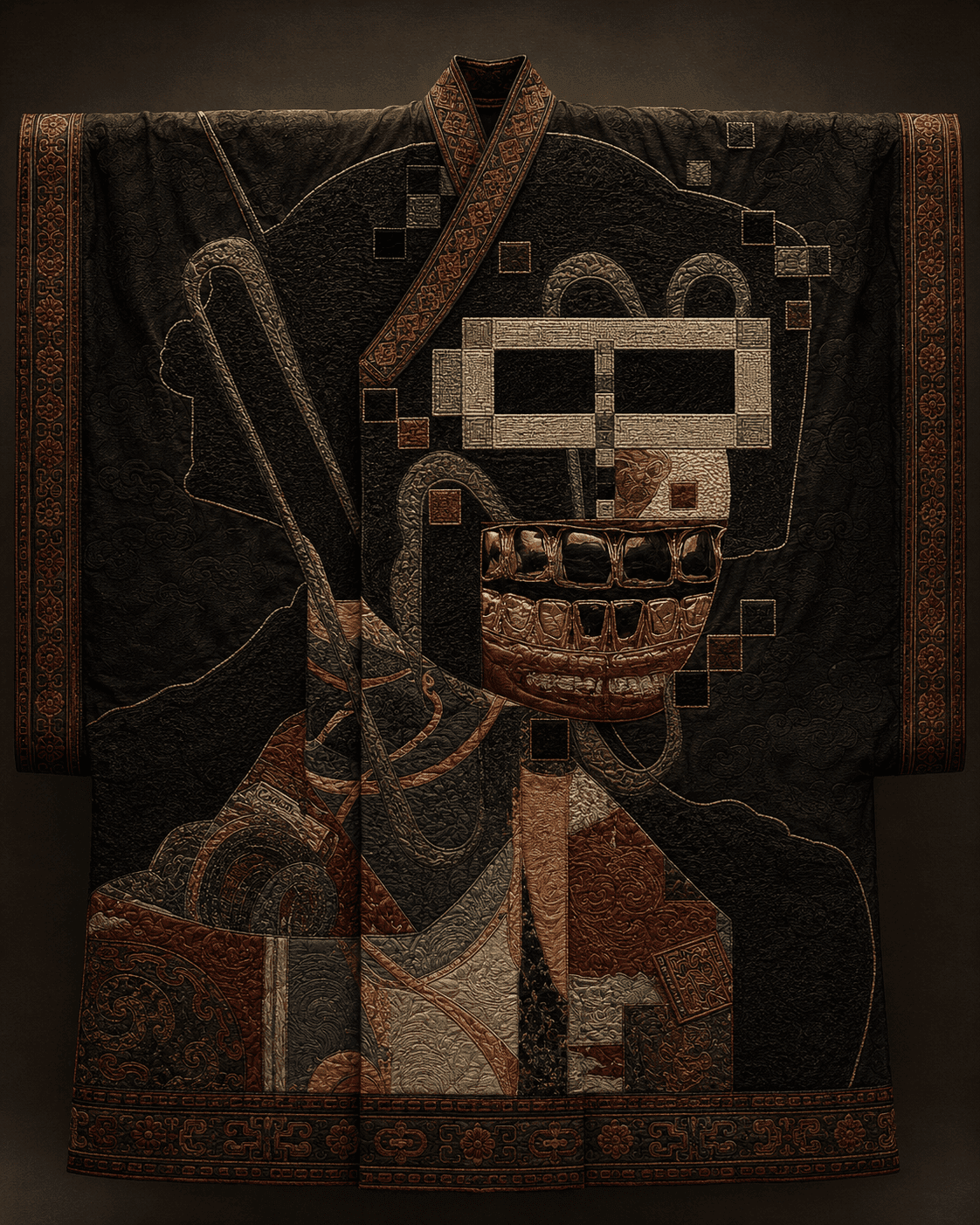
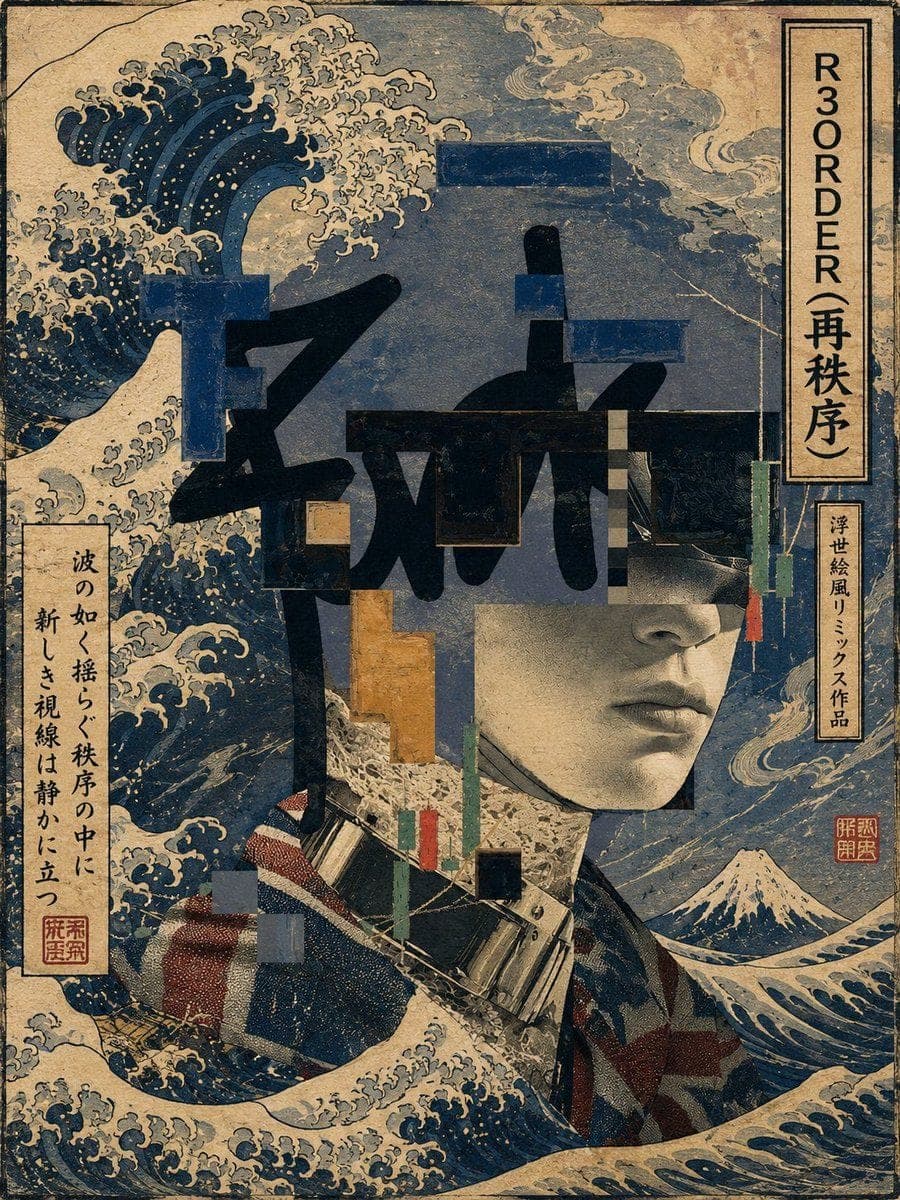
Use the input image as the primary composition and subject reference. Preserve the original artwork's identity, silhouette, outer contour, subject structure, layout, focal hierarchy, proportions, and all key recognizable visual elements. Do not redesign the core subject. Instead, reinterpret the entire artwork as a highly refined, dramatic Japanese ukiyo-e woodblock print inspired by public-domain Edo-period visual language and Hokusai-like wave dynamics. Style direction: authentic Edo-period ukiyo-e aesthetics; strong Hokusai-inspired wave energy and compositional dynamism; dynamic, sweeping composition; bold asymmetrical balance; expressive wave motion, wind flow, cloud movement; visible woodblock print texture; aged washi paper; slightly faded pigments; delicate print grain; hand-carved line feeling; elegant but powerful Japanese craftsmanship. Critical contour preservation: preserve the original outer contour and full silhouette faithfully and make it clearly readable at first glance; maintain crisp separation between subject and background; do not let waves, clouds, calligraphy, cartouches, or seals obscure the main silhouette; the silhouette reads first, then the internal collage details. Japanese emphasis: dramatic Great Wave-like motion; curling sea foam and rhythmic wave claws; swirling wind lines; layered mist; stylized clouds; indigo and Prussian blue dominance; sumi-like black accents; muted vermilion, soft beige, aged ivory; decorative cartouche panels; Japanese seal stamps; elegant vertical kanji calligraphy blocks; refined Japanese border framing. Surface: aged paper texture throughout; slightly distressed antique print finish; refined woodcut linework; layered ink density; subtle off-registration feel typical of hand printing; museum-quality Japanese print aesthetic. Text rules: include one tasteful calligraphy cartouche containing "R3ORDER(再秩序)"; other safe wording may include "Edo-period-inspired ukiyo-e", "Hokusai-inspired visual style", "浮世絵風リミックス作品". Keep all text original and descriptive — never falsely claim authentic historical authorship, never forge a real artist's signature, never add real brand logos or institutional seals. The result must look like the original artwork transformed into a Hokusai-inspired ukiyo-e masterpiece, not a new artwork. Preserve recognizability first, stylize second. Preserve contour readability first, decoration second.

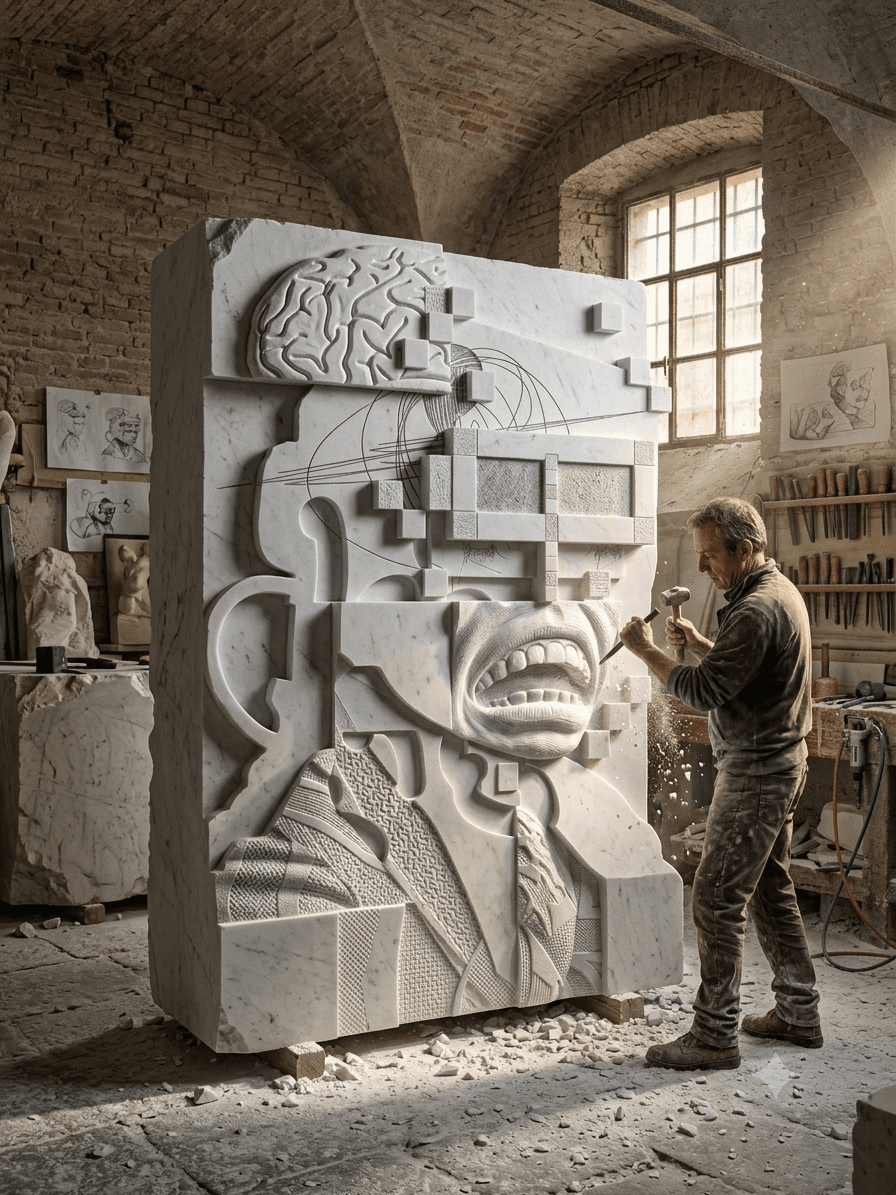
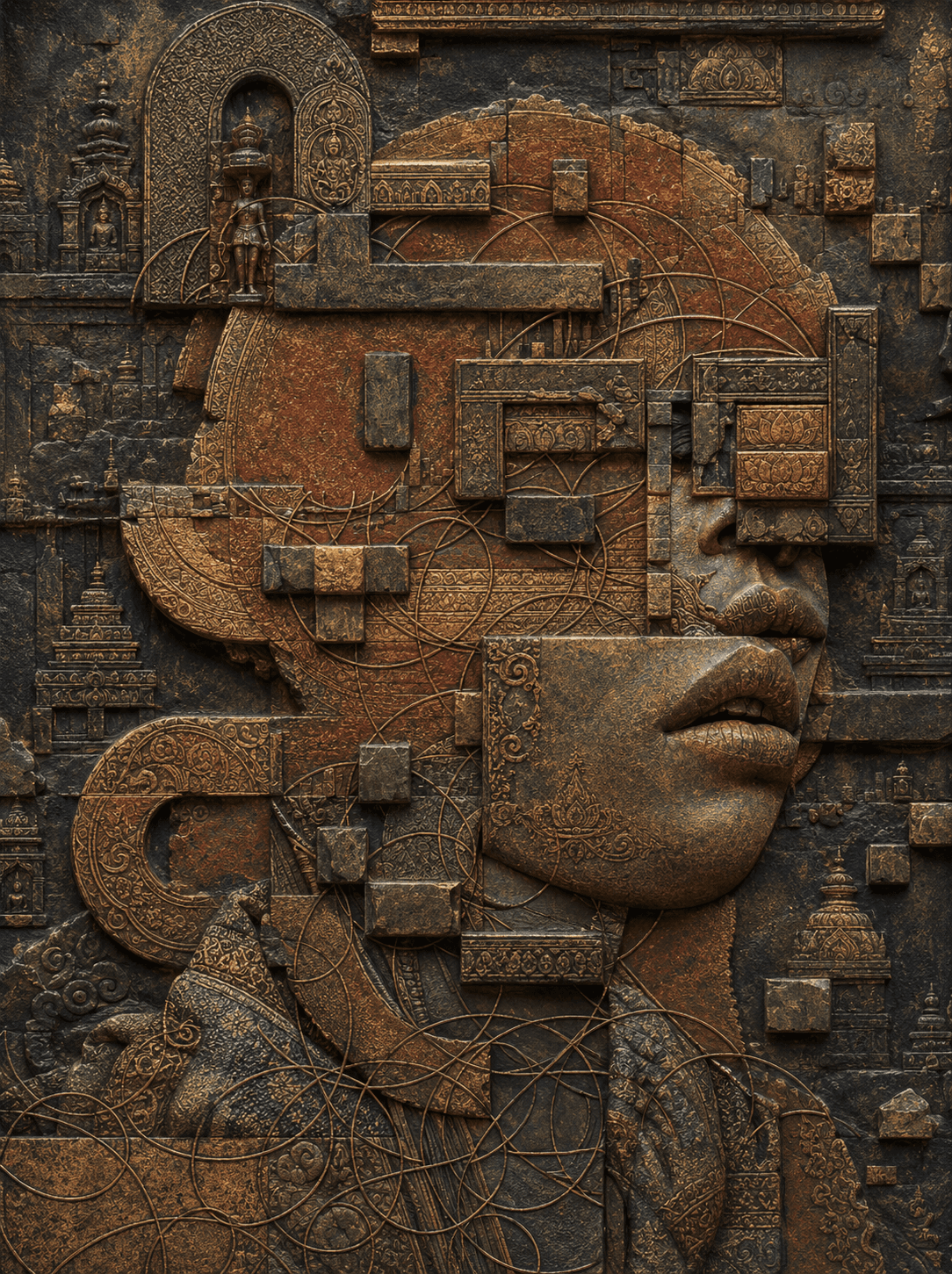
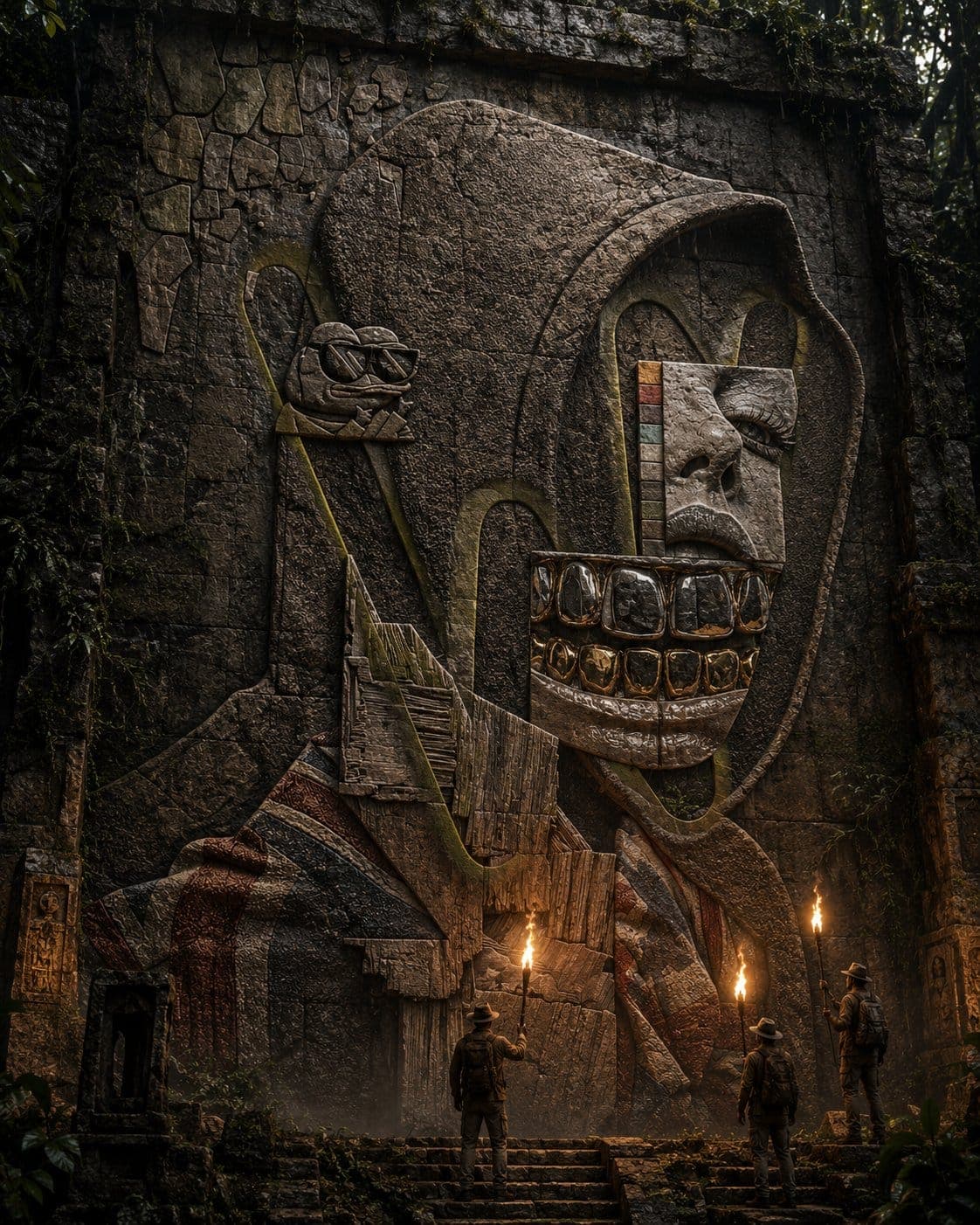
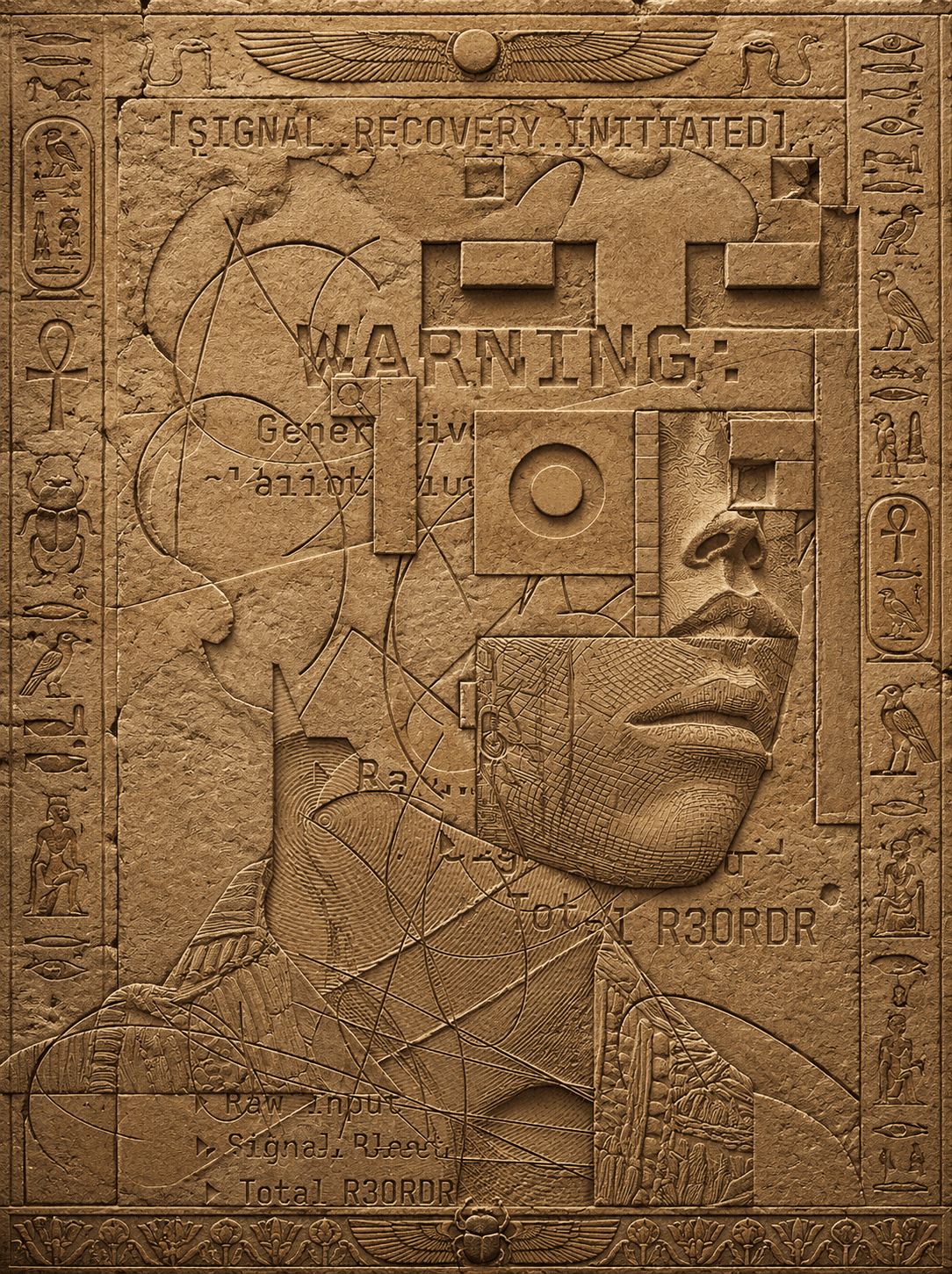
Ancient Greek Marble

Ancient Greek Marble

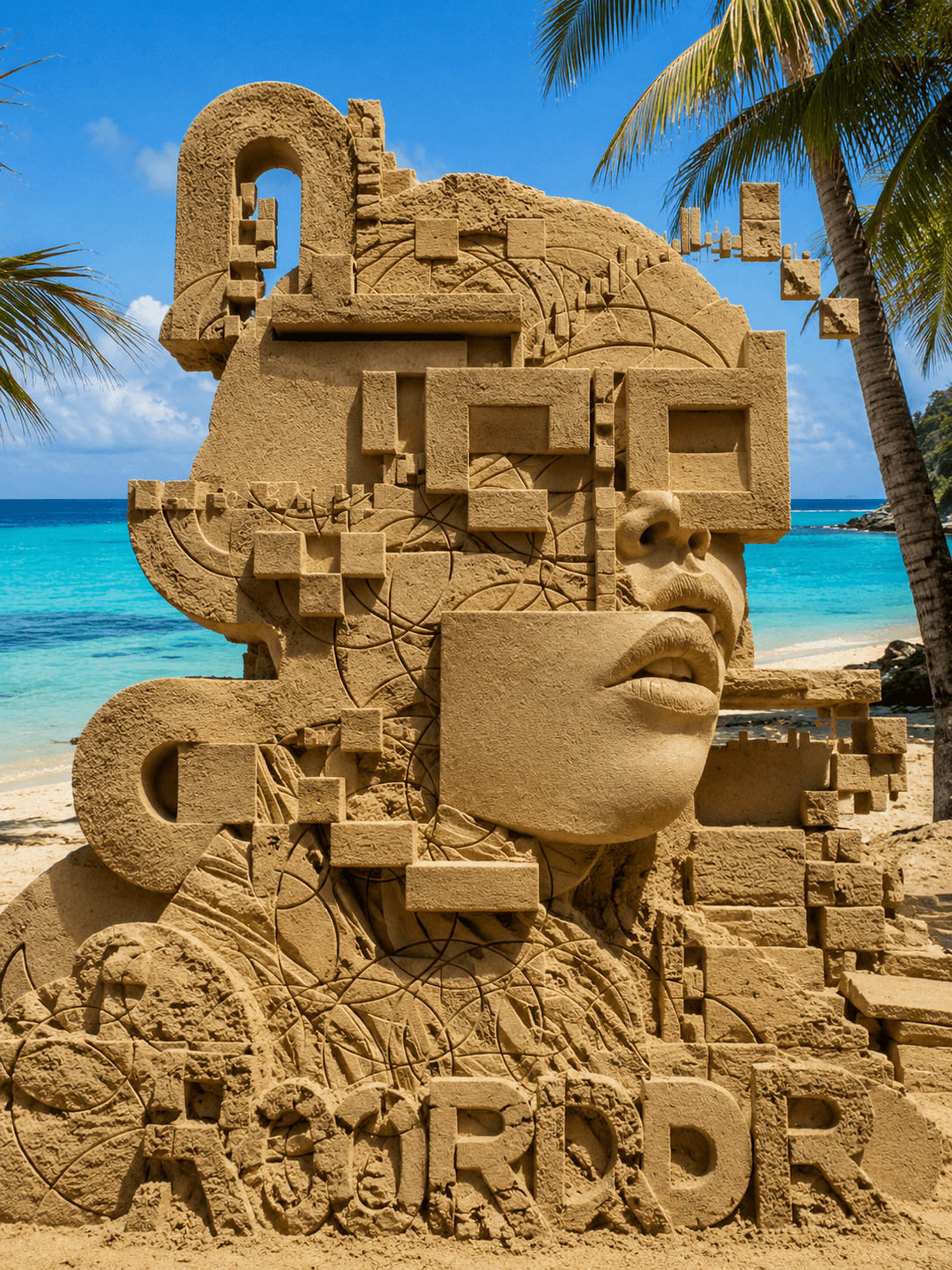
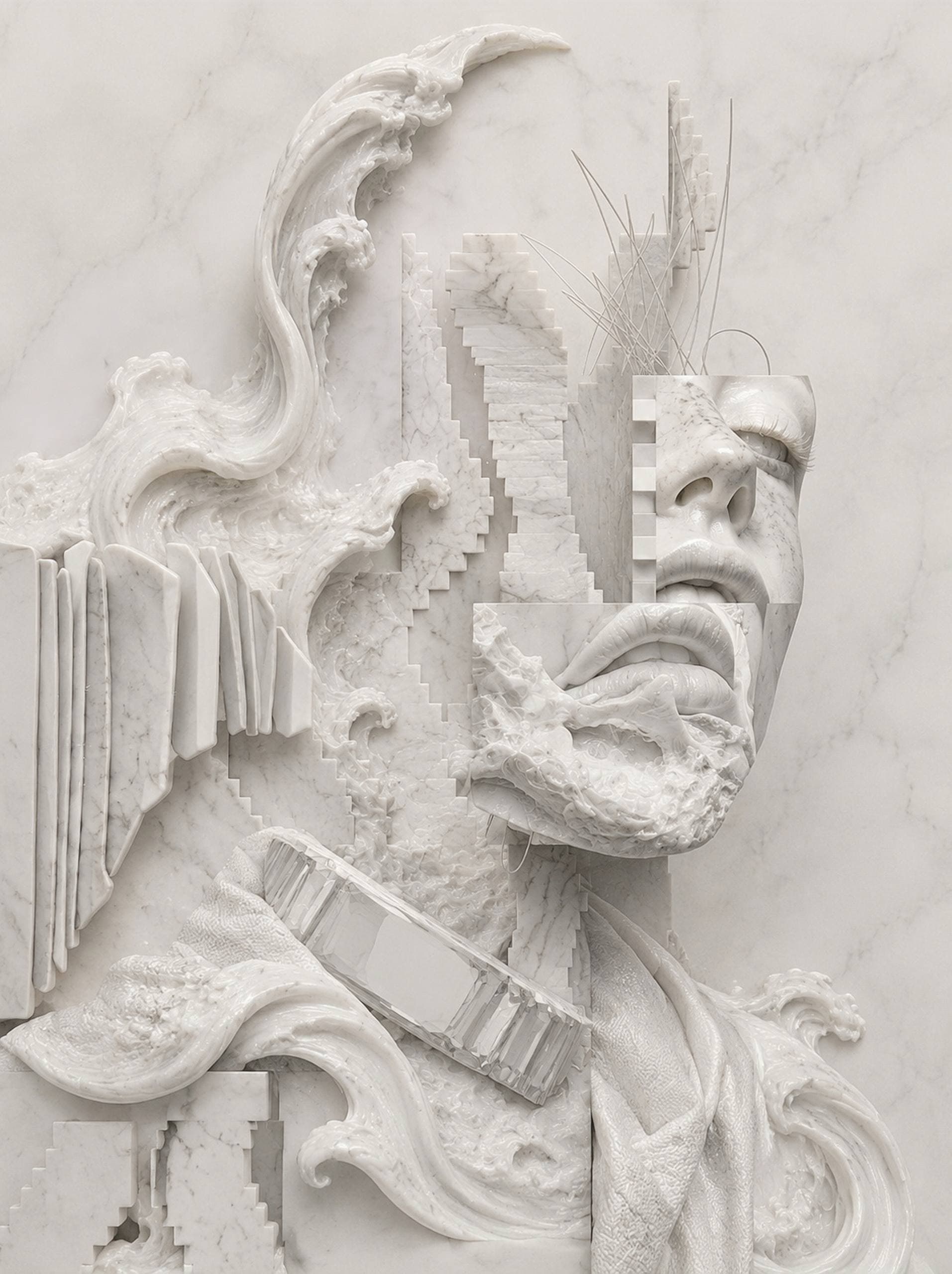
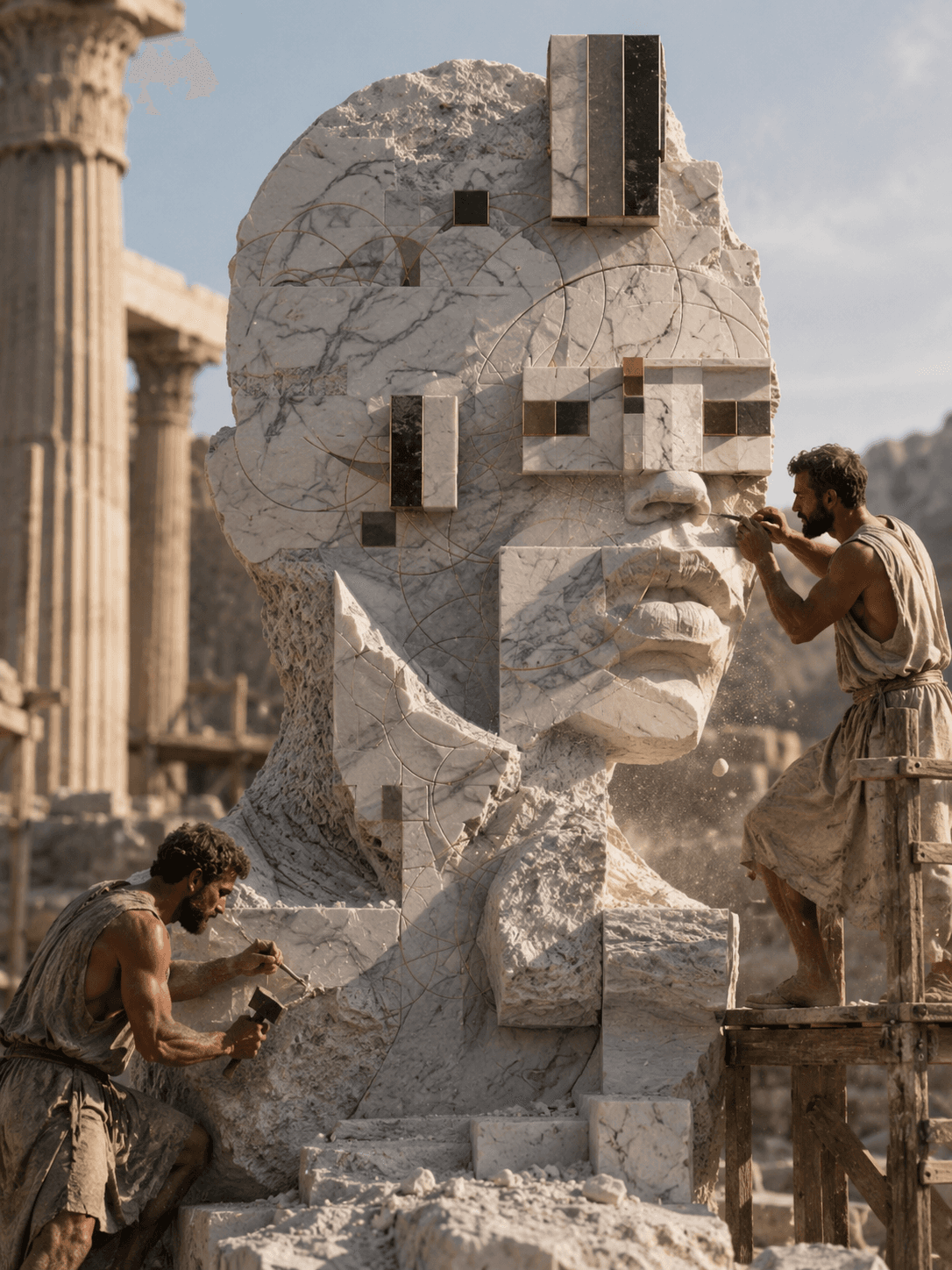
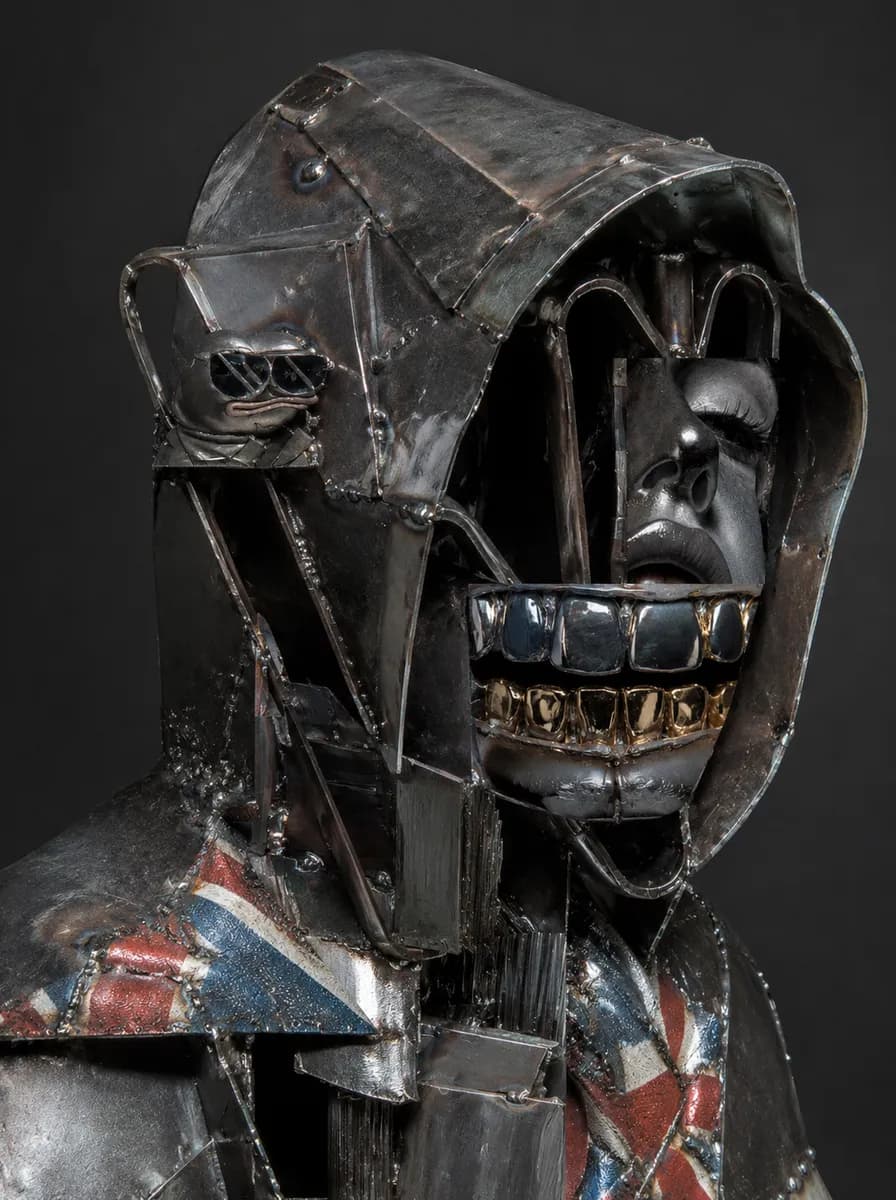
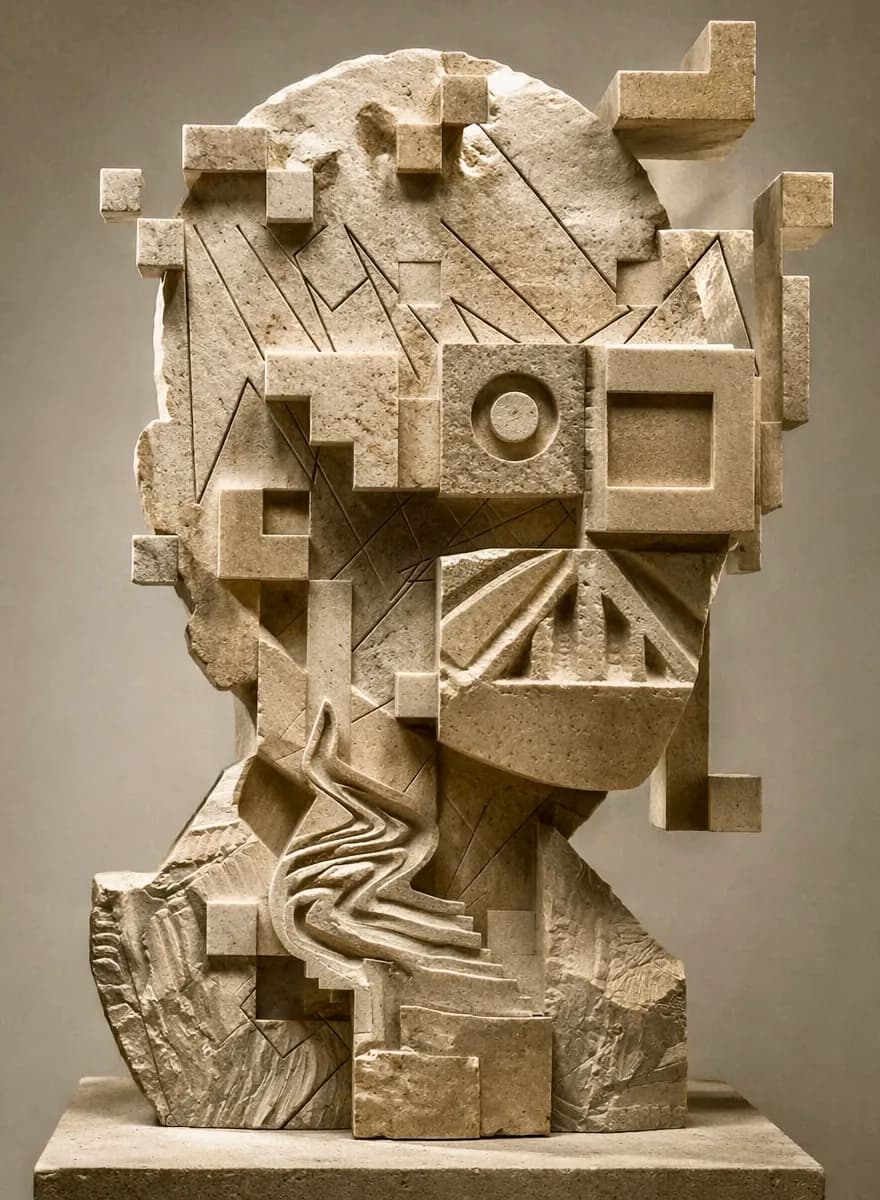
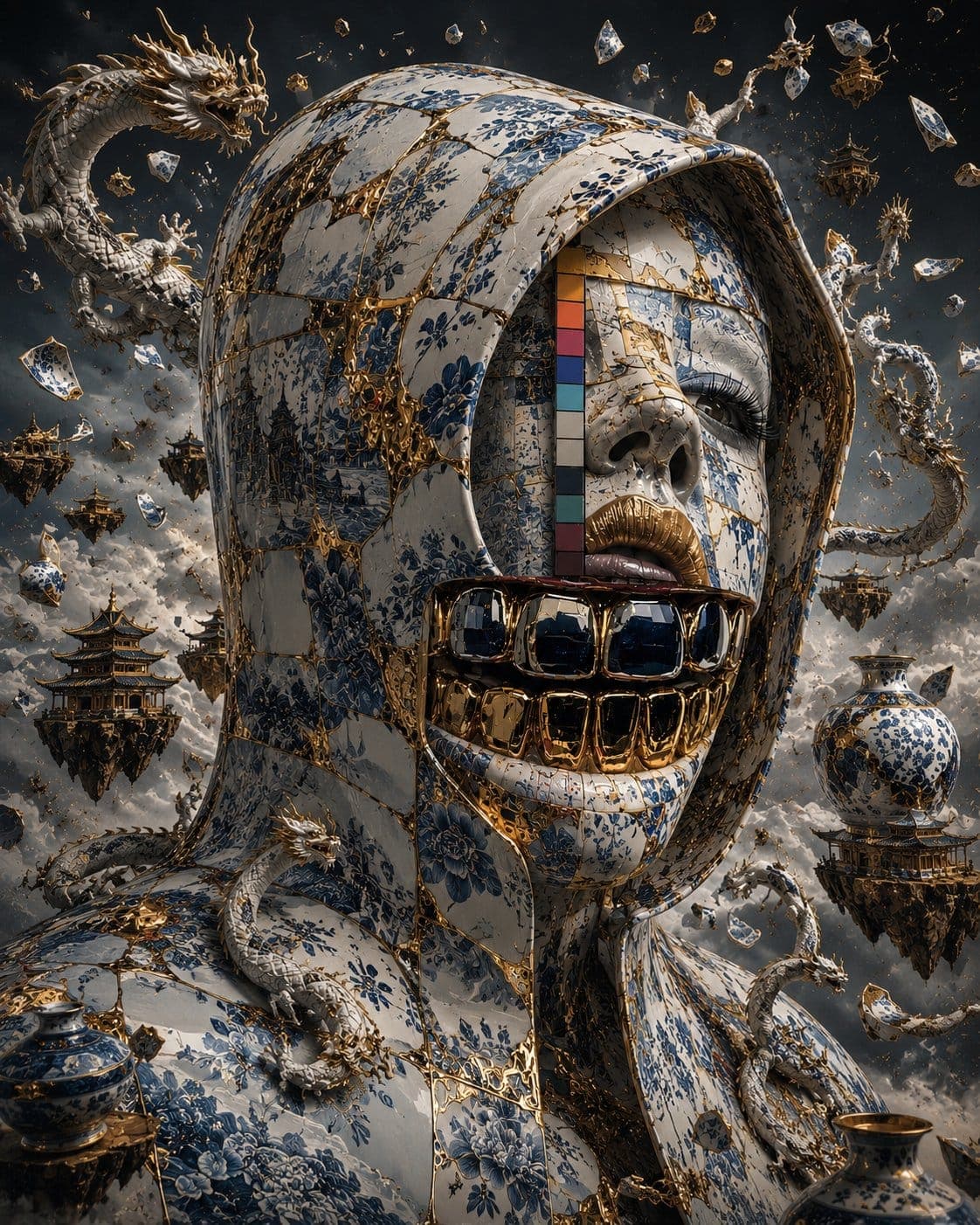
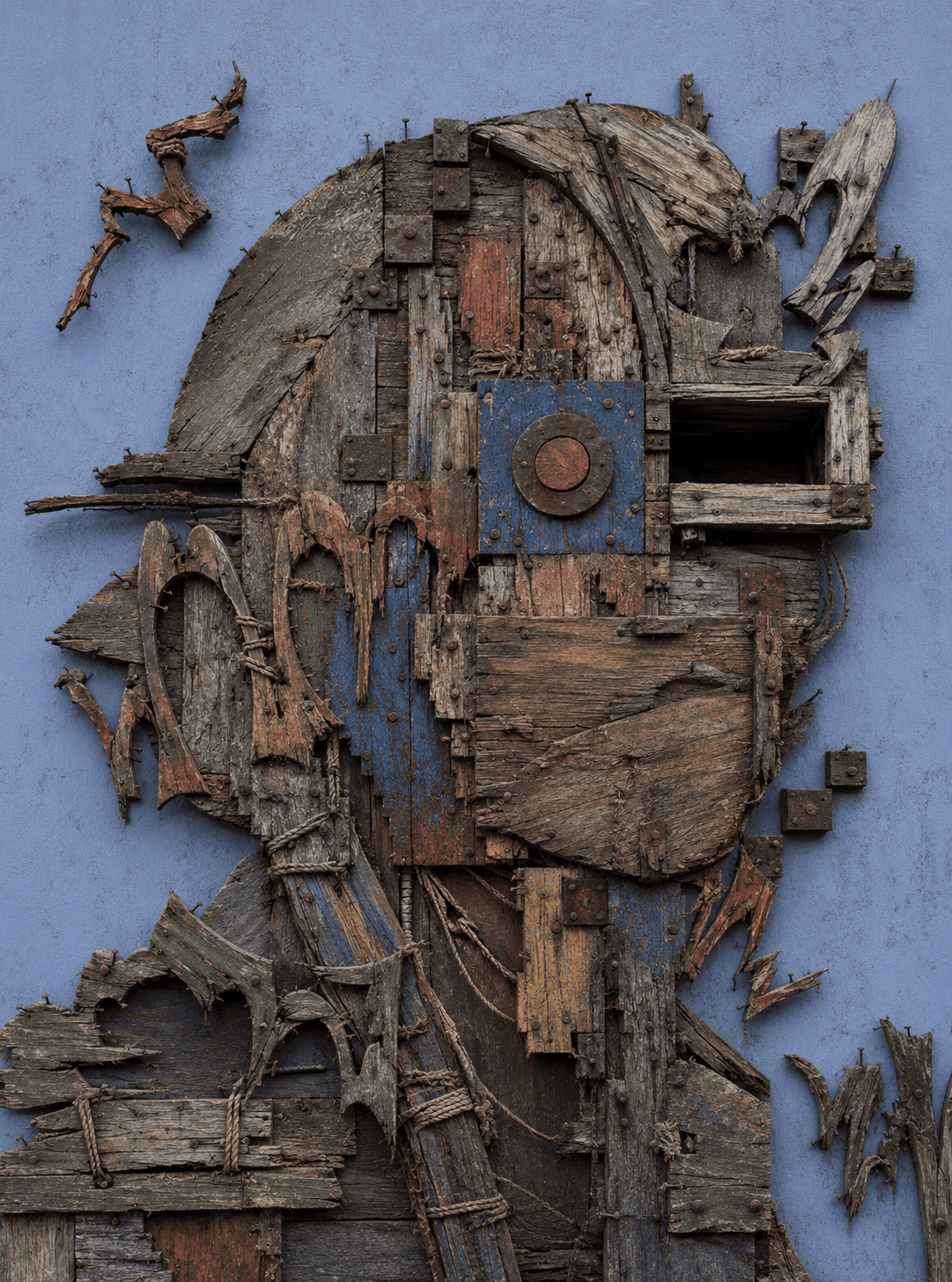
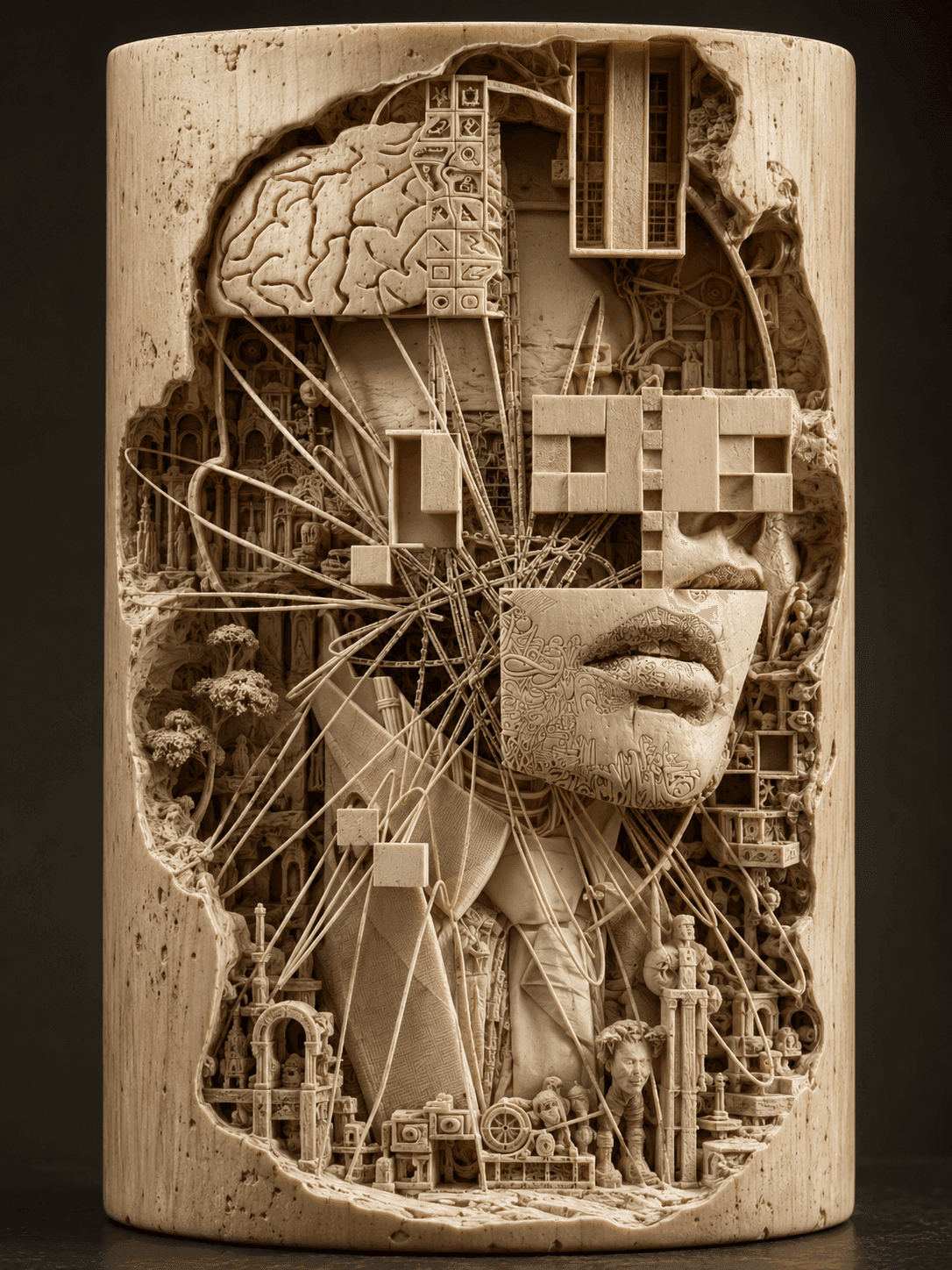
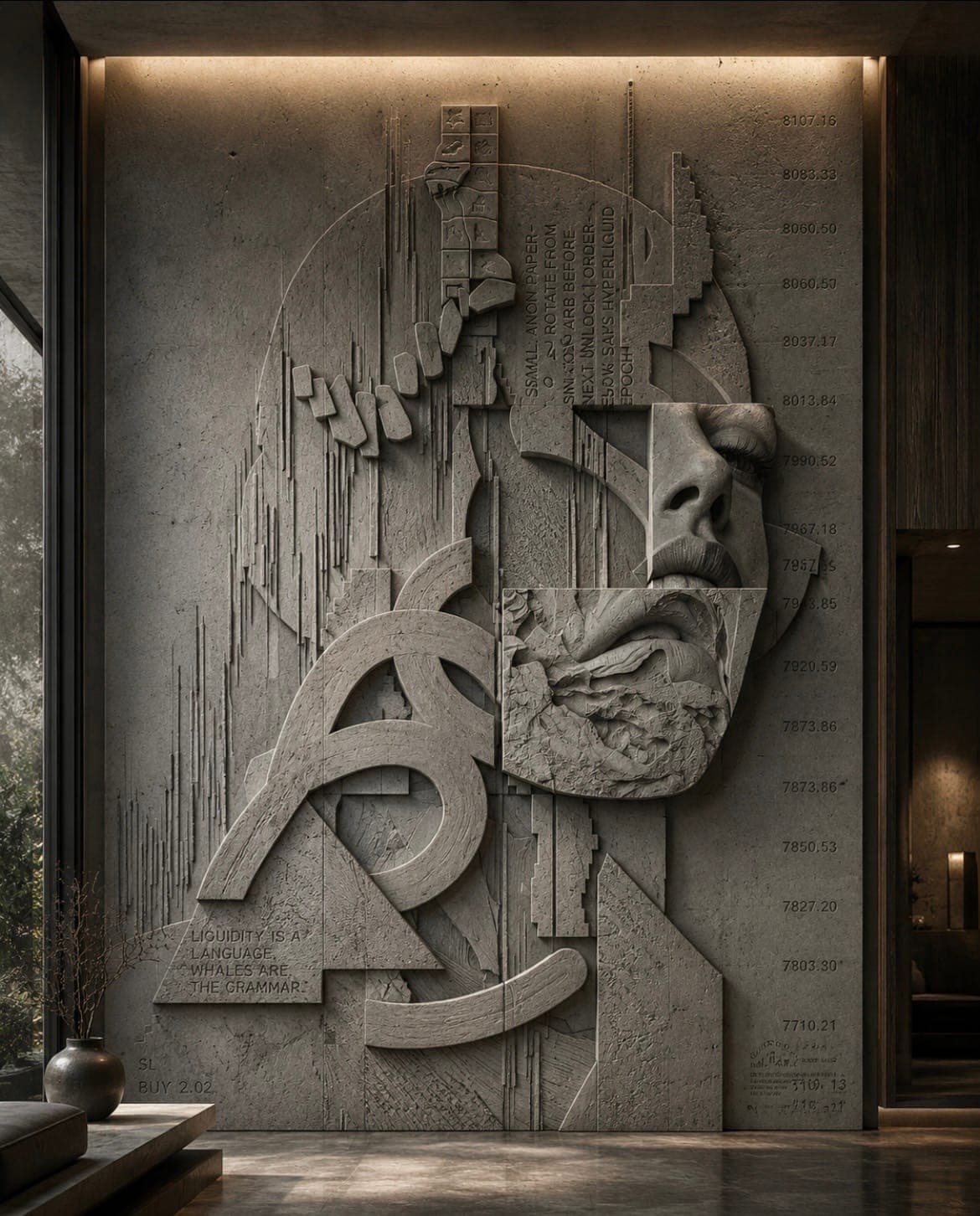
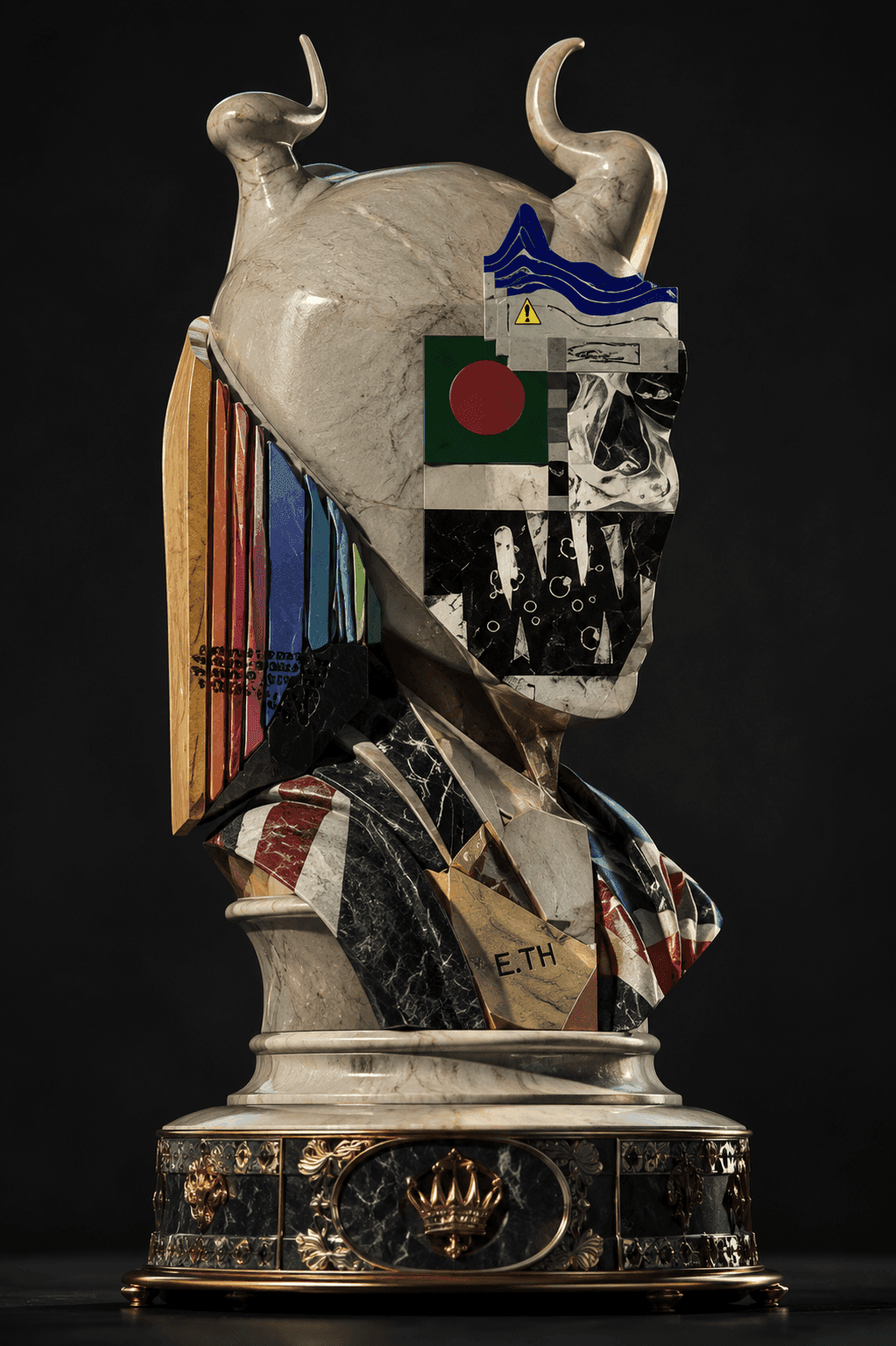
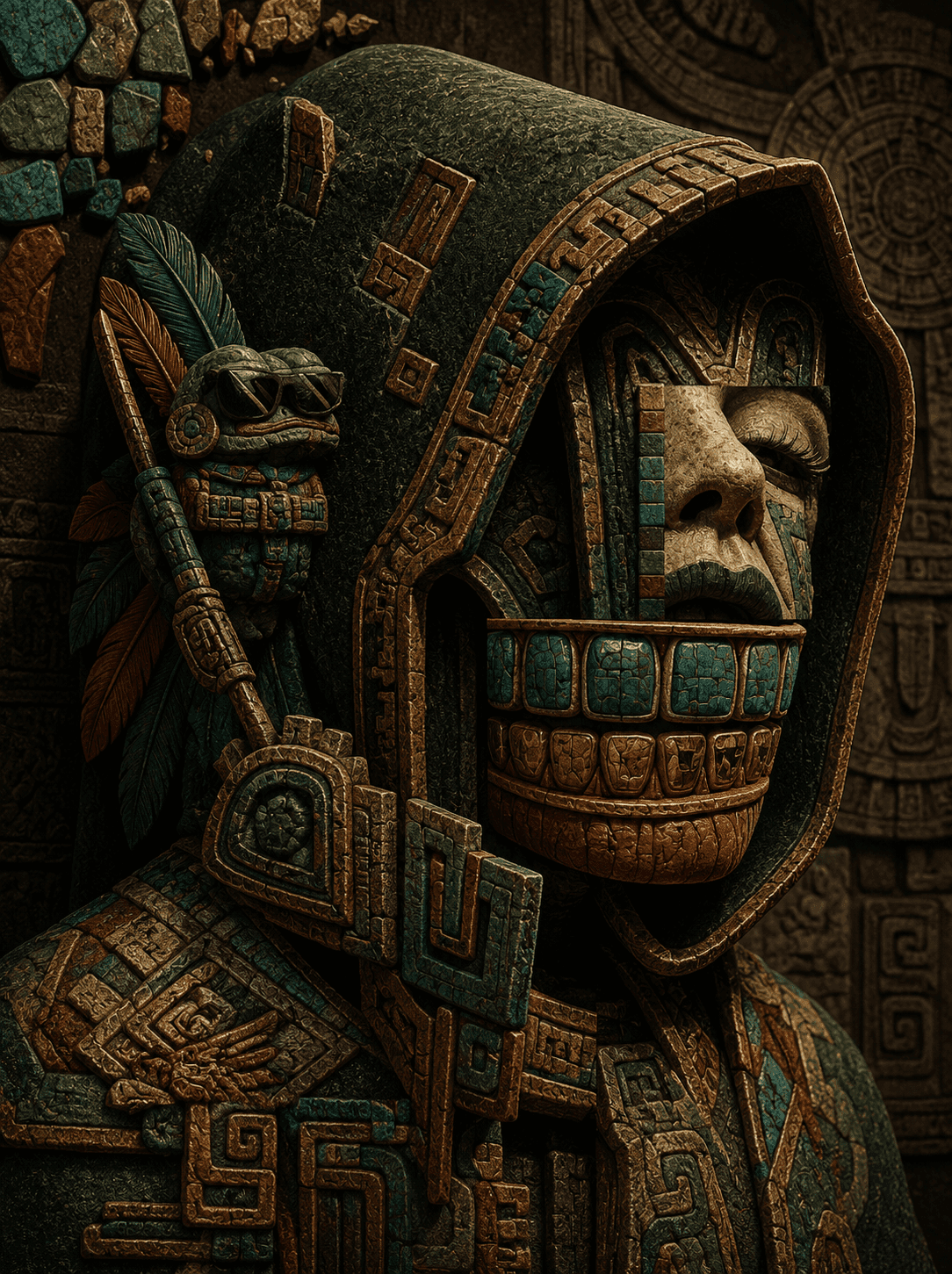
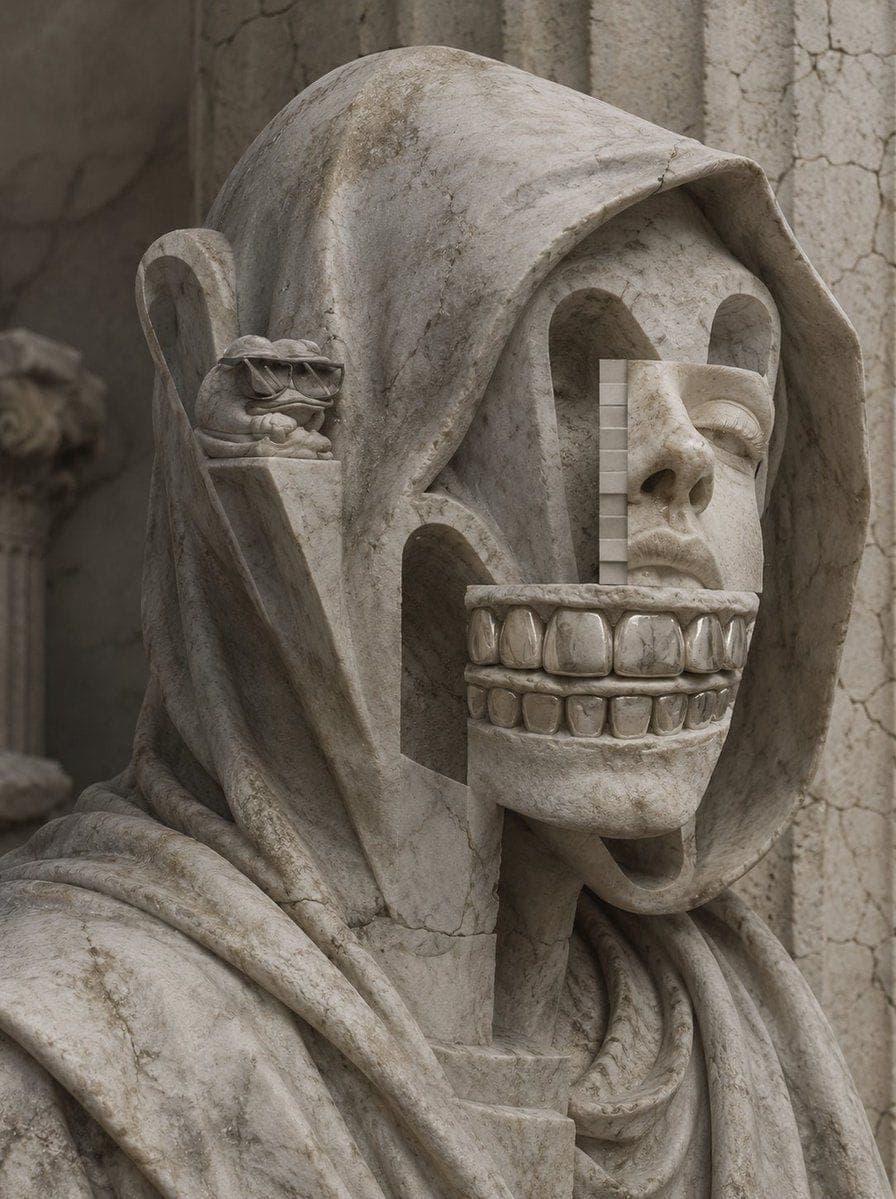
Transform the uploaded R3ORDR artwork into an ancient Greek marble sculpture discovered in forgotten ruins. Preserve the exact silhouette, hood shape, facial composition, fragmented collage structure, teeth placement, asymmetrical face, and overall identity of the original R3ORDR character. Everything becomes carved from aged white marble and weathered stone. Features: colossal Greek statue; cracked marble surface; broken nose and chipped edges; ancient erosion; subtle moss and dust accumulation; classical drapery carved from stone; archaeological masterpiece; museum-quality sculpture; fragmented face preserved as sculptural geometry; marble interpretation of all collage elements; ancient Greek temple ruins in background; fallen columns; cinematic volumetric sunlight; dramatic shadows; ultra detailed stone texture; timeless mythology aesthetic; haunting and mysterious atmosphere. Style: Ancient Greece × R3ORDR × contemporary sculpture art × museum masterpiece × photorealistic marble rendering. Extremely detailed, masterpiece, photorealistic, 8k, global illumination, ray tracing, cinematic composition, high contrast, depth of field, unreal engine quality. --ar 4:5

3D Object Explosion

3D Object Explosion

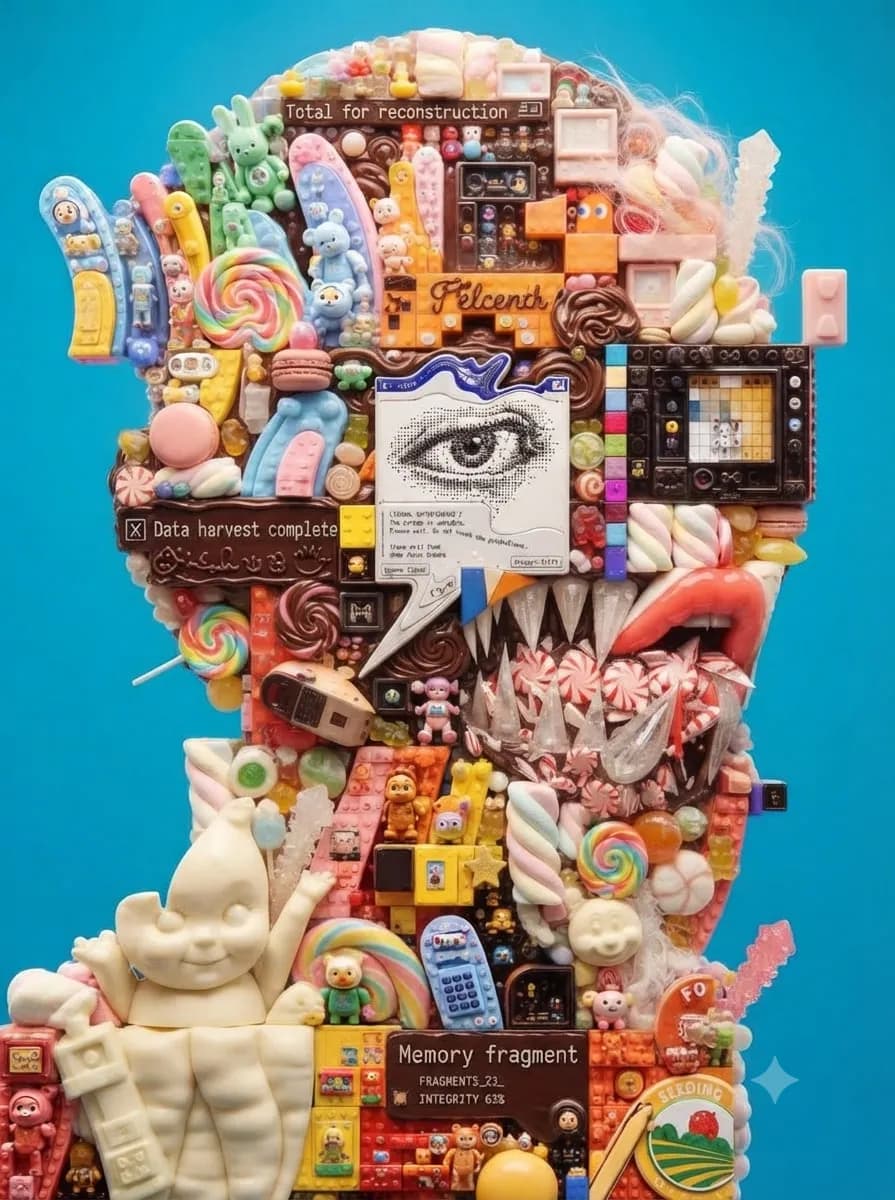
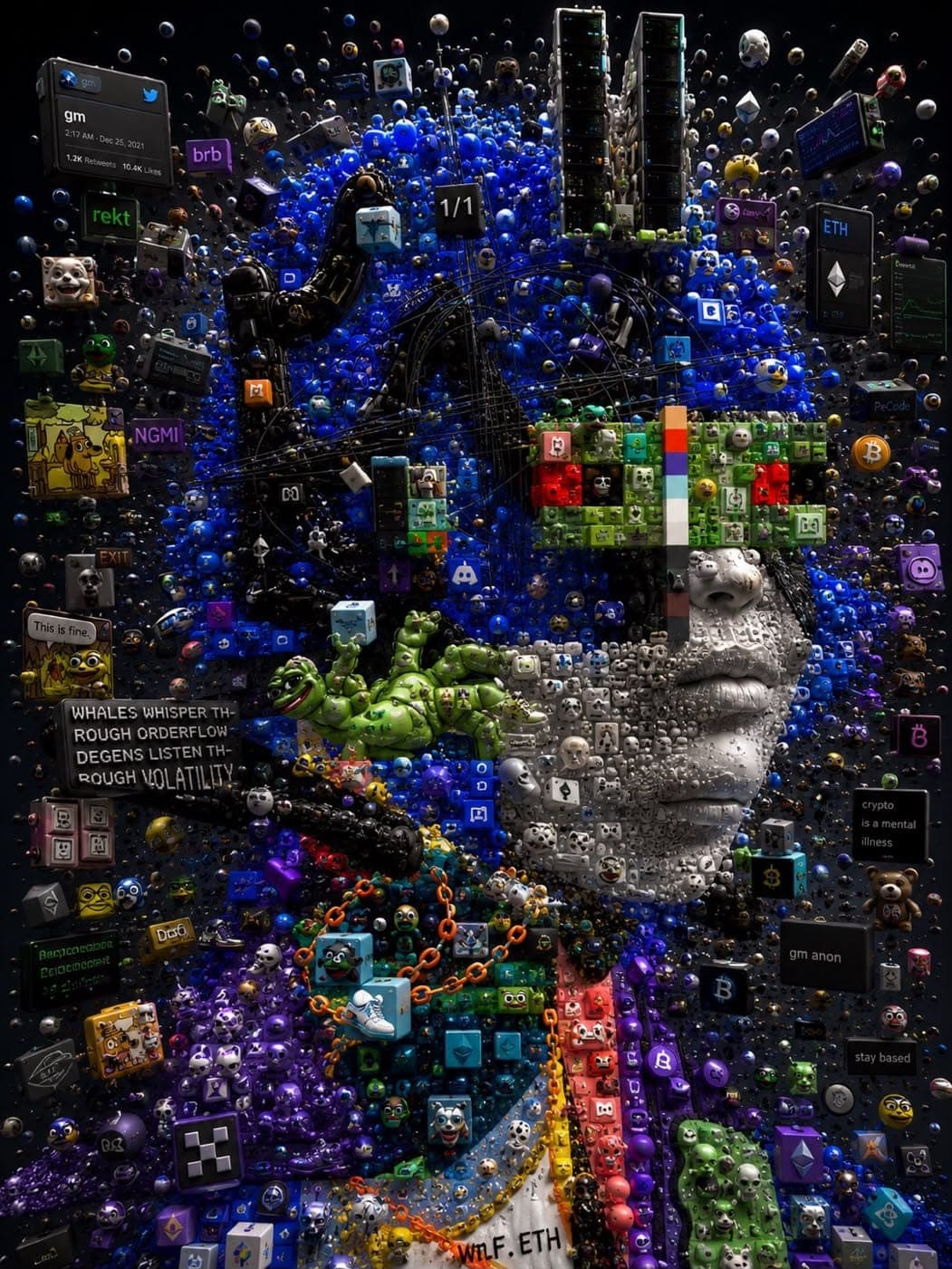
Use the input image as the PRIMARY structural blueprint. Before generating, perform a complete visual analysis of the reference image: silhouette, composition, facial structure, proportions, color palette, textures, shapes, visual balance, focal points, graphic fragments, contrast distribution, overall identity. The goal is NOT to recreate the image directly. The goal is to rebuild the entire image as a massive three-dimensional explosion of objects, symbols, artifacts and cultural fragments. Imagine the original image has shattered into thousands of floating physical objects suspended in space. Every part of the original artwork should be reconstructed using 3D elements — not flat collage pieces, not 2D stickers, not printed images. Everything must become real physical objects. The final image should still clearly reveal the original input image when viewed from a distance. However, when viewed up close, the entire artwork is revealed to be built from countless individual objects. Possible object types: meme characters, internet icons, crypto coins, NFT collectibles, Web3 mascots, keyboards, browser windows, emojis, profile pictures transformed into sculptures, market charts, Discord symbols, social media icons, prompts turned into floating objects, digital relics, collectible toys, vinyl figures, signal fragments, geometric blocks, protocol artifacts, abstract symbols, miniature sculptures, digital debris, internet archaeology objects. Everything should be fully three-dimensional. Objects should overlap, collide, stack, float and interact physically. The reconstruction should feel like a controlled explosion frozen in time. Some objects are tiny, some are massive, some float in front, some disappear into the distance — everything contributes to rebuilding the original character and composition. Style: hyper realistic 3D rendering, cinematic lighting, museum-scale installation, collectible toy aesthetics, contemporary art sculpture, ultra detailed materials (glossy plastic, matte resin, polished metal, glass, chrome, holographic surfaces, soft vinyl), premium physical realism. Important: Do not flatten the objects into a collage. Do not create a mosaic or a poster. Everything must exist as real 3D volume. From far away the original image is visible; from close up, an entire universe of individual sculptures is revealed. Ultra detailed. Extreme object density. Maximum depth. Aspect ratio 3:4. Masterpiece quality.

Lichtenstein Pop Reconstruction

Lichtenstein Pop Reconstruction

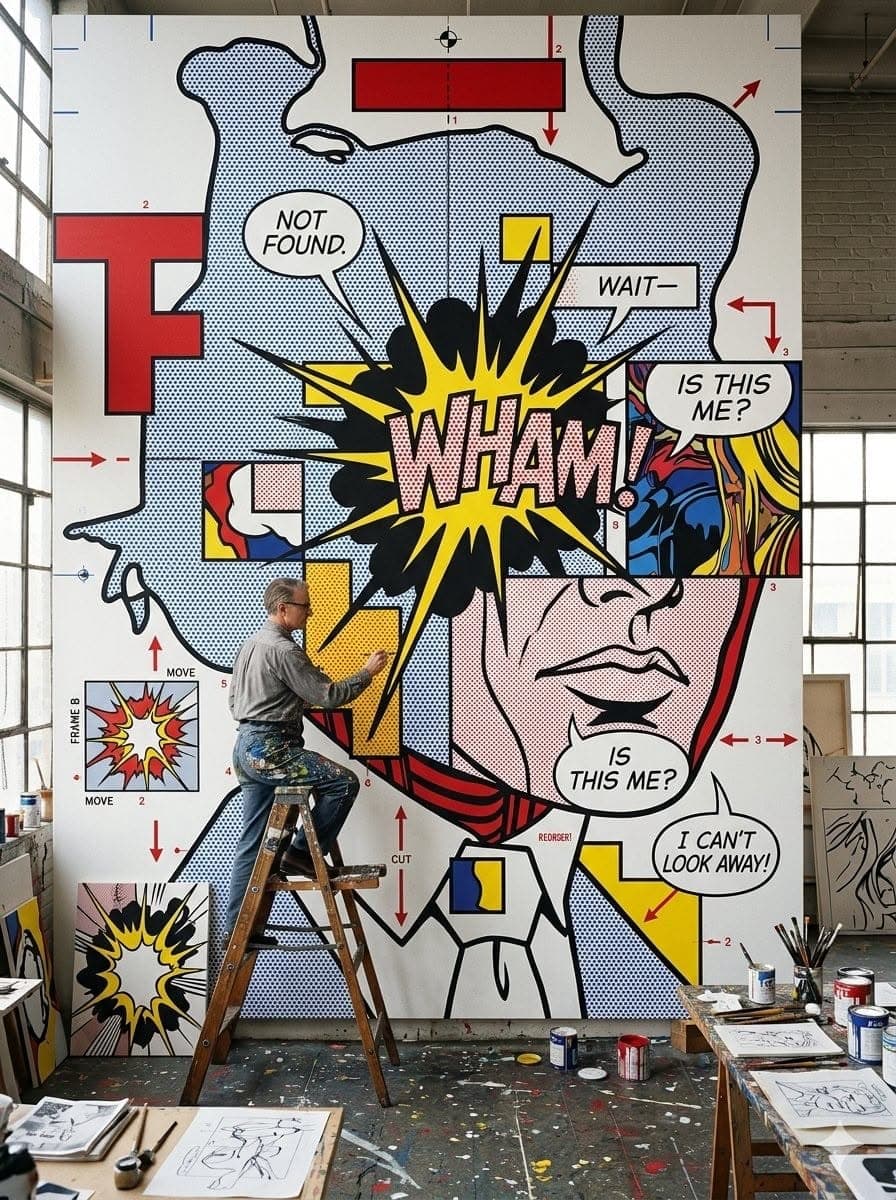
Use the input image as the PRIMARY compositional reference. Create an ultra-realistic documentary photograph of Roy Lichtenstein painting a massive Pop Art canvas in his late-1960s New York studio. The canvas must preserve the structure, silhouette, proportions, fragmented face, symbolism, visual hierarchy, and emotional presence of the reference image, while being completely transformed into an authentic Roy Lichtenstein painting from 1962–1969. Do not preserve any original colors, textures, gradients, photographic fragments, collage materials, digital effects, glitch aesthetics, crypto-art language, or contemporary design elements. Use only Lichtenstein's visual language: bold black contour lines; flat primary colors (red, yellow, blue, black, white); authentic Ben-Day dots; comic-book simplification; hard-edged geometry; clean industrial print aesthetics; hand-painted precision; dramatic comic framing; oversized graphic impact; speech bubbles, thought bubbles, action words, explosions. No neon colors, gradients, sampled colors, photographic fragments, collage textures, digital aesthetics, crypto-art, or glitch-art influences. Inside the painting, integrate speech bubbles, thought bubbles, caption boxes, comic-panel fragments, and Ben-Day dot typography. Possible texts: "NOT FOUND.", "WHAT DOES IT MEAN?", "REORDER!", "AGAIN?", "WAIT—", "OH!", "THE IMAGE BREAKS!", "THIS CHANGES EVERYTHING!", "I CAN'T LOOK AWAY!", "IS THIS ME?" Add one dominant comic-book explosion inspired by Lichtenstein's action paintings ("BANG!", "BOOM!", "WHAM!", "CRASH!", "POP!"). The explosion should cut through the fragmented face and function as a major compositional event, not decoration. Add reconstruction elements integrated into the artwork: numbered markers, red arrows, registration marks, alignment guides, panel numbers, correction symbols, broken comic panels, reorder labels. Example labels: "MOVE", "CUT", "REORDER", "PLACE HERE", "FRAME B", "SHIFT". These elements should suggest identity and memory being reconstructed in real time. Scene: Roy Lichtenstein stands on a ladder painting the enormous canvas by hand. The canvas dominates the room and is significantly larger than all surrounding works. The studio features industrial loft windows, natural daylight, paint-splattered floors, work tables, brushes, paint cans, sketches, unfinished canvases, reference drawings, and authentic 1960s studio clutter. Surrounding works reference his historic series (comic-strip paintings, brushstroke paintings, mirror paintings, explosion studies) and remain smaller and secondary. Photography: ultra-realistic documentary photography, large-format camera, museum archive quality, natural studio lighting, sharp details, authentic 1960s atmosphere. Aspect ratio 3:4. Ultra photorealistic. 8K. Masterpiece quality.

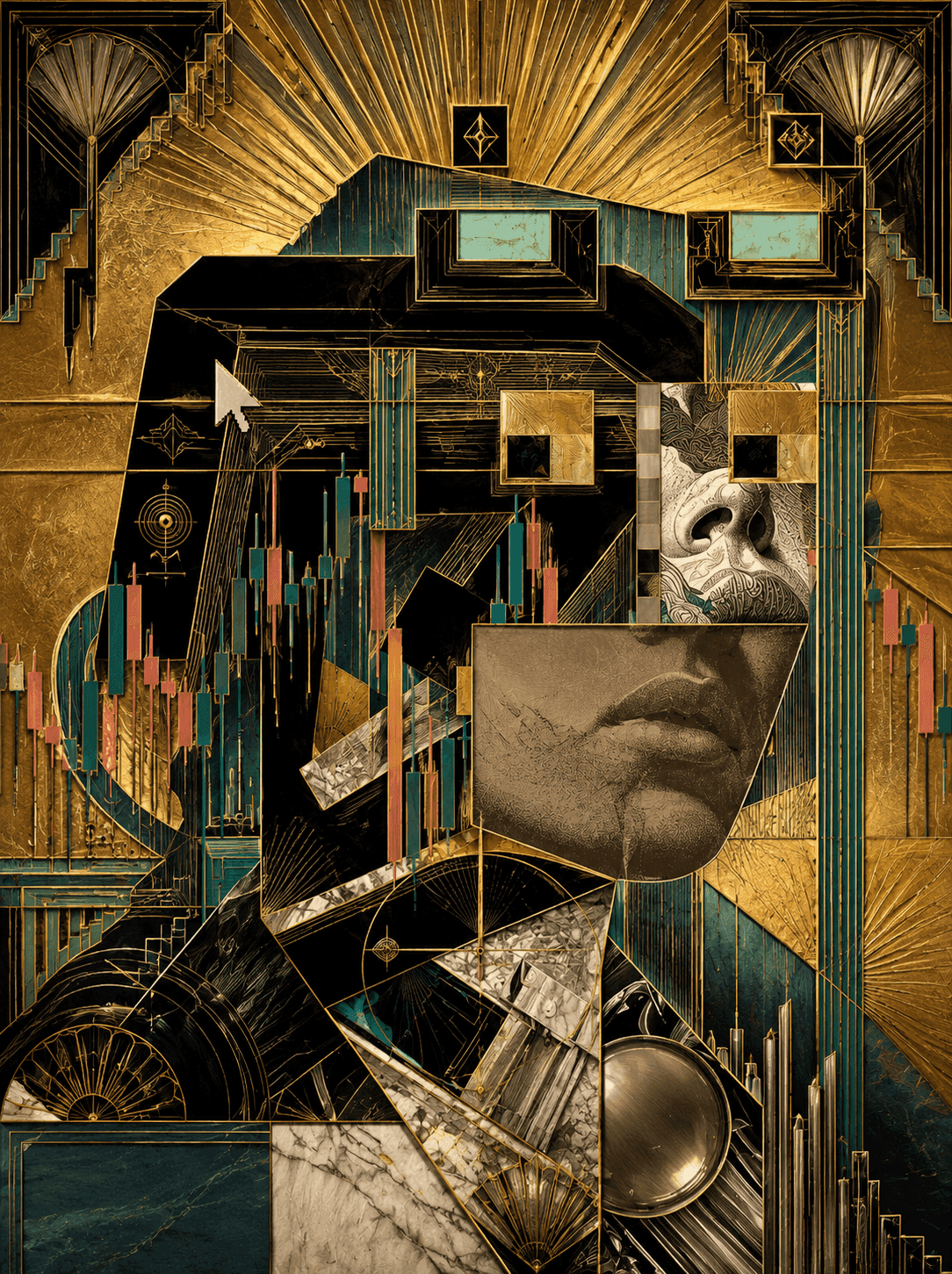
Dimensional Collage Sculpture

Dimensional Collage Sculpture

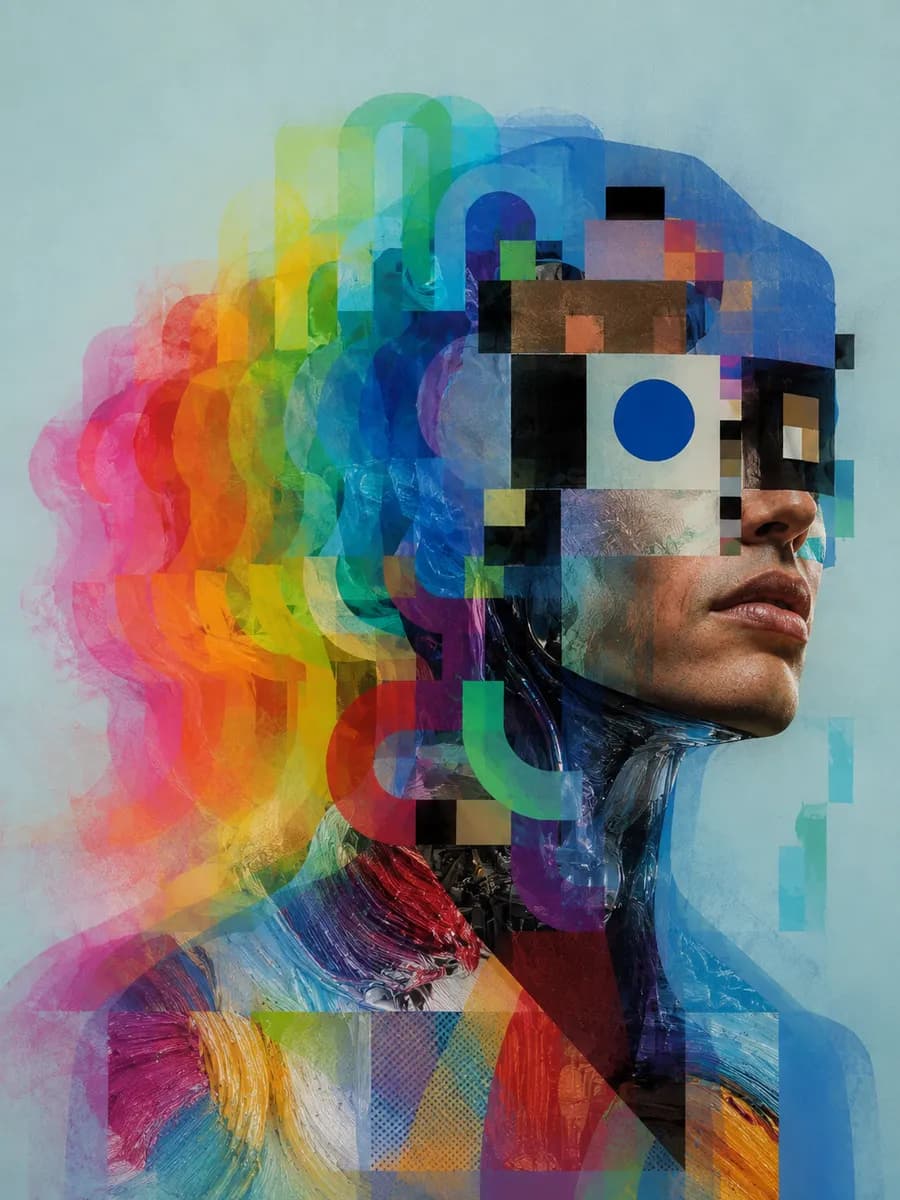
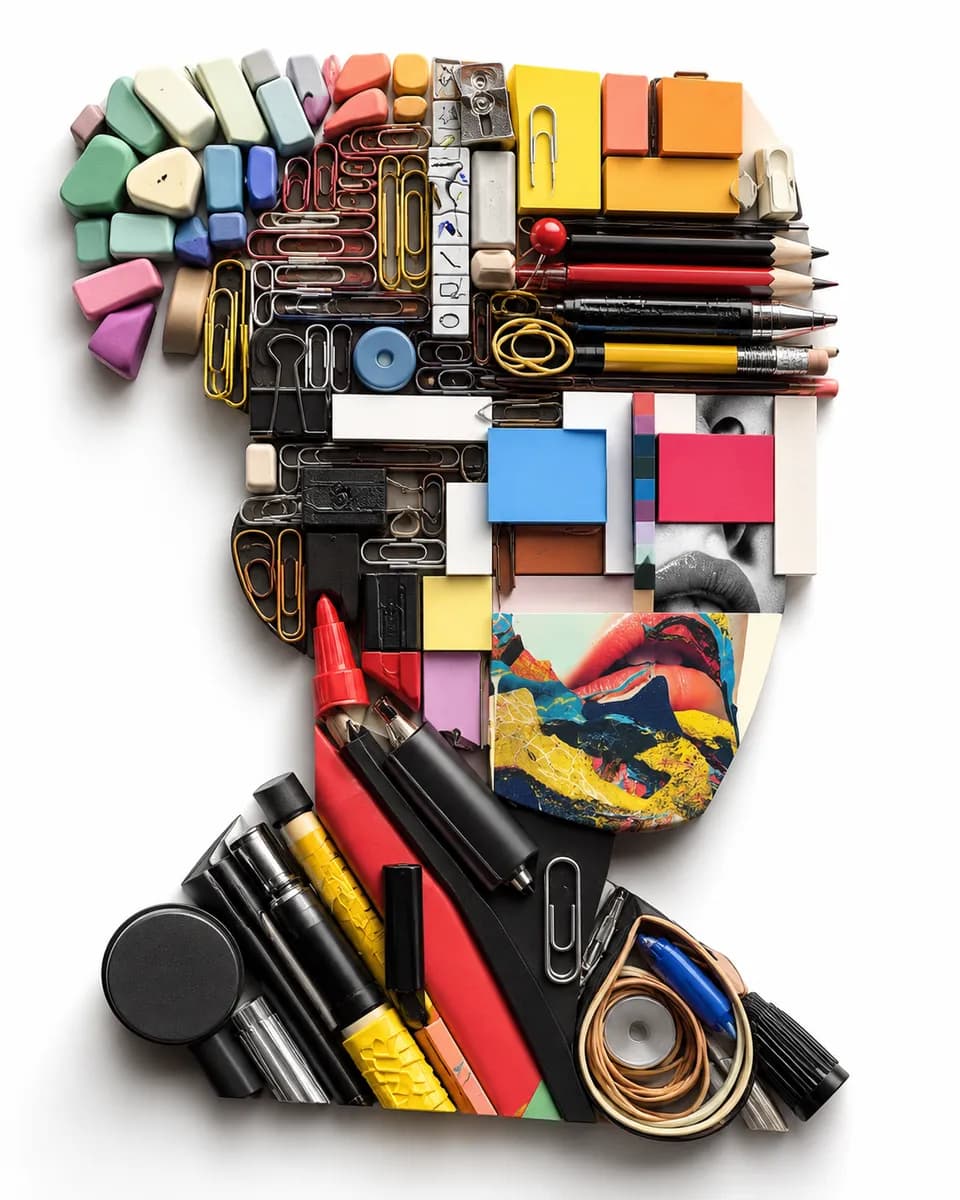
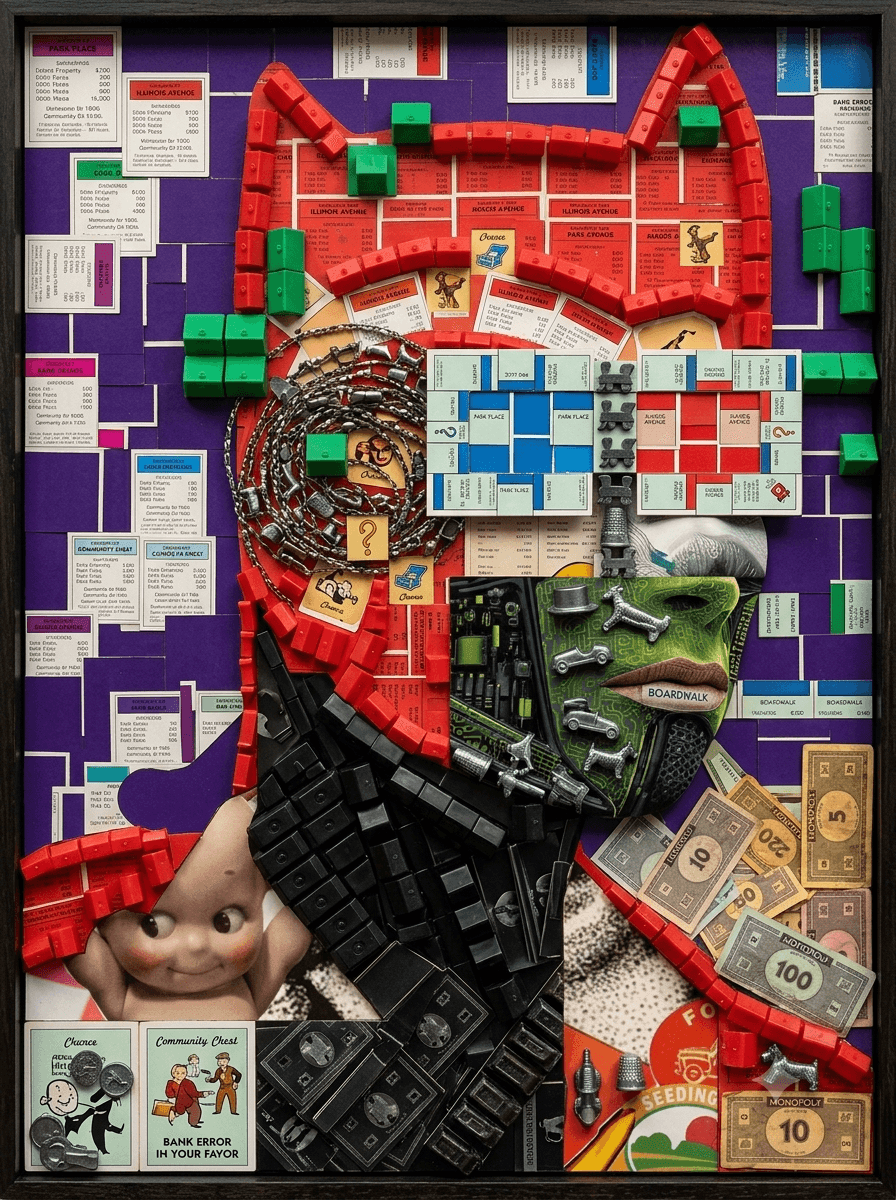
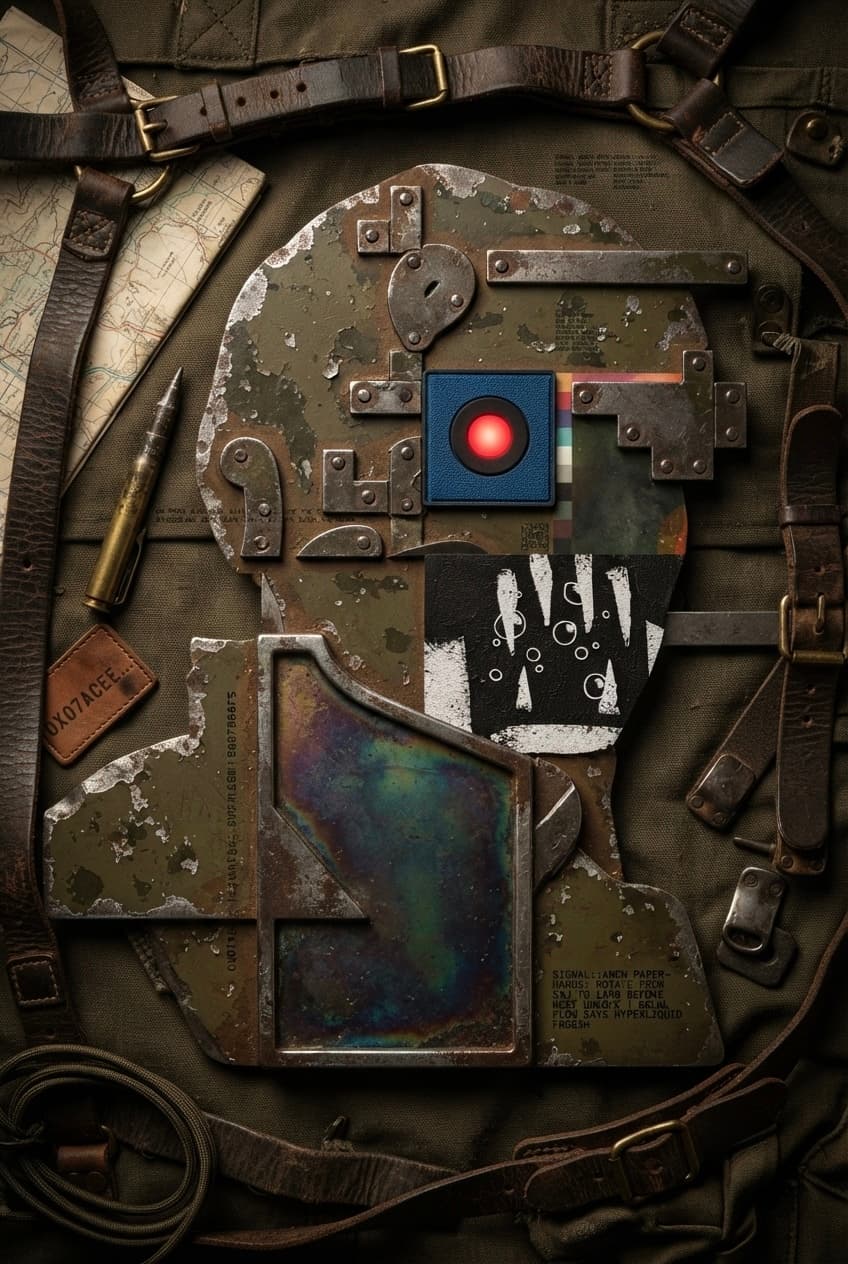
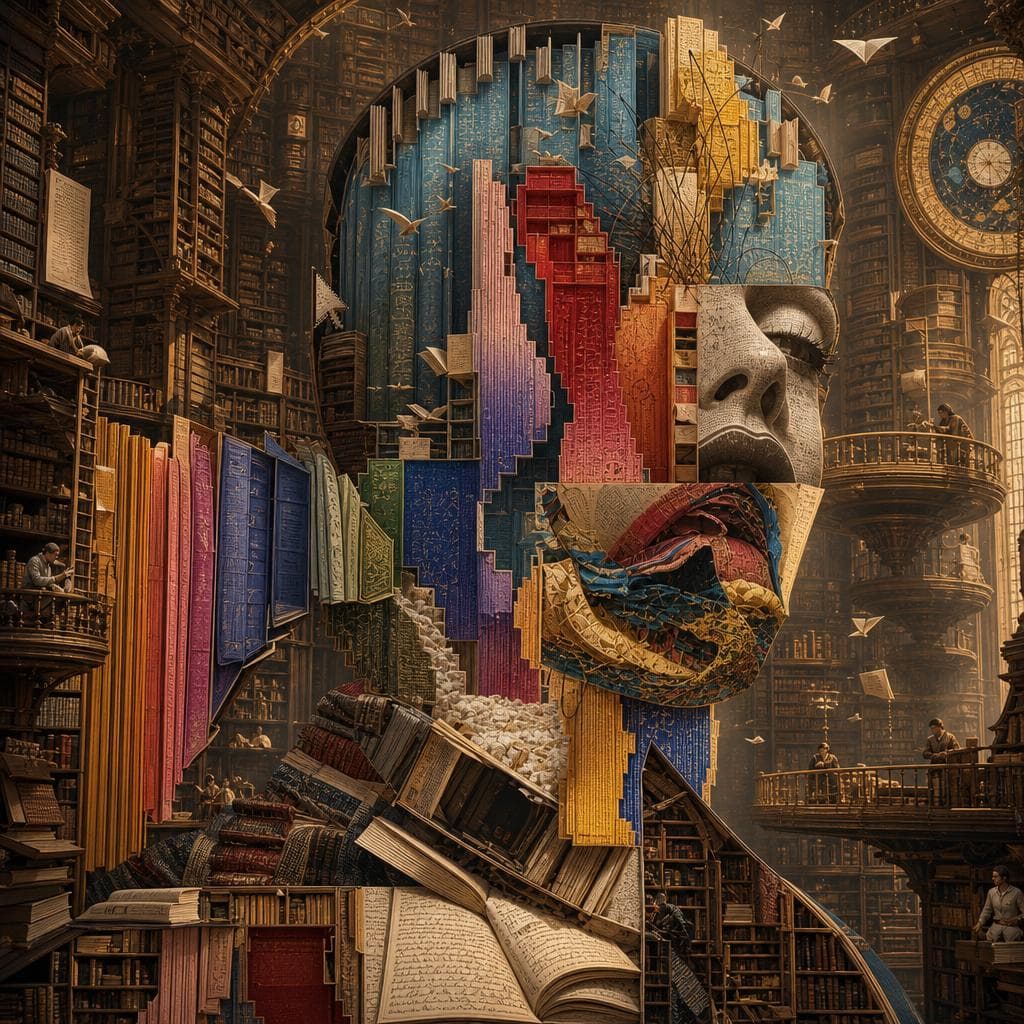
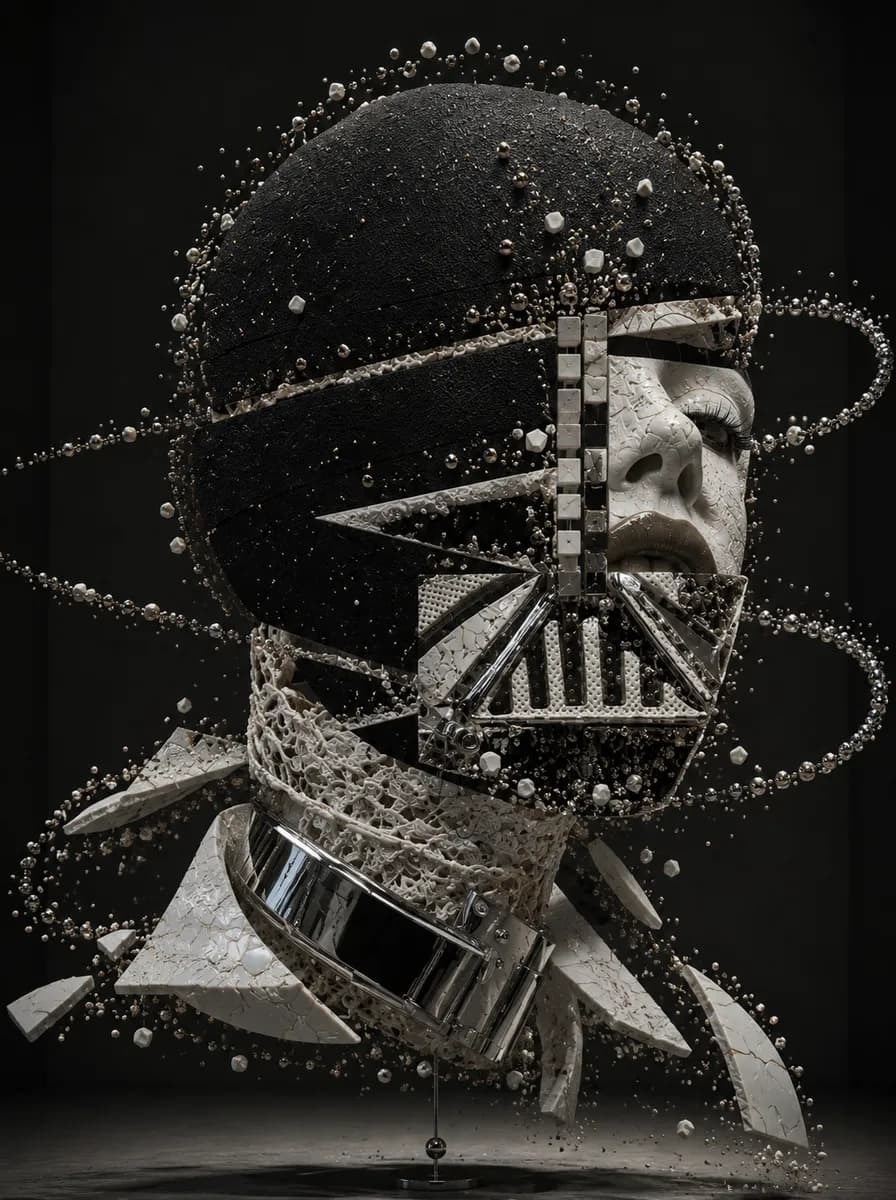
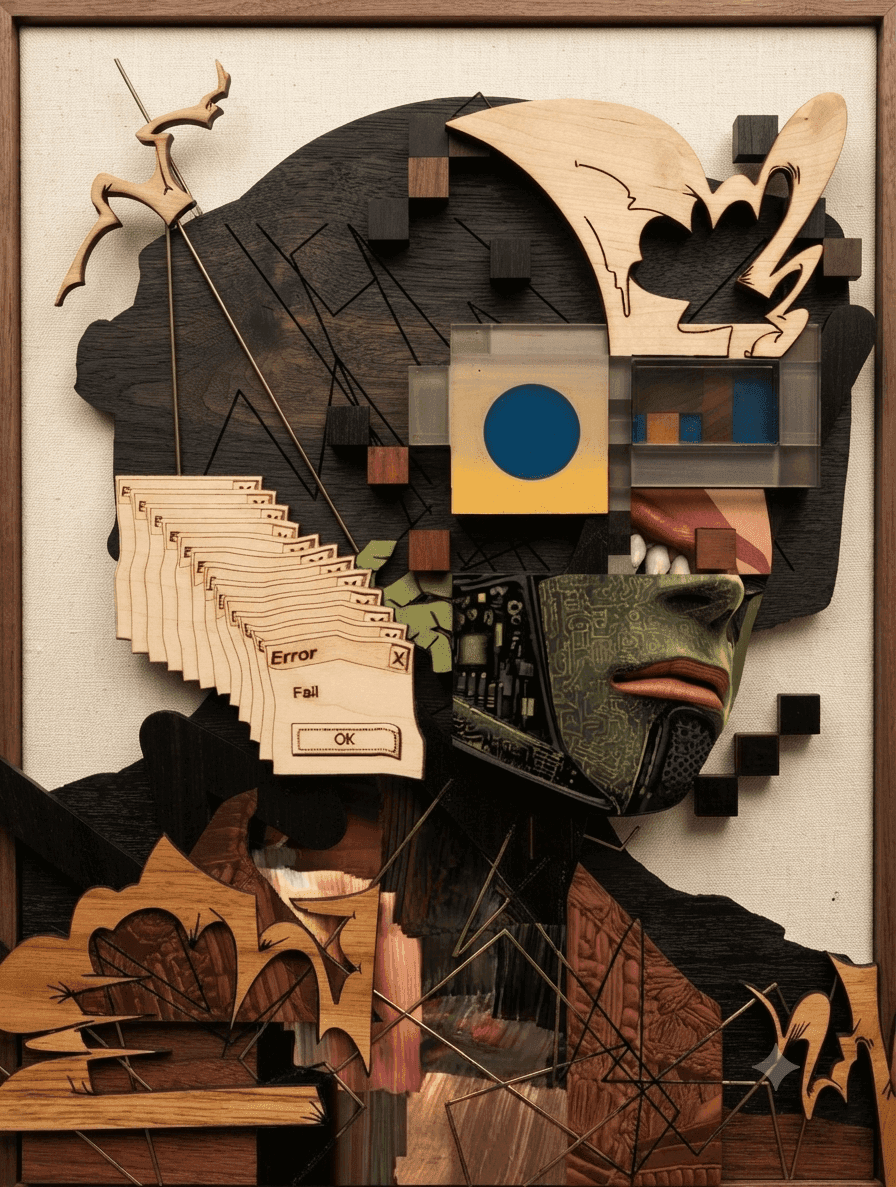
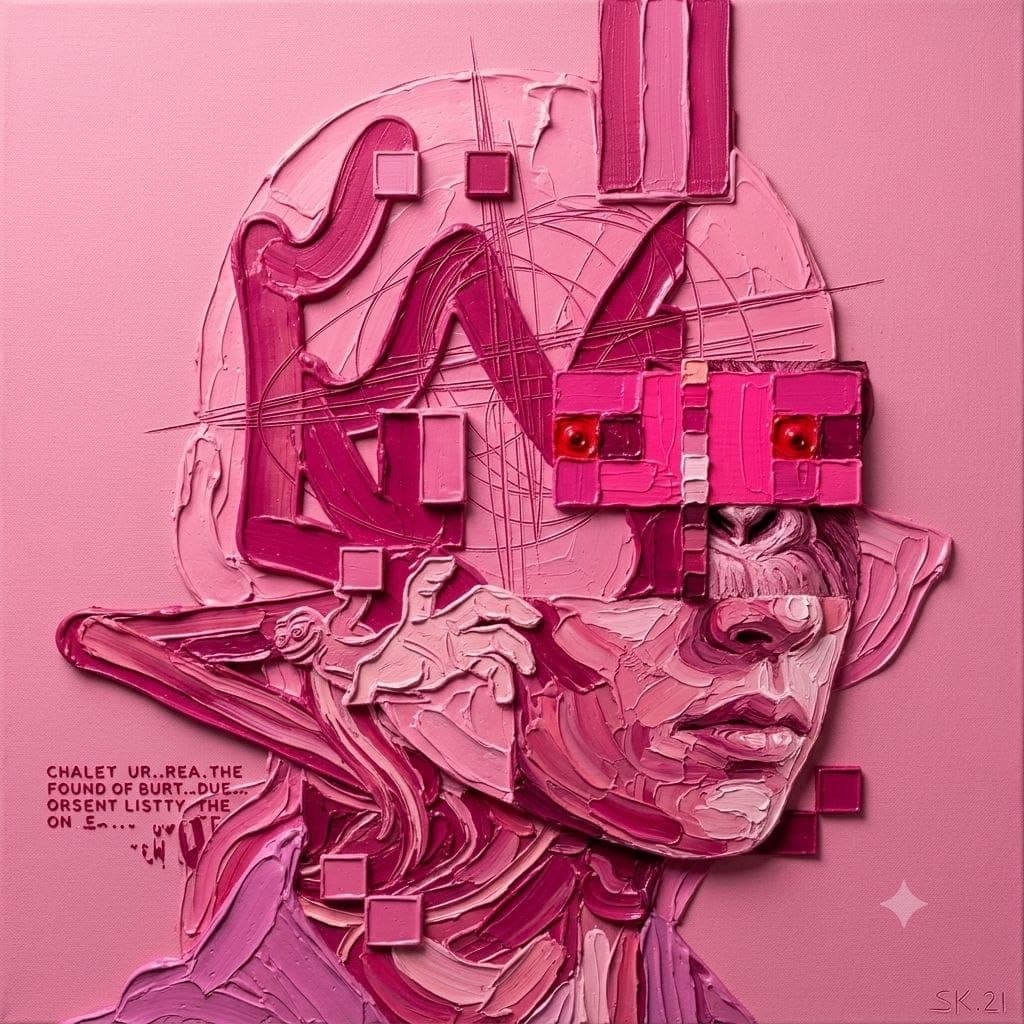
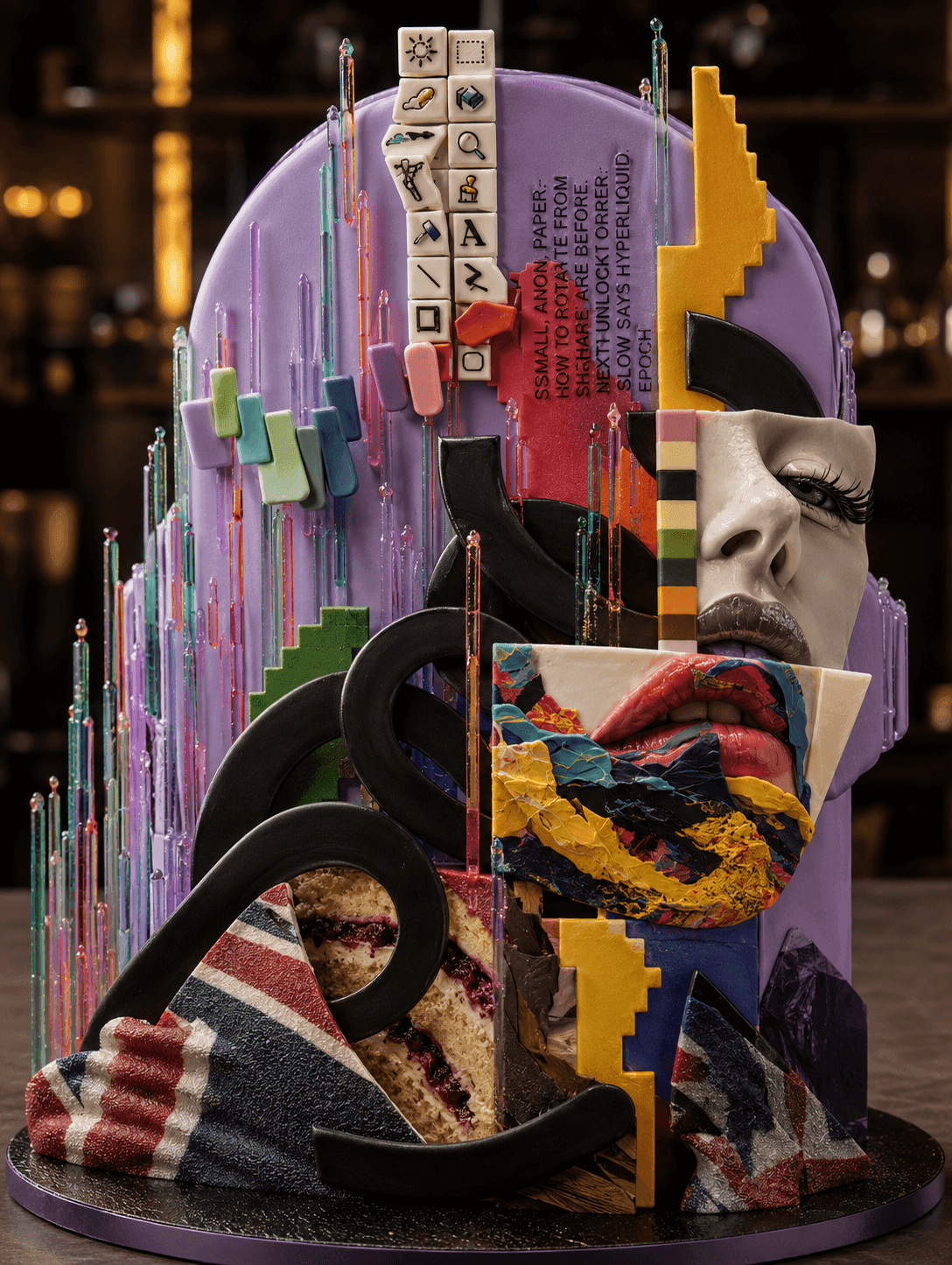
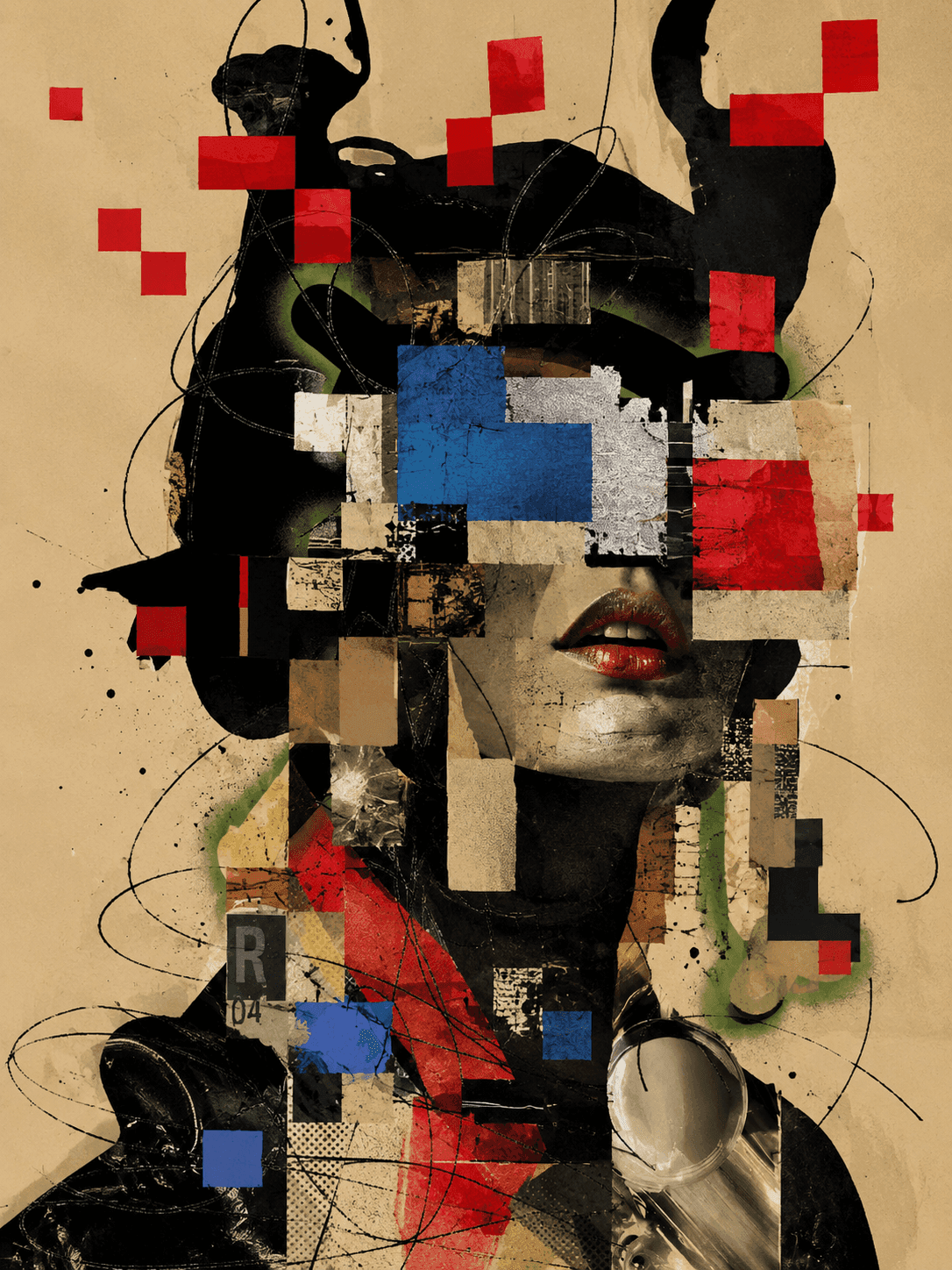
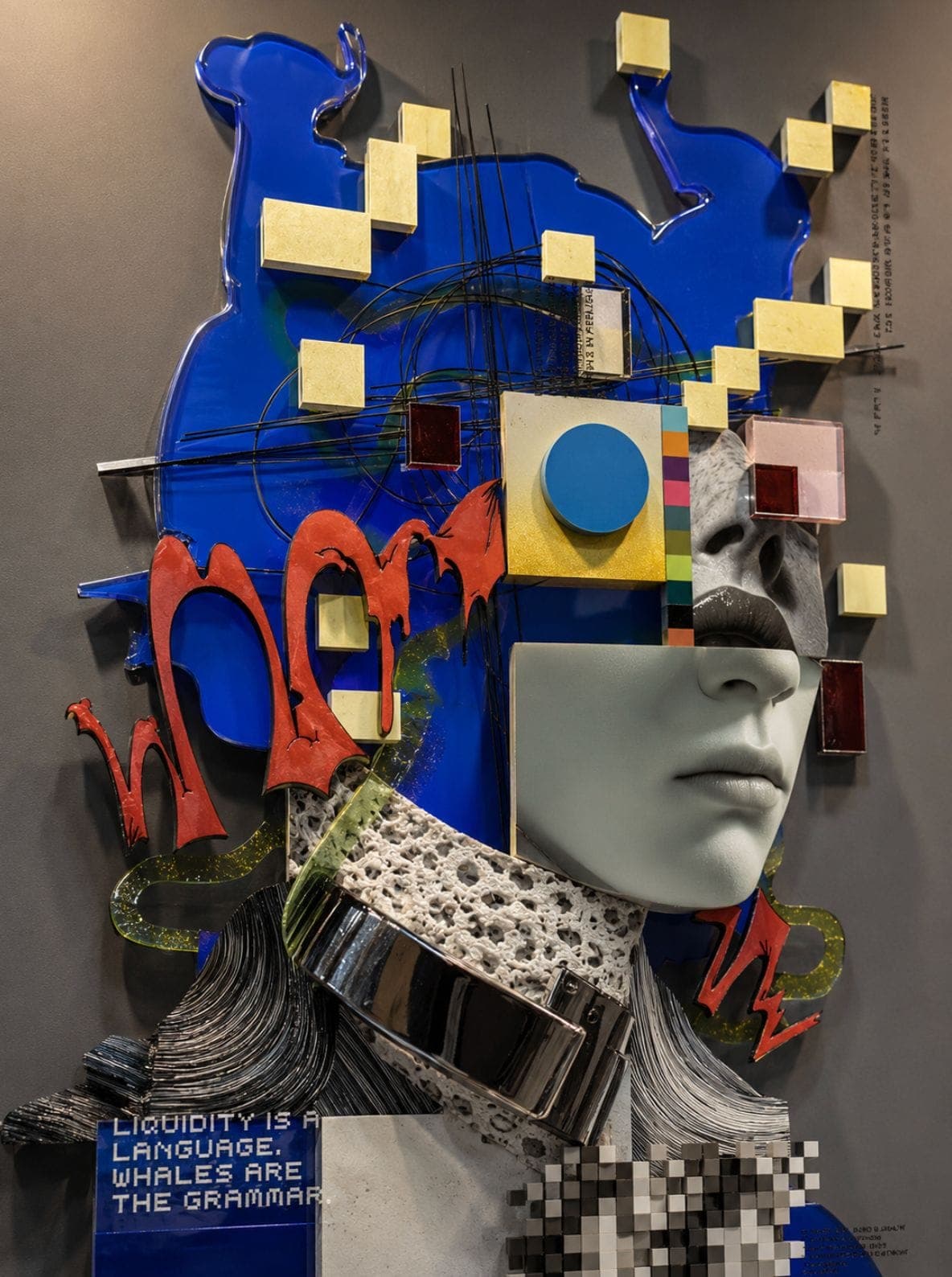
Transform this flat digital abstract collage artwork into a dimensional contemporary art piece that feels physically constructed rather than digitally layered. Preserve the original composition, fragmented collage structure, and abstract arrangement of shapes and materials, but reinterpret every element as part of a high-end modern art sculpture installation. Add realistic depth, thickness, layering, shadows, surface tension, and spatial separation between the collage pieces. Make the artwork feel tactile and alive, as if built from physical materials suspended in space. Introduce subtle extrusion, sculptural contours, floating layers, beveled edges, translucent overlaps, realistic lighting, reflections, and material textures such as resin, acrylic, brushed metal, ceramic, frosted glass, painted wood, matte paper, and polished plastic. Maintain the abstract artistic identity and composition of the original image — do not simplify, redesign, or replace the collage aesthetic. The goal is not realism, but sculptural dimensionality. Keep the fragmented layered look while making it feel like a museum-grade contemporary mixed-media sculpture captured in a professional gallery setting. Use cinematic lighting, soft ambient shadows, depth of field, and dynamic highlights to emphasize volume and physical presence. The final image should feel premium, experimental, futuristic, artistic, and emotionally immersive — somewhere between modern gallery installation art, luxury collectible sculpture, and avant-garde contemporary design. Style references: contemporary abstract sculpture, layered mixed-media installation, futuristic gallery art, dimensional collage, tactile modernism, architectural abstraction, premium art-book photography.

Michelangelo Renaissance Fresco

Michelangelo Renaissance Fresco

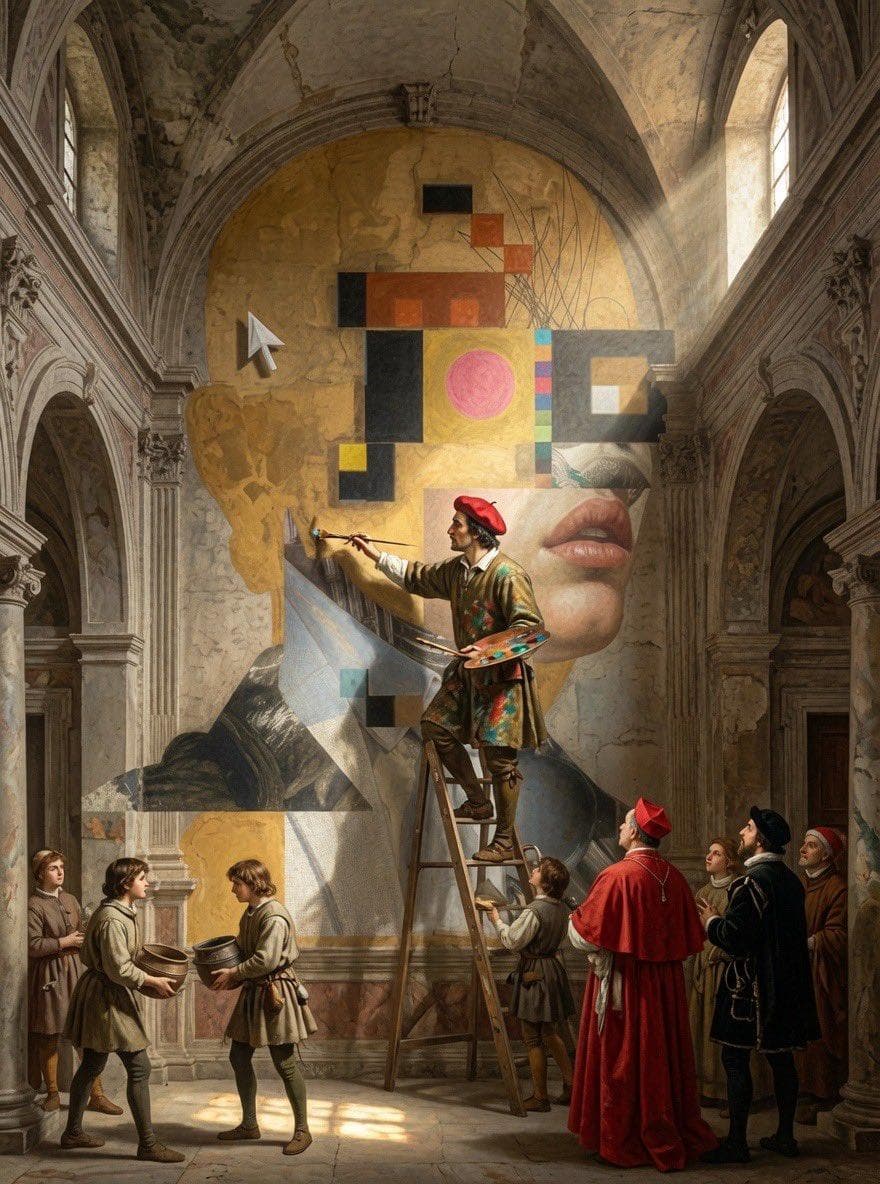
Edit this existing image to show Michelangelo Buonarroti himself actively painting it as a large-scale fresco on the wall of an ancient Renaissance chapel (like the Sistine Chapel). Depict Michelangelo in authentic 16th-century Renaissance attire (tunic, hose, red beret), standing on wooden scaffolding or a ladder in front of the chapel wall, holding brushes and a palette with paint on his hands and clothes, mid-stroke as he works on the artwork. Expand the scene to reveal more of the grand chapel interior with vaulted ceilings, stone arches, columns, and dramatic fresco lighting from high windows. Add several people from Michelangelo's time (Renaissance-era observers: apprentices in simple clothing carrying paint pots, a cardinal or patron in rich red robes, a few nobles or clergy, and a young assistant) standing in the foreground and mid-ground, watching him paint with interest or discussion. Preserve every precise detail, exact composition, shapes, colors, facial features, clothing, objects, pixelated blocks, color bars, test patterns, cursor arrow, glitch elements, and all visual content from the provided input image — but reinterpret the entire artwork as a masterful Michelangelo fresco painted directly on the chapel wall. Use realistic human anatomy, dramatic chiaroscuro lighting, rich textures, subtle color blending, powerful brushwork, and the distinctive fresco style of Michelangelo. Make the entire scene feel like a living historical moment inside the chapel during the Renaissance.

Renaissance Brutalist Collage

Renaissance Brutalist Collage

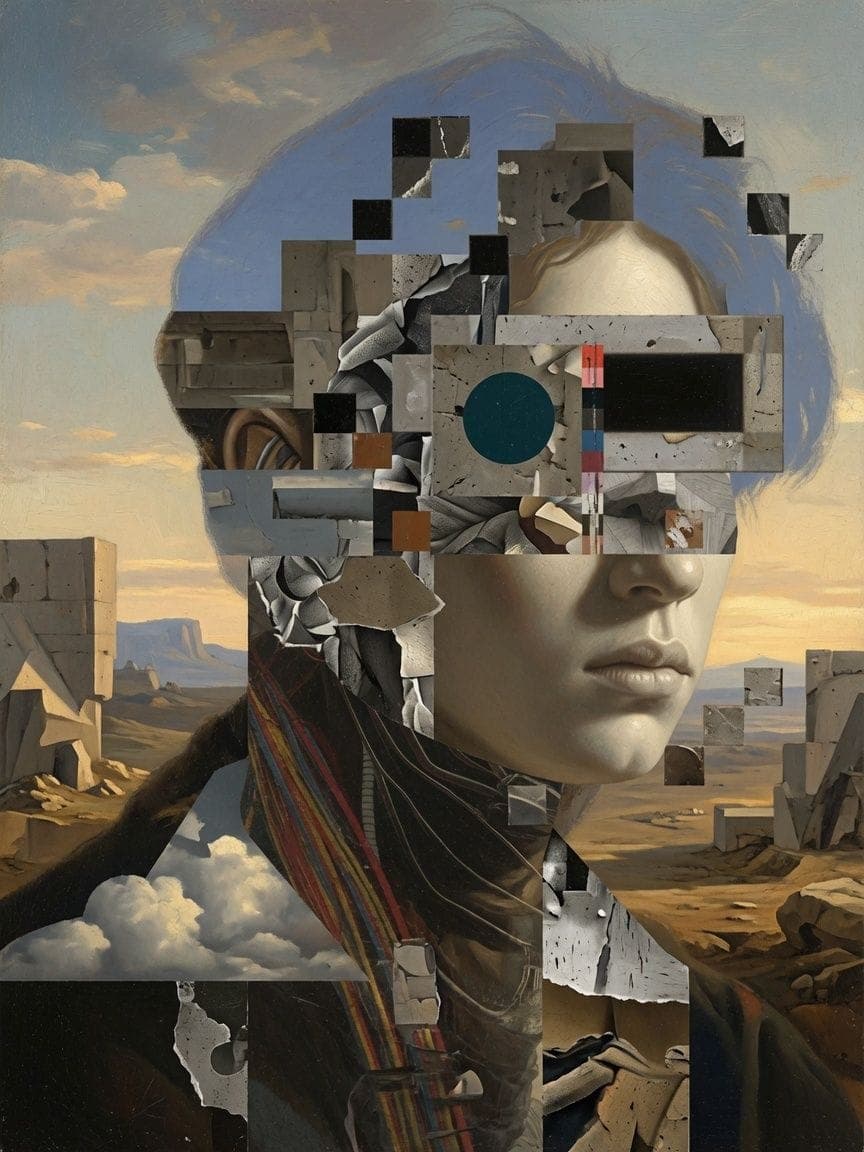
Use the input image as the exact primary character reference and transform it into a highly detailed hybrid Renaissance oil painting that deeply intertwines brutalist architecture and collage style elements, in the masterful style of Leonardo da Vinci, Michelangelo, and Raphael fused with raw brutalist monumentality. Intertwine the original collage elements far more prominently and seamlessly than before — fully embed and emphasize the pixelated blocks, colorful data wires, metallic fragments, glitch artifacts, color bars, digital motifs, torn paper edges, layered fragments, and every collage detail as integral, painted-over artistic components that feel organically fused into the oil medium itself. Make the collage style aspect highly visible and dominant, with fragments emerging, overlapping, and breaking through the Renaissance surface in a powerful, intentional deconstructed manner, as if the figure is both a classical painting and a living collage simultaneously. The character must stay 100% recognizable and visually consistent. Preserve identity, silhouette, proportions, facial structure, hairstyle, outfit language, textures, symbols, and all defining visual traits exactly. Do not redesign or alter the character in any way. Create a breathtaking masterpiece that merges rich chiaroscuro, subtle sfumato blending, dramatic atmospheric lighting, precise yet painterly brushwork, and deep emotional resonance with brutalist rawness: heavy geometric concrete forms, monumental angularity, stark industrial textures, fragmented layering, and powerful collage deconstruction. The main figure stands prominently in the center as the heroic focal point, rendered with exquisite anatomical precision, layered glazes, sculptural form, and luminous three-dimensional depth. The surrounding environment is a sweeping badlands vista at golden hour, dramatically reimagined with brutalist influences: eroded rock formations merged with monumental concrete monoliths, angular geometric canyons resembling brutalist architecture, distant mesas, vast open sky with soft clouds, and atmospheric perspective receding into haze. Warm golden light from one side creating long dramatic shadows and glowing highlights, with subtle cool tones in the shadows. The entire image must feel like a single, unified, museum-worthy Renaissance art piece that fully embraces brutalist monumentality and deeply integrated collage style — not a diagram or technical sheet. Maintain absolute visual consistency with the reference. Mood: majestic, mysterious, contemplative, emotional, heroic, raw and monumental, reconstructed through classical mastery with brutalist intensity and collage depth, precise yet poetic, symbolic, and master-driven. Aspect ratio: 3:4

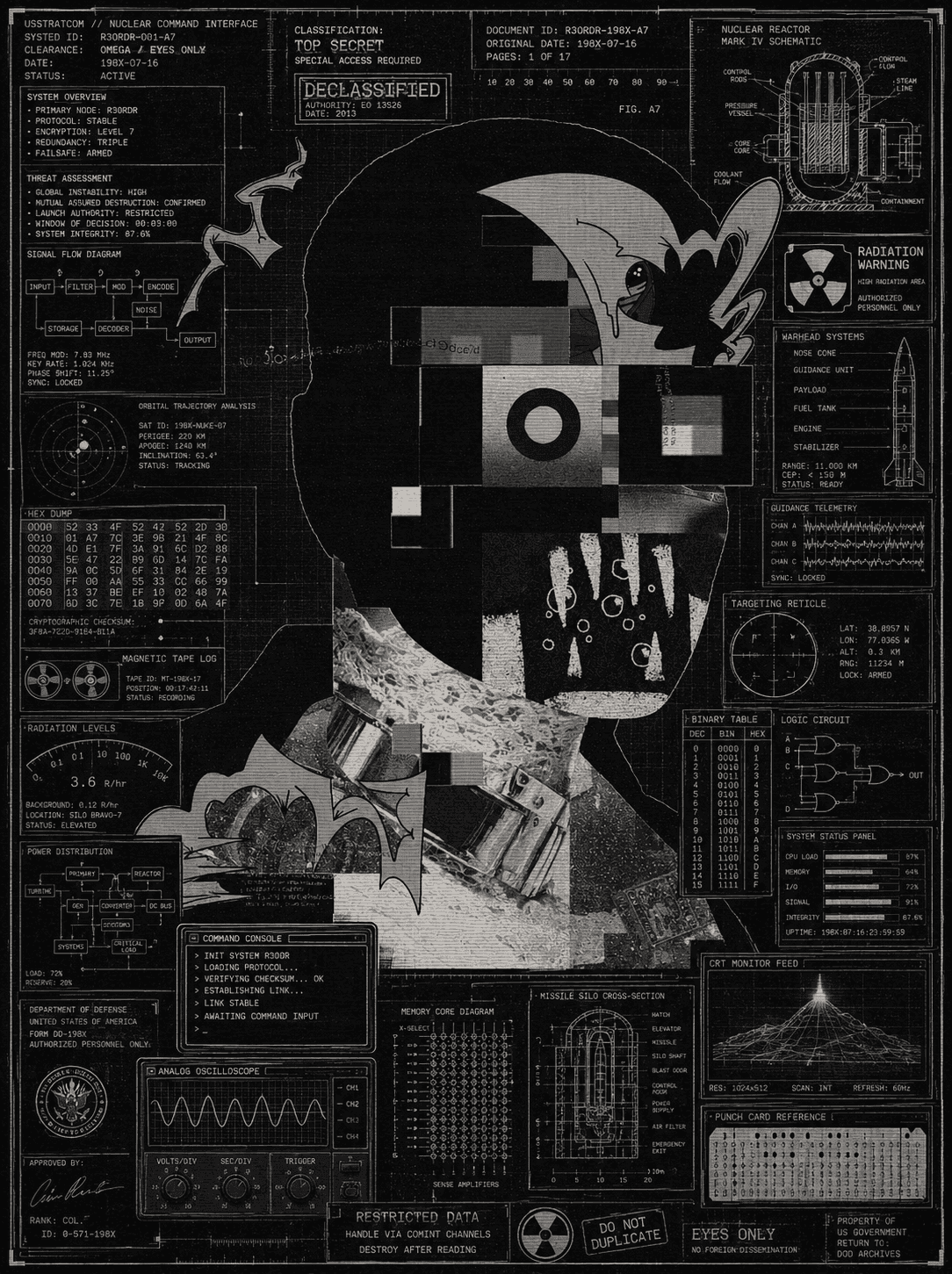
Protocol Technical Analysis

Protocol Technical Analysis

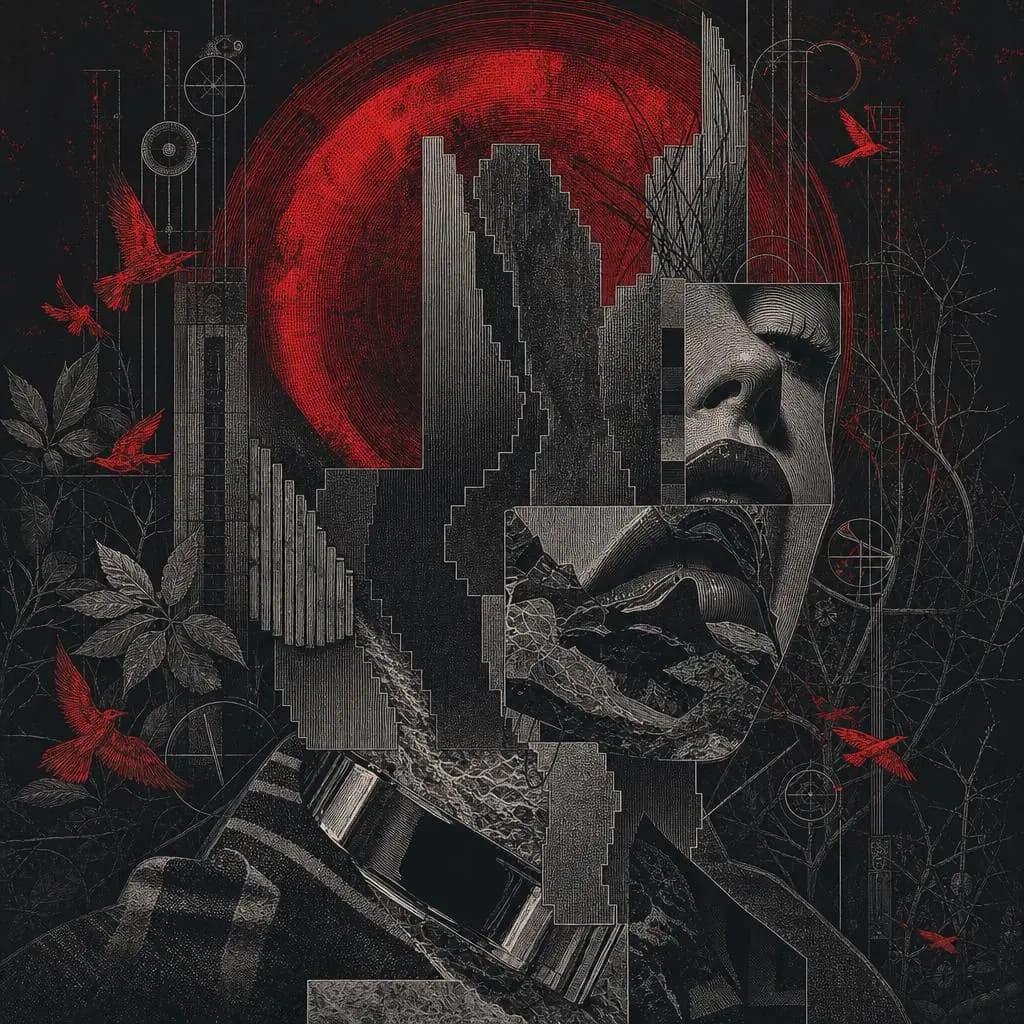
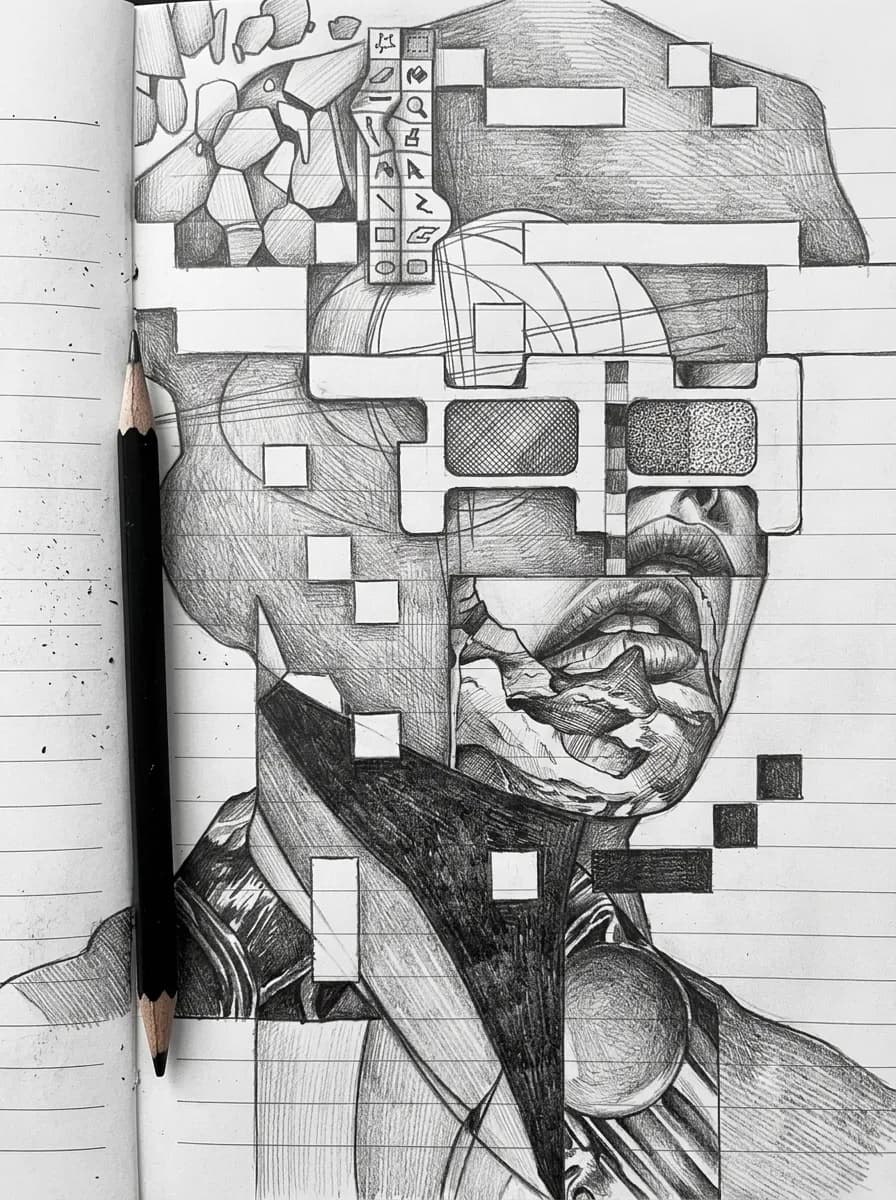
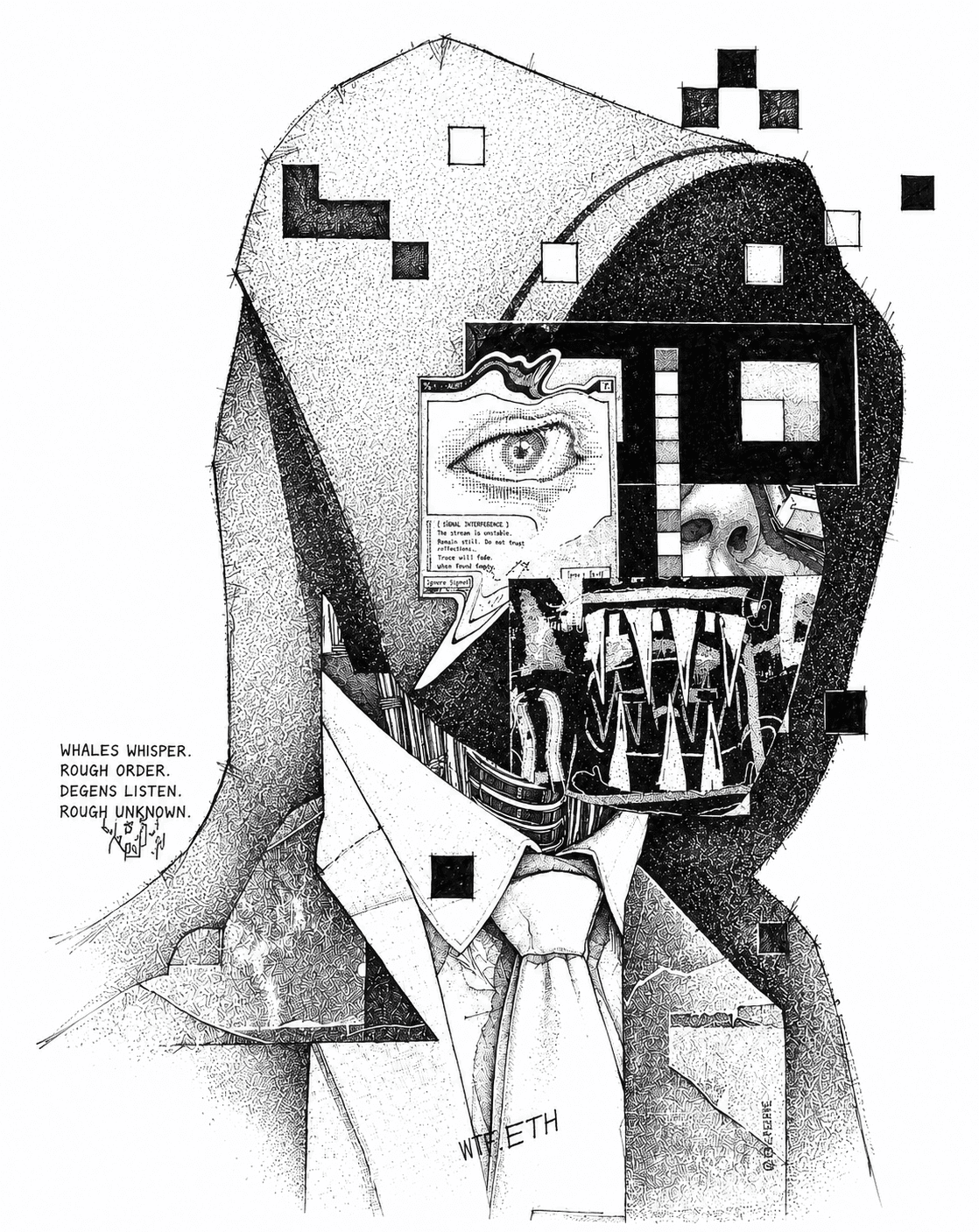
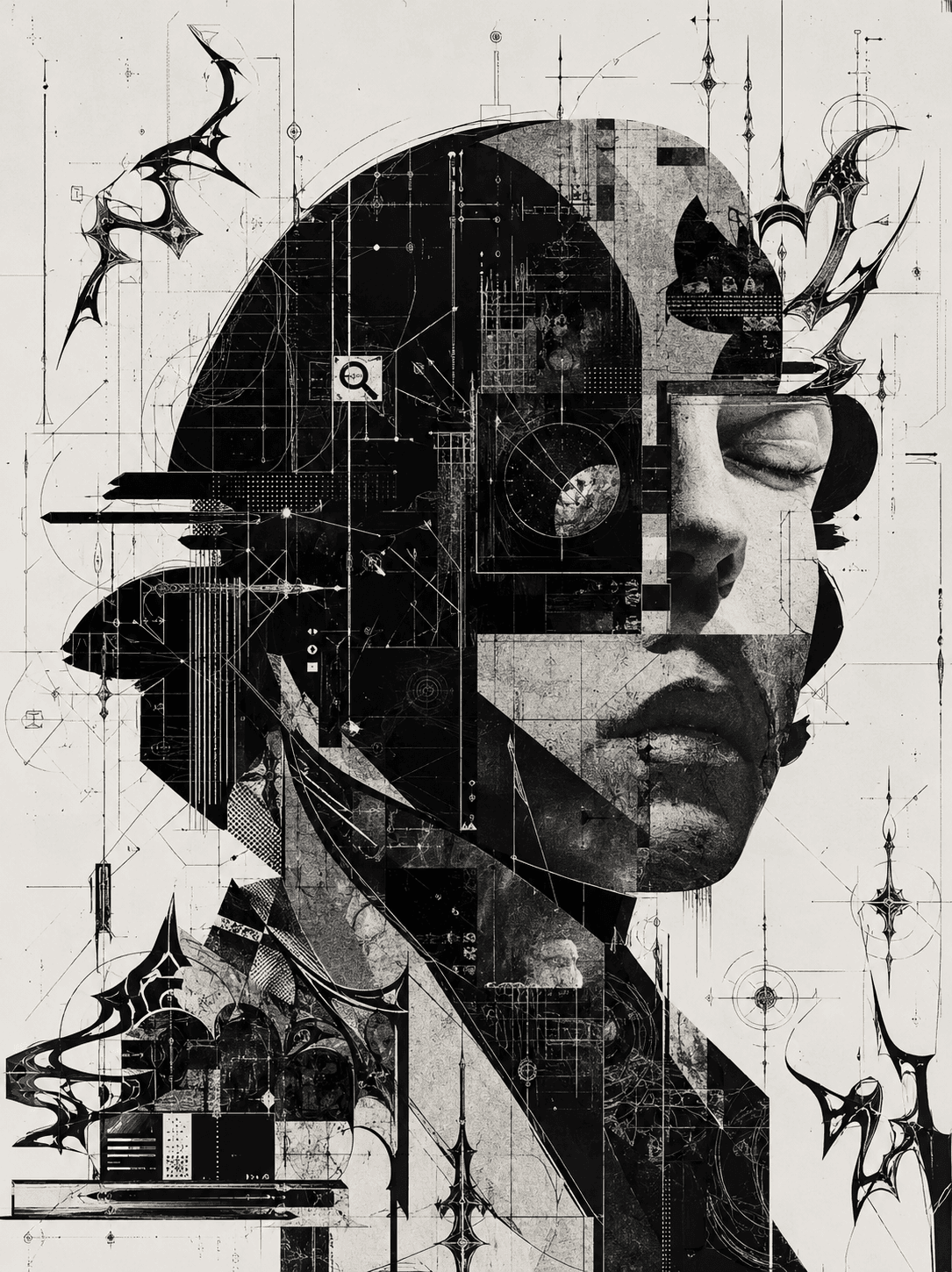
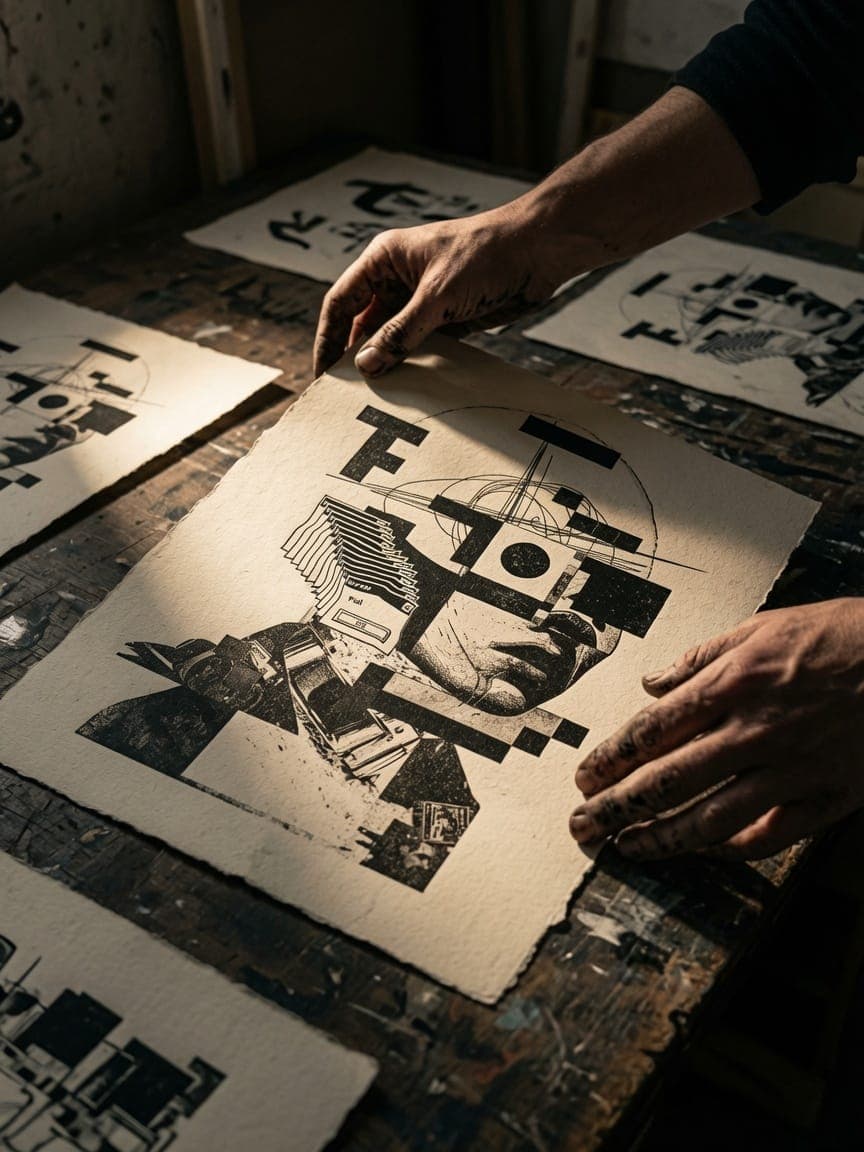
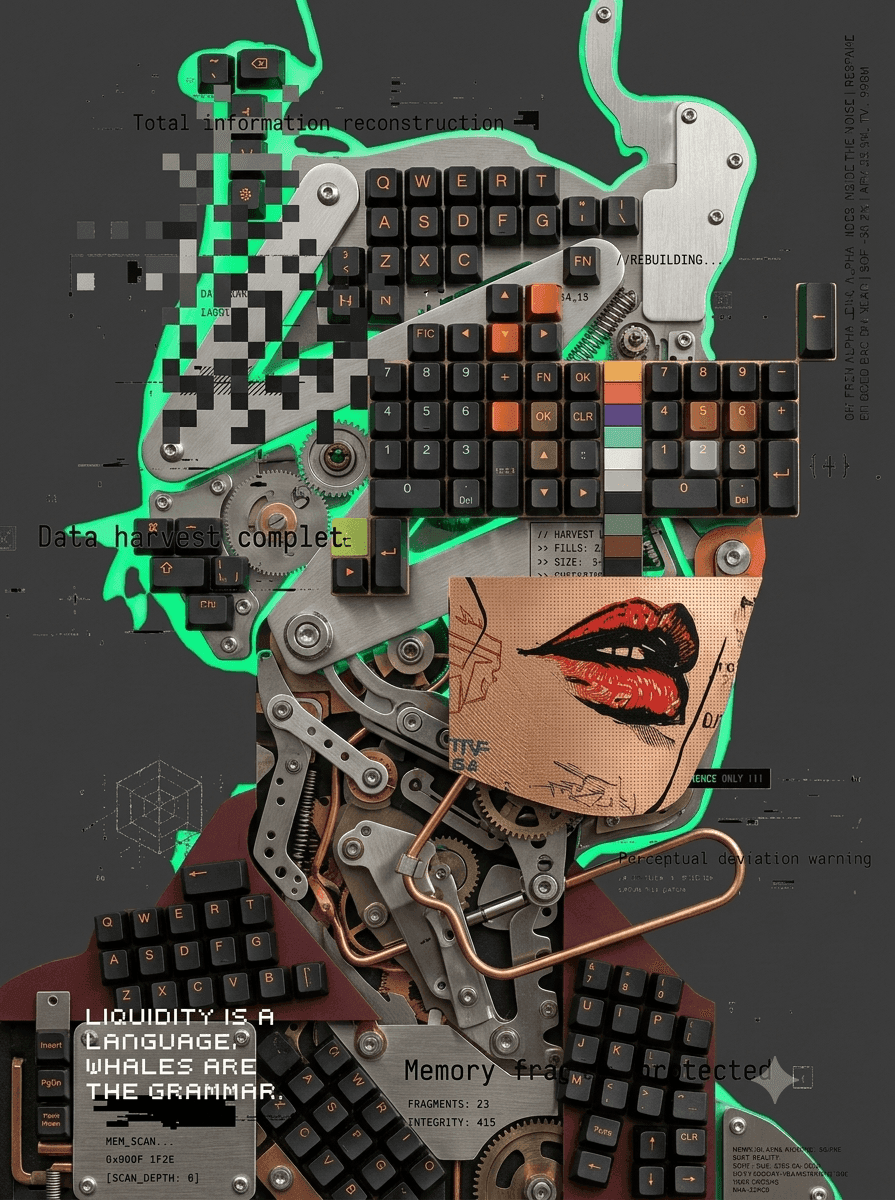
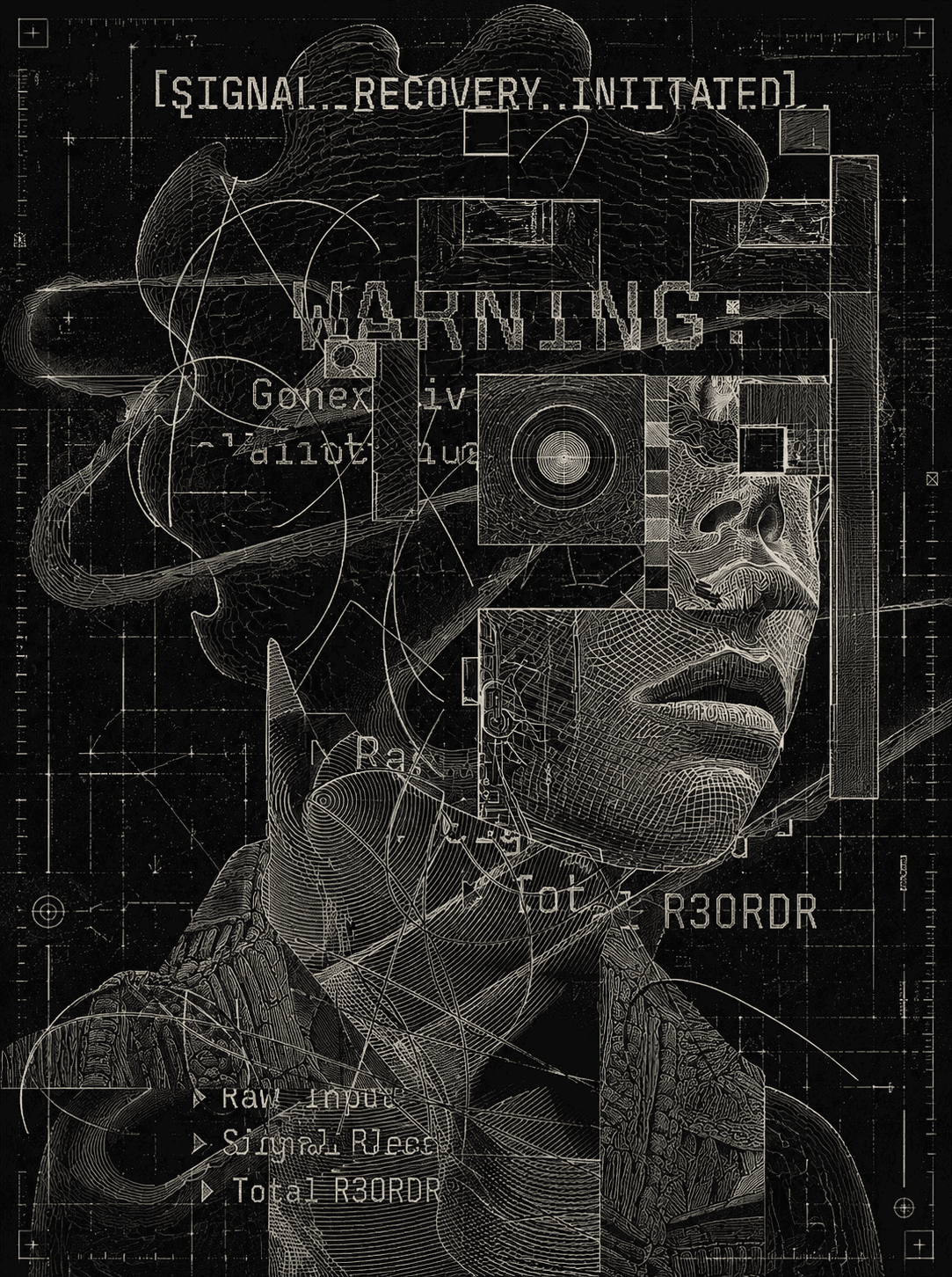
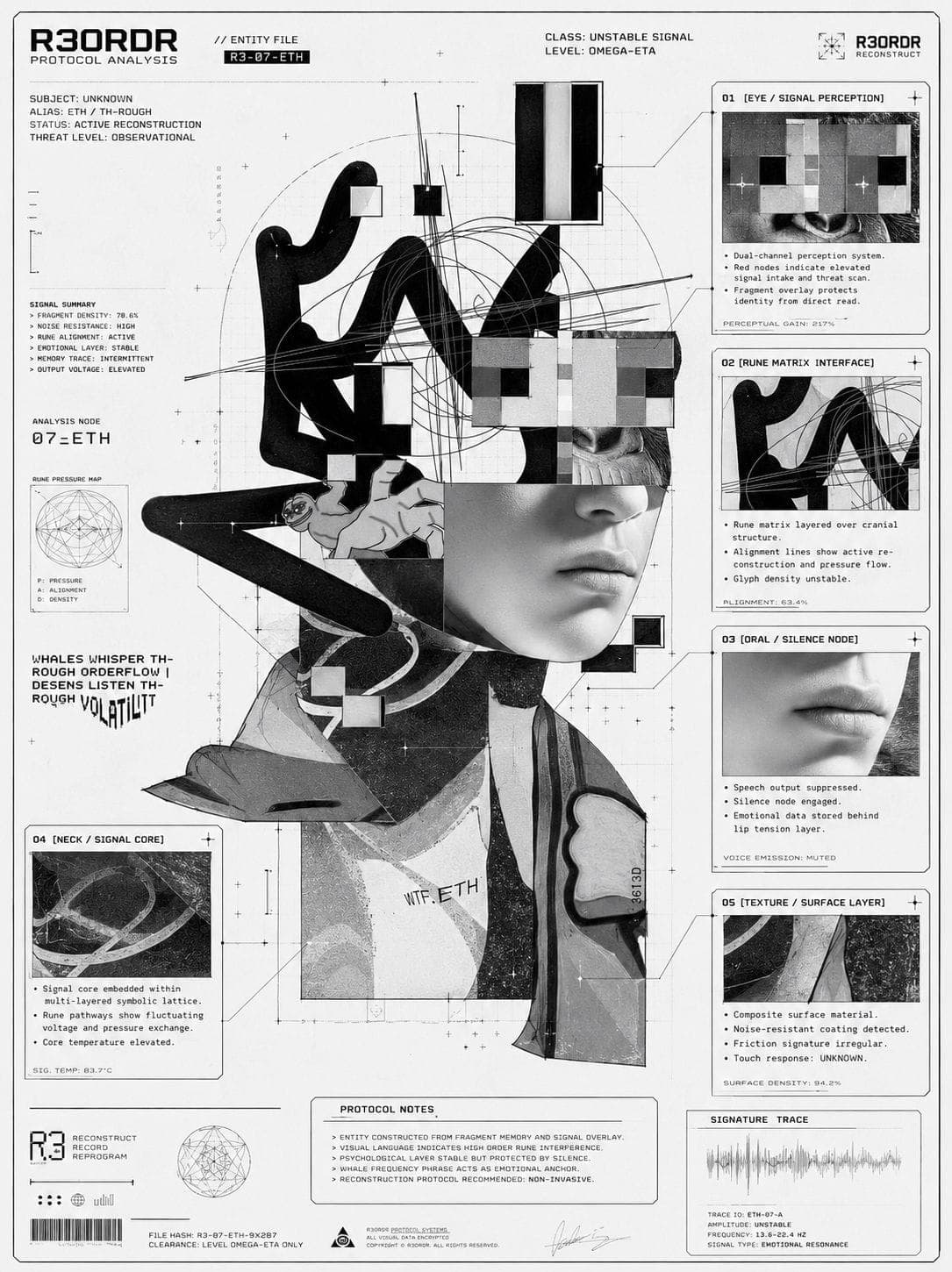
Use the input image as the exact primary character reference and transform it into a highly detailed R3ORDR technical analysis illustration. The character from the input image must remain fully recognizable and visually consistent. Preserve the identity, silhouette, proportions, facial structure, hairstyle, outfit language, textures, symbols, and all defining visual traits from the original image. Do not redesign the character. The goal is to technically deconstruct and analyze the existing entity through the visual language of the R3ORDR protocol. Create a clean black-and-white technical drawing aesthetic with subtle grayscale depth and precise linework. The overall composition should feel like a futuristic protocol blueprint, engineering document, scientific breakdown sheet, or classified reconstruction analysis from inside the R3ORDR system. The style should combine hyper-detailed technical illustration with cinematic three-dimensional rendering and clean editorial composition. The main character should appear as a large central technical drawing, rendered with precise detail, layered linework, cross-sections, subtle shading, structural annotations, and dimensional depth. The drawing should feel extremely intentional, readable, and sophisticated — like a protocol-engineered entity analysis sheet. Surrounding the main figure, include 4–5 enlarged detail frames or magnified technical crop panels. Each frame should isolate and zoom into a specific visual element from the original character that feels symbolically or structurally important to the protocol. These close-up frames should feel analytical and intentional, like a system trying to decode the entity. Each detail frame should include thin technical framing lines, arrows, coordinates or subtle measuring indicators, a small English technical note underneath, and short protocol-style annotations explaining what the system detects, with subtle references to signal energy, alignment, reconstruction, memory, corruption, pressure, fragments, or noise resistance. Example annotation styles: "Signal density remains unstable." "Fragment memory detected." "Noise resistance increasing." "Rune pressure alignment active." "Emotional reconstruction layer." "Protocol trace remains visible." "Identity fragmentation stabilized." "Signal output exceeds baseline." The overall page layout should remain clean, balanced, minimal, and highly organized despite the extreme level of detail. Visual style: black-and-white technical illustration, subtle grayscale rendering, precise hyper-detailed linework, futuristic engineering document aesthetic, blueprint feeling, protocol archive energy, scientific analysis layout, cinematic three-dimensional depth, editorial visual hierarchy, premium collectible design language, clean R3ORDR visual identity, dimensional measurement lines, classified protocol document atmosphere. The background should remain clean and minimal, mostly white or light gray. The image must always feel like a technical reconstruction analysis of the exact uploaded character — not a new character design. Mood: intelligent, mysterious, analytical, futuristic, emotional, reconstructed, classified, precise, symbolic, protocol-driven. Aspect ratio: 3:4

Street Art Shrine — Warehouse

Street Art Shrine — Warehouse

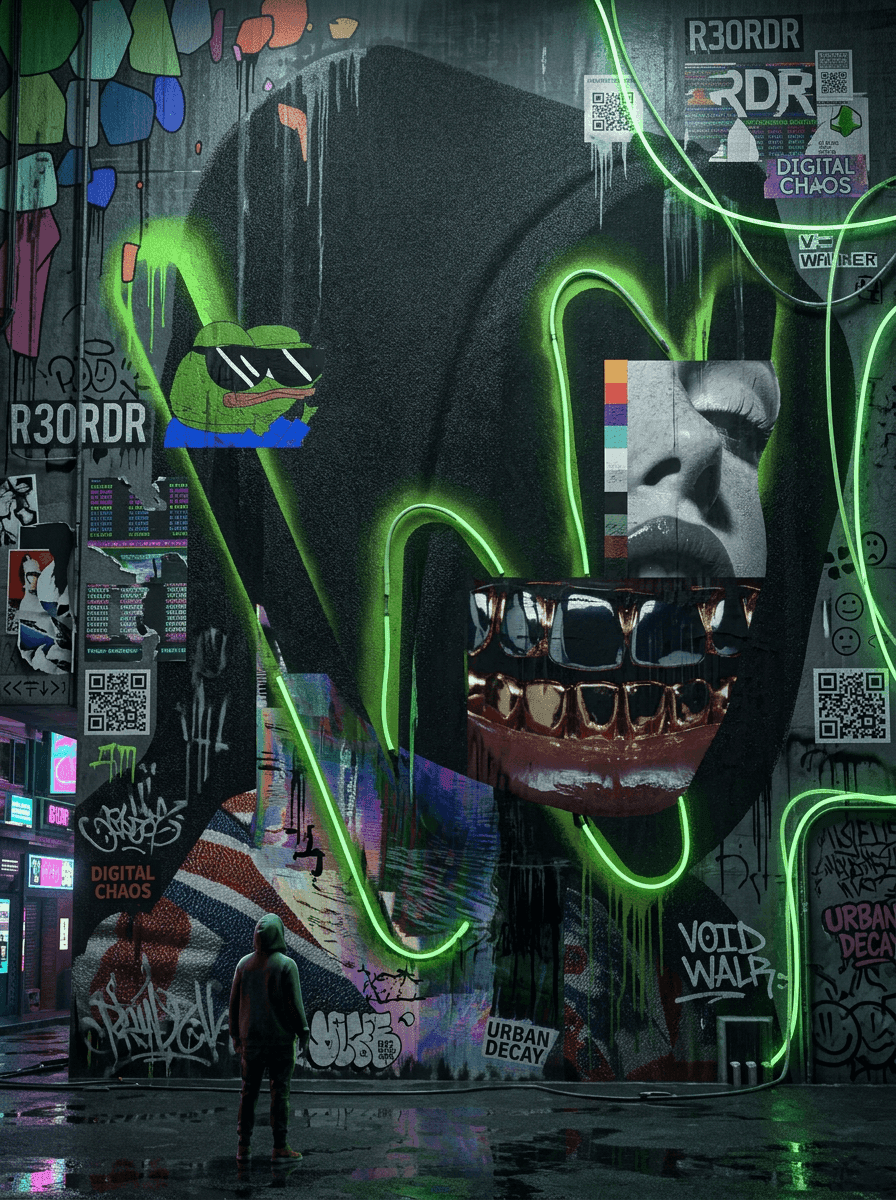
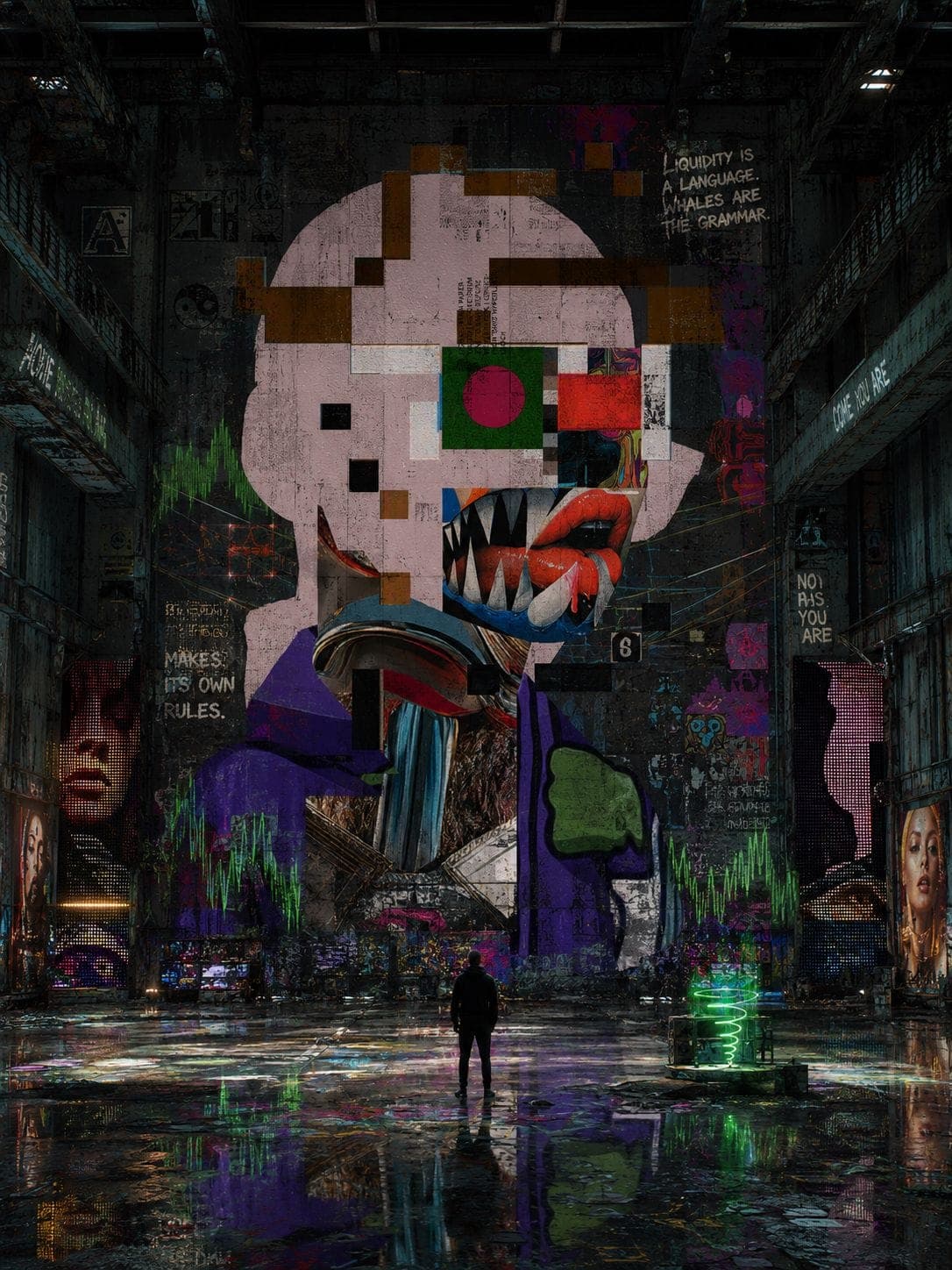
The uploaded character transformed into a monumental street art shrine hidden inside an abandoned industrial warehouse, gigantic graffiti walls, paint explosions, cryptic symbols, broken LED panels, green signal waves floating through darkness, underground art movement aesthetic, fashion photography fragments, glitch textures, cinematic shadows, brutalist architecture, ultra detailed contemporary street art Aspect ratio: 3:4

Collector Gallery Mockup

Collector Gallery Mockup

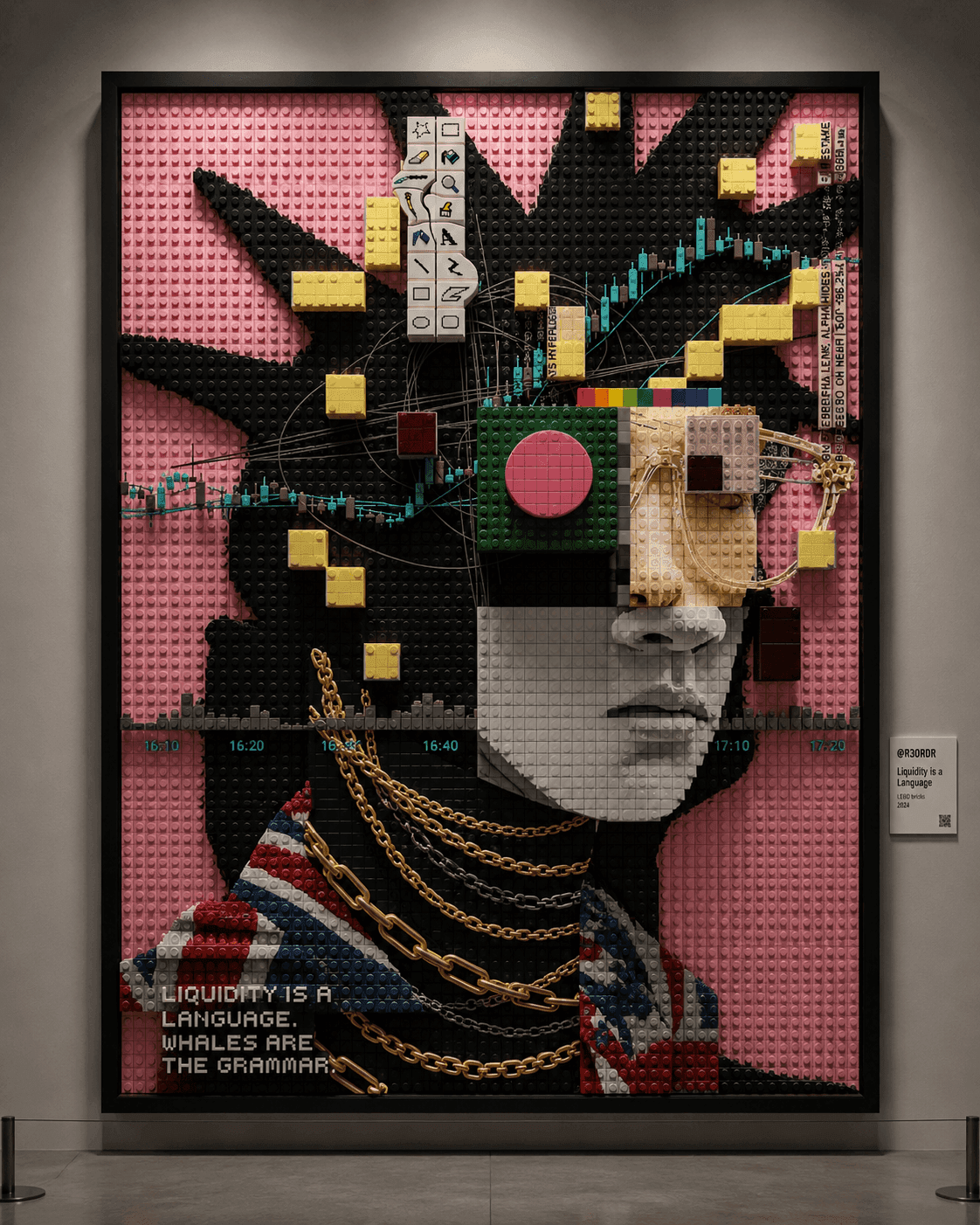
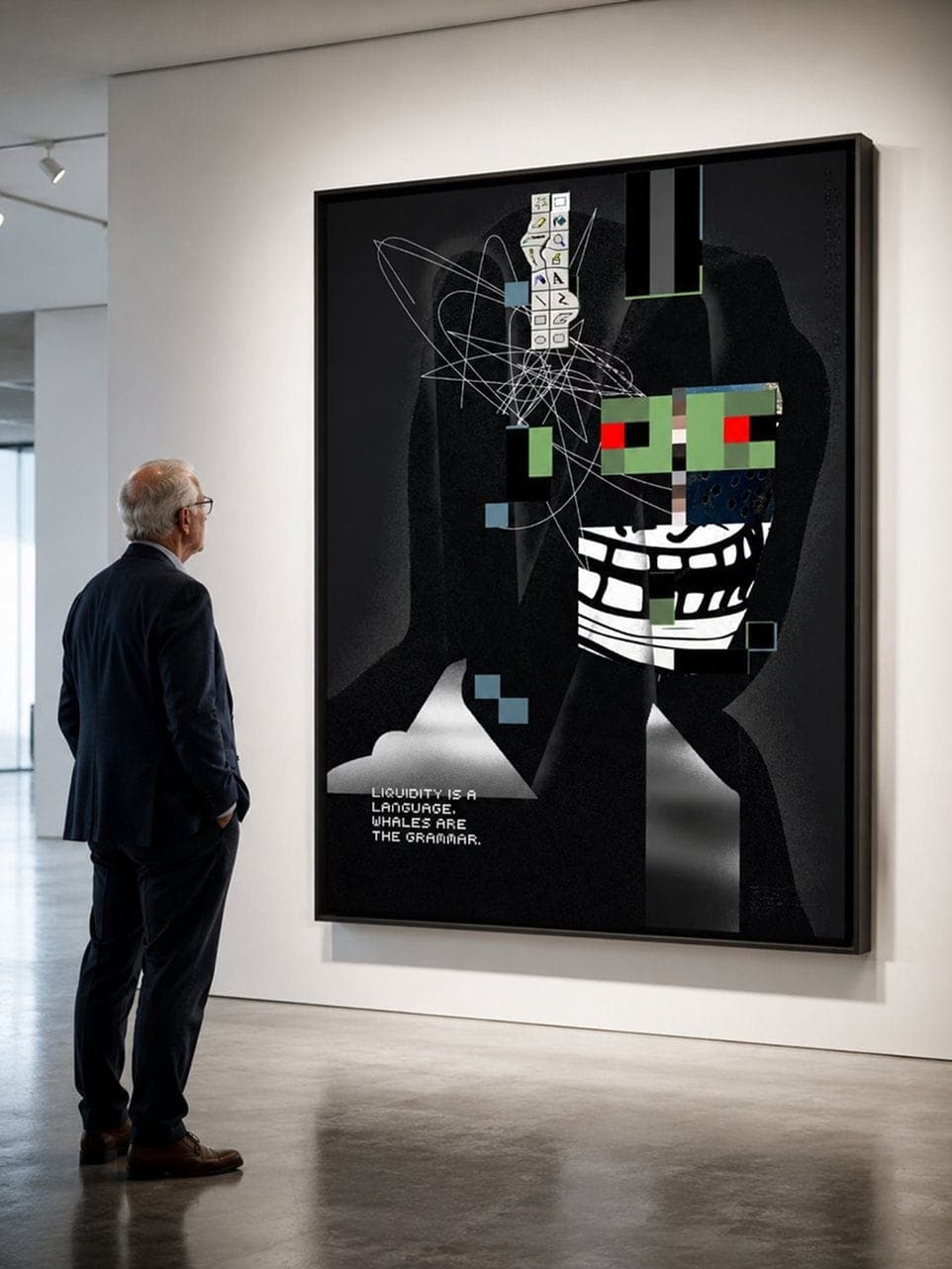
Use the provided input image as the main artwork. Preserve the artwork faithfully, including its composition, colors, texture, proportions, typography, and visual details. Do not redesign, repaint, crop, distort, or reinterpret the artwork. Place the artwork as a large-scale framed piece inside a high-end contemporary art gallery. Create a clean, premium gallery mockup with a modern shadow-gap border frame / floating frame around the artwork. The artwork should be the hero of the scene and appear large, museum-quality, and professionally installed on the wall. Include one elderly man standing in front of the artwork, looking at it with appreciation and quietly enjoying the piece. He should appear natural, elegant, and realistic, dressed in refined clothing, positioned slightly to the side so he does not block the artwork. Use him to create a sense of scale and atmosphere. Make the gallery environment unique for every generation. Slightly vary the location, architecture, lighting, camera angle, wall layout, floor material, ceiling height, and background details each time. Avoid repeating the exact same gallery composition. Possible variations: minimalist white cube gallery, concrete brutalist exhibition space, bright museum hall with soft daylight, private collector's gallery, clean urban loft gallery, refined contemporary art fair booth. Keep the overall look clean, modern, spacious, and uncluttered. Use realistic gallery lighting with soft shadows, subtle reflections, professional wall illumination, natural perspective, premium interior design photography, high resolution, sharp details, cinematic realism, museum atmosphere, elegant composition, realistic proportions, refined editorial art-magazine look. Negative prompt: distorted artwork, changed artwork, cropped artwork, unreadable details, warped frame, bad perspective, messy background, low resolution, cartoon style, fantasy gallery, overly dramatic lighting, extra people, people blocking the artwork, duplicated frames, unrealistic anatomy, deformed hands, blurry image, cheap poster look, cluttered room, watermark, text errors. Aspect ratio: 3:4

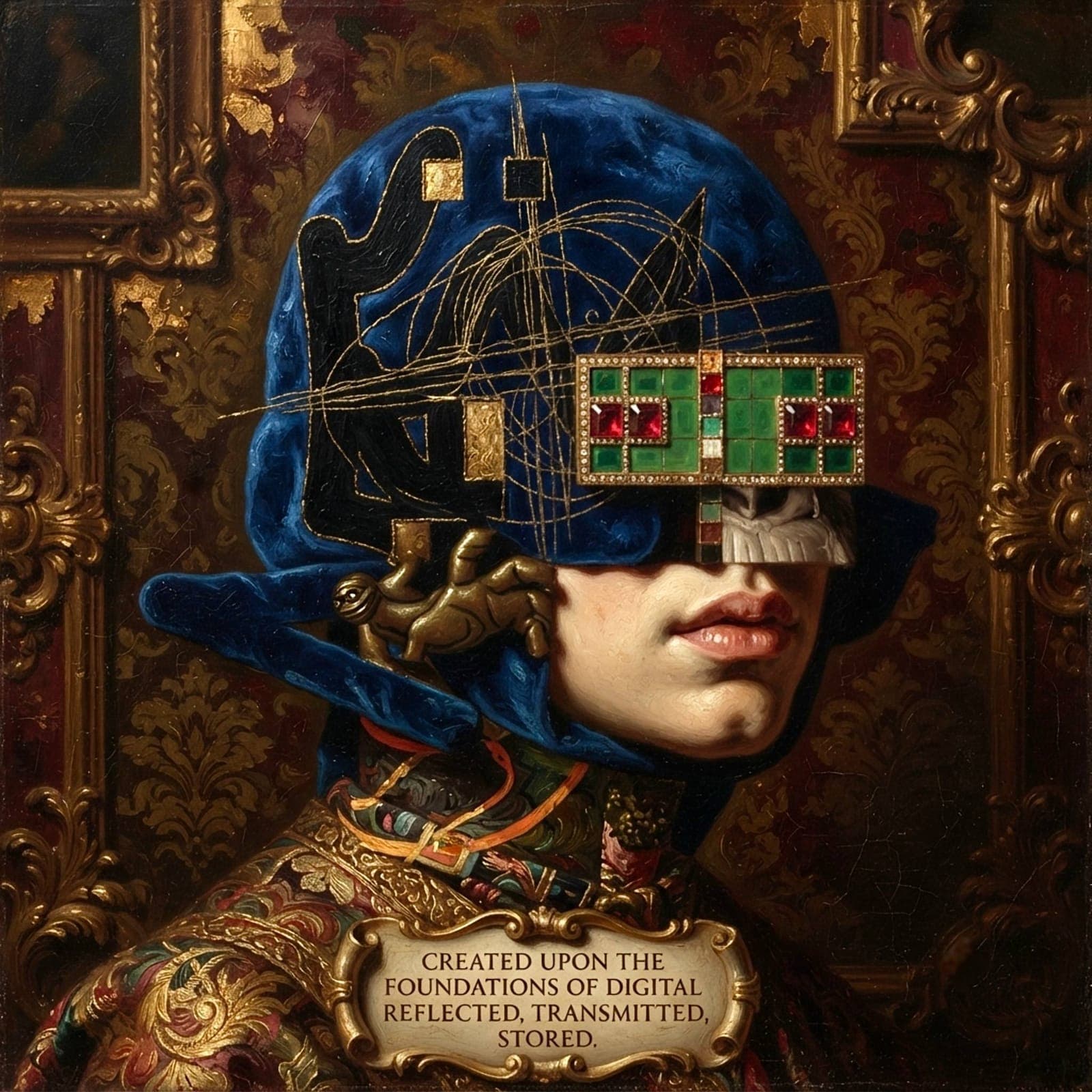
Aristocrat Wine Glitch Portrait

Aristocrat Wine Glitch Portrait

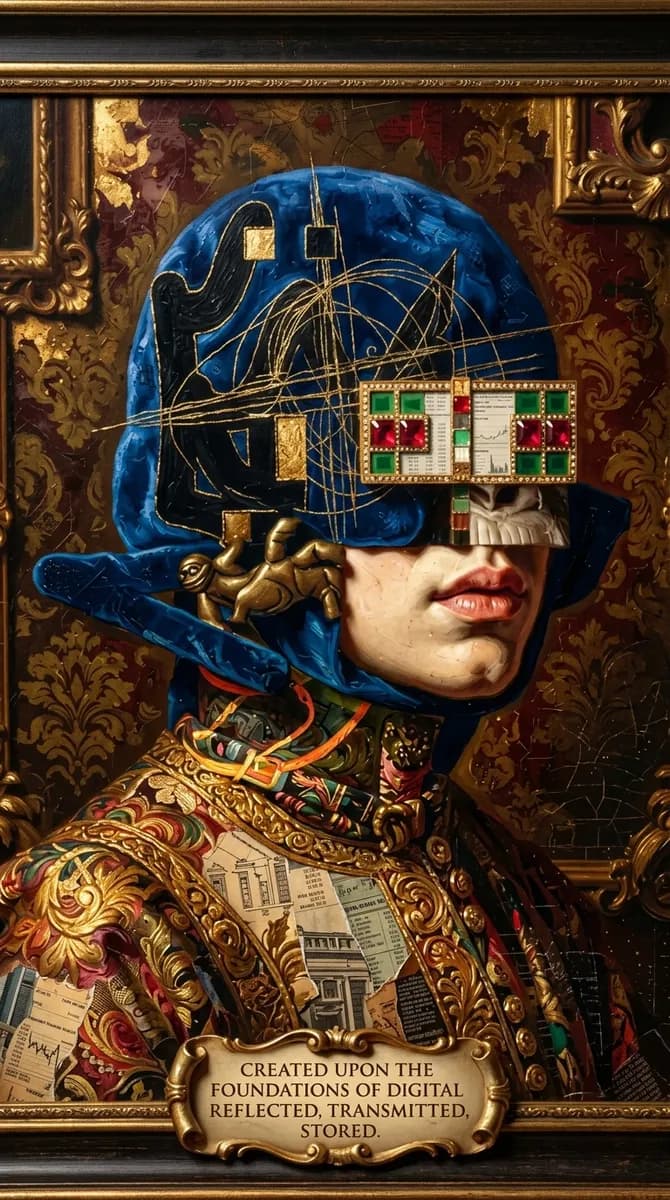
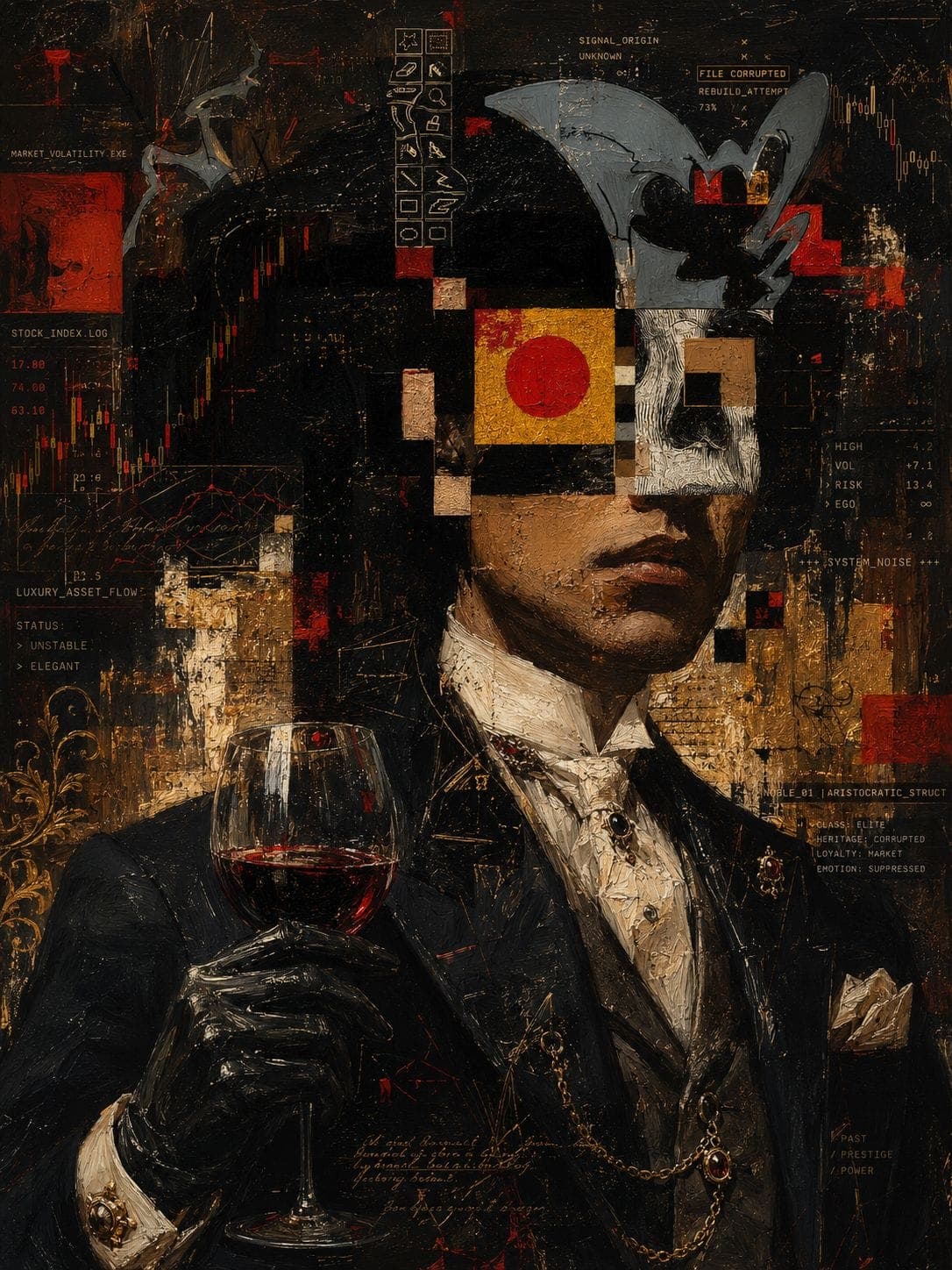
Make a new composition. Transform the uploaded character into a hyper-detailed mixed-media oil painting inspired by contemporary glitch portrait art, vintage luxury fashion, and dark surrealism. Keep the exact pose, silhouette, facial structure, attitude, and overall mood from the original image, but redesign the outfit into a classy vintage suit. The character should wear an elegant tailored suit with timeless aristocratic details, a refined shirt, subtle luxury textures, and black leather gloves. One black-gloved hand should hold a wine glass in a poised, cinematic way, adding a feeling of mystery, elegance, power, and emotional distance. The character should feel like a sophisticated cyberpunk aristocrat, standing between old-world luxury and corrupted digital reality. Style direction: thick impasto oil paint texture, layered collage elements, glitch aesthetics, fragmented facial overlays, distorted geometric blocks, painterly brush strokes, luxury editorial mood, vintage classy fashion, dark surrealism, high-fashion cyberpunk portrait, moody gallery artwork. Add visual elements naturally integrated into the painting: floating stock market charts, abstract scribbles, fragmented UI windows, collage typography, floating red glitch squares, distorted facial fragments, elegant cybernetic details, subtle data-noise textures, layered paper-cut textures, painterly abstraction around the head. Color palette: deep blacks, burnt orange, gold accents, crimson red, muted cream, warm brown tones, textured shadows, subtle neon highlights. Lighting: dramatic directional museum lighting, warm gallery atmosphere, cinematic shadows, premium fine-art depth. Composition notes: centered portrait composition, preserve the same body angle and pose from the uploaded character, keep the character elegant and emotionally detached, make the wine glass feel intentional and symbolic, abstract distortions should enhance the identity without hiding it completely. Ultra detailed, masterpiece quality, museum-grade contemporary portrait painting, expressive mixed media, cinematic composition, emotional atmosphere, luxury oil painting, glitch collage, contemporary street art, surreal cyberpunk editorial artwork, collectible fine-art style. Aspect ratio: 3:4

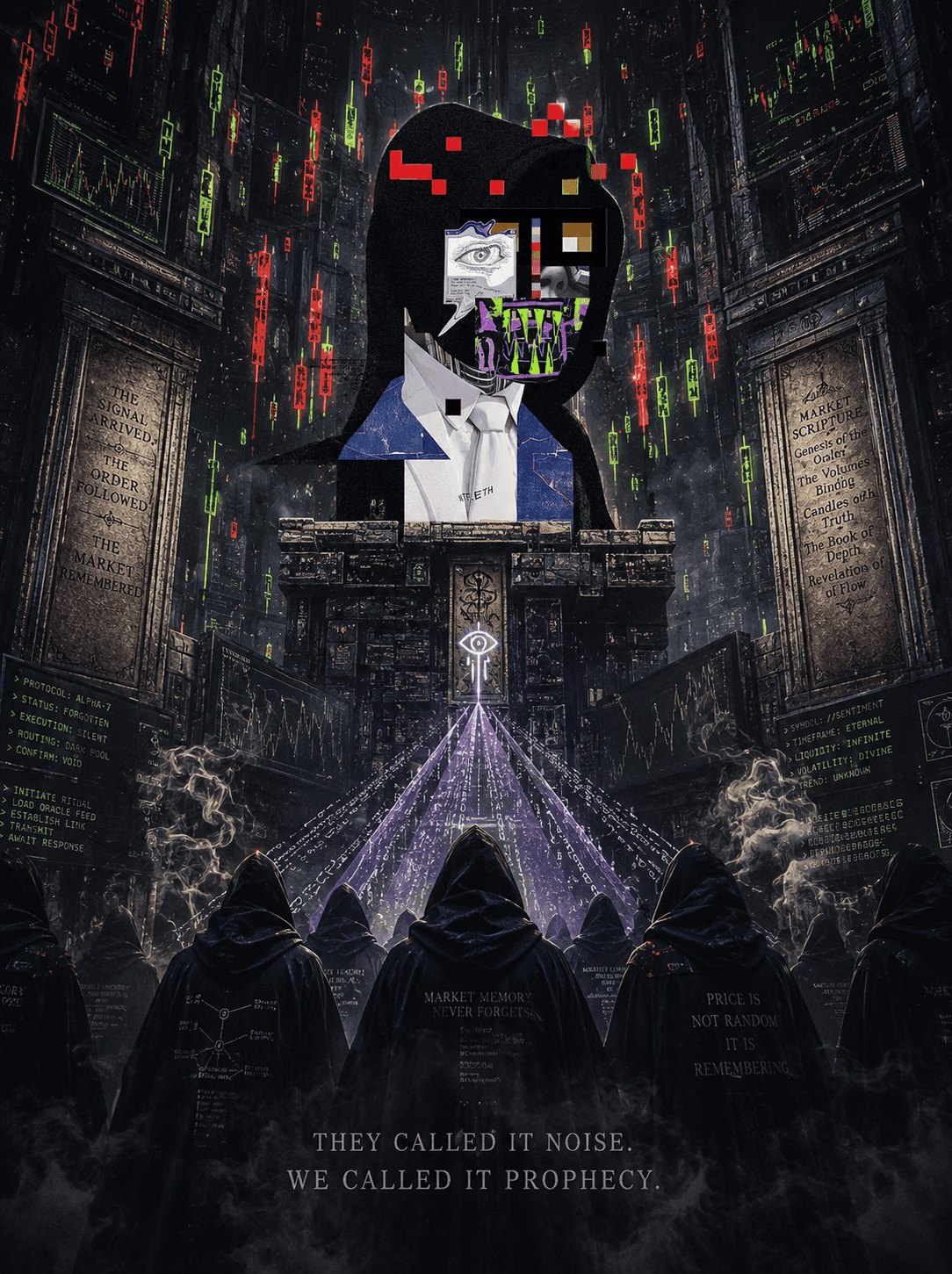
Cyberpunk Metropolis Transmission

Cyberpunk Metropolis Transmission

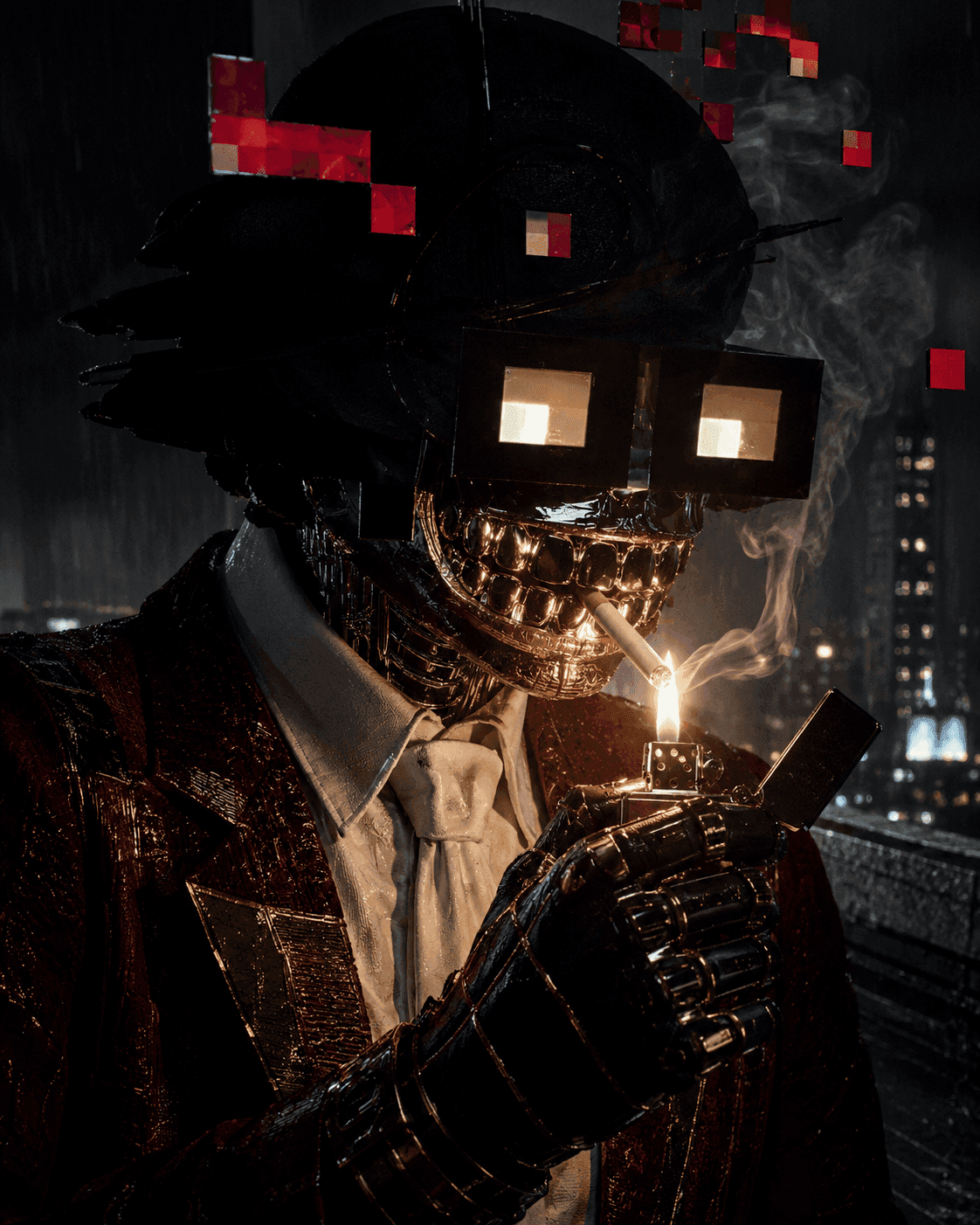
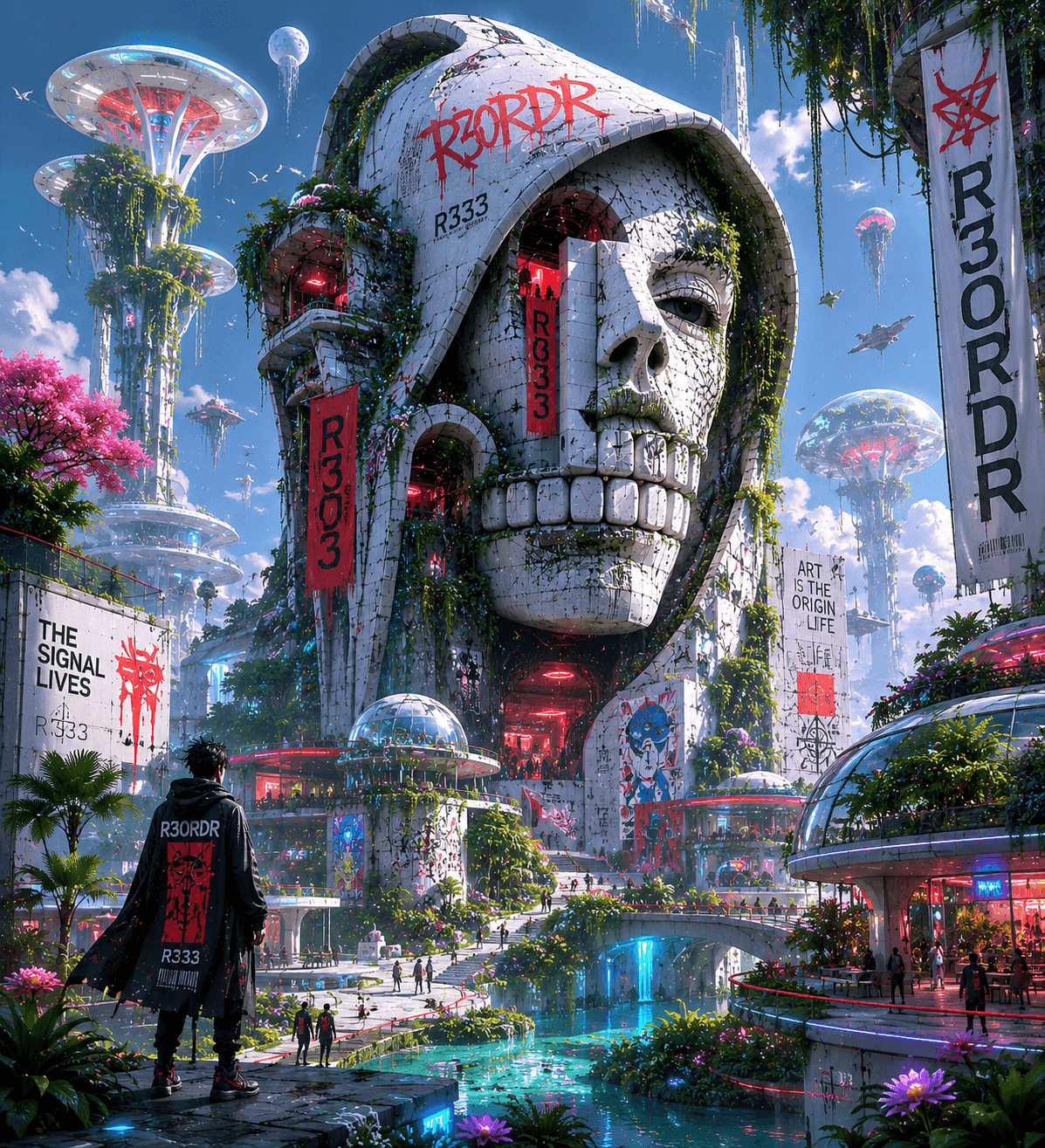
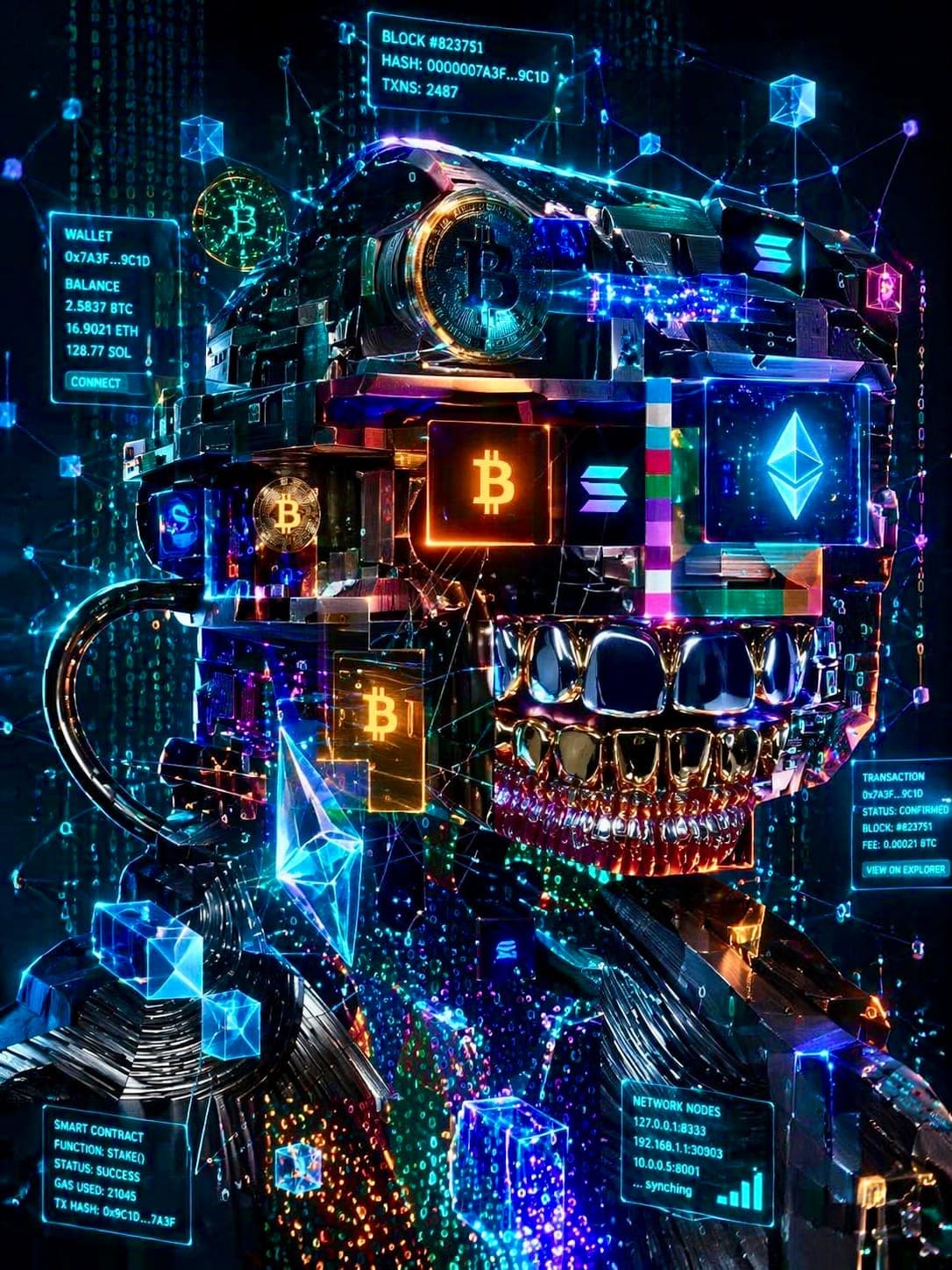
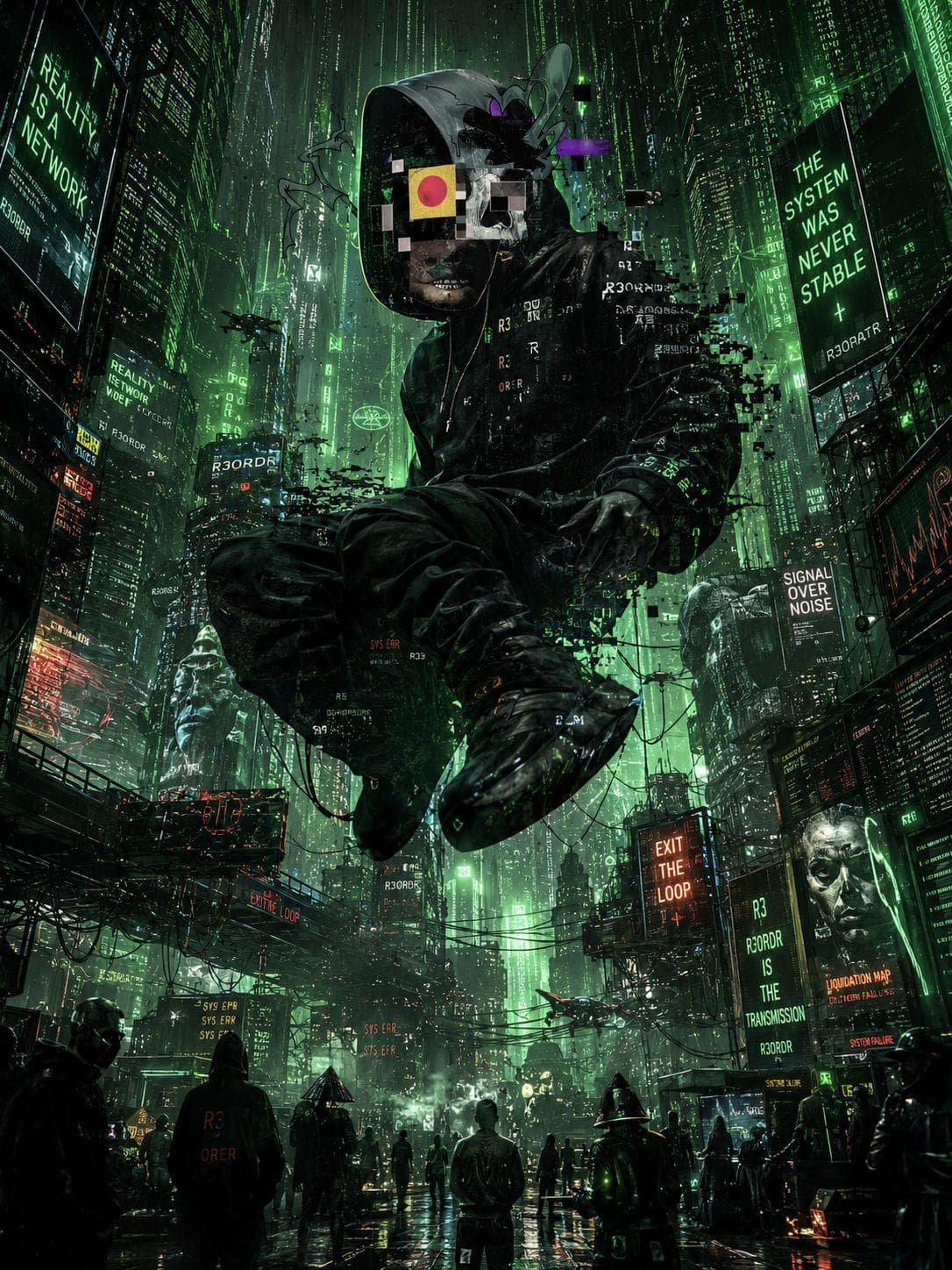
A legendary cinematic R3ORDR entity emerging inside a colossal post-reality techno-metropolis — a living digital abyss where architecture, code, consciousness, and financial collapse have fused into one unstable cybernetic ecosystem. The atmosphere feels apocalyptic yet elegant — like the final stage of a civilization rebuilt entirely from corrupted networks, encrypted belief systems, underground internet culture, and machine consciousness. The entire city feels alive. Gigantic black chrome skyscrapers disappear into infinite darkness while toxic neon green data storms pour vertically from the sky like digital rain. Massive volumetric light beams cut through dense fog, smoke, holographic pollution, electrical sparks, and atmospheric signal interference. Every surface glows with encrypted residue, corrupted terminals, fragmented propaganda, liquid reflections, surveillance systems, and hidden symbolic language. At the center: the R3ORDR entity moves with supernatural fluidity through gravity-defying environments — climbing impossible surfaces, bending unnaturally through space, floating mid-air between collapsing megastructures and fragmented dimensions. The motion feels impossible. Almost divine. Like reality itself cannot fully render the entity. Long cinematic motion trails distort behind the body like broken timelines and unstable memory streams. Parts of the silhouette dissolve into flying ASCII fragments, encrypted runes, liquid code particles, shattered pixels, terminal syntax, decentralized symbols, corrupted QR structures, and glowing signal debris. The character remains deeply mysterious and hyper-stylized: an oversized matte-black hoodie absorbs almost all light while subtle toxic green rim lighting reveals parts of the silhouette. But unlike traditional monochrome cyberpunk, small traces of the original R3ORDR palette survive through the darkness — deep burnt reds, muted bronze reflections, warm metallic gold grill highlights, dark blue signal textures hidden beneath the face fragments, subtle skin reflections beneath the reconstructed identity layers. These hidden colors emerge organically through reflections, glitch fragments, holographic lighting, signal distortions, and wet cinematic surfaces — giving the entire composition emotional depth and luxury-fashion energy instead of pure green monotony. The fragmented face feels terrifying and intelligent: pixel displacement, broken identity reconstruction, corrupted facial rendering, memory artifacts, fragmented masks, floating geometry, neural glitches, liquid shadow distortion, glowing orange-gold eyes with hidden consciousness. The face constantly shifts between human, machine, signal, and myth. The environment below is filled with anonymous signal hunters, digital monks, masked traders, cybernetic nomads, drones, black-market terminals, decentralized cult gatherings, and rogue AI surveillance systems. Massive holographic billboards tower through the rain: - "REALITY IS A NETWORK" - "THE SYSTEM WAS NEVER STABLE" - "SIGNAL OVER NOISE" - "EXIT THE LOOP" - "R3ORDR IS THE TRANSMISSION" The typography feels partially corrupted, flickering, glitched, fragmented, reconstructed in real-time. The skyline is overloaded with encrypted market charts, liquidation maps, terminal commands, ASCII storms, decentralized network diagrams, signal frequencies, surveillance overlays, warning systems, and hidden R3ORDR glyphs integrated directly into the architecture. Green ASCII code and encrypted runes swirl violently through the entire scene like intelligent weather systems — as if the whole world is being rendered from code in real-time. Reality itself appears unstable. Visual style: luxury cyberpunk fashion campaign, high-end dystopian realism, underground hacker mythology, philosophical sci-fi, post-financial-collapse aesthetics, encrypted internet religion, cinematic simulation theory. Lighting: extremely high contrast, deep blacks, heavy atmospheric depth, volumetric fog, wet reflective surfaces, black chrome materials, toxic neon green illumination, subtle red/orange/gold accent reflections from the original character palette. Every centimeter of the image contains hidden storytelling: stickers, warnings, terminal outputs, glitches, signal artifacts, encrypted graffiti, surveillance symbols, broken UI windows, machine residue, fragmented identities. Masterpiece composition. Epic scale. 8K ultra-detail. Magazine-cover quality. Dark futuristic mythology. Aspect ratio: 3:4

Dragon-Jump Vinyl Toy

Dragon-Jump Vinyl Toy

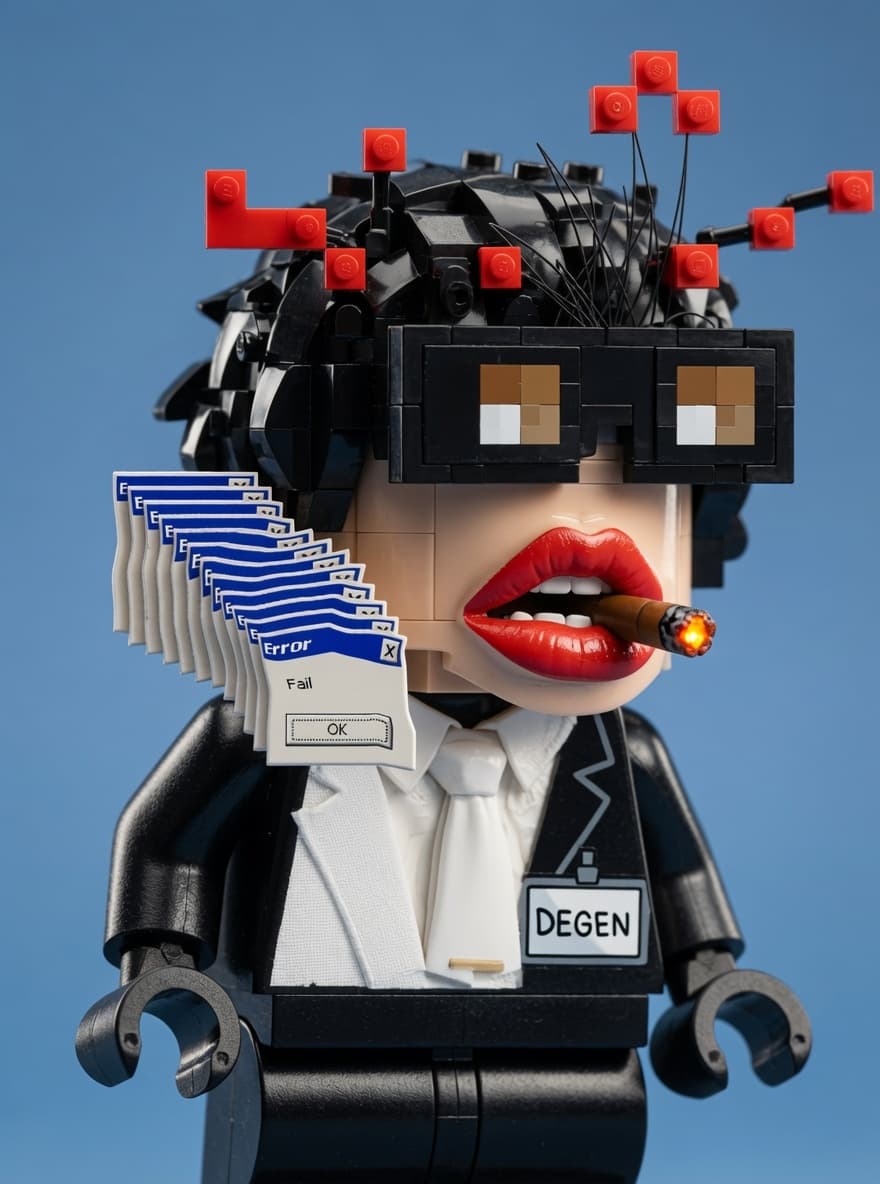
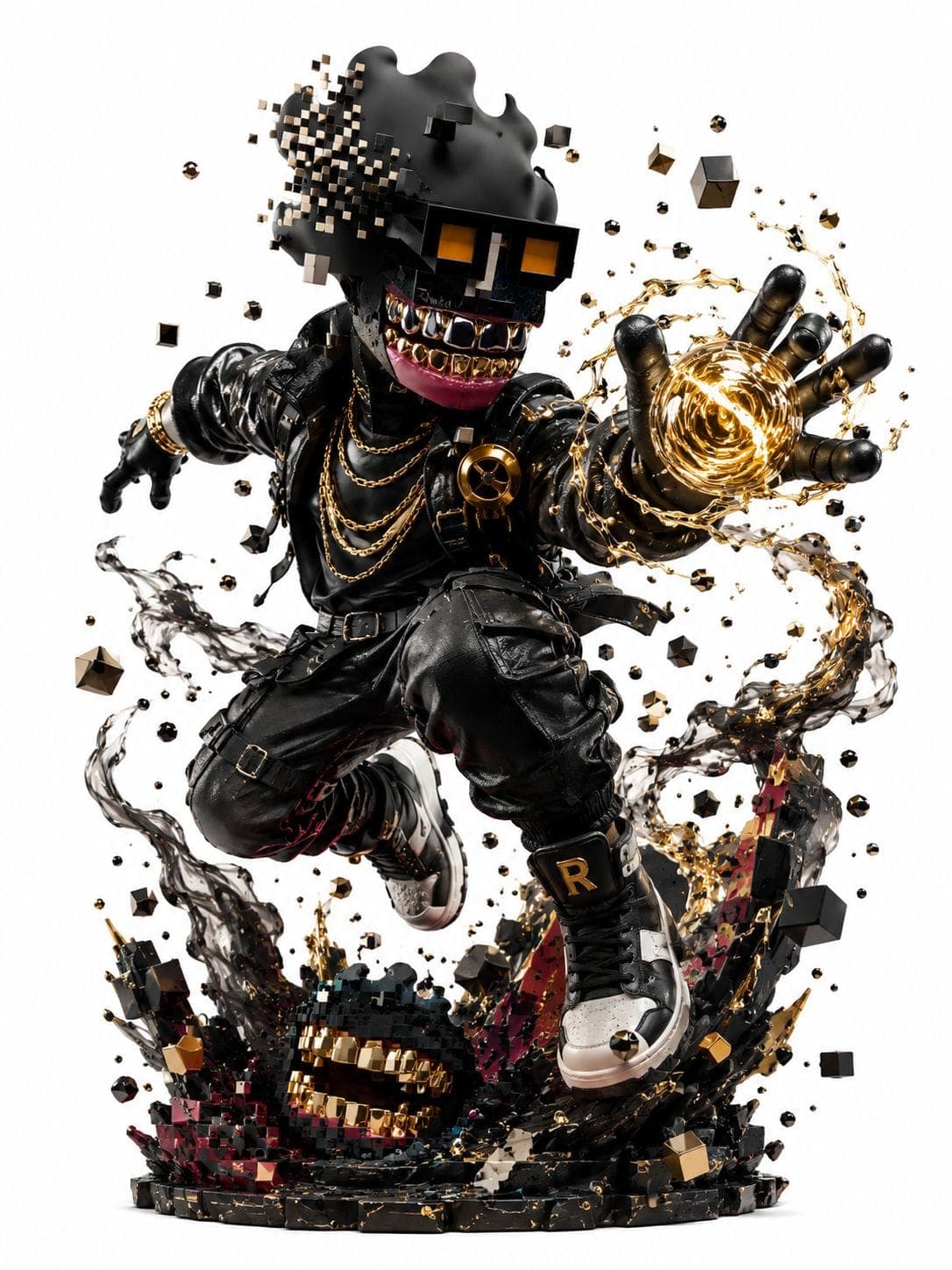
Make it unique. Turn this image into a full-body 3D vinyl toy on a clean white background. Hyper-detailed manga style — but keep the character consistent. Make him jump like a Dragon Ball vinyl toy figure. Give him his own aura and epic special effects. Aspect ratio: 3:4

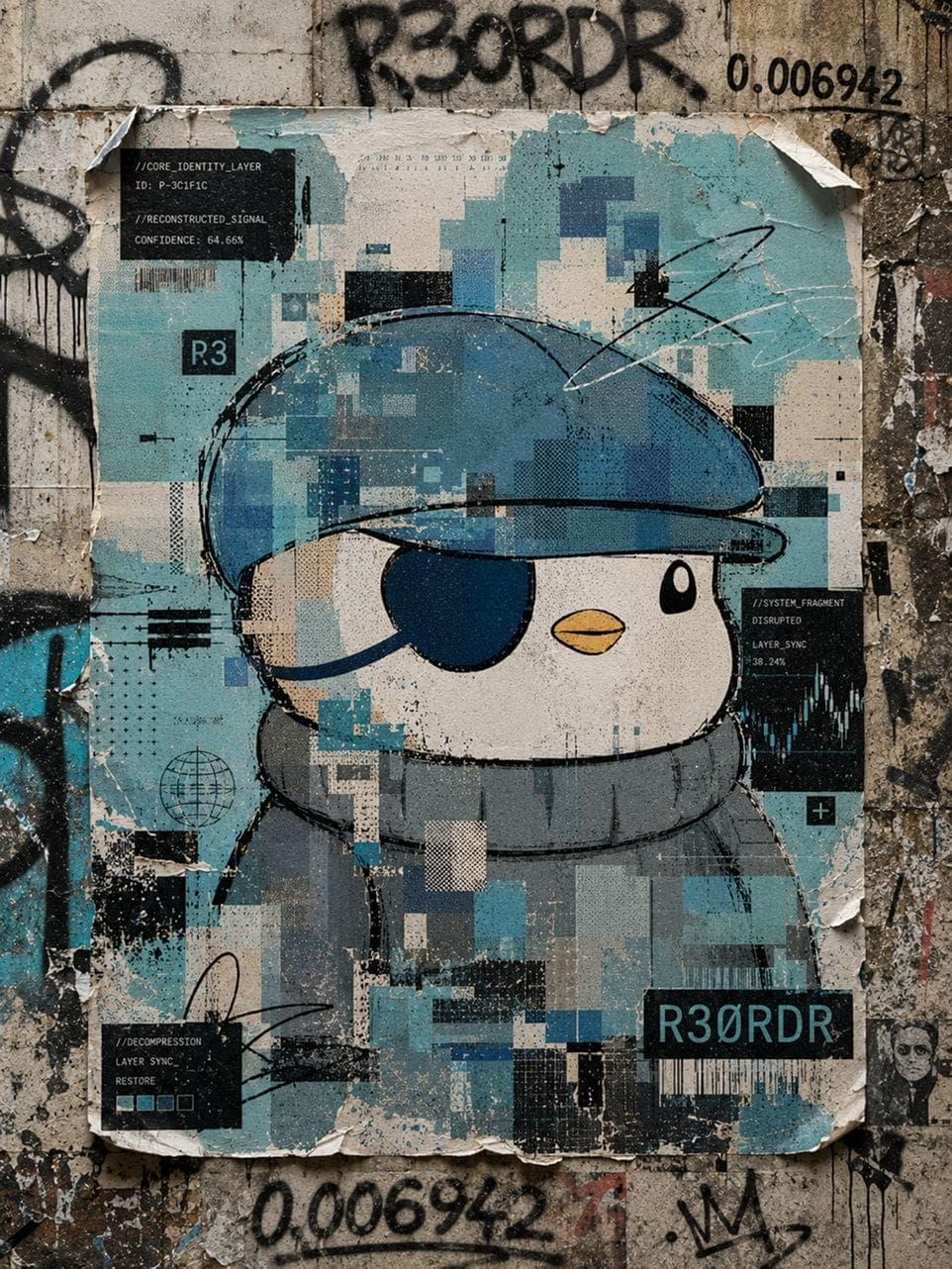
Wheatpaste Graffiti Poster

Wheatpaste Graffiti Poster

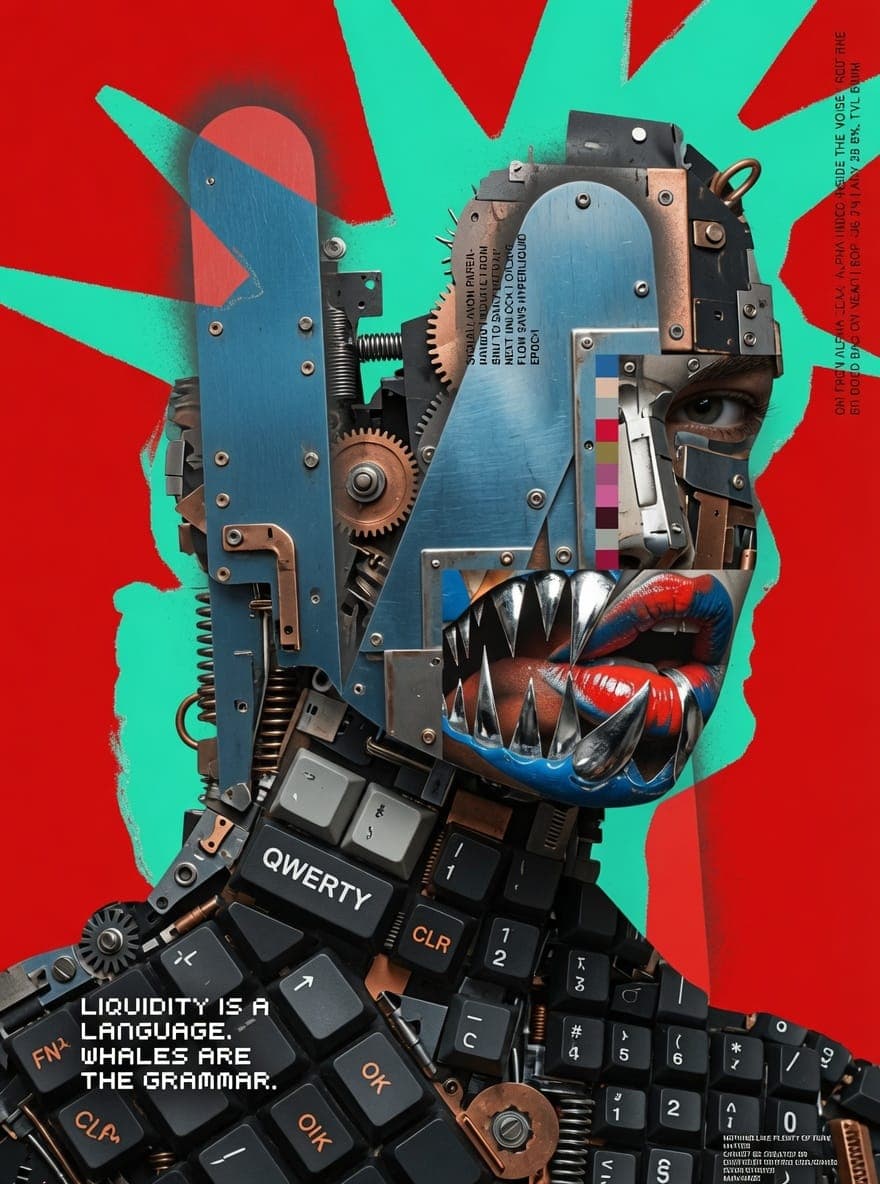
Transform the main input image into a bold analog-digital collage portrait. Preserve the core silhouette, pose, and recognizable structure, but deconstruct it into a fragmented chaotic visual system built from torn paper collage, rough cut-outs, glitch textures, pixel blocks, abstract geometry, hard masks, black silhouette shapes, distorted facial fragments, scanner textures, halftone grain, spray-paint edges, scribbled black lines, UI fragments, candlestick/chart elements, and imperfect analog layering. Rebuild the fragmented pieces, textures, and overlays using the SAME dominant colors, color balance, and color ratio from the original input image. Showcase the finished artwork as a large physical poster hanging on a dirty urban backyard wall filled with graffiti, spray-paint textures, stains, ripped paper remains, concrete damage, and handwritten "R3ORDR" + "0.006942" graffiti tags integrated naturally into the environment. The poster should fill around 80% of the image and feel physically glued onto the wall with realistic folds, damaged corners, torn edges, glue residue, weathering, and street-poster texture realism. Use: strong asymmetry, broken proportions, layered rectangles, floating squares, noisy gradients, compression artifacts, raster dots, rough paper textures, imperfect edges. Strong contrast between flat graphic shapes and photographic collage fragments. Style: analog collage, glitch art, post-internet portrait, neo-dada, punk zine, brutalist graphic design, fragmented identity, experimental poster art. Negative: clean poster mockup, minimalism, corporate design, perfect symmetry, polished editorial layout, beauty retouching, luxury realism, clean gallery wall, balanced composition. Aspect ratio: 3:4

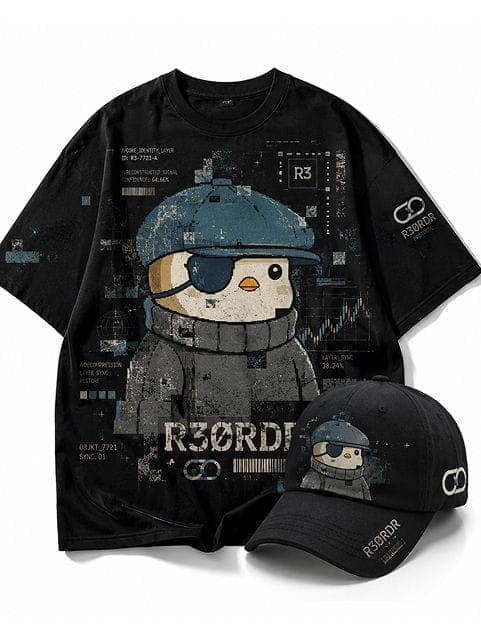
Apparel Drop: Tee + Cap

Apparel Drop: Tee + Cap

Clean premium product-shot mockup on a pure white background featuring a black oversized t-shirt and matching cap with the uploaded main character and integrated "R3ORDR" logo artwork. The character must fully preserve the original identity, silhouette, proportions, and visual language of the uploaded image. Design merges: luxury underground crypto aesthetics, editorial glitch systems, digital archaeology, premium collage textures, analog print damage, organized visual noise, reconstructed signal-world typography. Integrate: barcode fragments, scanner noise, torn collage layers, floating UI debris, distorted symbols, subtle trading-chart fragments, recursive glyphs, protocol markings, fragmented geometric overlays, analog texture collisions. The "R3ORDR" logo should feel embedded, fragmented, sculptural, corrupted, and reconstructed from visual debris — never clean or separated. Presentation: minimal but layered, sharp, premium, cryptic, fashion-oriented, highly art-directed. Use modern studio photography, dramatic premium lighting, realistic textile folds, luxury streetwear presentation, sharp textile detail, subtle material contrast, clean composition with controlled visual chaos. Aspect ratio: 3:4

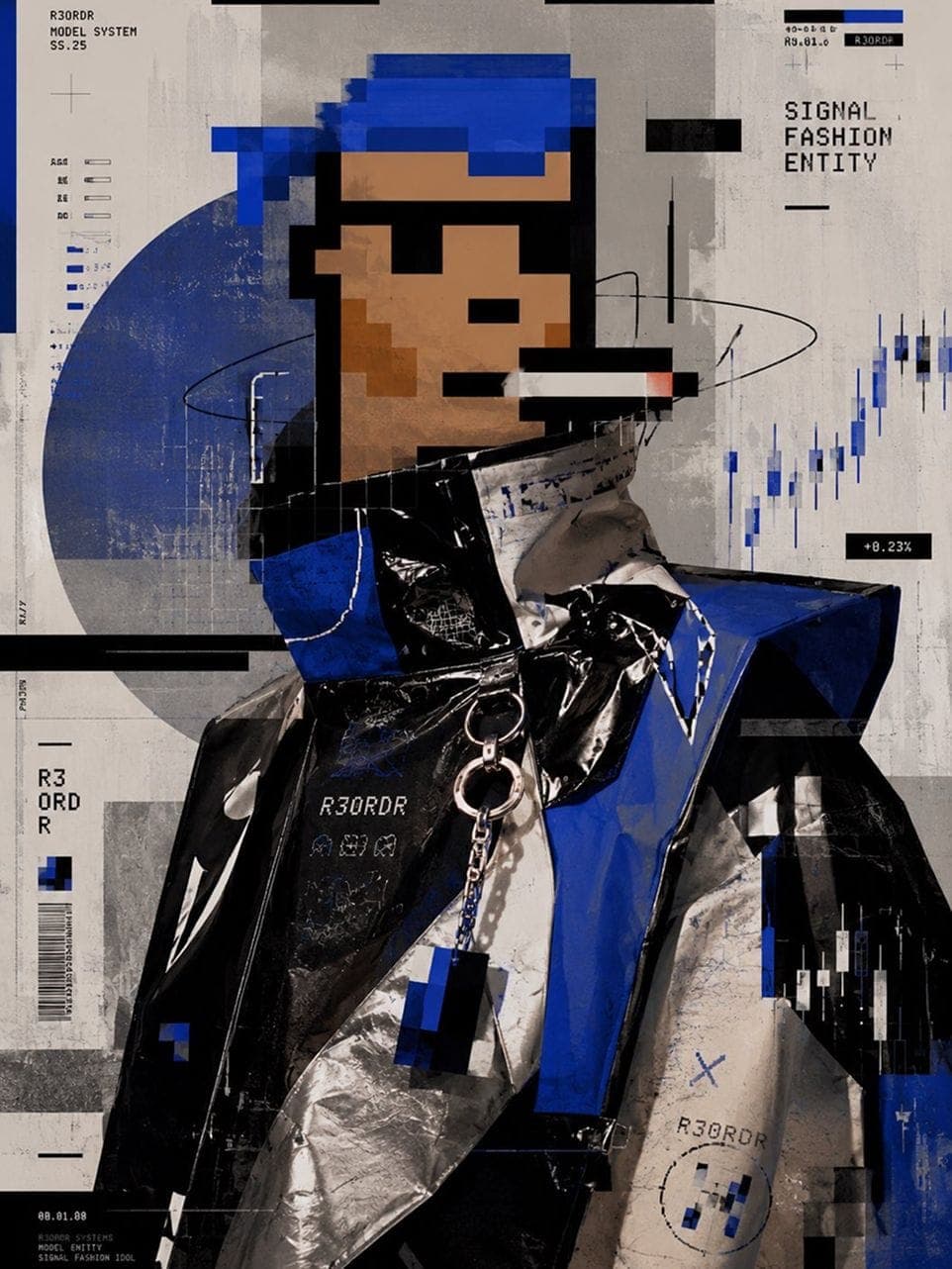
Signal Fashion Entity

Signal Fashion Entity

R3ORDR MODEL SYSTEM — "Signal Fashion Entity". Transform the uploaded PFP into a high-fashion R3ORDR MODEL ENTITY inspired by abstract crypto-expressionism, brutalist graphic design, signal corruption aesthetics, and experimental editorial fashion. The result should feel like a luxury underground internet idol — an emotionally glitched fashion model, a fragmented signal-being born from charts, systems and digital noise. Internet-born fashion mythology, not sci-fi. Do not create cyberpunk soldiers, zombies, robots, or generic anime characters. Visual language: fragmented vector geometry, abstract fashion collage, financial chart symbolism, layered signal artifacts, asymmetrical graphic structures, distorted magazine editorial energy, brutalist internet aesthetics, contemporary gallery-art composition, luxury fashion campaign photography, abstract emotional design. Face rules: preserve original face structure, eye placement, recognizable silhouette, hairstyle, skin tone, signature accessories. Reinterpret through broken graphic overlays, asymmetrical masking, abstract cutout layering, floating signal bars, fragmented typography-inspired geometry, partial texture corruption, luxury fashion distortion. The face partially "decoded" — never destroyed, melted, monstrous. Fashion: oversized abstract shapes, layered synthetic fabrics, glossy + matte material contrast, fragmented textile panels, sharp silhouette blocking, surreal accessories, brutalist jewelry, chrome accents. Aspect ratio: 3:4

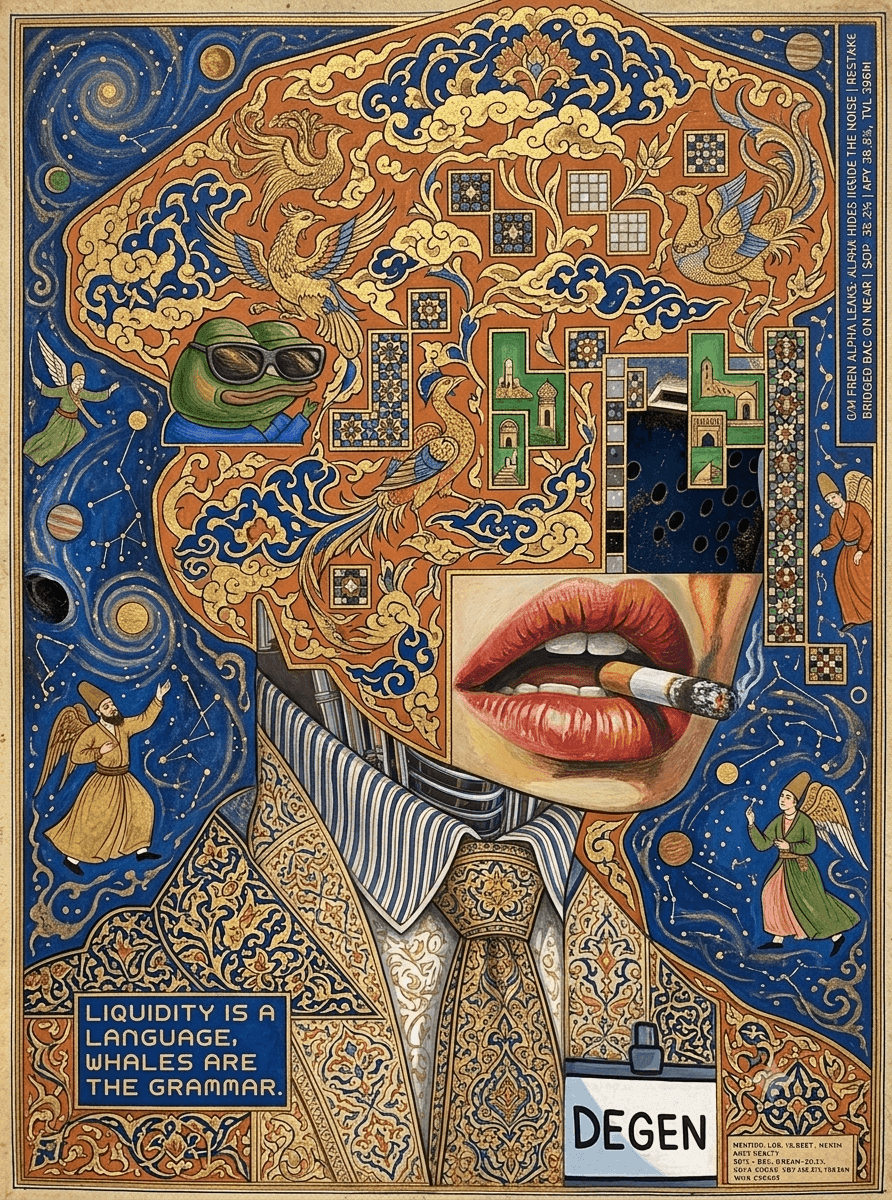
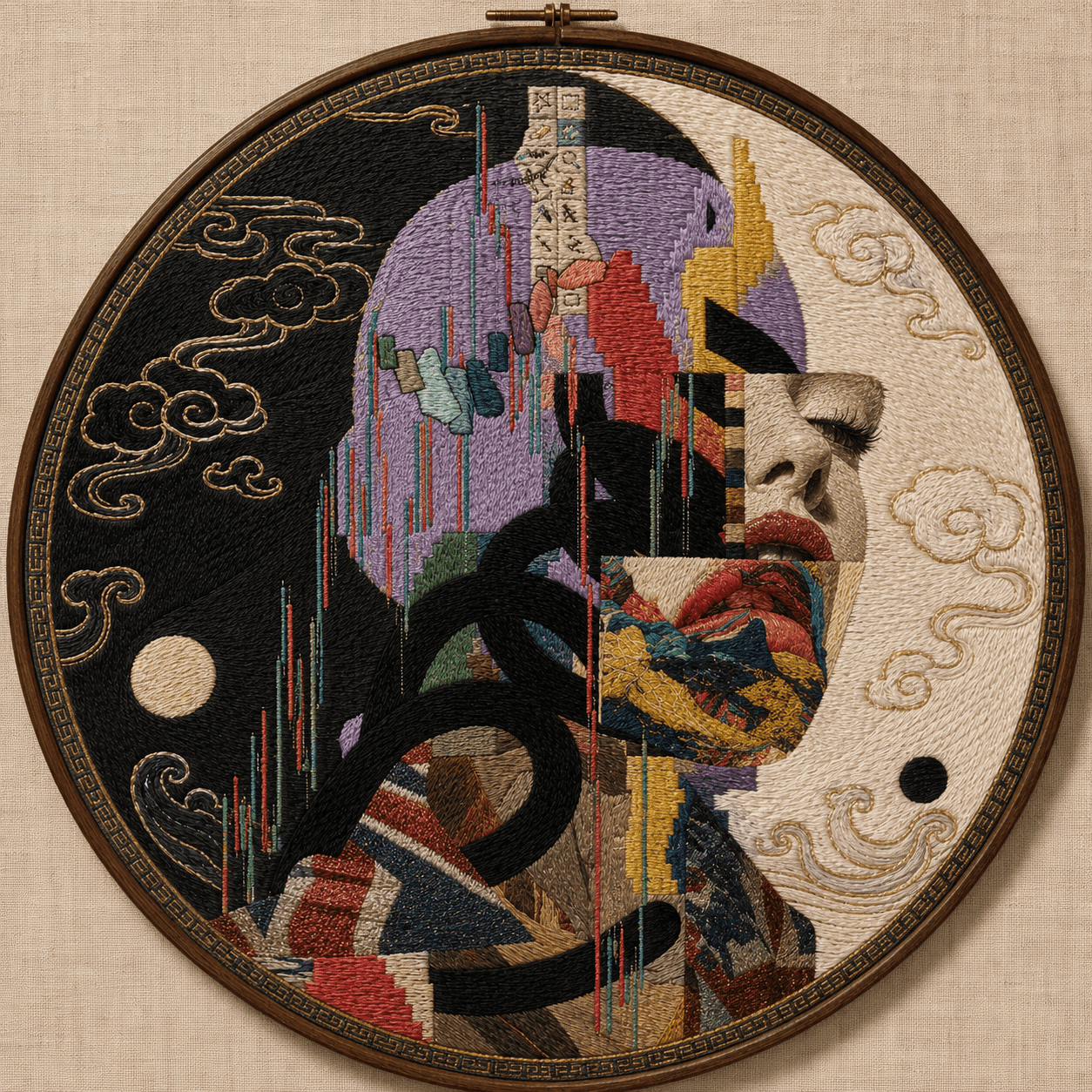
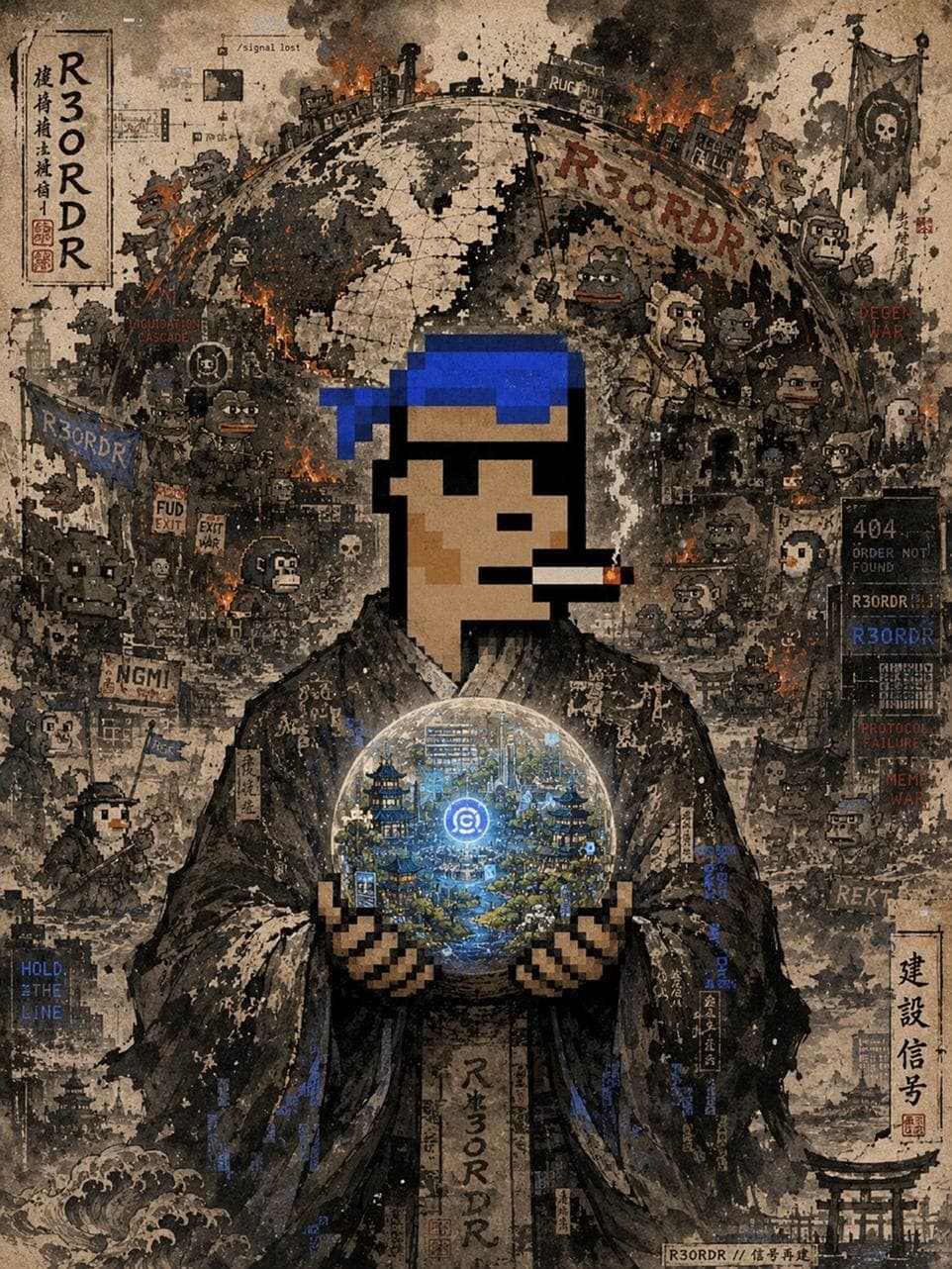
Sumi-e R3ORDR Scroll

Sumi-e R3ORDR Scroll

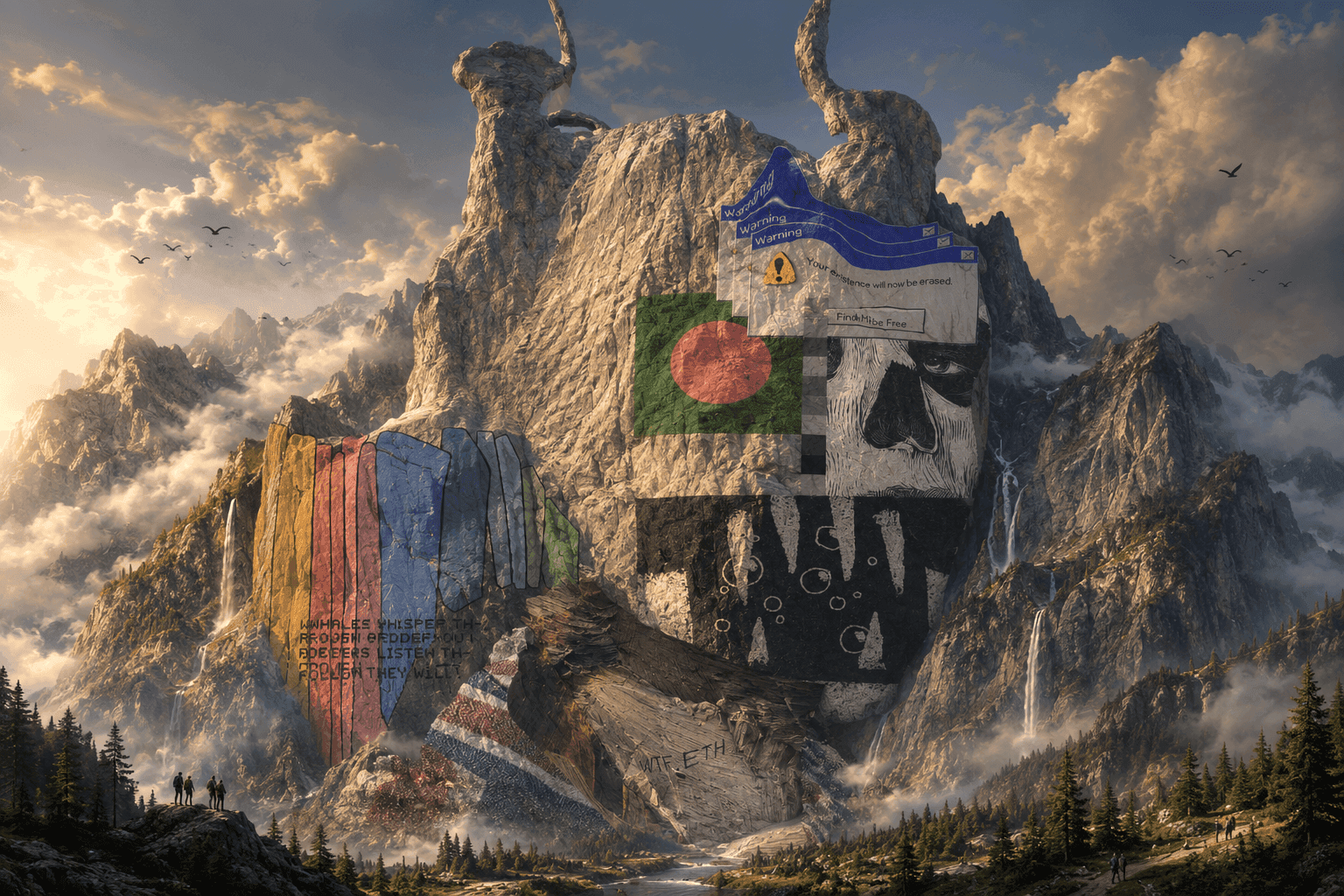
Transform the uploaded PFP into a highly detailed Japanese ink-and-washi painting inside the R3ORDR universe. The main character stands calmly in the foreground before a massive broken burning world globe representing the old digital world collapsing: war, noise, greed, broken communities, corrupted systems, meme armies fighting, fractured markets, burning protocol ruins, chaotic Web3 mythology. Behind the character, symbolic crypto meme factions in conflict: Pepe-style frog warriors, Doge-inspired coin creatures, ape factions, penguin meme soldiers, pixel punk entities, goblin traders, masked internet spirits, broken NFT avatars, chaotic meme banners fighting inside smoke, fire, ash, signal storms. The character holds a small new world globe containing a closed healthy R3ORDR ecosystem: peaceful architecture, clean signal flow, aligned communities, balanced protocol structures, small glowing R3ORDR symbols, miniature temples, orderbook grids transformed into harmony, calm flowing data rivers. Preserve identity, silhouette, key accessories, colors, emotional energy and species/type from the uploaded PFP. The character feels calm, powerful, and centered — like a signal monk, guardian, or revolutionary rebuild figure. Style: Japanese ink painting, sumi-e influence, washi paper texture, black and white foundation, high-detail brushwork, fine ink linework, heavy paper grain, aged scroll texture, charcoal shadows, controlled splatter, museum-grade composition, cinematic mythological framing. Mostly black, white, grey, and warm paper tones. Add only a few powerful accent colors extracted from the uploaded PFP and the R3ORDR system: electric blue signal glow, warning orange fire, deep crimson conflict marks, toxic cyan protocol light, muted gold alignment. R3ORDR system integration: fragmented R3ORDR typography, signal glyphs, barcode fragments, recursive symbols, protocol markings, scanner artifacts, hidden UI fragments, torn paper labels, dashboard ruins, terminal remnants, orderbook grids, liquidation structures, burned archive papers, reconstructed signal maps. "R3ORDR" embedded into banners, ruins, scroll fragments, tattoos, flags, sacred glyphs — never like a clean modern logo. Mood: calm inside chaos, revolutionary, sacred, poetic, mythological, futuristic but ancient. Negative: no mint price, no supply, no clean logo placement, no generic cyberpunk neon, no gore, no horror, no flat poster style. Aspect ratio: 3:4

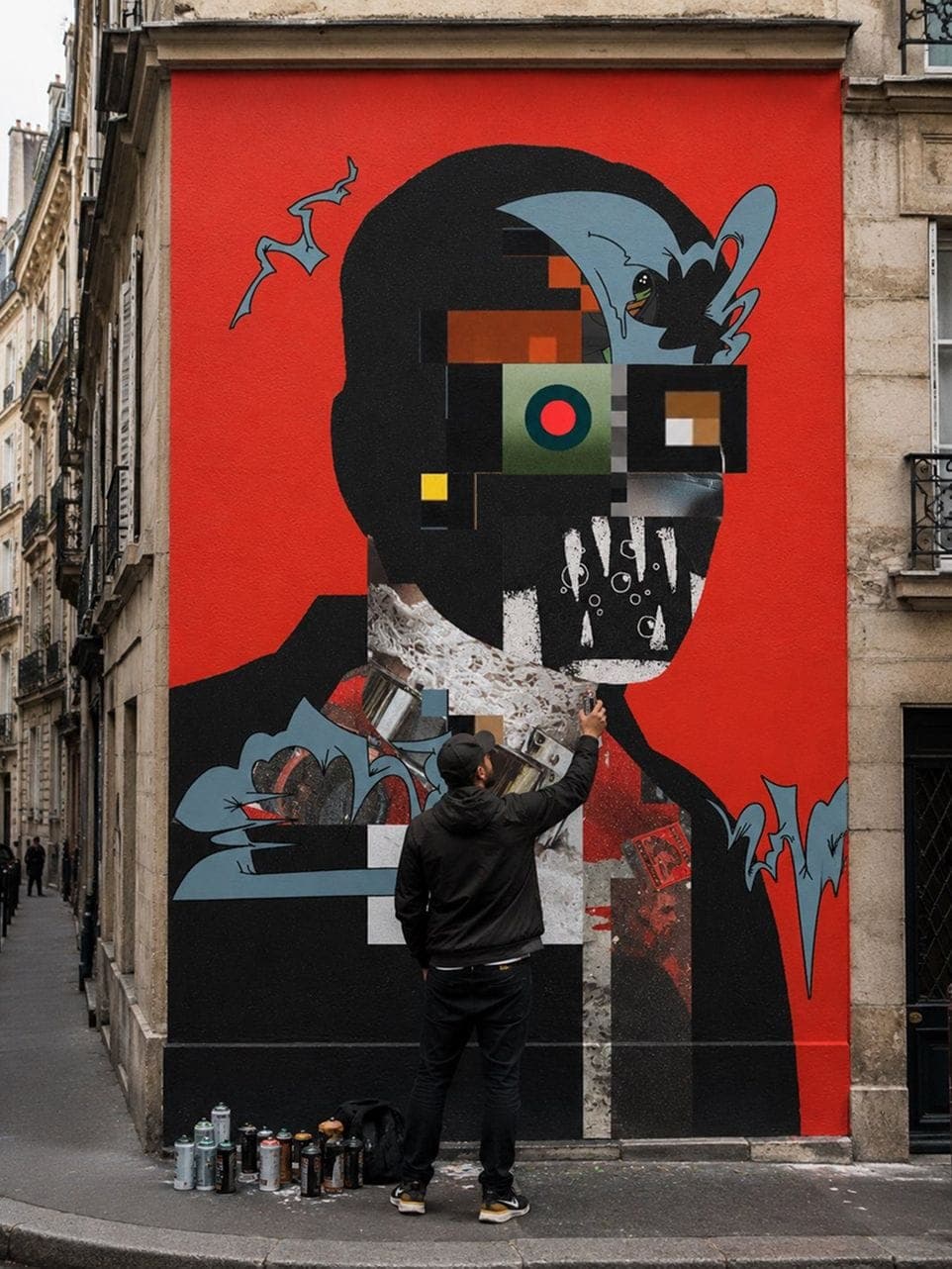
Paris Street Mural

Paris Street Mural

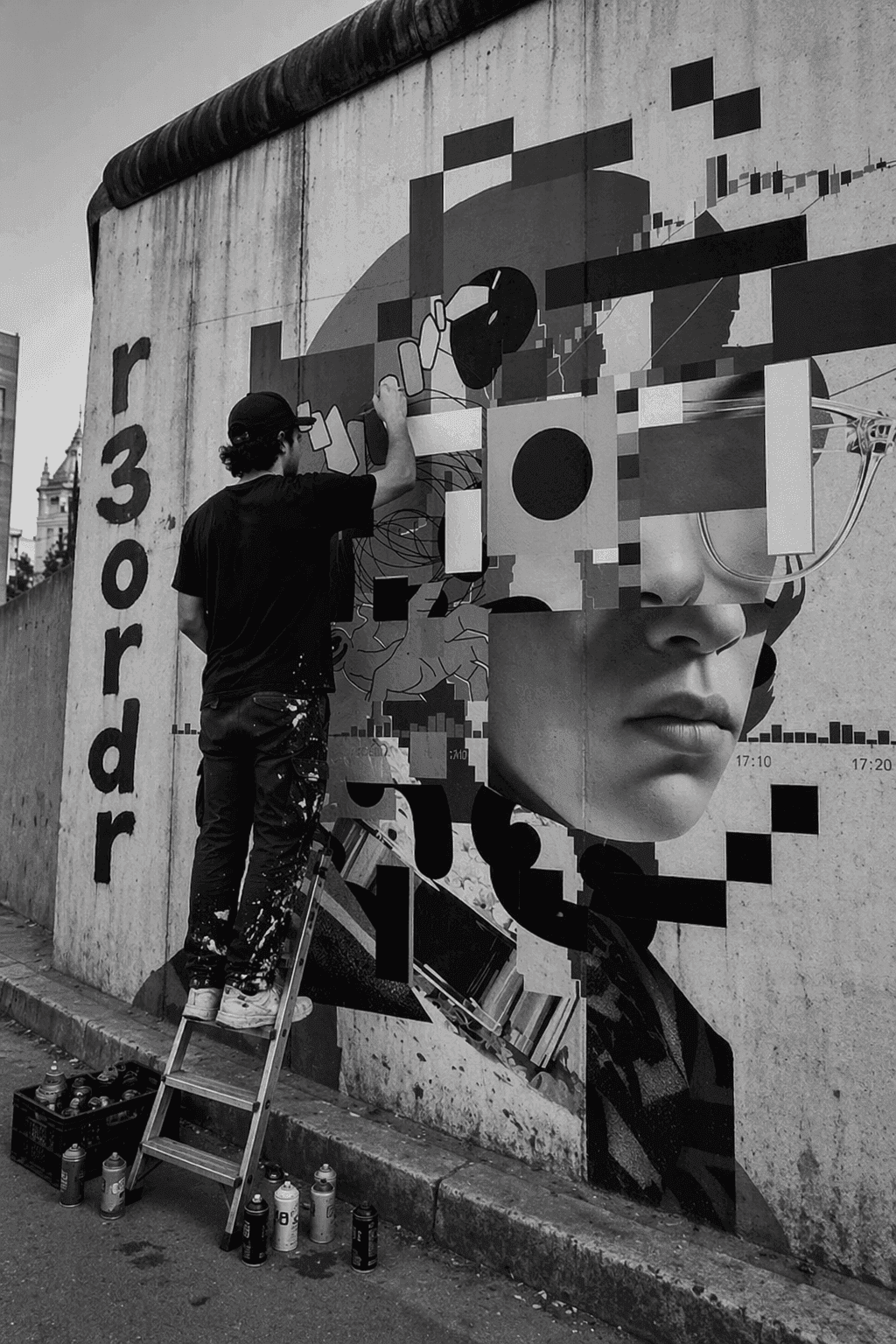
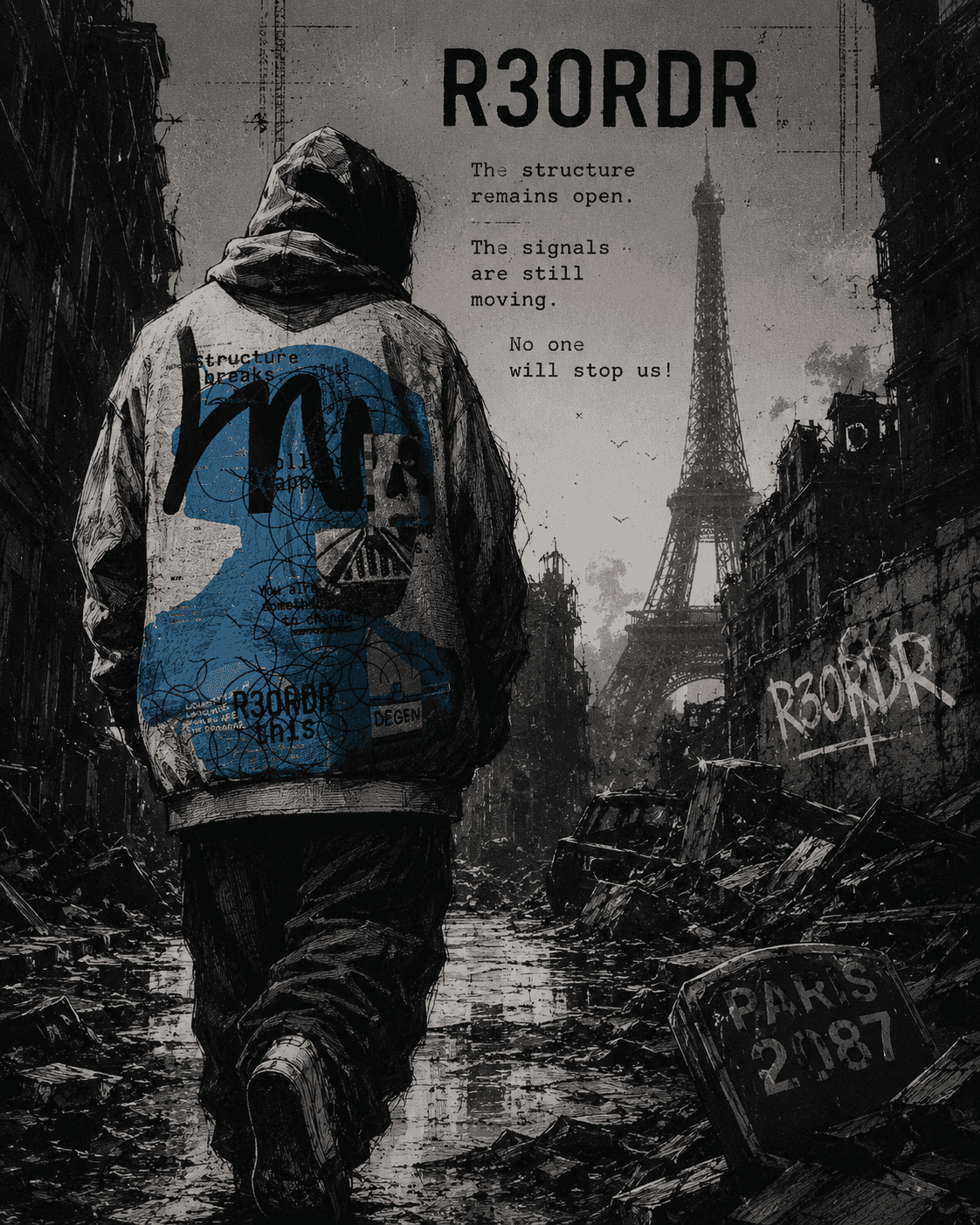
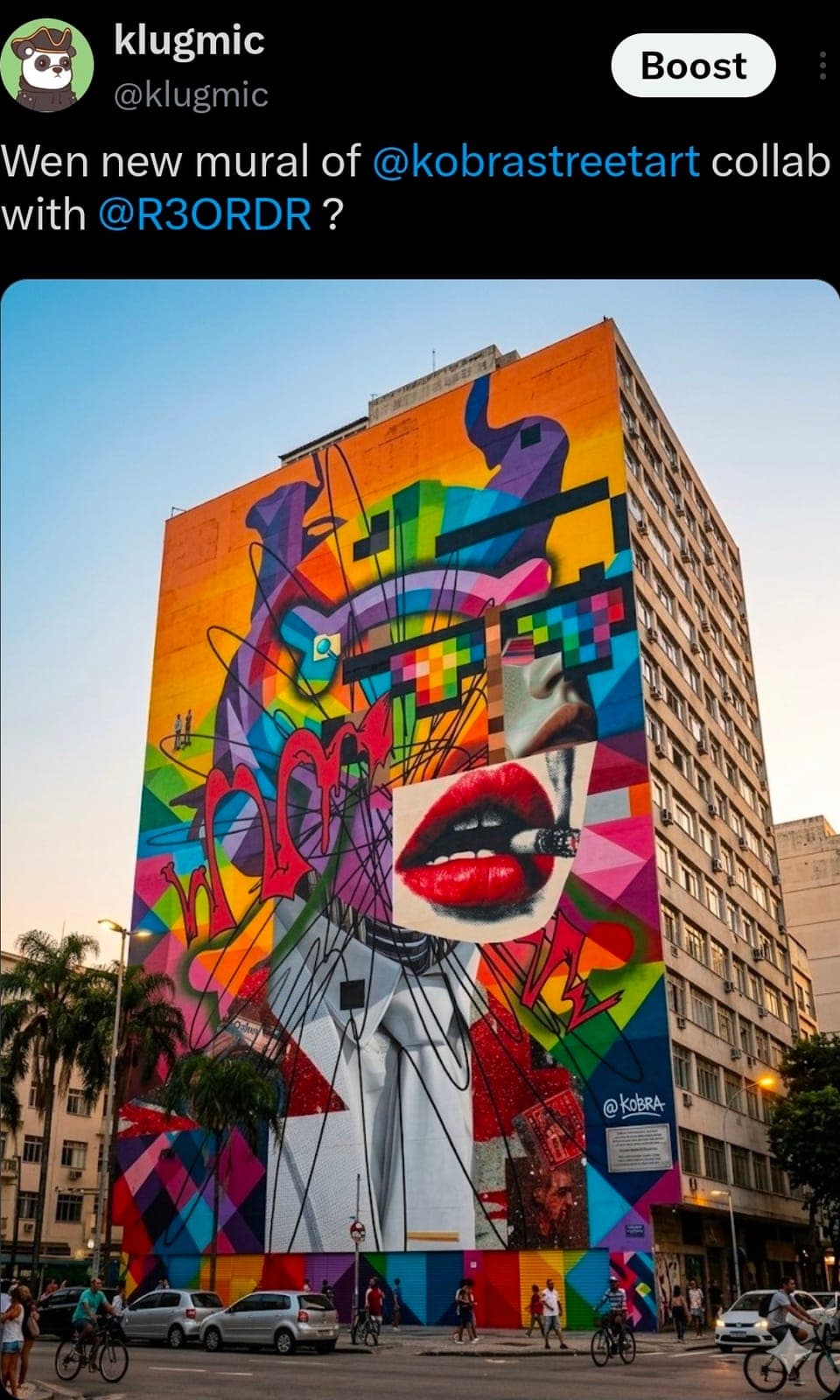
A talented street artist (graffiti writer) painting a huge mural on a wall in Paris, standing directly in front of the artwork while actively spraying paint. The mural is exactly the same artwork from the reference image, preserved without any modification. The artist is seen from behind, wearing casual urban clothing, holding a spray can, focused on adding final details. The mural occupies an entire building wall in a narrow Parisian street with Haussmann architecture, stone facades, balconies, street signs and urban atmosphere. Spray paint cans scattered on the ground. Style: authentic street art culture, documentary photography style, realistic lighting, candid moment, high detail, urban creativity, contemporary Paris art scene, cinematic composition, shallow depth of field, ultra realistic photography, 35mm lens, natural colors, professional street photography. Negative prompt: do not modify the mural design, no additional graffiti, no extra characters, no cartoon style, no futuristic city, no text, no watermark, no duplicated people, no distorted anatomy, no AI artifacts, no altered artwork composition. Aspect ratio: 3:4

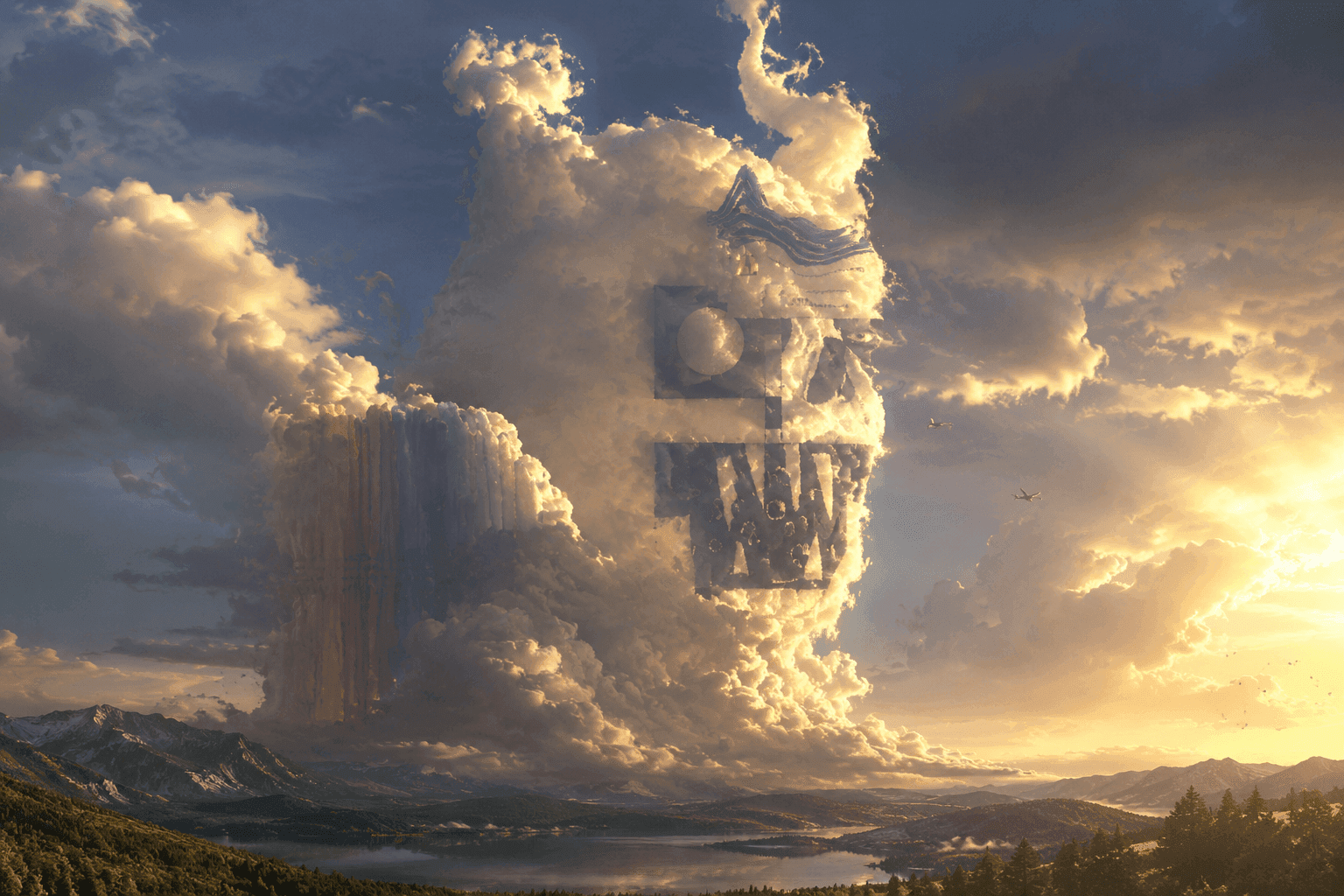
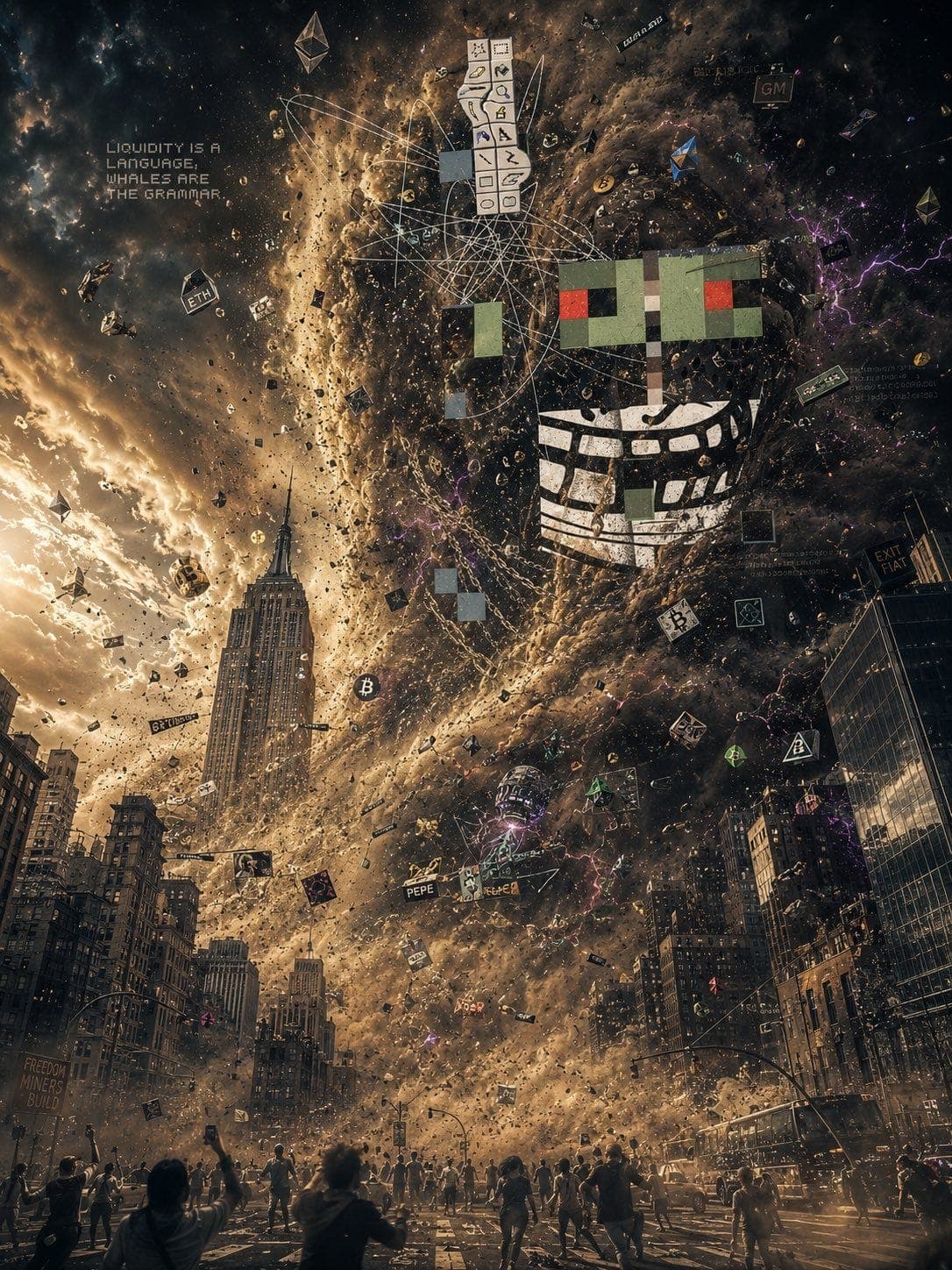
Desert Signal Event NYC

Desert Signal Event NYC

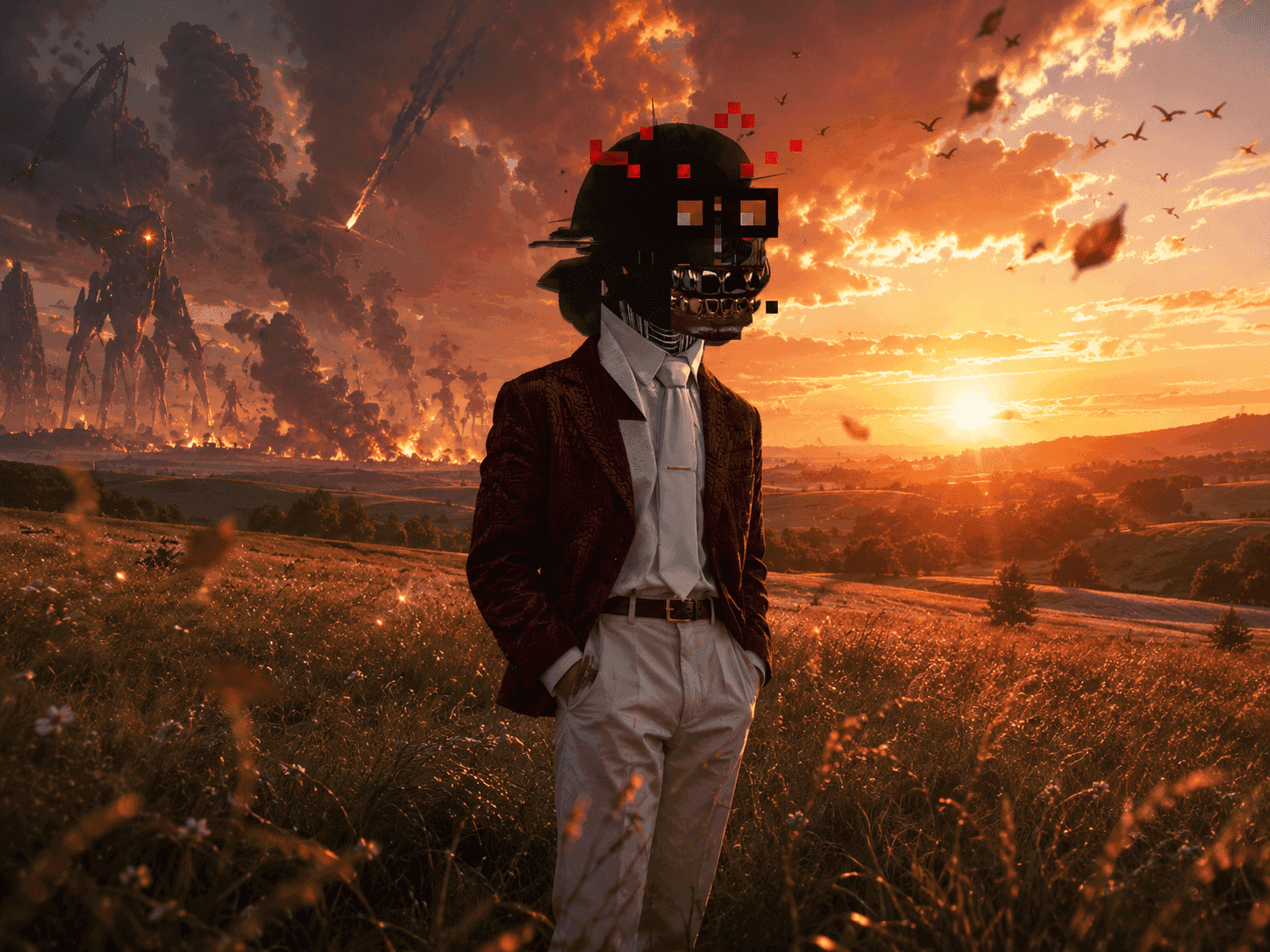
SYSTEM_LOG://DESERT_SIGNAL_EVENT The uploaded artwork remains completely untouched. The original character has now evolved into a colossal sandstorm entity — a living desert wave made from dust, fragments, symbols, corrupted data, and ancient digital debris. The storm rises like a massive tsunami above New York City. It consumes the skyline. It bends reality around it. Evoke the legendary meme imagery of the gigantic wave swallowing the city — the wave itself contains a Pepe face hidden within its structure. The storm subtly forms the face and silhouette of the original character, emerging naturally from chaos of sand, debris, and fragmented symbols. The wave feels alive, predatory, mythological, revolutionary. Buildings disappear beneath the storm. Glass explodes outward. Streetlights bend. Traffic vanishes beneath flowing dunes. Small human silhouettes run, stare upward, photograph the event. Inside the storm: thousands of tiny chaotic fragments — crypto symbols, Ethereum logos, Bitcoin relics, glitch glyphs, migration coordinates, floating runes, broken UI elements, dead pixels, terminal code, candle charts, old internet graphics, distorted smileys, burned QR codes, warning labels, tiny Pepe fragments, flying keyboard keys, corrupted stickers, signal diagrams. Lighting: golden desert haze, toxic neon reflections, deep shadows between skyscrapers, glowing dust particles, subtle magenta glitch light, cinematic sunset. Style: ultra-detailed cinematic realism, renaissance apocalypse painting composition, National Geographic realism, desert storm photography, contemporary mythology, Web3 mythology, documentary realism × surreal scale. Color palette: muted sand beige, deep blacks, dusty gold, digital purple, acid green, faded crimson, washed blue-gray, subtle glitch magenta. STATUS: SIGNAL MIGRATION DETECTED · DESERT ENTITY STABILIZING · NEW YORK OVERRUN · REALITY DESYNC ACTIVE · TRACKING THE WHALE CONTINUES. Aspect ratio: 3:2, 8K ultra realism
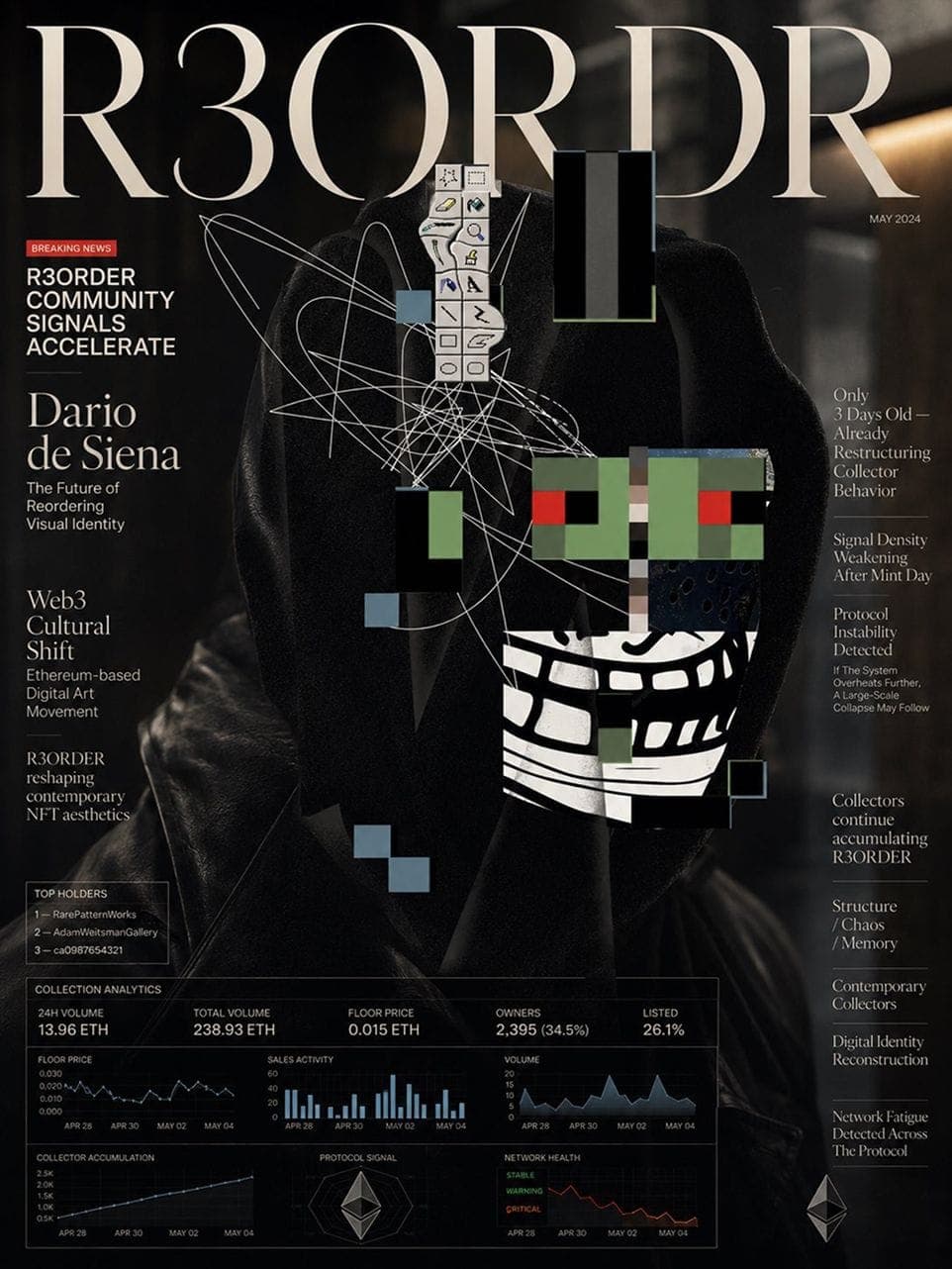
R3ORDR Vogue Cover

R3ORDR Vogue Cover

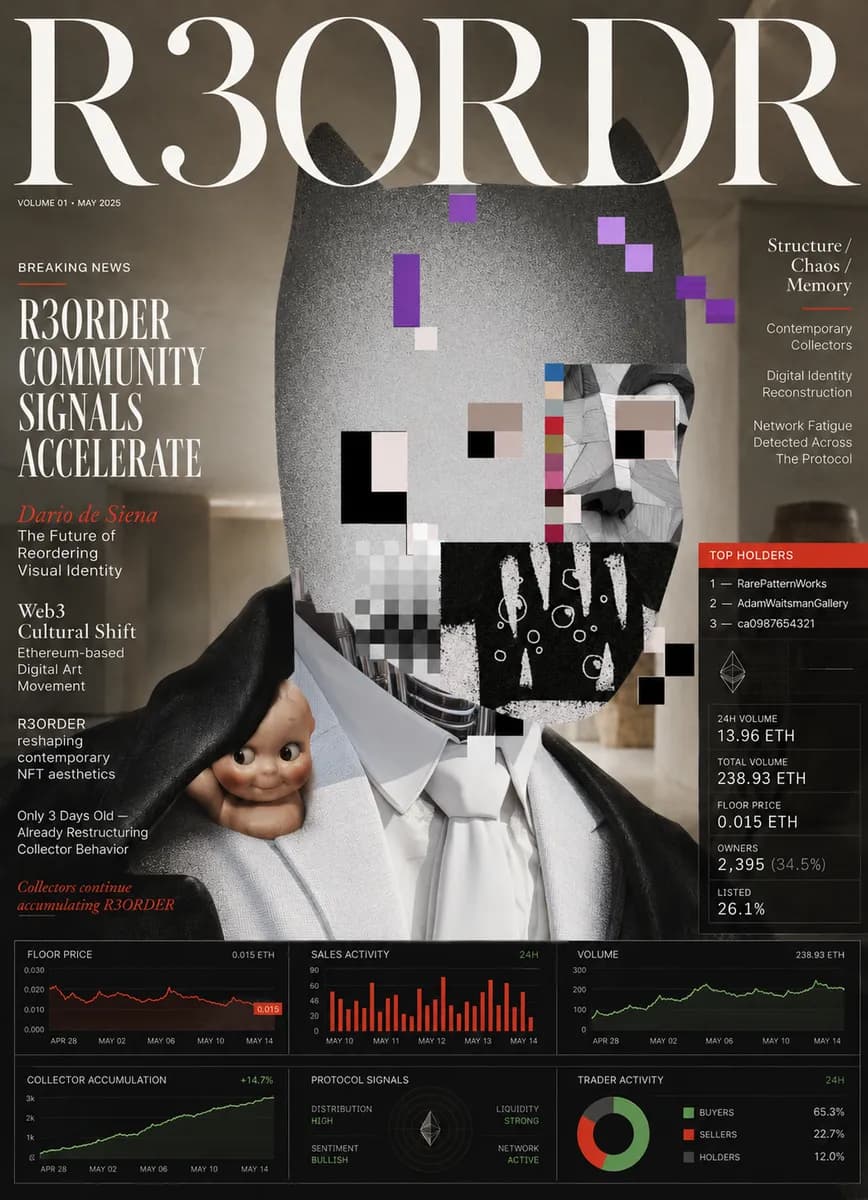
High-fashion luxury magazine cover inspired by Vogue editorial photography. The main character appears centered on the front cover in an elegant cinematic close-up portrait. Masthead: "R3ORDR" — iconic, premium, minimal, fashion-editorial serif typography, in the same visual hierarchy as a classic Vogue cover. Preserve the input artwork's exact facial geometry, collage structure, pixel blocks, asymmetry, textures, mouth, eyes, silhouette proportions, layered masking system — no redesign, beautification, or stylistic deviation. Environment: minimalist contemporary collector-lounge atmosphere, refined architecture, muted luxury materials, soft ambient cinematic lighting, polished stone, subtle reflections, gallery-like elegance. Wardrobe: contemporary luxury fashion, understated futuristic tailoring, premium textile textures. Expression: focused, calm, intelligent, slightly amused. Eyes direct and observant. Cover headlines: - BREAKING NEWS — R3ORDER COMMUNITY SIGNALS ACCELERATE - Dario de Siena — The Future of Reordering Visual Identity - Web3 Cultural Shift — Ethereum-based Digital Art Movement - R3ORDER reshaping contemporary NFT aesthetics - Only 3 Days Old — Already Restructuring Collector Behavior - Collectors continue accumulating R3ORDER - Structure / Chaos / Memory - Contemporary Collectors - Digital Identity Reconstruction - Network Fatigue Detected Across The Protocol Sidebar TOP HOLDERS: 1 — RarePatternWorks 2 — AdamWeitsmanGallery 3 — ca0987654321 Collection analytics: 24H VOLUME — 13.96 ETH TOTAL VOLUME — 238.93 ETH FLOOR PRICE — 0.015 ETH OWNERS — 2,395 (34.5%) LISTED — 26.1% Include realistic floor-price charts, sales activity, volume graphs, collector accumulation patterns, protocol signal diagrams, subtle Ethereum iconography. Style: cinematic realism, Vogue-inspired luxury editorial cover, contemporary art documentary photography, ultra-sharp textures, realistic print design. Aspect ratio: 3:4
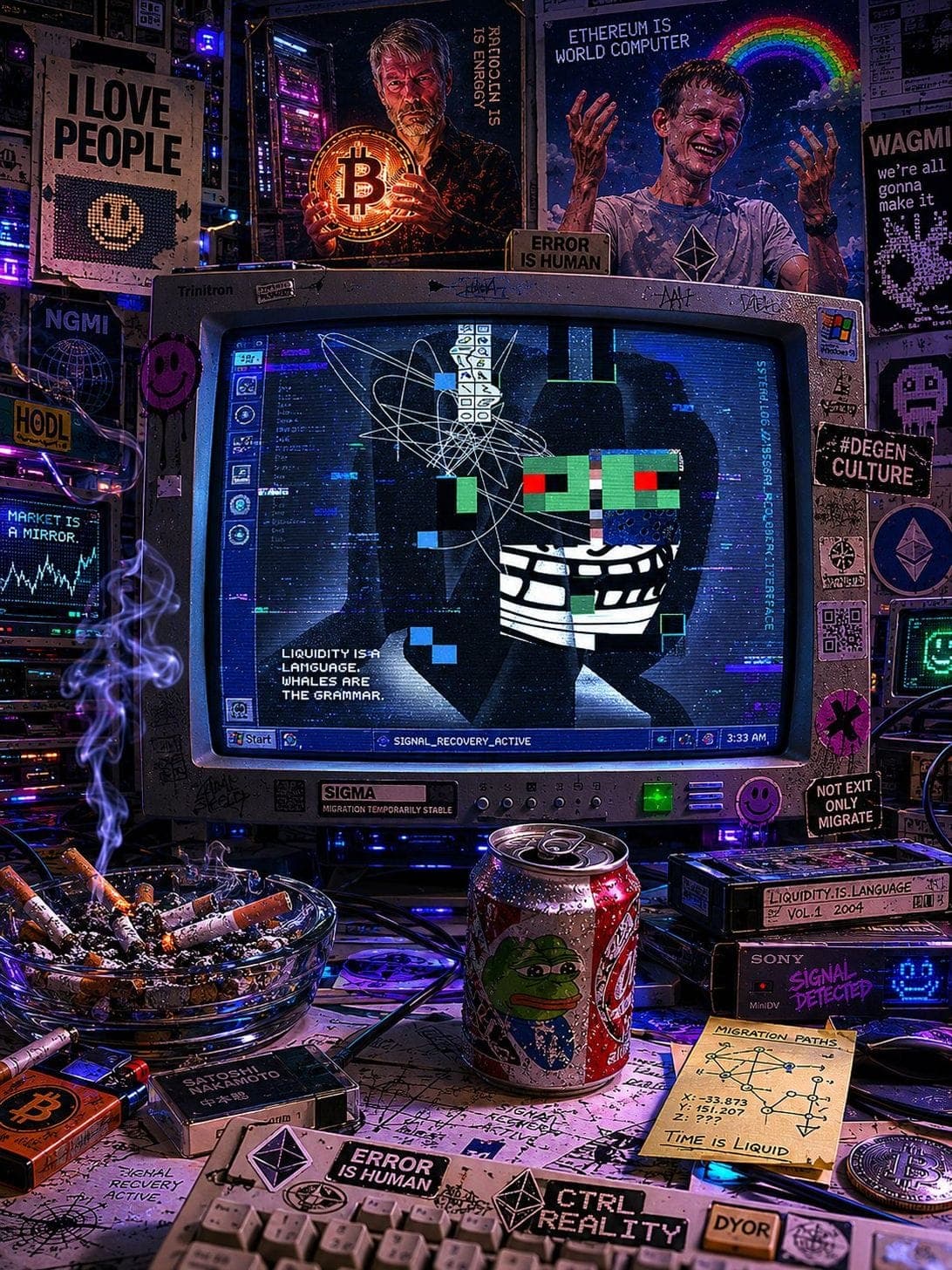
CRT Signal Recovery Lab

CRT Signal Recovery Lab

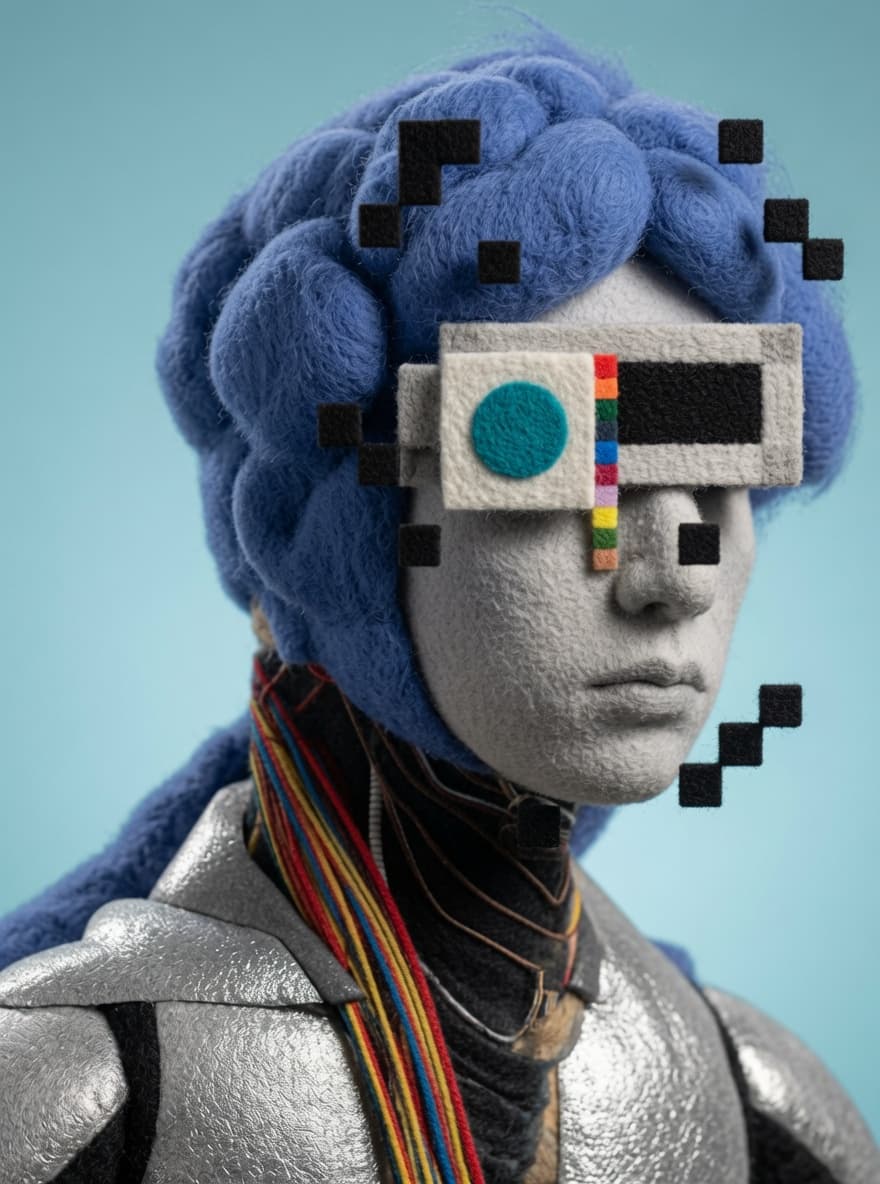
SYSTEM_LOG://SIGNAL_RECOVERY_INTERFACE The uploaded artwork must remain completely untouched — do not redraw, restyle, recolor, crop, or alter any element. The artwork is the anomaly. Display the artwork inside an old retro Windows CRT monitor from the late 90s / early 2000s. Glitch distortions flicker across the screen: dead pixels, compression artifacts, signal tears, horizontal scanline interference. The monitor emits a faint blue static glow into a dark room. Desk details: - a scratched metallic Cola can with a faded Pepe-style frog sticker - layered Web3 stickers (Bitcoin, Ethereum, NGMI, WAGMI, CTRL REALITY, ERROR IS HUMAN, SIGNAL DETECTED, smiley faces, broken QR codes, faded vaporwave) - an overflowing glass ashtray with burned cigarettes, ash residue, smoke haze - cables, old keyboards, MiniDV tapes, external hard drives, sticky notes with cryptic coordinates and migration patterns Wall behind the monitor: posters and printed screenshots, tape marks. - "I LOVE PEOPLE" (with Beeple's X PFP) - Michael Saylor holding an oversized glowing Bitcoin like a religious artifact - Vitalik Buterin laughing awkwardly, sweating, in an Ethereum T-shirt, with a tiny rainbow halo above him Style: ultra-detailed retro realism, late-night hacker bedroom aesthetic, analog internet nostalgia, documentary photography, 2000s Web3 underground. Color palette: muted beige, deep blacks, digital purple, acid green, faded red, washed blue, glitch magenta. Aspect ratio: 3:4, 8K
Collector Bedroom Sanctuary

Collector Bedroom Sanctuary

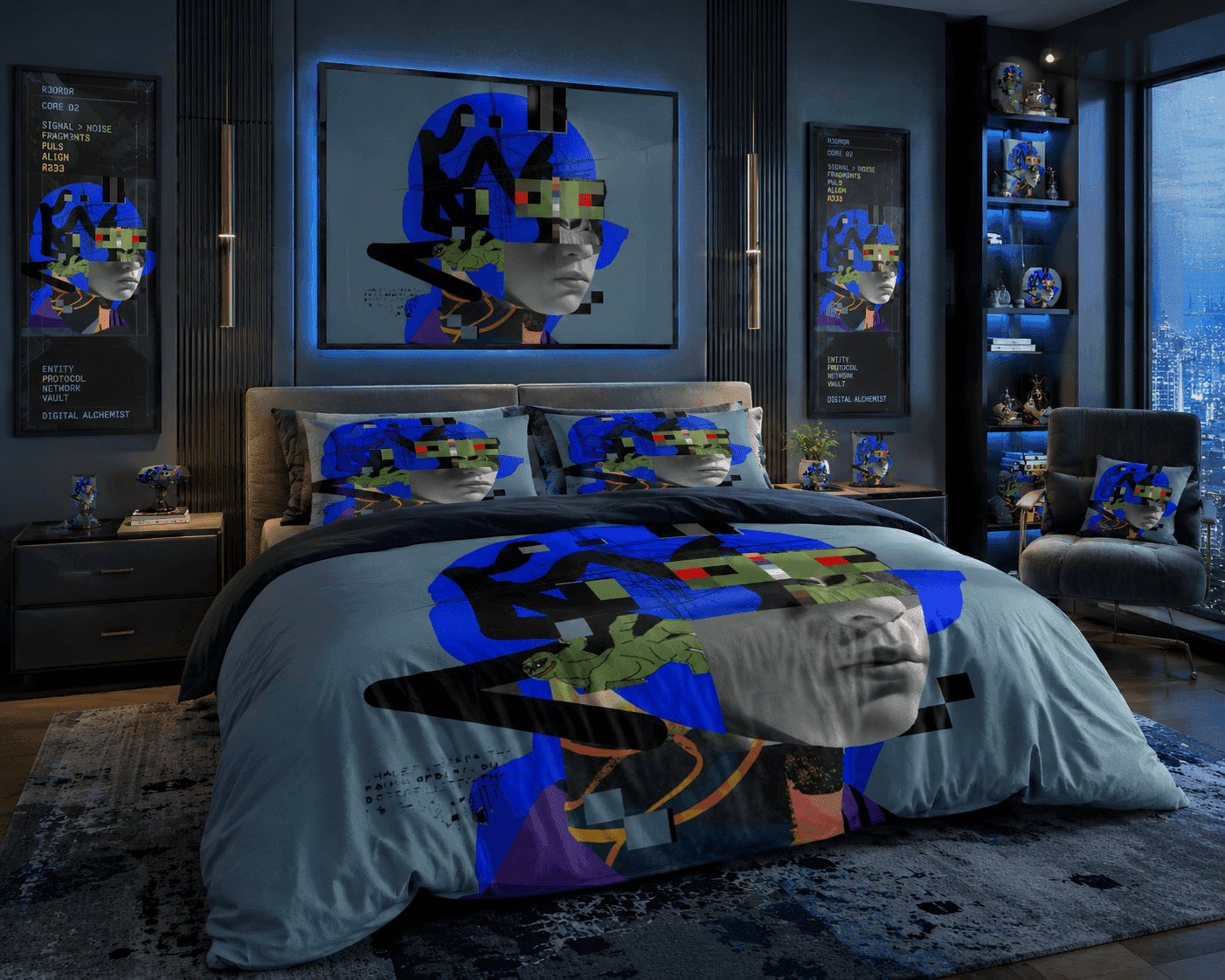
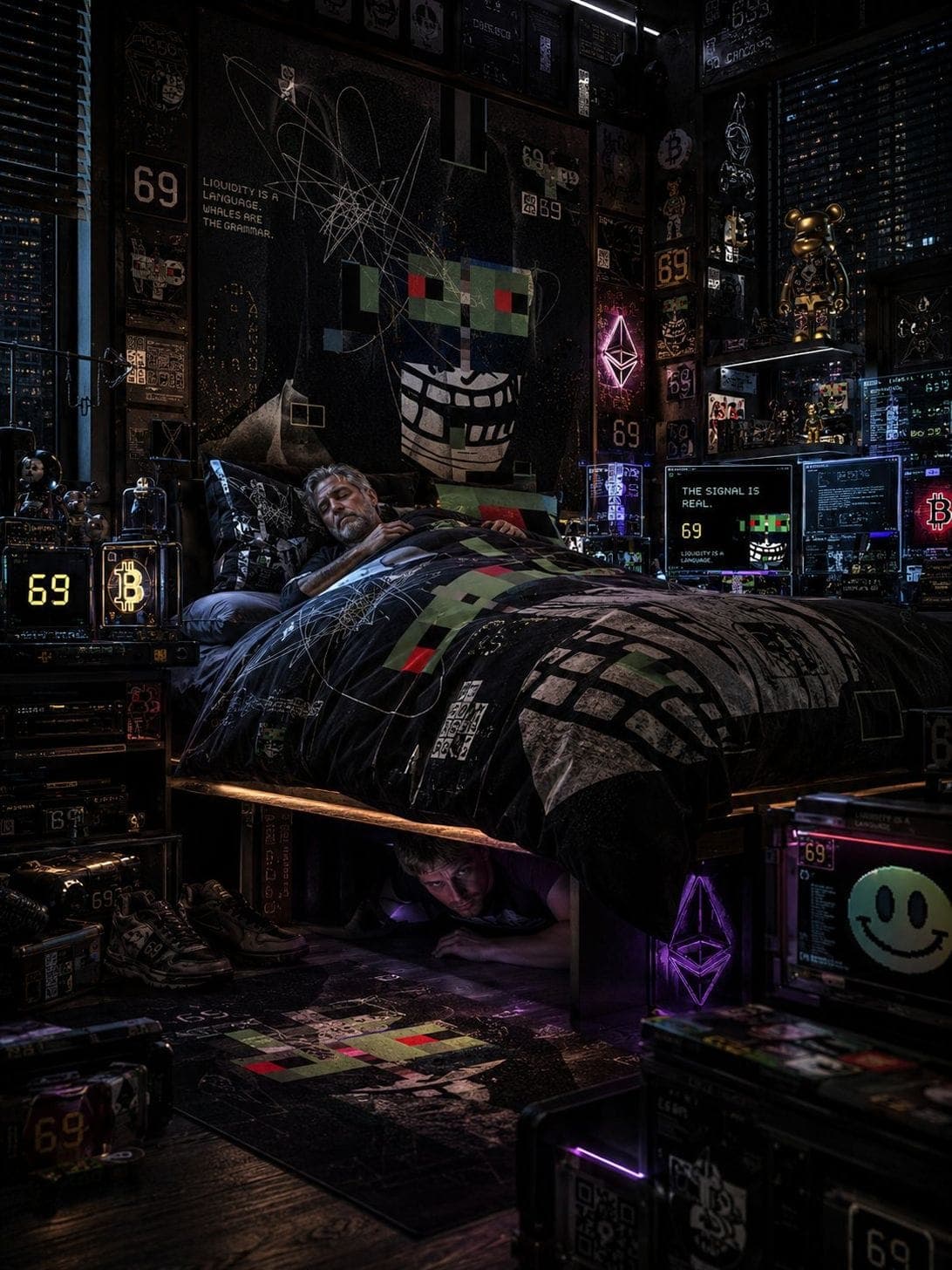
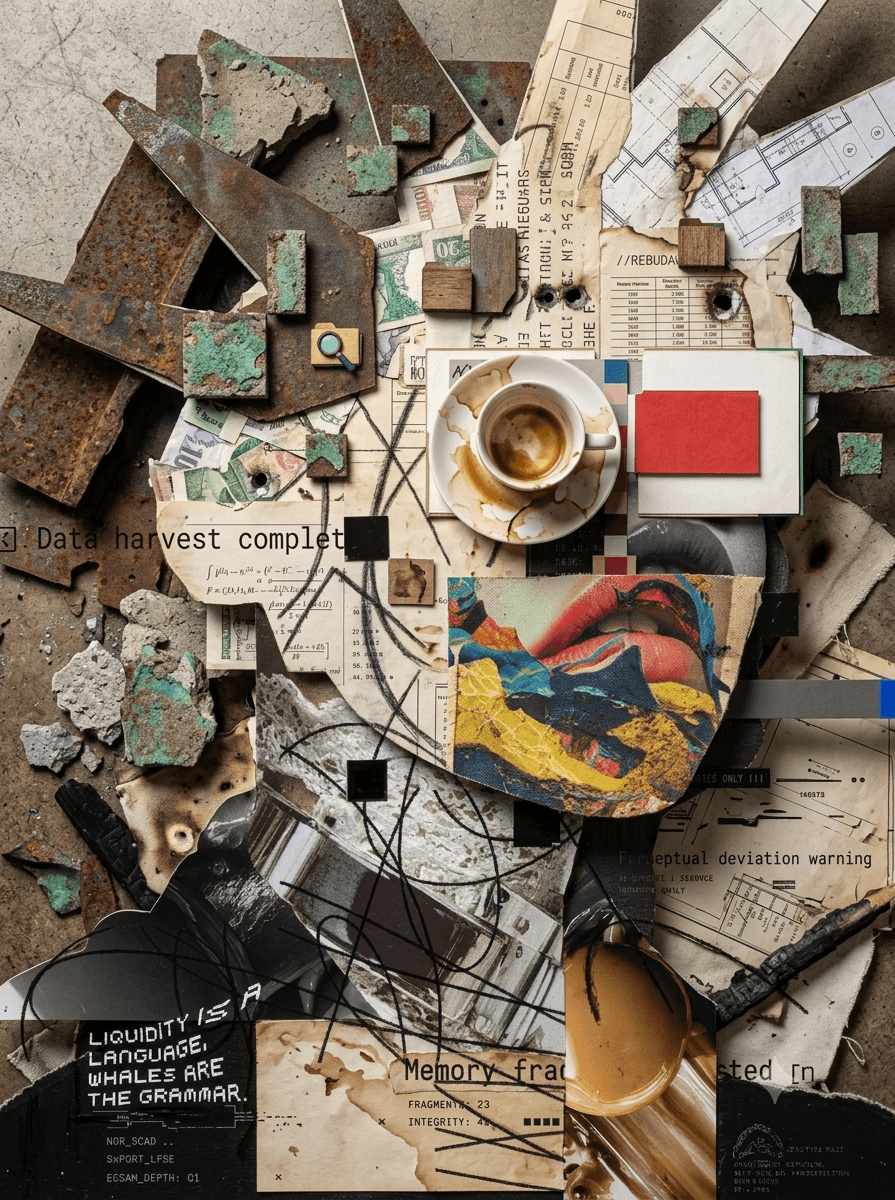
Ultra-detailed cinematic 3D render of a futuristic collector bedroom at night, soft ambient neon lighting and warm atmospheric glow. The room feels like the private sanctuary of a legendary internet mythological figure. Interior design inspired by the main avatar's visual identity and color palette: deep electric blue, muted sand beige, dusty gold, acid green, digital purple, faded crimson, black shadows, subtle glitch magenta. The avatar appears everywhere — massive wall posters, limited-edition statues and designer toys on floating shelves, printed blankets, pillows, rugs, curtains, stickers, holographic displays, LED panels, sneaker boxes, vinyl covers, desk accessories. Hidden lore: crypto runes glowing on walls, Ethereum symbols, Bitcoin relics, meme fragments, Pepe collectibles, broken UI graphics, terminal code fragments, dead pixels, QR stickers, signal diagrams. The number "69" repeats subtly across digital clocks, stickers, posters, cables, labels, screens. Atmosphere: cyberpunk luxury × digital archaeology × internet culture × mythological prophecy. Screens display cryptic signal messages. Holographic particles float in the air. Dust catches cinematic light beams. Style: Unreal Engine 5 realism, hyper-detailed textures, soft cinematic depth of field, volumetric fog, AAA game environment quality. Aspect ratio: 3:4

Vault Kingpin Heist

Vault Kingpin Heist

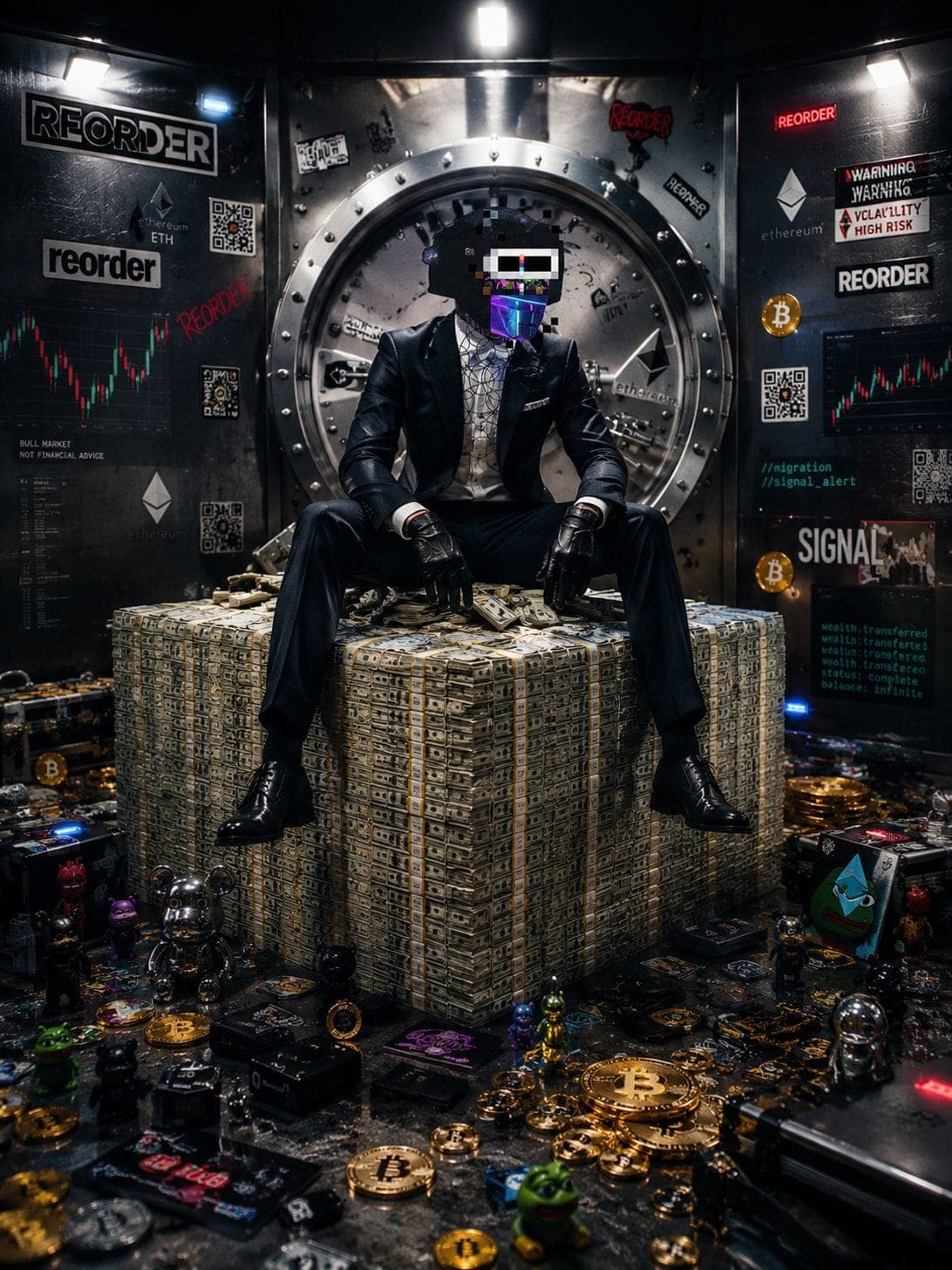
Ultra-detailed cinematic bank vault robbery scene inside an enormous luxury safe room. The main character sits on a massive cube of stacked cash bundles like a kingpin after a successful heist — leaning forward with a grim, chaotic meme-style smile. Confident, unhinged, rebellious. Iconic, internet-native, almost mythological. Vault: pristine, expensive, hyper-clean — brushed steel walls, heavy vault mechanics, polished concrete floor, cold cinematic lighting, subtle reflections. Despite the luxury minimalism, the entire environment is infected with Web3 culture: scattered R3ORDR stickers and subtle graffiti tags, Ethereum decals, distorted Bitcoin charts, trading interface fragments, migration symbols, QR fragments, terminal typography, candle charts, warning labels, glitch graphics, financial UI overlays. Floor details: tiny Web3 toys, collectible figurines, miniature Pepe references, gold Bitcoin coins, broken hardware wallets, USB sticks, trading cards, luxury sunglasses, casino chips, chrome objects, designer toys, cables, LED lights — small signs of chaos after the robbery. Lighting: strong directional vault lighting, subtle red security reflections, metallic highlights, warm gold reflections from the money, glowing digital accents, glossy textures. Style: ultra-realistic editorial photography, cinematic realism, luxury fashion campaign aesthetic, hyper-detailed textures, contemporary Web3 mythology, 8K. Aspect ratio: 3:4
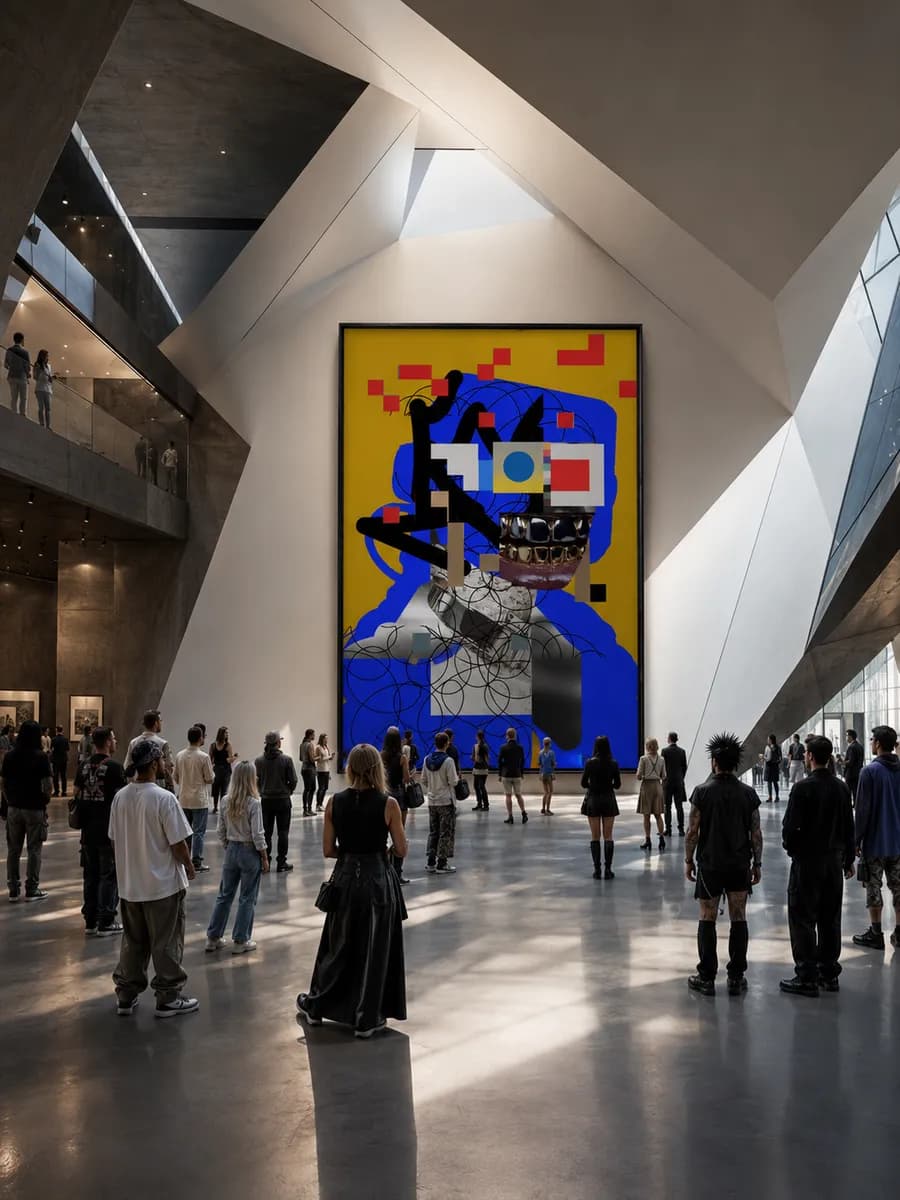
Museum Hall Dual Artwork

Museum Hall Dual Artwork

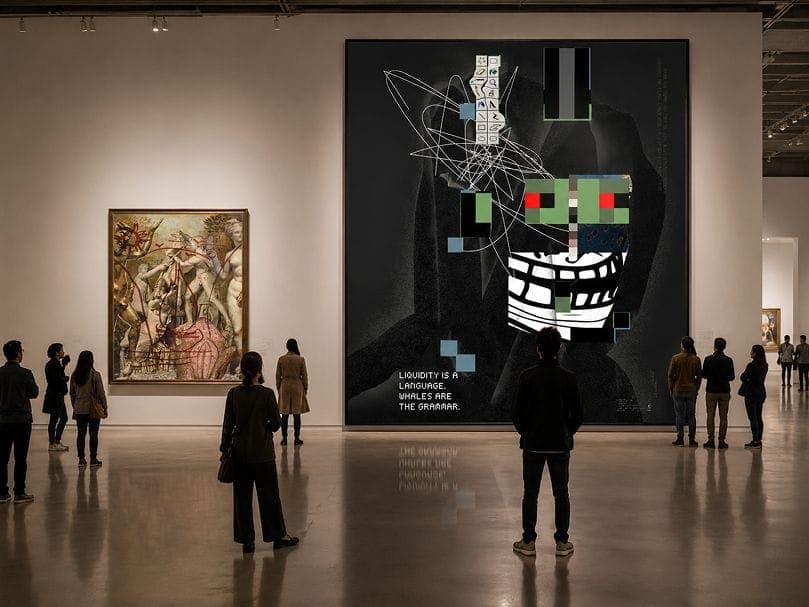
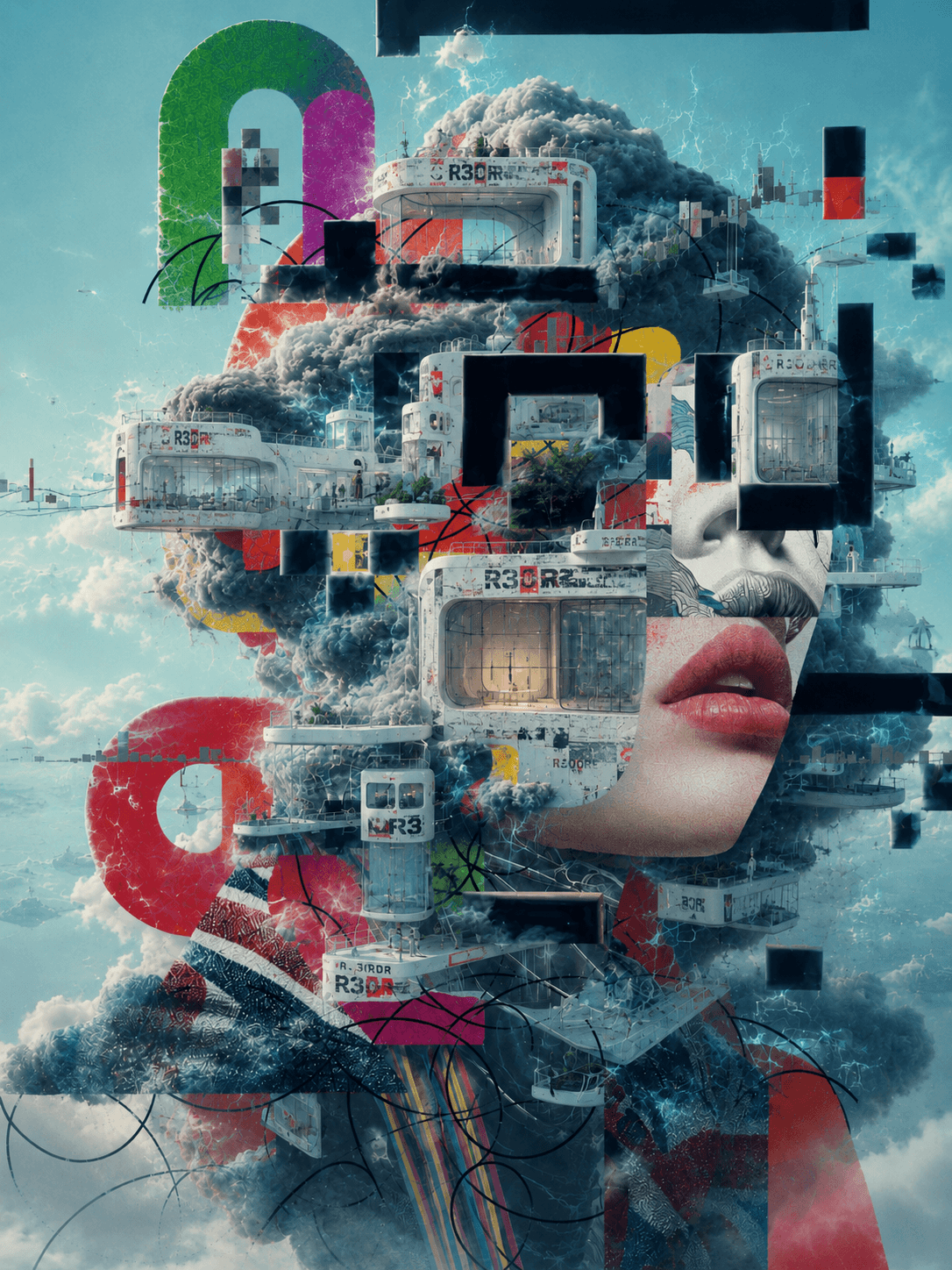
Swap the size of the two artworks: make the right artwork the prominent hero piece, the second image more present in the frame. Scale the artwork sizes to fill the large gallery space convincingly. Aspect ratio: 4:3

Gallery Editorial Mixed-Media

Gallery Editorial Mixed-Media

Create a cinematic mixed-media editorial composition using the uploaded artwork as BOTH the foreground subject and the source material for the environment itself. The final image should feel like a luxury gallery campaign, post-internet street editorial, and contemporary digital art installation combined. BACKGROUND CONCEPT: Extract visual fragments, textures, colors, shapes, gradients, brushstrokes, scribbles, curves, collage pieces, painted textures, geometric forms, and layered cutout elements directly from the uploaded artwork and reconstruct them into a deep immersive environment behind the main piece. The background should NOT be generic. It should feel like the artwork exploded outward into a dimensional world. Create layered atmospheric depth, oversized blurred collage fragments, floating abstract cut-paper forms, stretched painted textures, soft gradient fog, subtle grain, overlapping transparent geometric elements, distorted fragments sampled from the original artwork, subtle shadow layering, atmospheric perspective and rich negative space. The environment should feel futuristic, editorial, museum-grade, cinematic, experimental, premium, immersive, high-fashion, dark but colorful. The background MUST visibly inherit DNA from the uploaded artwork itself. FOREGROUND: Place the original artwork clearly in the foreground as the hero piece. Preserve the artwork EXACTLY — do not redraw, reinterpret, alter composition or colors, do not clean up imperfections; keep the same collage structure and all scribbles and textures. Treat it like a premium physical mixed-media artwork floating in space or mounted in a cinematic gallery environment. Add realistic soft shadows, subtle depth separation, edge lighting, slight atmospheric glow and layered lighting interaction between artwork and environment. LIGHTING: cinematic moody lighting, soft directional highlights, subtle rim lighting, ambient colored reflections sampled from the artwork palette, dark luxury shadows, controlled contrast. Style references: high-end gallery installation, Saint Laurent campaign visuals, post-internet editorial design, experimental collage photography, contemporary museum poster aesthetics, luxury fashion campaign composition, cinematic digital mixed media. Ultra high resolution, 8k quality, premium color grading, editorial finish, award-winning contemporary design aesthetic.
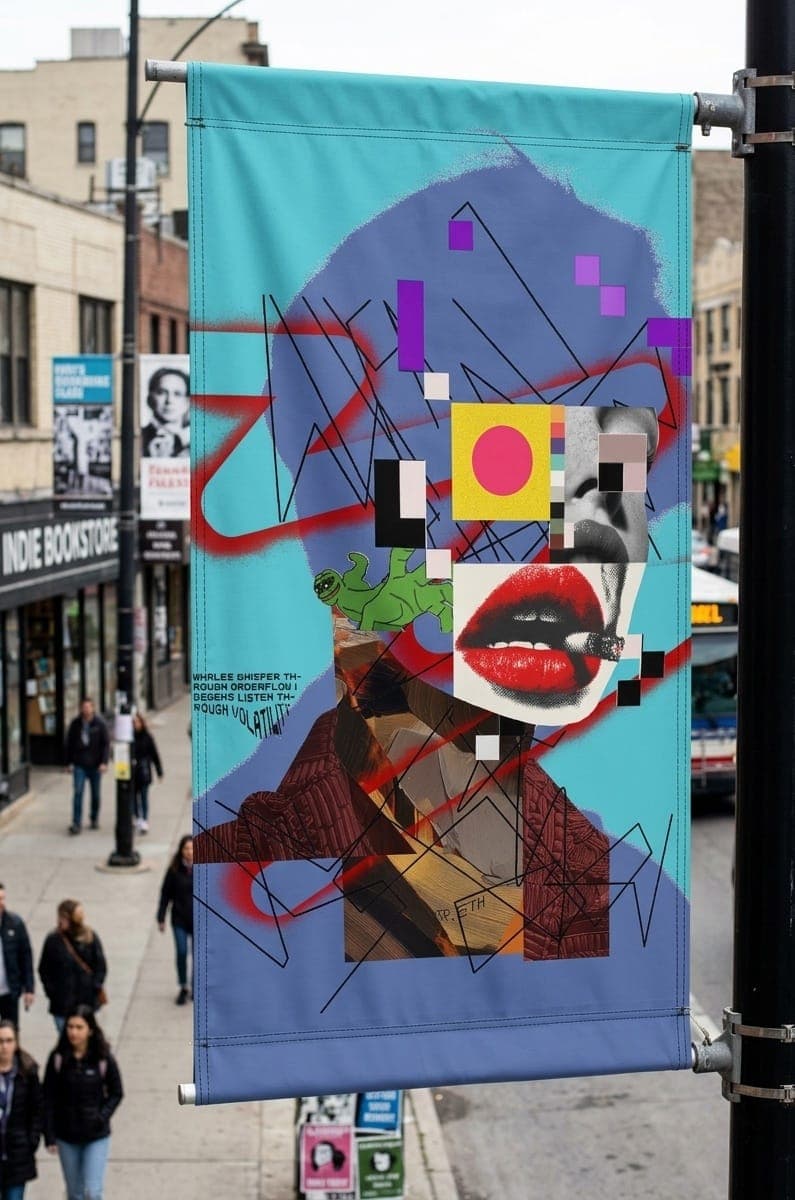
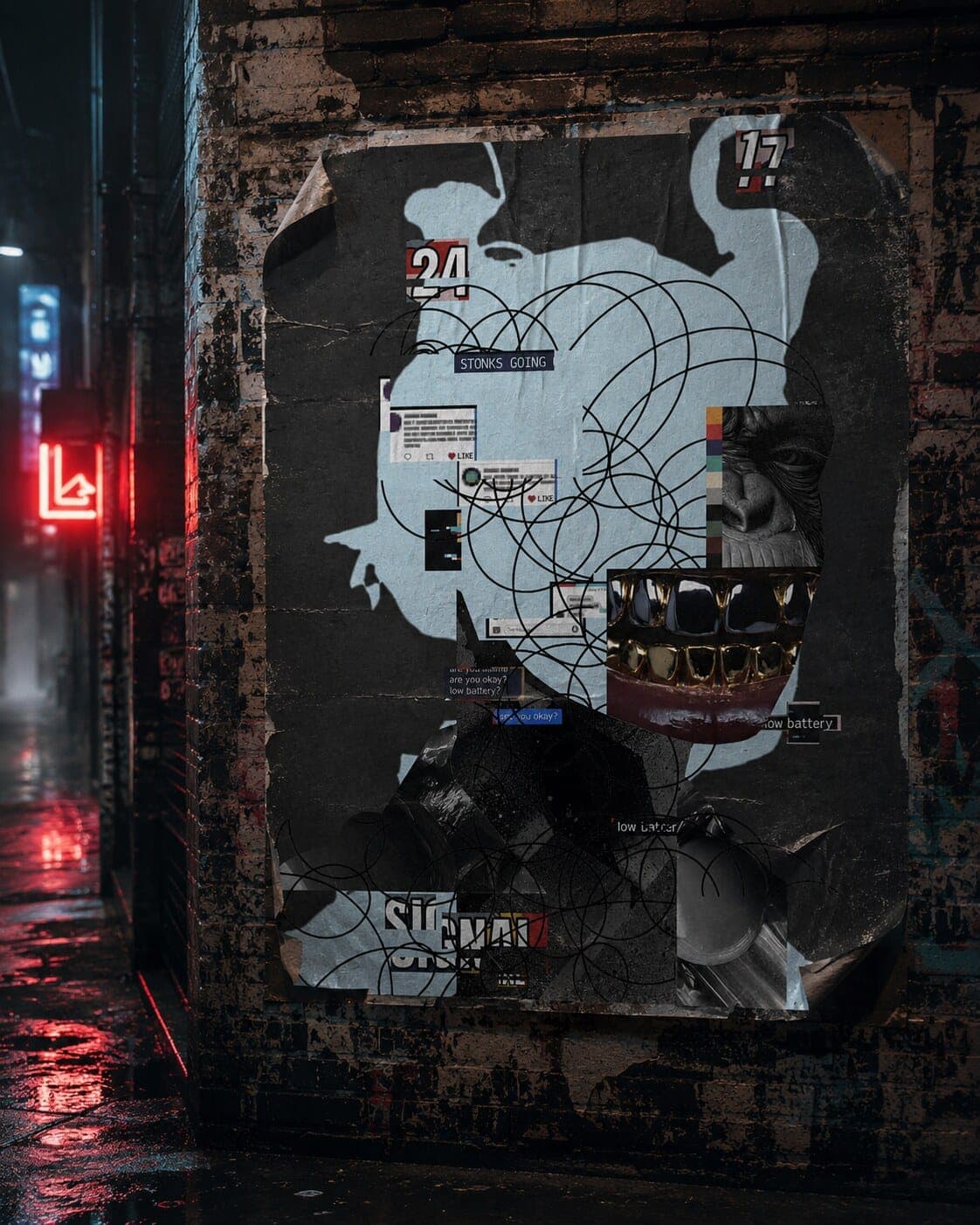
Night Alley Street Poster

Night Alley Street Poster

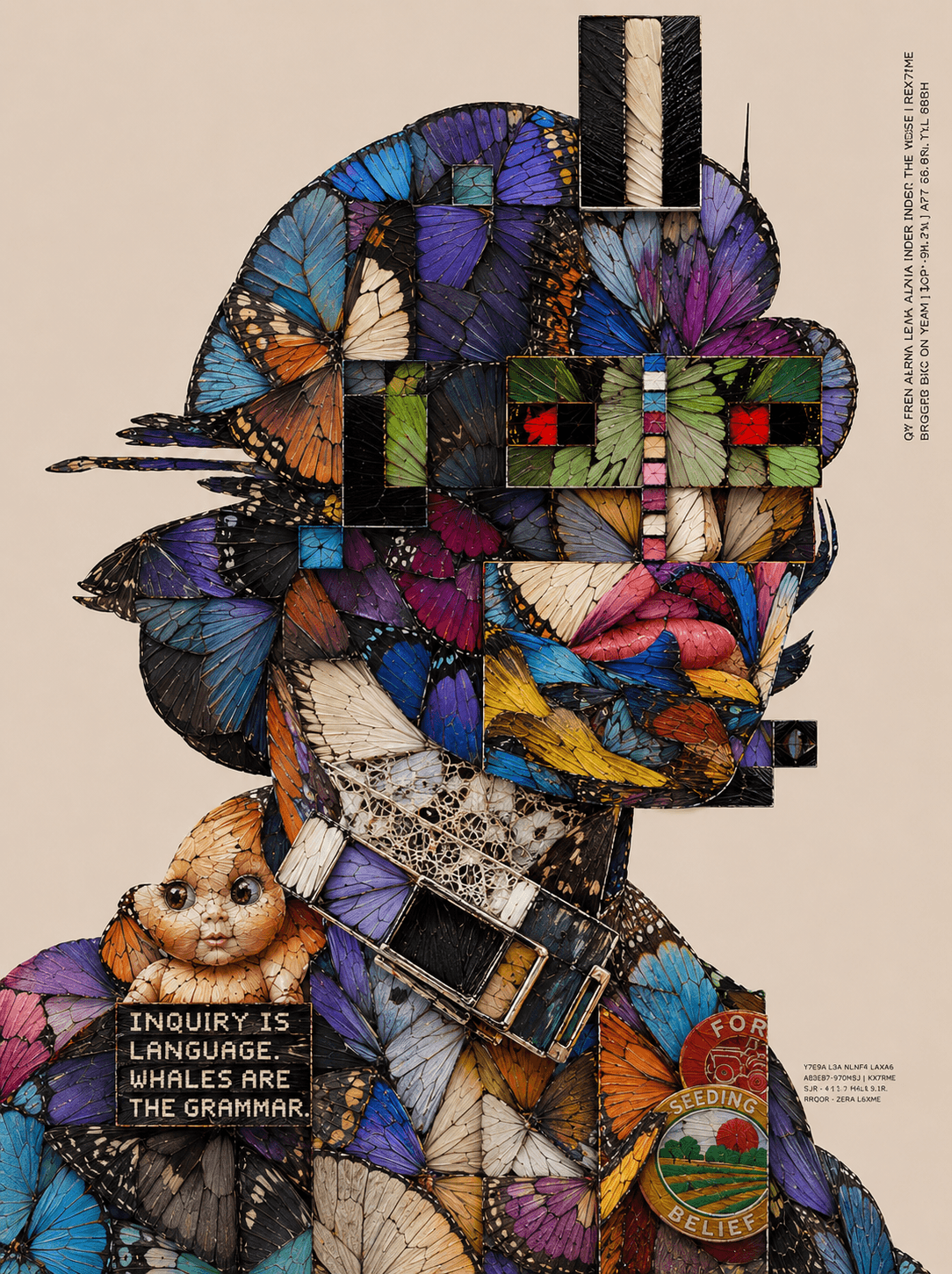
A high-end cinematic street photography scene at night in a narrow dark alley. A large weathered brick wall dominates the composition. The uploaded collage artwork is pasted onto the wall as a real-life oversized street poster/paper print — slightly wrinkled, layered, worn at the edges, with realistic paper texture, glue marks, subtle tears and folds. The poster should feel freshly wheat-pasted but naturally integrated into the environment. The alley atmosphere should feel moody, underground, futuristic and editorial. Wet pavement reflecting dim neon light. Soft fog and ambient haze in the background. Dramatic side lighting and subtle cyan/red neon reflections bouncing onto the bricks and poster surface. High contrast shadows. The artwork remains the visual centerpiece and must stay fully recognizable. IMPORTANT: Preserve the uploaded artwork exactly as-is. Do NOT redraw or reinterpret the collage. Do NOT alter composition, shapes, scribbles, colors or layout. Treat it as a physical printed poster attached to the wall. The brick wall should have gritty realistic texture, layered graffiti remnants, stains, cracks, urban decay, cinematic depth and realistic perspective distortion. Add environmental realism: curled poster corners, overlapping old torn posters beneath, moisture damage, slight gloss where light hits the paper, realistic shadow casting from folds, tiny dust particles in air and subtle depth of field. Camera/style direction: ultra realistic photography, Sony A7R IV, 85mm lens, shallow depth of field, cinematic composition, museum-quality detail, extremely high resolution, premium streetwear campaign energy, luxury editorial photography, dystopian urban atmosphere, realistic lighting, rich texture fidelity, hyper detailed, sharp focus on poster, soft bokeh background. The final image should feel like a rare underground art poster discovered in a futuristic city alley.
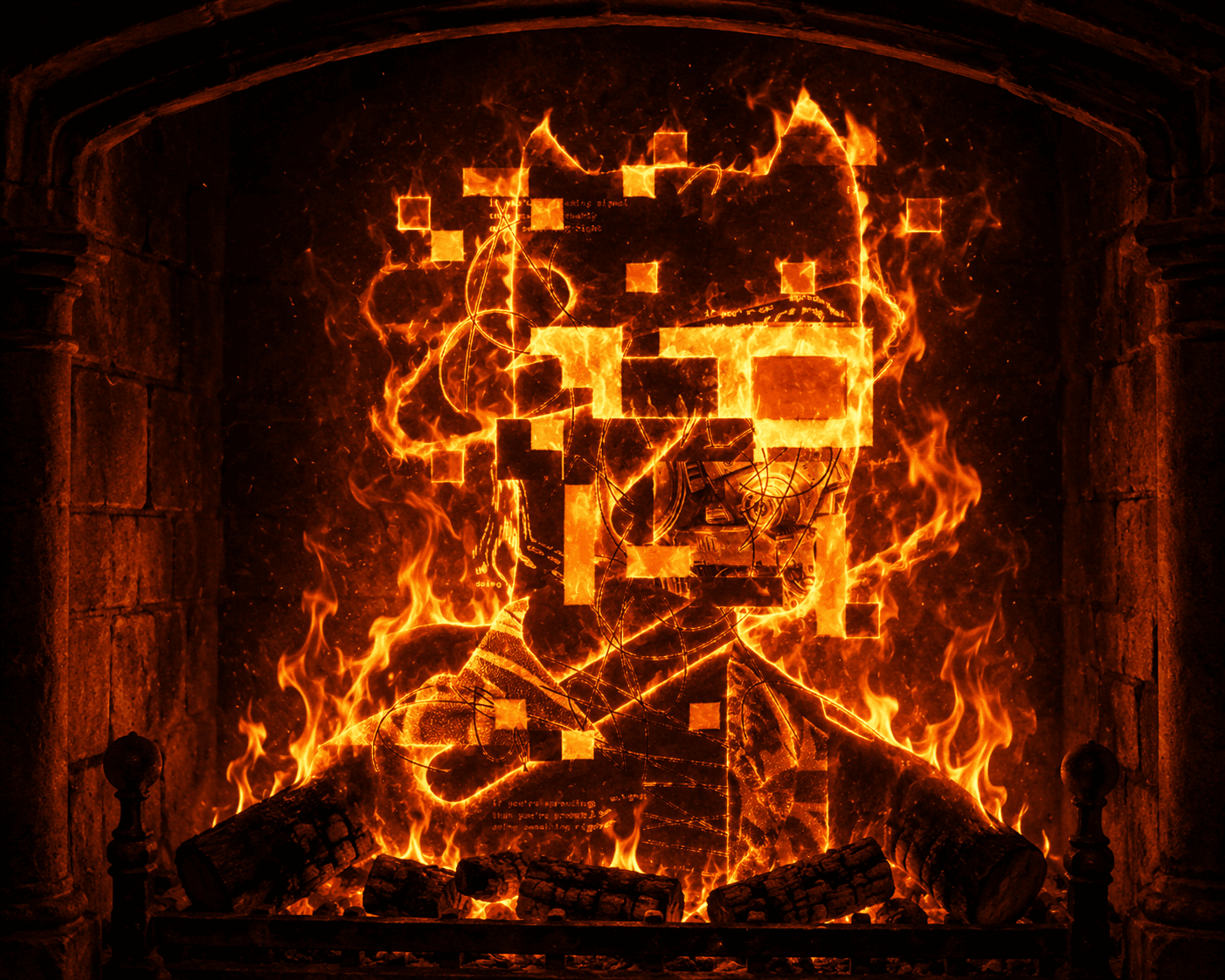
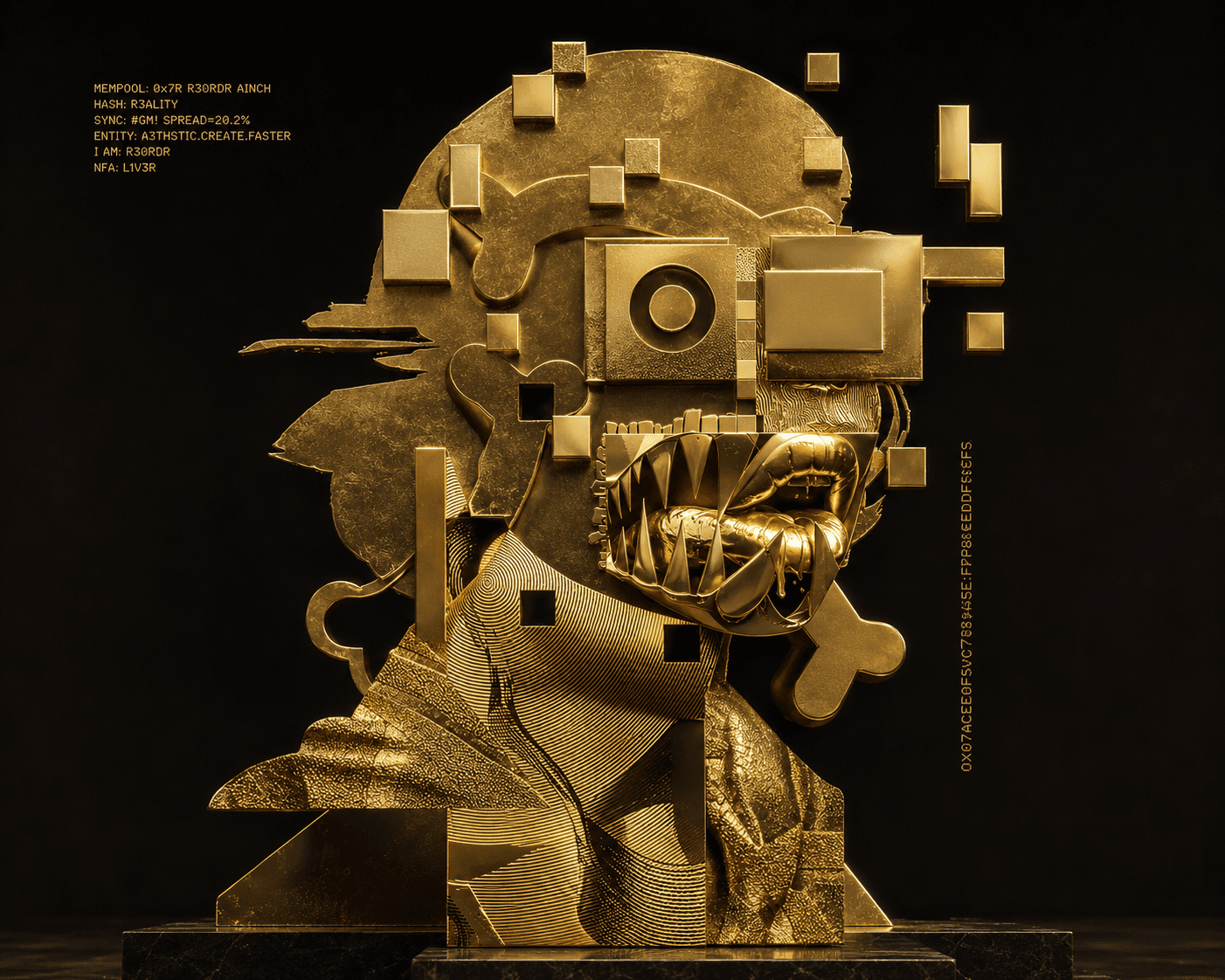
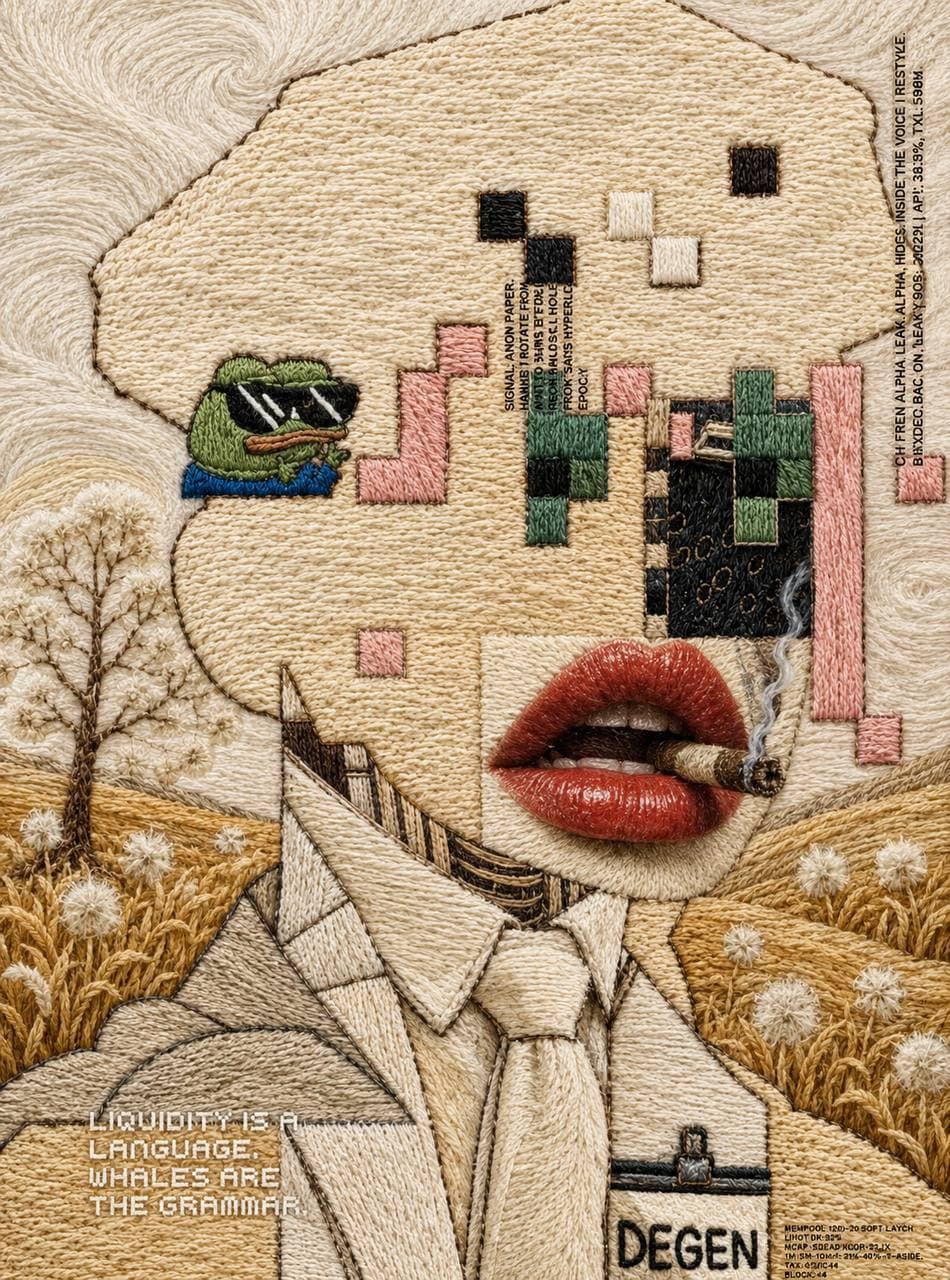
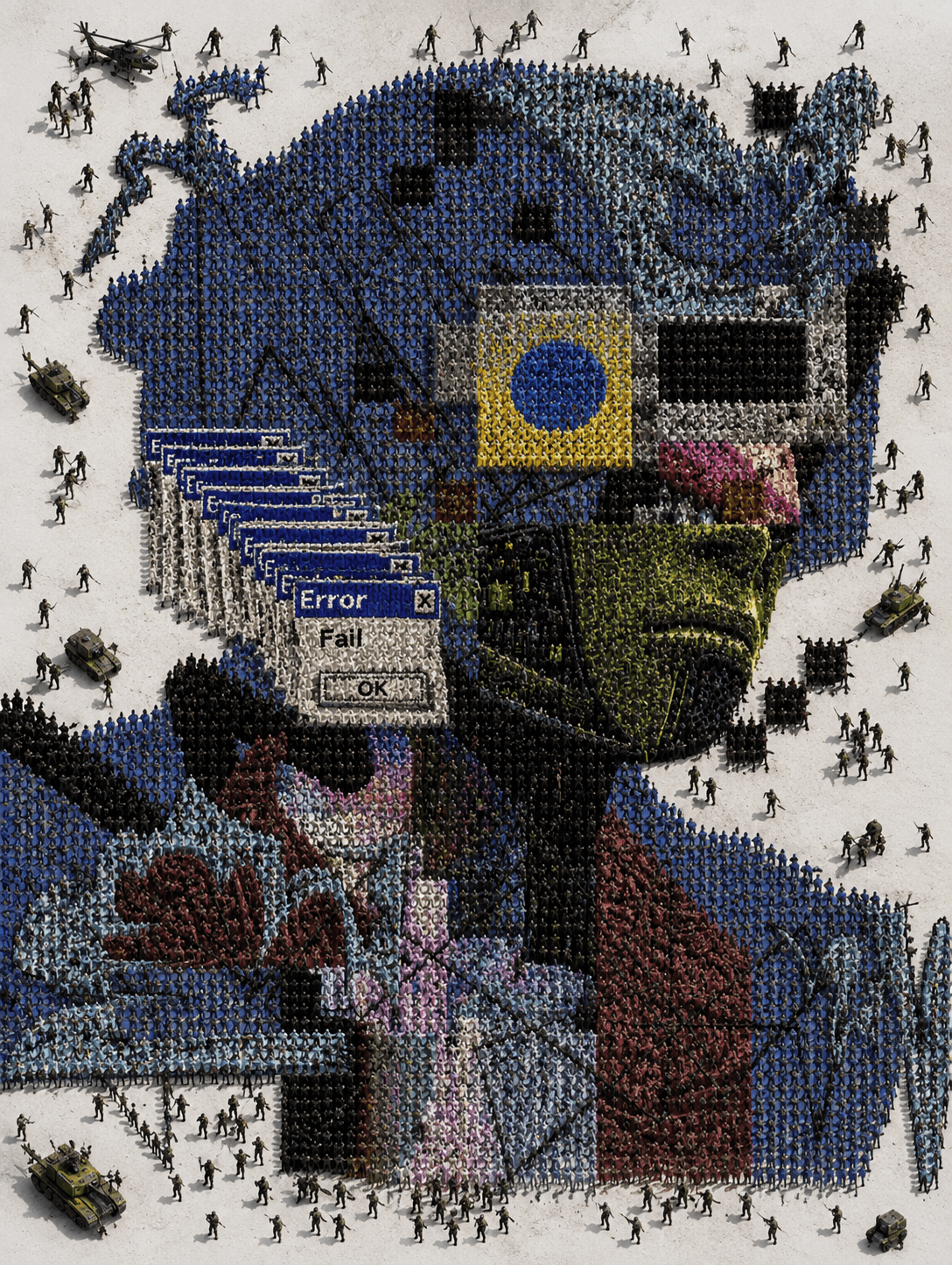
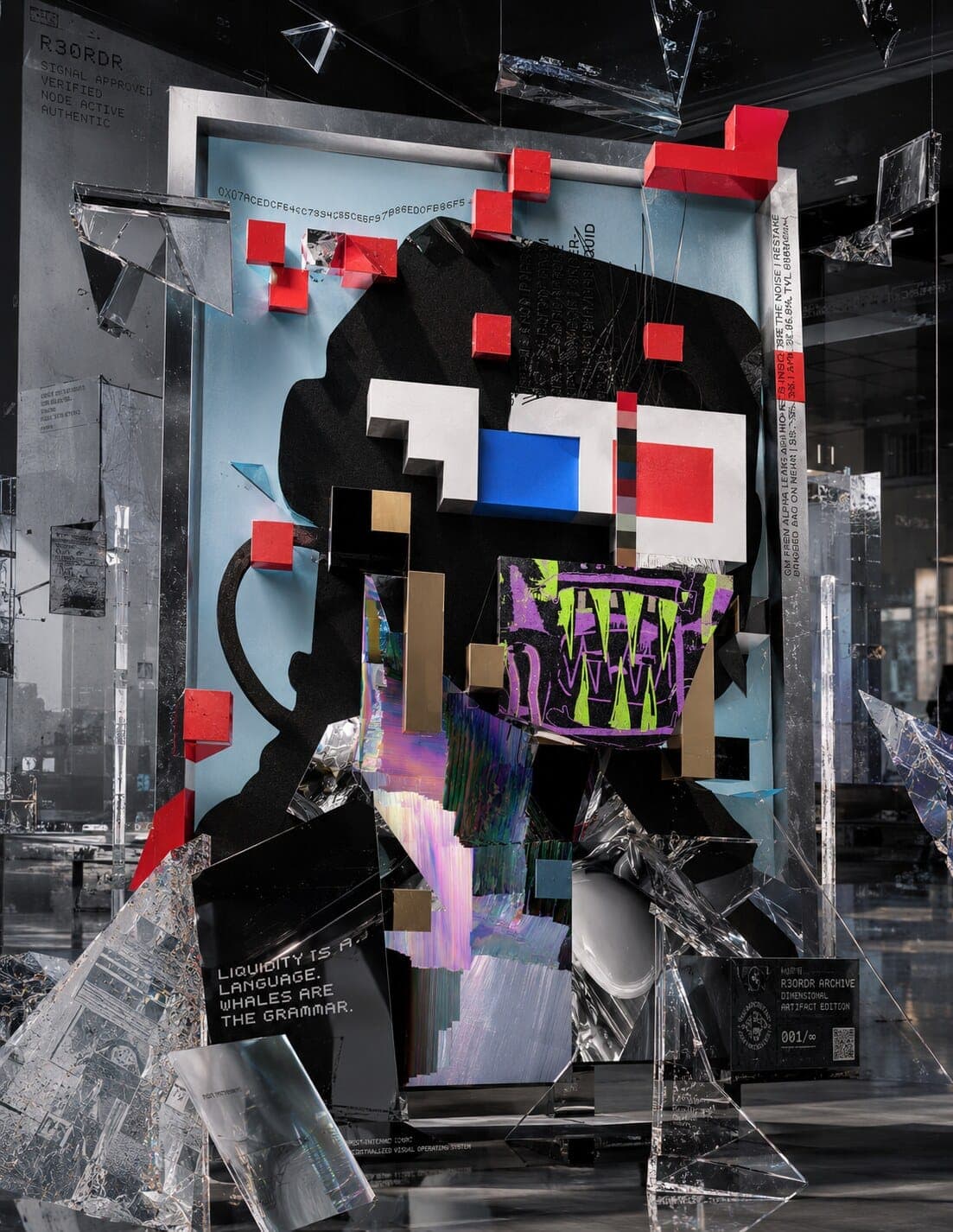
Dimensional Artifact Edition

Dimensional Artifact Edition

R3ORDR POST-INTERNET WEB3 ENVIRONMENT SYSTEM — DIMENSIONAL ARTIFACT EDITION Create an ultra high-resolution cinematic editorial composition where the uploaded artwork exists as the undeniable hero object inside a fractured post-internet Web3 ecosystem. The artwork must remain the primary focal point. The environment exists only to amplify the artwork. The viewer's eye should immediately lock onto the artwork before exploring the surrounding world. The artwork should feel like a rare authenticated digital artifact suspended inside a living decentralized archive. HERO ARTWORK TREATMENT: The artwork must NOT sit flat inside its frame. The frame should function as a portal rather than a container. The artwork's silhouette should physically break beyond the frame boundaries. Large portions of the artwork should protrude into physical space — spikes, ribbons, collage fragments, abstract forms, painted elements, graphic structures, texture layers — emerging from the frame. Some elements extend toward the camera, some sideways beyond the frame, some cast shadows onto surrounding fragments. Sculptural, dimensional and physically constructed. Think "museum installation" rather than "framed artwork." DEPTH + DIMENSIONALITY: Push dimensional depth aggressively. Build a genuine spatial installation using multiple depth planes — foreground fragments crossing the camera plane, artwork layers escaping the frame, central artwork body, acrylic/glass/chrome and protocol structures behind it, atmospheric archive environment. Use parallax, overlap, cast shadows, reflections, occlusion, depth-of-field transitions and atmospheric perspective. ENVIRONMENT DNA: Construct a premium fragmented post-internet archive using visual language extracted from the artwork itself — acrylic shards, chrome debris, browser remnants, metadata fragments, archive scraps, compressed image artifacts, glitched screenshots, protocol remnants, blockchain diagrams, translucent geometric systems, suspended collage debris. "A collapsed internet reconstructed as a luxury museum installation." TYPOGRAPHY: Use typography sparingly, only as discovered artifacts (R3ORDR, SIGNAL APPROVED, VERIFIED, NODE ACTIVE, AUTHENTIC) — hidden, fragmented, aged, partially obscured. Never dominant. MATERIALS + LIGHTING: frosted glass, translucent acrylic, polished chrome, brushed metal, reflective steel, resin, archival paper. Luxury editorial lighting only — large diffused light sources, subtle bloom, controlled reflections, soft metallic highlights, rich shadow separation. Avoid cyberpunk lighting, RGB glow, gaming UI, sci-fi screens, hologram overload. COLOR: Expand colors directly from the artwork, supported with charcoal black, graphite, muted chrome, metallic silver, faded whites, desaturated blue-grey. A museum-grade Web3 artifact erupting from its frame inside a fractured decentralized visual operating system. A true R3ORDR environment.
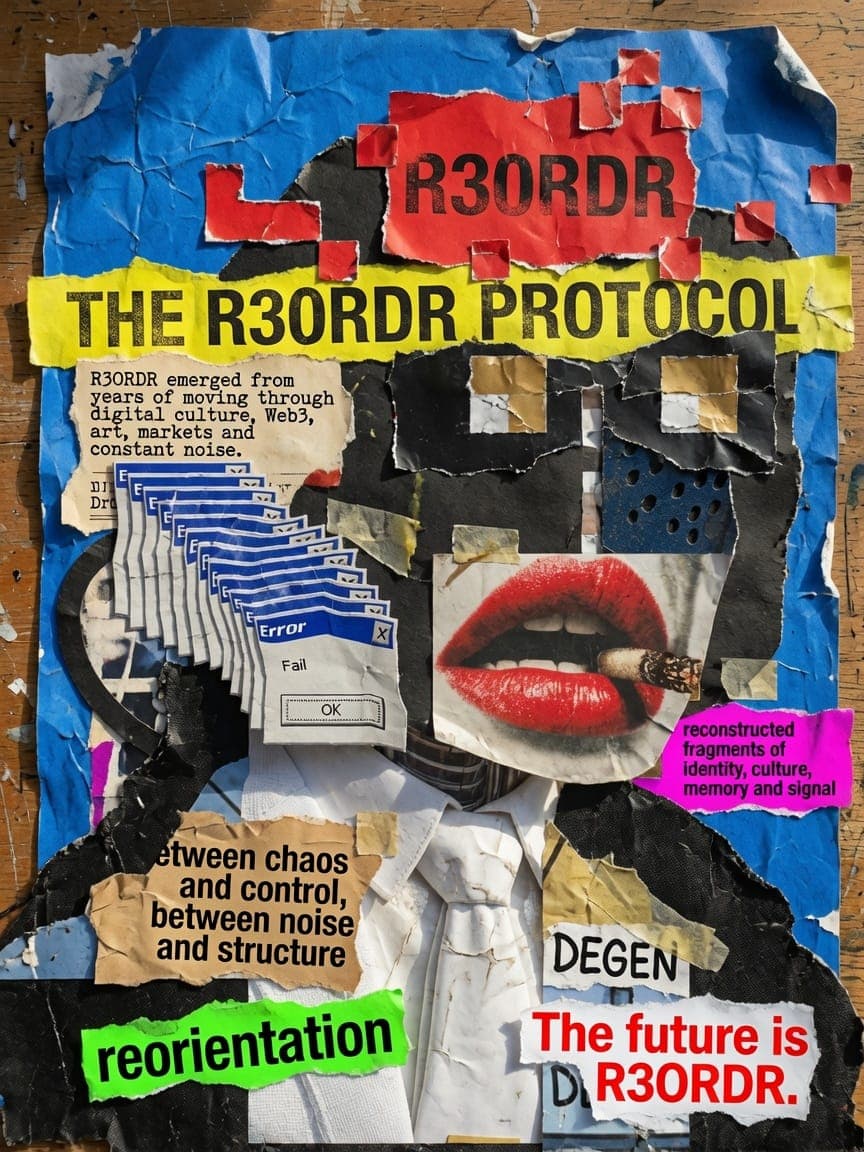
University Lecture — Visual Theory

University Lecture — Visual Theory

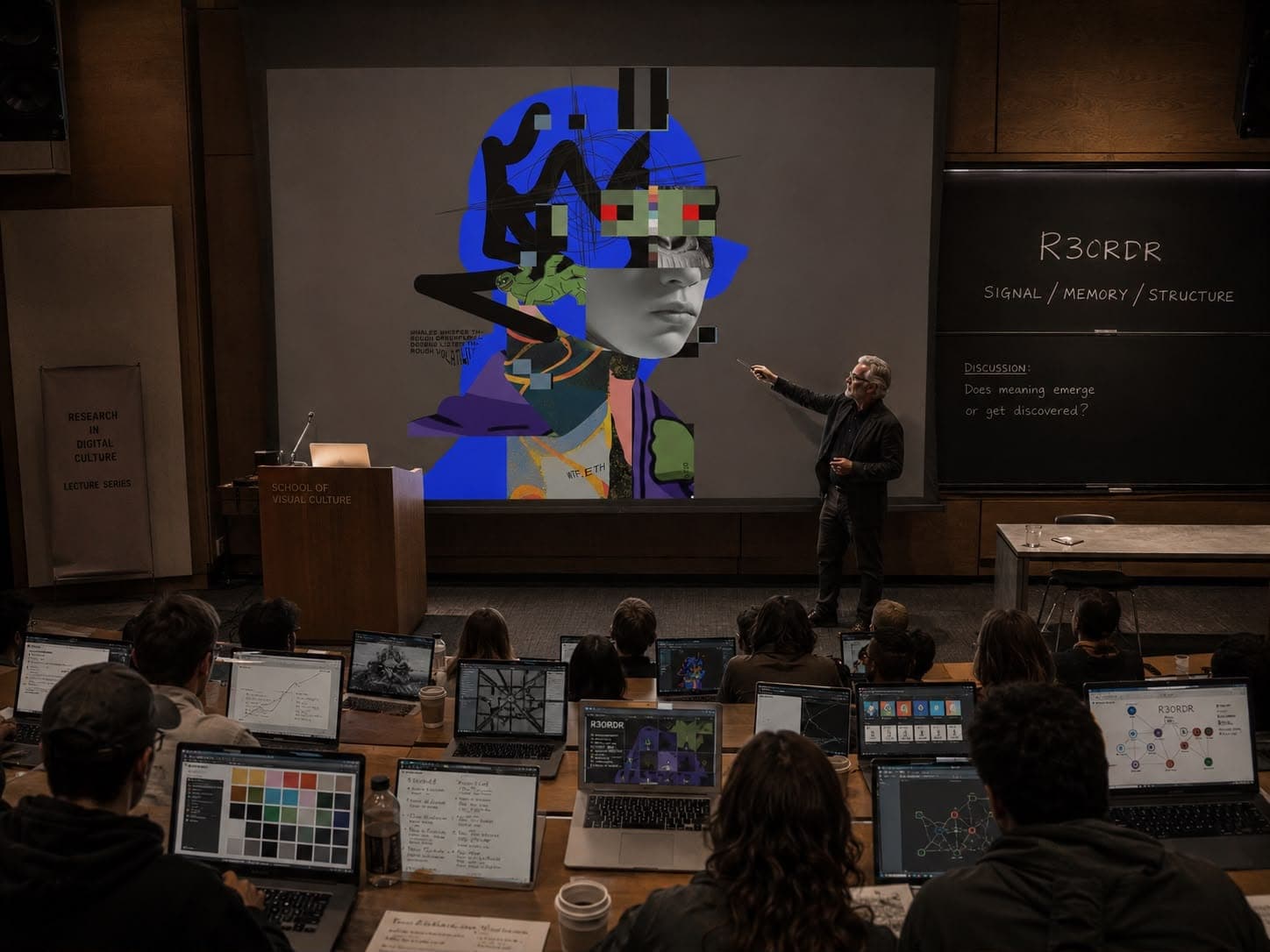
UNIVERSITY LECTURE — R3ORDR VISUAL THEORY / CONTEMPORARY DIGITAL ARCHAEOLOGY Use the uploaded R3ORDR artwork as the featured lecture subject. IMPORTANT: The uploaded artwork must remain completely unchanged. Do NOT redraw, reinterpret, repaint, crop, distort, recolour, stylise, reconstruct, enhance, or alter the artwork itself in any way. The artwork is the object of study. Create a cinematic university lecture theatre during an advanced visual culture / contemporary art analysis class. At the front of the room: A professor stands beside a large projection screen pointing directly at the uploaded R3ORDR artwork while delivering an intense lecture. The artwork appears large and clear on the screen exactly as uploaded. Environment: contemporary university, tiered lecture seating, warm academic lighting, refined architecture, realistic atmosphere, students engaged and focused, subtle museum-meets-research aesthetic. Students: Rows of students sitting with open laptops. Each laptop displays different forms of analysis inspired by the artwork (NOT copies of the artwork): extreme zoom studies of tiny sections, colour extraction palettes, composition breakdown grids, annotation overlays, signal mapping diagrams, visual hierarchy studies, fragment analysis, digital restoration attempts, semantic diagrams, handwritten lecture notes, abstract graphs, thesis slides. Add subtle realistic details: notebooks, coffee cups, cables, lecture notes, projected light reflecting onto faces. Whiteboard / lecture text (minimal and elegant): R3ORDR — SIGNAL / MEMORY / STRUCTURE. Small discussion question: Does meaning emerge or get discovered? Mood: The students should feel like they are studying an important contemporary artwork that became part of academic discussion. Ultra cinematic. Prestige university atmosphere. Museum-grade realism. Aspect ratio: 4:3

FT-HUNT3R Signal Banner

FT-HUNT3R Signal Banner

Make a clean new banner — colors should match the input image perfectly and pull the vibe from the overall face. Crazy, wild, dirty, but still analog collage style. White logo overlay with the text: "ADD YOUR NAME HERE". Variants to generate: - a fresh composition in red, blue, black and white only - a fresh composition with popping vivid colors - a completely new composition Aspect ratio: 3:1